In late February, the produce aisle in many supermarkets has a unique problem.
Shoppers still expect fruit. Retailers still want colour, volume, and consistency. Yet growers in temperate climates are mostly looking at bare orchards and dormant fields. The gap between “what the calendar allows” and “what the market demands” is where modern fruit preservation built its entire business.
For years, the easiest fix was distance. Ship berries from wherever it’s warm. Fly mangoes from wherever they're harvested. Keep the shelves full and hope no one asks how long the fruit has been in a box. Imports fill gaps, but they come with costs that are hard to hide: logistics, refrigeration, and a slow erosion of quality as days turn into weeks.
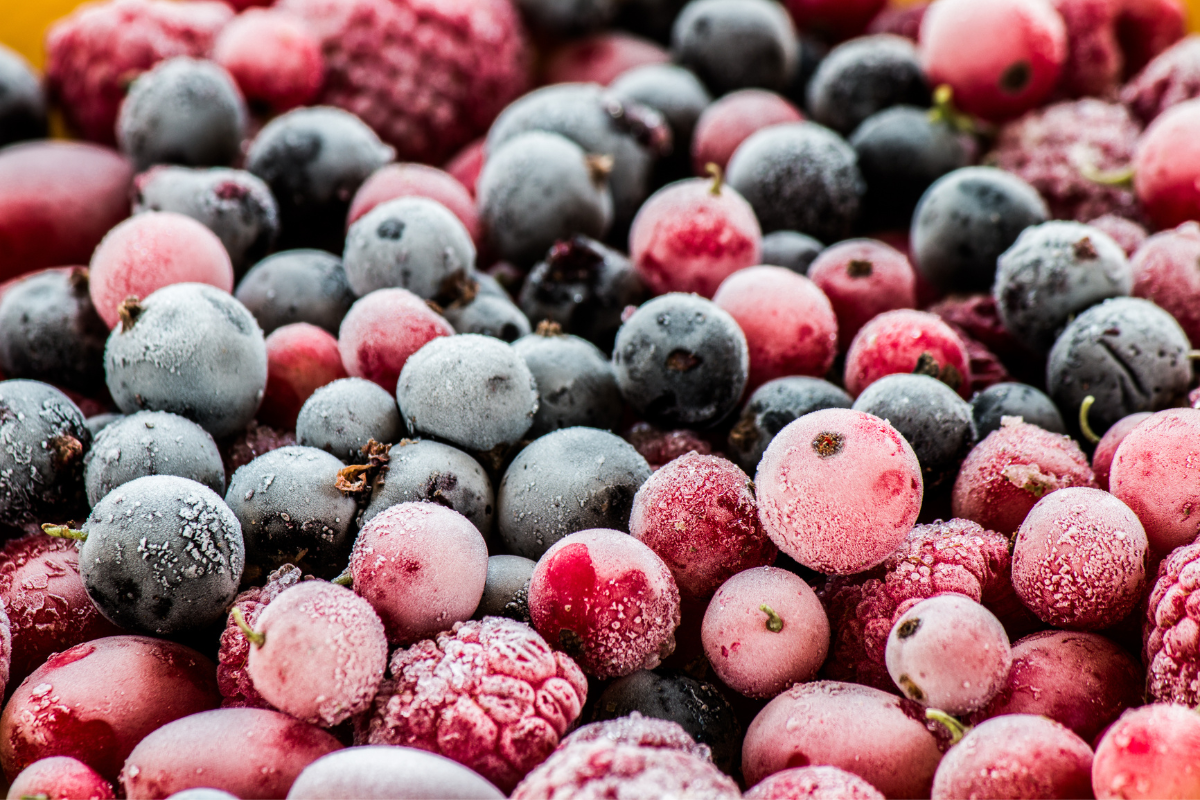
Freezing and processing offers another solution. They are not a substitute for seasonal fresh fruit, but they are more reliable. Instead of extending supply by moving fruit across long distances, they preserve fruit at harvest, when quality is highest, and make it available later.
The decision point growers know too well: Sell fast or lose money
During peak harvest, many berry growers face the same pressure. Large volumes reach the market at the same time, prices fall, buyers tighten quality standards, and only top-grade fruit moves easily. Lower grades must be handled quickly or they lose value.
This is where freezing becomes a business decision rather than a nutrition trend. Instead of sending the entire harvest to the fresh market, growers and processors can divert part of the volume into freezing or processing. Fruit is harvested at full ripeness, stabilised soon after, and sold later, when supply is lower.
The investment decision is clear. Committing to cold storage and processing capacity reduces dependence on a short-selling window. The risk is also clear. Poor timing or delayed processing locks in average quality. Correct timing turns surplus fruit into stored inventory that can be marketed when prices are more favourable.
Preserving the harvest instead of chasing freshness
Freezing became a serious strategy once it stopped being treated as a fallback. The logic is practical. Fruit is harvested at peak ripeness, quickly stabilised, and sold later, when supply is lower and quality would otherwise be difficult to secure.
FAO describes freezing as “a way to extend fruit use beyond the harvest season”. That framing matters because it shifts the role of frozen fruit from substitute to system tool. Fruit that would normally have a short market life becomes inventory that can be moved months later, often to regions where fresh fruit arrives with quality compromised by transport and storage.
Processing serves the same purpose through different methods. Canning, drying, juicing, jams, and purees convert a highly time-sensitive crop into shelf-stable products. This becomes especially important during heavy harvests, when prices drop, and fresh markets cannot absorb volume fast enough. FAO notes that even “small-scale processing can support year-round availability of fruit tree products”, which is both a food security and income-stability issue.
From the grower’s side, the benefit is straightforward. Processing reduces dependence on a narrow selling window and lowers the risk of forced sales at low prices when markets are saturated.
What freezing preserves, and where losses occur
Discussions around frozen fruit often turn into slogans. Fresh is framed as superior. Frozen is framed as worse. Neither description reflects how fruit is actually produced, transported, and eaten.
Frozen fruit is typically harvested ripe and frozen shortly after harvest. This limits nutrient losses compared with fruit that spends days or weeks moving through distribution chains. Multiple peer-reviewed comparisons show that nutrient differences between fresh and frozen fruit are often small, and in some cases, frozen fruit retains higher levels, especially when fresh fruit has been stored under typical household refrigeration conditions.
Long-term storage data makes the trade-offs clearer. In peaches stored frozen at –20 °C for 360 days, total phenolic antioxidants changed by less than 20%. Antioxidant capacity remained at roughly 80% of fresh fruit after one year. Carotenoids were more sensitive, declining by about 40% to 48% depending on treatment.
The implication is specific rather than absolute. Freezing preserves many antioxidant compounds well over long periods, while some vitamin A precursors are more vulnerable. Frozen fruit is not nutritionally identical to fresh, but it retains a substantial share of its nutritional value, especially when compared with fresh fruit that has aged through transport, storage, and retail handling.
When “fresh” loses its advantage
Fresh fruit eaten immediately after harvest remains the reference point for quality. The problem is that most fresh fruit is not consumed that way.
In real supply chains, fresh fruit is often harvested early, transported long distances, stored at multiple stages, and refrigerated again at home. That is the comparison that matters in practice. Frozen fruit is not competing with orchard-picked fruit eaten the same day. It is competing with fruit that has already spent time losing moisture, firmness, and nutrients.
A two-year nutrient comparison published in the Journal of Food Composition and Analysis examined fresh, frozen, and “fresh-stored” fruit meant to reflect typical home refrigeration. The differences were frequently small, and in several cases, frozen fruit matched or exceeded the nutrient levels of stored fresh fruit.
This explains why frozen fruit gained ground without needing better messaging. It solved a logistical problem that fresh fruit could not solve.
The role of processing in nutrition and access
Freezing attracts most attention, but processing is what allows fruit to move across regions, income levels, and seasons.
In many temperate regions, tropical fruits are either expensive, inconsistent, or unavailable for long periods. Processing changes that. Purees, dried fruits, canned products, and concentrates are not inferior replacements. They are often the only realistic way to maintain dietary diversity outside harvest seasons.
Processing does affect nutrients, but not uniformly. Heat-sensitive vitamins tend to decline, while fibre and minerals remain relatively stable. Freeze-dried and gently dried fruits generally retain more phytonutrients than heavily processed forms.
Folate illustrates why this matters. Papaya has been reported to contain folate levels ranging from about 61.6 to 90.7 µg per 100 g. When fruits like papaya or mango are processed properly, they continue to supply key micronutrients long after fresh fruit is no longer available or affordable. In regions where fresh tropical fruit is seasonal or a premium product, processed forms help close nutritional gaps.
Food security and year-round access
Preserved fruit plays a specific role in food security because it decouples nutrition from harvest timing.
In regions with strong seasonality, relying only on fresh fruit means that access to vitamins and antioxidants fluctuates throughout the year. Frozen and processed fruit extends access to nutrient-dense foods beyond the harvest window. This is particularly relevant for berries and vitamin C–rich fruits, where seasonal shortages can affect intake during winter months.
The same logic applies to tropical fruits in temperate regions. Mango, papaya, pineapple, and jackfruit cannot be produced locally in most climates. When fresh supplies are limited or expensive, frozen, canned, or dried products help maintain dietary diversity. Even when some heat-sensitive vitamins decline during processing, fibre and minerals remain largely intact, and preserved fruits still contribute meaningfully to micronutrient intake.
From a system perspective, preserved fruit acts as a buffer. It smooths supply gaps, reduces dependence on long-distance fresh imports, and helps stabilise availability when weather events or market disruptions affect fresh production.
Food waste and why it matters in practice
The core conflict in this discussion is not fresh versus frozen. It is edible fruit versus wasted fruit.
Globally, FAO estimates that about 13.3% of food is lost after harvest and before reaching retail. Fruits and vegetables are among the most affected categories because they are highly perishable and often rejected for cosmetic reasons rather than safety or nutritional quality.
At the consumer level, losses continue. Fresh fruit spoils quickly after purchase, especially when buying patterns do not align with household schedules. Research on household food waste shows that frozen foods are discarded far less frequently than fresh equivalents. One UK-based analysis found that households wasted around 47% less frozen food compared with fresh categories. This reduction is not theoretical. It represents food that is produced, transported, and paid for, but not thrown away.
Reducing waste is not only an environmental issue. It directly affects food availability, household budgets, and nutrient intake.
A field-to-freezer example in practice
The impact of freezing becomes clearer when it is tied to real volumes.
Every year, strawberry growers face a familiar problem. At peak harvest, production can exceed what the fresh market can absorb at acceptable prices. The fruit is edible, but retail tolerance for surplus is low, and unsold volume quickly becomes waste.
In North Carolina, the company Seal the Seasons built a business around this bottleneck. According to the North Carolina Department of Agriculture and Consumer Services, their network collects, washes, and freezes approximately 250,000 to 400,000 pounds (~113,000 to 181,000 kg) of strawberries per year, often within 24 to 48 hours of harvest.
The significance is not branding. It is timing and scale.
That volume would otherwise face heavy price pressure or be discarded. Freezing converts it into a product that can be sold months later, during winter, when fresh local strawberries are unavailable. The result is reduced waste, extended market access, and additional income for growers.
Someone had to make several deliberate decisions for that system to work. Treat surplus as a resource rather than a failure. Invest in processing capacity. Convince retailers that frozen local fruit is a legitimate winter product rather than a seasonal compromise.
The closing thought that keeps circling back
Seasonality used to be a hard boundary. Now it’s a set of choices.
Retailers can choose to rely entirely on imports and accept the quality and cost pressures that come with long chains. Growers can choose to gamble everything on a short fresh window, or they can split the harvest and sell across time. Consumers can keep treating the freezer as a last resort, or they can use it as a tool to waste less and eat fruit closer to peak quality.
The produce aisle in February still faces the same problem; the difference is that we have finally built more than one viable solution.
Sources
- Peach polyphenol and carotenoid content as affected by frozen storage and pasteurization
- Influence of temperature and time of storage on amount of vitamin c in strawberries
- Recent developments in freezing of fruits and vegetables: Striving for controlled ice nucleation and crystallization with enhanced freezing rates
- Beyond fresh: implications of produce prescription policy for food systems transformation - PMC
- U.S. Fruit Imports Grew By $8.9 Billion Over the Last Decade to Meet Rising Demand | Economic Research Service
- Freezing of fruits and vegetables | FAO
- Fruit products for profit | FAO
- Selected nutrient analyses of fresh, fresh-stored, and frozen fruits and vegetables | ScienceDirect