Step-by-step cadmium mitigation practices to reduce soil availability and crop uptake
Decades of soil science and agronomy show cadmium uptake isn't random. It's strongly controlled by soil chemistry (especially pH), what you add to the soil (fertilisers, composts, amendments), and the crop genetics you plant.
Here's the practical principle that keeps decisions clear: you don't need to remove all cadmium from the soil to produce compliant crops. In many situations, the fastest win is to reduce the plant-available fraction, block uptake pathways, and prevent new cadmium inputs. The strongest results come from combining the highest-impact levers first (testing and pH), then adding supportive measures (clean inputs, balanced nutrition, cultivar choice, and monitoring).
Why cadmium mitigation works
The good news? Cadmium behaviour in soil is predictable enough to manage. Soil pH is typically the single most important factor controlling cadmium mobility. Acidic soils release more cadmium into the soil solution, where roots can take it up. Neutral to slightly alkaline soils bind cadmium more tightly. This pH relationship holds across most soil types and crops.
Fertiliser inputs matter because small annual additions accumulate over decades. Long-term experiments show phosphate fertilisers can slowly load soils with cadmium when applied year after year. The effect isn't obvious in a single season, but after 20 or 50 years, soil cadmium levels can double or triple if high-cadmium sources are used continuously.
Crop genetics creates opportunities. Within a single crop species, such as wheat, genetic variation in cadmium accumulation can span 10-fold or more. Some cultivars simply take up less cadmium from the same soil. When breeders select for this trait, and you plant those varieties, you get market-compliant grain without changing your soil.
Soil assessment is the foundation
Reducing cadmium starts with measurement because cadmium risk can vary within a single field. Total cadmium alone often doesn't predict plant uptake as well as tests that estimate the available fraction.
What to test
Minimum testing set for cadmium risk assessment:
- Total soil cadmium (mg/kg, dry soil) to understand baseline loading and long-term risk
- Plant-available or extractable cadmium using consistent methods. Ask your lab which extractant they use, and keep the same method over time, so trends are real. Long-term work shows that the plant-available pool tracks crop uptake risk most closely.
- Soil pH, because it's one of the most important controls on cadmium mobility and uptake
- Soil organic matter and texture (and CEC when available), because both influence retention and buffering
- Key nutrients linked to cadmium behaviour, especially zinc (and iron status via tissue testing in sensitive crops), because nutrient deficiencies can increase cadmium uptake
How to sample
Use proper soil testing methodology so your numbers mean something. Extension and conservation sampling guides consistently recommend:
Composite sampling with 15 to 20 cores from a uniform area, while separating problem spots (old burn piles, fence rows, low spots, historic manure piles)
Zone or grid sampling if you suspect hot spots or sell into strict markets. Store GPS points so you can resample the same locations later.
Consistent depth. For many annual systems, a 0 to 15-20 cm (0 to 6-8 inch) depth is standard for routine sampling. No-till or perennial systems often benefit from an additional shallow sample because acidity and metals can stratify near the surface.
Interpreting results for decisions
Your soil test becomes a decision tool when you translate it into management zones:
Where is cadmium risk highest? Often, the highest-risk zones are where soil is most acidic, lowest in organic matter, or has a history of high phosphorus application.
Which zones should grow high-accumulator crops? If you grow leafy greens or other known accumulators, you may need to reserve the lowest-risk zones for them and shift higher-risk zones to lower-accumulating crops.
Retest on a schedule (often every few years) and after major changes such as a liming program or large amendment application. The whole point is to learn whether your strategy is working on your farm.
Soil pH management for lower cadmium uptake
If you can only prioritise one lever on many farms, it's usually soil pH. Across many soils and crops, cadmium becomes more mobile and plant-available as soils become more acidic. Raising pH reduces cadmium solubility and transfers cadmium into less bioavailable forms.
Why pH works in real fields
A multi-year field experiment on contaminated land showed what "pH as a lever" looks like in practice. Applying limestone raised soil pH from about 4.5 to 6.8, lowered extractable cadmium in soil by about 20-54% over 3-27 months, and reduced cadmium in grain. Wheat grain cadmium dropped up to 38% in one season. Maize grain cadmium dropped 37-63% depending on timing. The effect persisted for at least 27 months, which is important for planning lime frequency.
Rice-focused evidence points in the same direction. A meta-analysis found that liming reduced rice grain cadmium by an average of around 44%, although results vary with soil properties and lime strategy.
What this means for farmers: when pH is limiting, even a moderate pH correction can shift a crop from "borderline" to "marketable," because uptake often responds faster than total soil cadmium changes.
Practical pH targets
A common risk-reduction target for many crops is near-neutral soil pH (often around the mid-6s to about 7), because cadmium availability generally declines from acidic toward neutral conditions.
Two cautions matter:
Don't over-lime. Experimental work on lettuce shows that cadmium uptake doesn't always decline at high pH. Evidence indicates that cadmium uptake can decrease from acid to neutral conditions, but may increase again in more alkaline conditions in some situations, especially when zinc is high and biomass is reduced.
Respect crop pH needs. If you grow crops that prefer acidic soil, you may not be able to push pH to a generic "ideal" without yield or nutrient issues. In those cases, "clean inputs + cultivar choice + monitoring" becomes more important.
How to lime effectively
A reliable liming program is more than "apply a ton and hope":
- Use a buffer-based lime requirement from your soil lab or local recommendations so rates match soil buffering.
- Incorporate lime when possible, because lime moves very slowly downward without mixing. Incorporation improves effectiveness in the root zone.
- Apply lime early enough for reaction time. Field evidence shows significant changes in pH and cadmium over months. The strongest effects are commonly measured after the system equilibrates.
- Plan for maintenance. Soil pH can decline over time with acidifying nitrogen fertilisation. One extension guide gives a rule-of-thumb decline of about 0.1 pH unit per year with 100 lb/acre ammonium-N, so pH needs periodic monitoring and correction.
Fertiliser selection and management
Many farms focus only on immobilising cadmium already in soil, but long-term trials show that inputs matter because cadmium can accumulate slowly year after year.
A 50-year rice paddy experiment demonstrated how this happens. Plots receiving phosphate fertiliser (and phosphate plus compost) showed total soil cadmium rising from about 110 to 232 μg/kg over decades, and rice cadmium later exceeded a national permissible level. The same study notes that phosphate fertilisers can contain cadmium ranging from trace levels up to greater than 130 mg/kg, while nitrogen and potassium fertilisers are typically much lower in cadmium.
Choose low-cadmium phosphorus sources
Phosphorus fertilisers are a major controllable cadmium pathway on many farms because cadmium content depends on the phosphate rock source and processing. Policy is moving in the same direction. The EU fertilising products rules introduced a harmonised cadmium limit value in phosphate fertilisers of 60 mg/kg P₂O₅.
On-farm actions that actually reduce risk:
- Ask your supplier for cadmium content in phosphate products and keep records (especially important for export markets and audits)
- Use soil testing to match P rates to crop needs. Over-application increases the long-term cadmium loading risk and can also shift soil chemistry in ways that increase plant-available cadmium.
- Watch pH interactions. Long-term work showed phosphate fertiliser can increase plant-available cadmium partly through soil acidification and changes in soil charge. P management and pH management are linked.
Micronutrient fertilisers and hidden cadmium
Cadmium can also enter fields via contaminated micronutrient products. Reports document cases in which imported zinc sulfate fertiliser was contaminated with cadmium, illustrating why trace-element fertilisers should be treated as potential cadmium sources unless their quality is known.
A related regulatory point: recycled or industrial byproduct-derived fertiliser materials can carry impurities unless processing removes them.
Practical takeaway: if you're applying zinc or other micronutrients to reduce cadmium uptake, the product itself must be part of your cadmium-control plan, not a blind spot.
Organic amendments and soil health practices
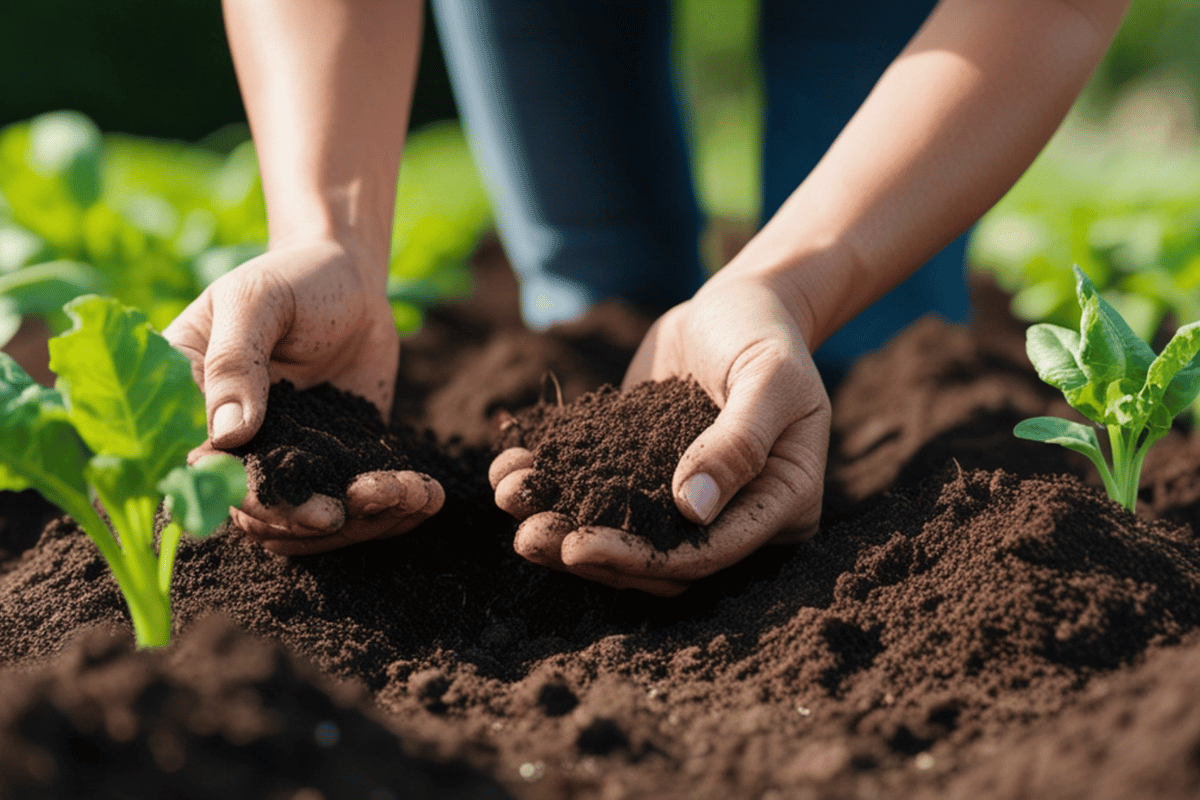
Organic amendments can reduce cadmium uptake by increasing binding sites and improving soil chemistry, but quality and type matter, as some materials can also add cadmium or mobilise it via dissolved organic carbon.
Compost and manure quality matter
A multi-year field study found that animal-waste compost reduced cadmium concentration in spinach by about 34-38% compared with chemical fertiliser. It also highlighted trade-offs, such as phosphorus accumulation with repeated applications of some compost types.
Long-term European field experiments further support that organic management can reduce cadmium in wheat grain and improve Zn/Cd ratios. In one long-term comparison, treatments that included compost had much lower cadmium uptake in grain than mineral-fertilised comparators. This is consistent with reduced crop cadmium concentration when yield is considered.
However, compost and manure can also be sources of cadmium, depending on the feedstock and contamination. A major European technical review on compost quality and contaminants shows why compost standards and testing exist in the first place.
Action steps that keep this strategy safe:
Test compost/manure for cadmium (and other metals) before large-scale use, especially if feedstocks include mixed wastes or biosolids
Monitor soil phosphorus if repeated compost use is part of your cadmium mitigation plan, to avoid long-term nutrient and water-quality problems
Favour stable, mature composts and consistent suppliers, because dissolved organic carbon effects can sometimes increase cadmium mobility, depending on soil conditions
Biochar as a long-term investment
Biochar has among the strongest evidence among organic amendments for immobilising cadmium, especially in acidic or moderately acidic soils, where its liming effect and surface chemistry reduce cadmium availability.
A two-year field experiment reported that applying biochar at 10-40 t/ha reduced rice grain cadmium by roughly 16.8-45% in the first year and 40-62% in the second, while also modestly raising soil pH and reducing extractable cadmium in soil.
A larger meta-analysis spanning many studies found that biochar amendments reduced cadmium concentrations in plant tissues by about 38% on average and reduced bioavailable soil cadmium by about 52% on average.
Field and pot evidence also show biochar can lower grain cadmium by around 30-40% in rice systems, depending on rate and context.
How to make biochar practical on-farm:
- Think in years, not weeks. Biochar is usually not a single-season input. It's closer to a soil upgrade.
- Apply it where it pays: highest-risk zones, high-value crops, or fields with market compliance pressure.
- Use quality standards. Biochar should be tested for heavy metals and other contaminants. Clean feedstock and verified product quality matter.
- Expect soil biology benefits, too. A systematic review across field studies found biochar often increases microbial biomass, supporting long-term soil function even when your main goal is lower cadmium uptake.
Plant nutrition, genetics, water, and monitoring
Competitive uptake with zinc and iron
Cadmium often uses the same root transport routes as essential nutrients, so changes in nutrient status alter cadmium uptake risk.
Field evidence shows zinc management can reduce cadmium in harvested products, but the dose matters:
In a field experiment, a low zinc dosage reduced wheat grain cadmium by about 25-33%, while a higher zinc dosage increased grain cadmium compared with the low-zinc treatment. This shows that there can be a point at which zinc begins to activate cadmium or shifts the balance unfavourably.
Field work in vegetables also shows that combining amendments with zinc fertilisation can further reduce cadmium concentrations in edible tissues. This reinforces the idea that "zinc sufficiency" is often supportive of cadmium control.
Iron status matters too. Mechanistic and physiological work in rice shows that iron deficiency can enhance cadmium uptake and movement because iron transport systems can also transport cadmium under deficiency conditions.
Farmer meaning:
Correct zinc and iron deficiencies because deficiencies can increase cadmium uptake
Avoid "more is better." Over-application can backfire, and micronutrient products themselves must be verified as low in cadmium.
Cultivar and rootstock selection
Genetic differences are real and can be large enough to matter in compliance decisions.
A large wheat screening study reported grain cadmium concentrations among 273 genotypes ranging from 0.01 to 0.14 mg/kg. That's a very wide range under field conditions.
Breeding and selection papers emphasise that cultivar choice can reduce cadmium accumulation without changing soil, but it must be combined with soil management when soil risk is high.
For tree crops, rootstocks can influence scion traits and mineral outcomes, which is why it's reasonable to ask for cadmium-related data when choosing rootstocks in regions with cadmium concerns. Direct cadmium-specific rootstock guidance is still developing for some fruit crops, so local trial evidence is important.
Water management and irrigation quality
Water is both an input pathway and a chemical lever.
Irrigation water quality: The irrigation water guidance lists a recommended maximum cadmium concentration of 0.01 mg/L, noting cadmium's tendency to accumulate in plants and soils.
If your irrigation supply is influenced by mining, industrial discharge, or wastewater reuse, water testing becomes a direct cadmium management strategy, not just an environmental check.
Rice and flooded systems: Timing of flooding and drying matters. A quantitative review found that alternate wetting and drying (AWD) tends to reduce arsenic compared with continuous flooding, but can increase rice grain cadmium, sometimes substantially, depending on severity and timing of drying.
Farmer meaning: if cadmium compliance is your main constraint in rice, continuous flooding or careful avoidance of drying during sensitive growth stages may reduce cadmium risk, but you must consider arsenic trade-offs and follow regional guidance.
Rotation and system design
Rotation cannot "dilute" cadmium out of soil quickly, but it can reduce risk by matching crop type to field zones and by using crops that accumulate less cadmium in the harvested portion.
Evidence from rapeseed-rice rotation work shows that choosing appropriate rotations and varieties can reduce rice grain cadmium by about 15-38% compared with a fallow-conventional rice pattern, while maintaining production goals.
Phytoremediation and phytoextraction (using hyperaccumulating plants to remove cadmium) is real science, but is typically slow and limited by biomass removal rates, making it a longer-term or special-case strategy rather than a standard commercial solution.
Monitoring and adaptive management
The farms that reliably meet cadmium limits treat cadmium like any other quality metric: they measure, adjust, and document.
A straightforward monitoring loop is supported by extension guidance on soil testing consistency and by long-term cadmium studies showing slow trends over time:
Soil testing on a repeat schedule and at consistent timing improves trend interpretation
Testing harvested product (or at least doing periodic tissue and product sampling) provides direct confirmation that your soil strategy is actually lowering cadmium uptake. Long-term experiments show crop cadmium can drift upward over decades if inputs add cadmium, even when soil levels seem low.
Recordkeeping matters: fertiliser sources, cadmium content documentation where available, lime rates, compost sources, and test results. This is also what buyers and auditors often require.
Crop-specific applications
Avocados
A pilot market study confirms that metal concentrations in avocado tissues vary by origin and conditions, supporting the idea that monitoring and input control matter even in perennial fruit supply chains.
A practical orchard cadmium strategy is usually built on:
- Soil pH is kept in the crop-appropriate target zone
- Low-cadmium phosphorus sources, where possible
- Compost or mulch that is tested and consistent
- Periodic leaf and fruit testing to confirm export compliance
The rootstock lever is plausible because rootstocks influence scion traits, but it should be treated as "use local evidence" rather than a guaranteed cadmium fix.
Leafy greens
Leafy vegetables can respond strongly to soil conditions. Evidence shows compost applications can reduce spinach cadmium by about 34-38% in field production. Experimental evidence in lettuce warns against assuming that pushing pH well above neutral always reduces cadmium.
A practical playbook: zone your field (keep highest-cadmium zones out of leafy greens), maintain near-neutral pH where agronomically safe, use clean inputs, and confirm with tissue or product testing.
Grains
Grains often provide the clearest examples of "pH first." In a field study, raising soil pH with limestone substantially reduced grain cadmium levels over multiple seasons. Genetic variation in wheat shows that cultivar choice can shift grain cadmium levels several-fold, even within a single species.
A practical grains strategy: maintain pH first, correct zinc deficiency carefully (avoid over-application), select low-cadmium cultivars where available, and retest grain cadmium after management changes.
Economic prioritization
When budgets are tight, the science strongly supports a triage approach:
Highest return, fastest effect on many farms: soil testing plus pH correction where soils are acidic. Liming has shown multi-season persistence and large reductions in grain cadmium in field conditions.
Essential prevention: avoid adding cadmium through high-cadmium phosphorus sources or contaminated micronutrients. Long-term data show small annual inputs can become a market problem decades later.
Targeted investments: biochar and other amendments can deliver meaningful reductions, but their costs and logistics make them most cost-effective in high-risk zones or for high-value crops.
Low-cost add-ons that stack with the basics: cultivar selection (when data exist), careful zinc and iron deficiency correction, and zoning crops away from higher-risk patches.
Conclusion
Reducing cadmium in crops is a serious challenge, but it's manageable with proven, practical strategies grounded in sustainable nutrient management. The most consistent pathway is:
- Measure and map risk
- Manage soil pH intelligently
- Stop adding cadmium through inputs
- Use soil health amendments carefully and verify quality
- Support with nutrition and genetics
- Monitor outcomes and adapt
You don't need to remove all cadmium from the soil to produce compliant crops. The fastest wins come from reducing the plant-available fraction and blocking uptake pathways. Small inputs compound over decades. Informed management decisions today can protect soil quality and market access for decades to come.
Sources
- Effect of Liming with Various Water Regimes on Both Immobilization of Cadmium and Improvement of Bacterial Communities in Contaminated Paddy: A Field Experiment
- Spatial Distribution of Cadmium in Avocado-Cultivated Soils of Peru: Influence of Parent Material, Exchangeable Cations, and Trace Elements
- Comparing CaCl2, EDTA and DGT methods to predict Cd and Ni accumulation in rice grains from contaminated soils
- Uptake of soil cadmium by three field crops and its prediction by a pH-dependent Freundlich sorption model