
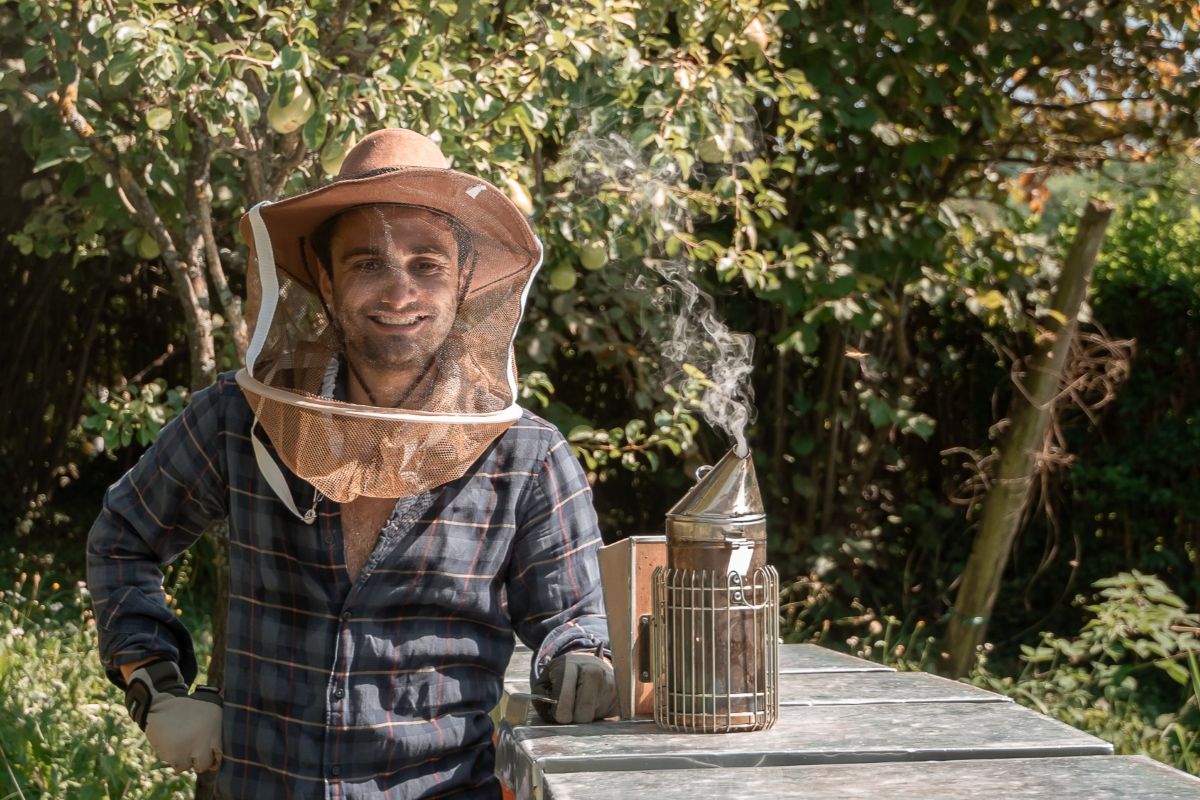
Balancing a remote digital marketing career with 10 hives, Filip Šinko Morandini is reviving a family beekeeping legacy on a hillside in northern Croatia—finding purpose, patience and pride among the bees.
The first time the bees became his was just after dawn one March morning, on a hillside above some vineyards in northern Croatia. His mentor bent down and slid open the entrance of the hive. A cloud of bees poured out into the air. “This is the moment you need to remember,” he told his pupil. “Now they are your bees.”
For Filip Šinko Morandini, a self-employed digital marketer from Varaždin, that moment marked the beginning of a second life—one lived far from screens and search algorithms, measured instead by flowering seasons, swarms and the steady hum of 10 beehives overlooking the hills his family has visited for generations.
Starting a hillside apiary
Šinko Morandini says he does not fit the traditional beekeeping profile. “Normally, you either start when you’re very young and inherit it, or you retire and want to spend more time in nature,” he says. “I’m neither.”
Raised in a city, he developed a connection to the countryside through weekend trips to his family's vineyards, where his father produced small amounts of wine. “Although I’m from a city, we always had this countryside culture,” he explains. “I always liked to do things with my hands.”
He and a friend—both city dwellers—decided to start beekeeping simply out of curiosity and a love of nature. At the time, Šinko Morandini was building his digital marketing career in Zagreb, while his friend was working in finance in New York. When both moved back closer to home, they decided to act.
“We didn’t know where to start—how to set up a hive, where to place it. We were lucky to find a mentor.”
Together, they cleared land above the vineyards, prepared hive stands, and, in 2022, began with six colonies. As the bees grew and swarmed, they split colonies and expanded. Today, Šinko Morandini manages 10 hives across two nearby hilltop properties, both about a 15-minute drive from his home.
Learning the craft: Mentorship and formal training
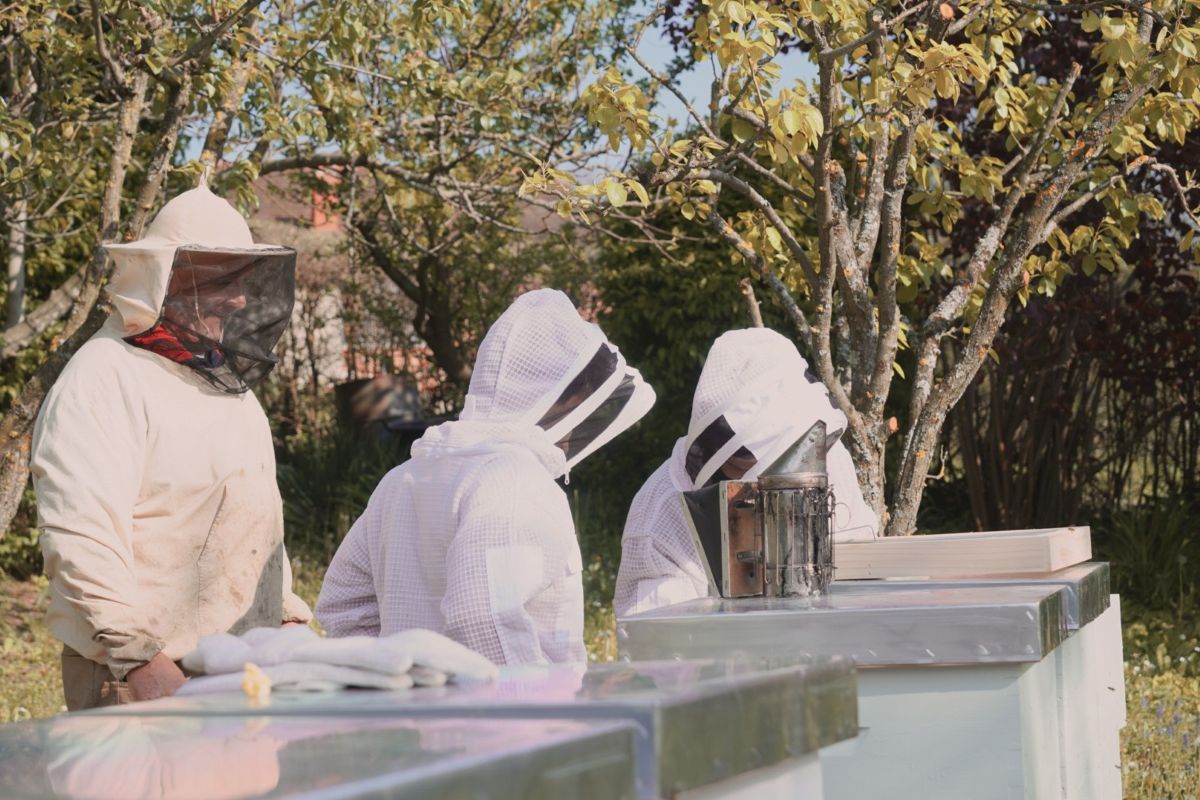
Šinko Morandini's mentor—a retired beekeeper with around 50 hives just across the road—guided him through the essentials.
“The first few years, he’d come and tell us where to place the frames, how to handle colonies, when to expand and how to respond if bees showed signs of disease.”
Within three to four years, Šinko Morandini felt confident managing daily operations independently. To deepen his knowledge, he completed a state-certified program in organic beekeeping led by a veterinarian-beekeeper, focusing on disease prevention and environmentally friendlier treatments.
“Even with certification, theory isn’t enough,” he says. “Experience and instinct matter, especially when a colony shows signs of distress.”
Challenges and real-world constraints
Like many beekeepers, Šinko Morandini faces a difficult balance between organic principles and local realities.
“The rules say that no one within several kilometres can use non-organic practices if you want certification,” he explains. “That’s impossible where I live. It’s a relatively urban area with vineyards and agriculture. People use chemicals.”
Weather adds another layer of uncertainty. In strong seasons, his apiary has produced up to 350 kilograms of honey. In weaker years, barely 100. On average, he harvests between 200 and 250 kilograms annually.
“The challenges will always be there—diseases, weather,” he says. “But with a mentor and education, you won’t face them alone.”
Acacia forests and the taste of Croatian honey
The hills where Šinko Morandini keeps his bees are dominated by acacia forests, providing the main nectar flow and sometimes two harvests in a good year. Early spring brings lighter floral honey from fruit trees and wildflowers, while chestnut trees produce a darker, more intense variety—his personal favourite.
“Honey is definitely underappreciated in gastronomy,” he says. “Different honeys—from different plants and flowers—have completely distinctive smell, texture and taste.”
At home, he uses honey as a natural sweetener, preferring it to refined sugar. Much of his harvest is gifted to family and friends.
But a larger idea is taking shape. Šinko Morandini envisions building a honey brand that combines local best practices with modern digital marketing—helping small-scale Croatian beekeepers compete with cheap imports and supermarket chains “I have a business idea that could combine my digital marketing experience with my passion for beekeeping,” he says.
For now, his goal is modest: 15 hives, the maximum he believes he can responsibly manage alongside his career.
Balancing remote work and beekeeping
Šinko Morandini works as a freelance digital marketer and SEO specialist. “I’m self-employed and work remotely. Beekeeping is one of the reasons I only accept remote jobs.”
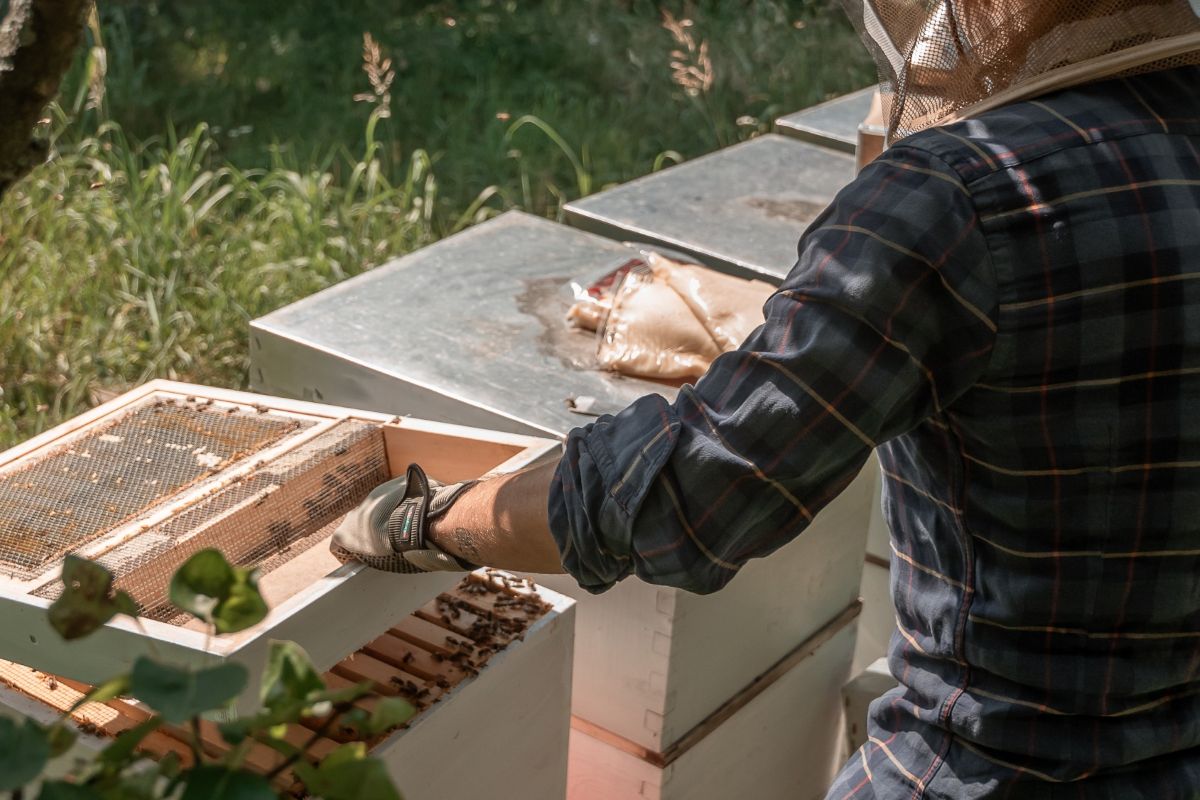
During peak season, he sometimes packs his laptop alongside his smoker and veil. “I take my MacBook to the apiary, work a bit, then check the bees, and continue working later at home.”
The contrast between these two jobs is stark. “Digital is overwhelming—constant algorithm changes, AI, competition. Everything is fast. Beekeeping is my filter. It slows me down.”
Patience, he insists, is essential. “If you come stressed and angry, the bees feel it. You close everything and go home with no joy.”
Stings are part of the learning curve. “Each time I get stung, I think about quitting,” he says, laughing. “But then I remember it’s part of the fun.”
A family legacy rediscovered
Only after he began beekeeping did Šinko Morandini learn that his late great-grandfather, Mario Morandini, had kept bees in the 1970s and ‘80s. “He had fewer hives than I have now,” Šinko Morandini says. “My mother remembers helping him—no suits, just a hat.”
Though he never met Mario, who passed away before Šinko Morandini was born, the connection left a lasting impression. “Two family members, from different generations, keeping bees in the same place—it’s really cool,” he reflects.
Šinko Morandini has also inspired others. A colleague he encouraged to start with three hives now manages more colonies than he does. “Because of me, we have 10 more bee communities in my area,” he says. “That’s something I contributed to nature.”
Through his local beekeeping association, he visits schools to teach children about pollinators and the importance of bee health. “These small things are what make you happy outside your main line of work,” he reflects.
“If you’re not proud of yourself, no one will be”
In the crowded digital marketing industry, Šinko Morandini often feels expendable—one among thousands. Beekeeping, he says, is different.
“Keeping bees is the one thing I’m really proud of about myself. If you’re not proud of yourself, no one will be.”
His advice to aspiring hobby beekeepers is clear:
- Make sure you have the time and flexibility to care for hives consistently.
- Find a mentor and join a local beekeeping association.
- Seek formal education, especially on bee health and disease.
- Accept that you will be stung, that some colonies will be lost, and that some seasons will be poor.
- Above all, be patient—with the bees, the weather and yourself.
If you can accept that, he says, the reward may be more than honey: It may be the joy of opening a hive at dawn and watching your bees pour into the morning air knowing they are yours.