



European Fresh Fruit Market Update: Late August
Week 35 marks Europe's critical seasonal transition in the fresh fruit market. Summer varieties are concluding while early autumn crops begin their harvest. Supply constraints on remaining summer inventory create higher prices, while autumn varieties show promising availability ahead. Market dynamics reflect this seasonal handover, ongoing climate pressures, and evolving supply conditions shaping the weeks ahead.
Stay up-to-date with our weekly fresh fruit market digest
Fruits in Season
Pip Fruit – New Harvest Starting
- Apples: Early varieties are being picked across Europe. Quality is strong thanks to favorable spring conditions.
- Pears: First harvest volumes are entering the market, with overall production expected to be slightly higher this season.
Grapes – Season Opening
- Harvest is underway across several regions and will continue into autumn. Peak volumes expected in the weeks ahead.
Figs – Second Season
- The second fig crop is beginning, following the early summer harvest. Italian figs are widely available, while French black figs are just entering the market. Supply is expected to remain steady through autumn.
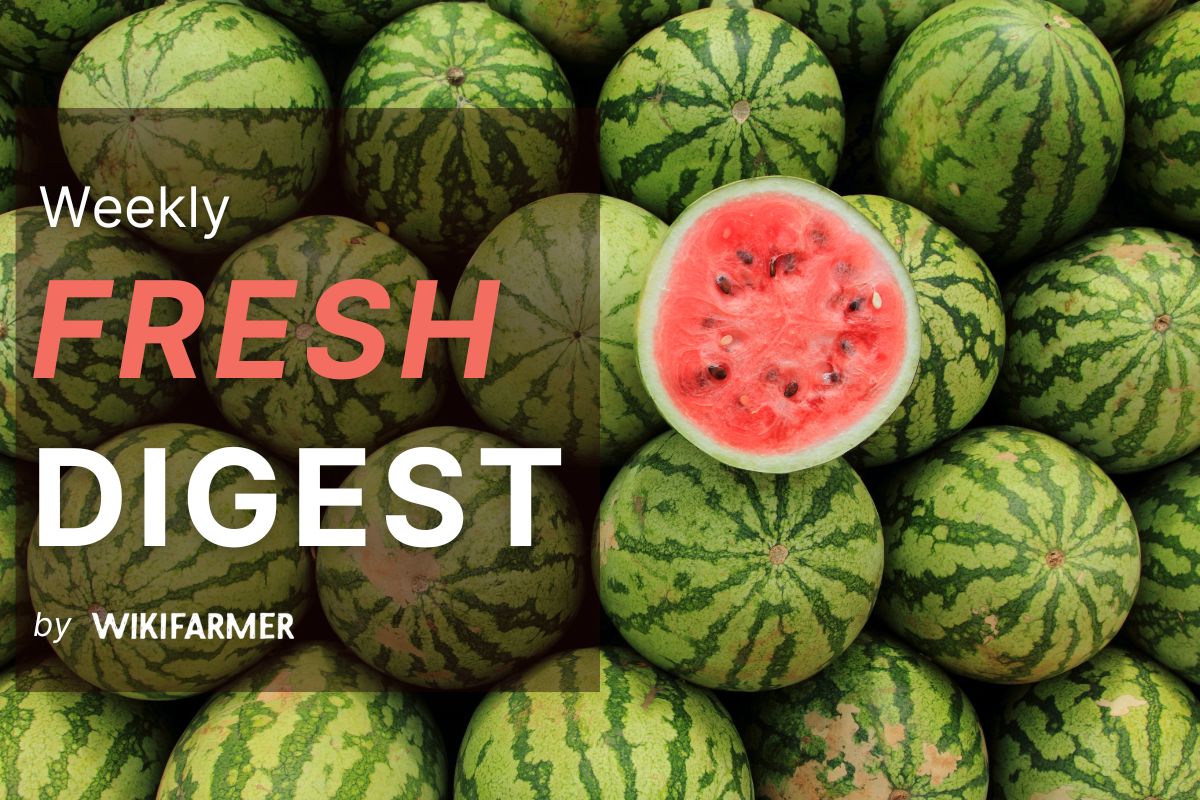
Melons & Watermelons – Peak Availability
- Melons: Galia, Cantaloupe, and Piel de Sapo remain at peak availability, with strong demand.
- Watermelons: Varieties such as Sugar Baby, Jubilee, and Crimson Sweet remain widely available. Quality is supported by summer heat. Season is expected to last into September.
Stone Fruit – Season Concluding
- Peaches & Nectarines: Late varieties are finishing. Volumes are limited, but quality is generally good, keeping prices firm.
- Plums: In season, with English varieties like Victoria and French types such as Reine de Claude and Mirabelle available.
- Apricots: Availability is winding down, with only small volumes from late-producing regions. Quality remains strong.
- Cherries: Main season has now finished. Results varied across Europe, but in many regions quality was excellent.
Berries – Season Ending
- Blackberries: Limited availability, with some production expected into September.
- Raspberries & Strawberries: Still present in small volumes from late-season plantings, though supplies are tightening.
- Blueberries: The season is nearing its end, though late French varieties will continue into early autumn.
Production Challenges & Market Risks
- Southern European drought and heat speed up ripening, cutting yields and storage life. Water restrictions in Spain risk long-term production, especially for berries and stone fruits.
- Labour shortages and high energy costs strain harvest and logistics, squeezing margins.
- Currency swings complicate export pricing, while U.S. tariffs add trade uncertainty.
- Shift to sustainable, organic farming and tighter pesticide rules improve quality but reduce yields.
Wholesale Prices
Spain
 Aug. 25, 2025.jpg)
Based on the Mercamadrid pricing data from August 25, the Spanish fresh fruit market reflects the seasonal transition occurring in late August.
Stone fruit pricing reflects the supply constraints within the concluding season. Peaches remain competitively priced at €1.48-€1.71/kg despite the season nearing its end, while nectarines at €1.73/kg show the firming prices typical of limited late-season availability. Apricots at €2.00/kg reflect the premium pricing for the final supplies of the 2025 season. Plum varieties ranging from €1.66-€3.13/kg show the quality differentiation typical of peak season availability
Berry markets show extreme price volatility characteristic of the post-peak period. Raspberries command €18.00/kg and blackberries €16.00/kg, reflecting very limited availability as the season concludes. In contrast, blueberries at €9.60/kg and strawberries at €5.11/kg suggest continued supply, likely from late-season plantings or protected cultivation. The premium €11.00/kg for cherries indicates exceptional quality for any remaining inventory.
Melon pricing reflects continued peak summer abundance, with Spanish varieties showing excellent value. Piel de Sapo melons at just €0.55/kg and Galia at €0.86/kg demonstrate the strong domestic supply from Murcia and other producing regions, while Cantaloupe at €1.05/kg remains highly accessible. Watermelons at €0.41/kg represent exceptional value during peak season availability.
Early autumn fruits show promising market entry. Apple pricing ranges from €1.70-€1.80/kg for Granny Smith and Golden varieties, indicating a stable supply as the harvest season begins. Pears show variety-based pricing with Conference at €2.10/kg and White pears at €1.60/kg, reflecting the early season premium.
The grape market displays €1.77-€2.54/kg pricing across varieties, consistent with the beginning of the harvest period. Figs at €3.08-€3.28/kg demonstrate the premium positioning of this seasonal specialty as the second crop arrives.
Italy
 Aug. 21, 2025.jpg)
Based on the Bologna Chamber of Commerce wholesale pricing data from August 21, the Italian fresh fruit market demonstrates the regional dynamics of Europe's seasonal transition in late August.
Stone fruit pricing reflects the final phase of the season. Apricots command €1.30-€1.40/kg for premium Farbaly 40+ varieties, indicating strong demand for high-quality late-season fruit as production concludes. Nectarine varieties show uniform pricing at €0.90-€1.00/kg across varieties, suggesting a stable supply from orchards during the season's final weeks. Peaches maintain competitive pricing at €0.95-€1.05/kg, reflecting consistent quality as the harvest ends.
Plums show competitive pricing, typical of peak season availability. Stanley 35+ plums at €0.55-€0.65/kg and Grossa di Felisio at €0.50-€0.60/kg show Italy's strong position in European plum production during late summer, with narrow price ranges indicating stable supply.
Pear pricing reveals early autumn season dynamics with premium positioning for quality fruit. Conference varieties are at €0.95-€1.05/kg, Kaiser at €1.05-€1.25/kg, and Abate commands the highest prices at €1.45-€1.60/kg. The price progression reflects both variety characteristics and early-season positioning.
Apple markets reflect the new season, with Gala Group varieties at €0.65-€0.75/kg. This competitive pricing reflects fresh supply entering the market as the 2025 harvest season commences.
Melon and watermelon pricing demonstrates peak summer abundance with size-based pricing differentiation. Watermelons range from €0.30-€0.80/kg depending on variety and size, reflecting consumer preference for medium-large fruit during the peak consumption period. Melons maintain premium steady pricing at €1.25-€1.40/kg for smooth and netted types, demonstrating the added value of Italian specialty production.
Greece
 - Aug. 26, 2025.jpg)
Based on the Athens Central Market wholesale pricing data from August 26, Greek fruit markets reflect late-summer supply and the start of early autumn harvests.
Stone fruit pricing shows significant quality stratification. Peaches show grade differentiation with Grade I commanding €1.00-€2.50/kg versus Grade II at €0.80-€1.00/kg, while premium white flesh varieties reach €1.30-€2.80/kg, indicating strong consumer preference for quality fruit. Nectarines follow similar patterns with Grade I at €1.30-€2.50/kg and Grade II at €0.80-€1.00/kg. Vanilla plums at €1.00-€2.50/kg demonstrate the wide quality range typical of peak season availability.
Early autumn fruits are entering the market. Pears show variety-based pricing with Crystal type commanding €1.20-€2.00/kg and Santa Maria at €1.00-€1.80/kg. Apple pricing remains competitive with both Granny Smith and Starking Delicious varieties at €1.00-€2.00/kg, indicating stable supply as the harvest begins to supplement stored inventory.
Peak summer melons and watermelons offer excellent value. Watermelons at exceptionally low €0.23-€0.27/kg reflect domestic production strength during peak season. Melon pricing shows differentiation with premium Galia varieties at €0.40-€0.70/kg, while Loutraki melons display grade stratification from €0.50-€0.60/kg for Grade II to €0.80-€1.20/kg for Grade I.
Grape harvests are underway, with Muscat varieties at €1.40-€1.80/kg and Sultana at €1.00-€1.80/kg, reflecting Greece's position as a major producer with a strong domestic supply entering the market.
Seasonal specialty positioning is reflected in fig pricing at €2.50-€3.50/kg, showing the premium consumers pay for this delicacy. The wide price range reflects quality variations and different supply sources.
France
 Aug. 25, 2025.jpg)
Based on the FranceAgriMer Rungis wholesale prices from August 25, the French market shows late-summer varieties finishing strong and early autumn fruits entering steadily.
Strawberries remain at premium levels at €7.60/kg, reflecting limited late-season supply. Grape harvests are underway, with prices varying by quality and origin. Chasselas AOP Moissac (€8.00/kg) and Muscat Hamburg (€4.20/kg) command premiums as harvests ramp up, while Italian grapes at €3.60/kg offer more value.
Stone fruits are still available. Apricots at €2.60/kg indicate stable volumes. Peaches show clear origin and type premiums: white-flesh Spanish fruit at €1.80/kg and French white-flesh at €2.90/kg reflect domestic quality advantages, while yellow-flesh peaches trade at €1.80–€3.00/kg, showing abundant Spanish supply and France's finishing season. Domestic plums command strong prices with strong demand as harvest ends: Yellow Mirabelle at €3.50/kg, Reine-Claude de Bavay at €3.00/kg, and Reine-Claude Golden at €4.00/kg.
Early autumn fruits are establishing market presence. Gala apples and Golden Delicious start at €2.00/kg, marking a stable entry for the new season.
Germany
 Aug. 27, 2025.jpg)
Based on BMEL's wholesale prices from August 27, the German fruit market reflects the tail end of summer production alongside the first wave of early autumn harvests.
Summer stone fruits are winding down, driving up prices for late-season specialties. Apricots from €2.91–3.73/kg remain available. Nectarine pricing spans €2.46–3.07/kg for top Italian yellow-flesh grades down to €2.07–3.19/kg for Spanish first grades, while white-flesh nectarines from France peak at €4.00–4.43/kg versus €2.84–3.21/kg for Spanish AA-A fruit. Peaches show wide variation: yellow-flesh from France, Italy, and Spain ranges €2.10–4.39/kg, while white-flesh AA-B types from France and Spain trade at €2.75–4.38/kg. Plums from Italy and Spain at €2.60–2.73/kg reflect steady volume, whereas domestic German prune plums are lower at €1.06–1.37/kg as growers clear remaining stocks.
Italian Gala apples trade at €1.42–2.00/kg, while German Elstar and Jonagold sit at €1.77–1.80 and €1.34–1.58/kg respectively, as domestic orchards wrap up their early varieties. Italian Abate Fetel pears remain strong at €2.74–3.10/kg, and Carmen pears at €2.34–2.67/kg, while Germany's Clapps Liebling fetches €1.54–1.70/kg as supply narrows.
Table grapes reflect harvest momentum. Italian Crimson Seedless commands €3.25/kg, German blue varieties around €3.00/kg, and Italian Victoria at €2.55/kg amid plentiful imports from southern Europe. Berry supplies tighten, with mixed-origin strawberries at €5.98–6.98/kg, signaling limited late summer plantings.
Market Outlook
- Summer stone fruits will tighten through early September, keeping peach and nectarine prices elevated.
- Berry shortages will persist until late-September plantings.
- Melon and watermelon supplies will peak in early September, offering stable volumes.
- Table grape availability will remain strong, ensuring consistent offerings.
- Early apples and pears will ramp up in September; expect modest price declines as volumes increase.
- Figs and late plums will retain niche premiums into October; limited supply supports ongoing margin opportunities.
Conclusion
European fruit markets are shifting from late-summer scarcity in stone fruits and berries to abundant melon and grape supplies, with early-autumn apples and pears steadily entering at competitive prices. Consumers and retailers may prepare for sustained premiums on concluding summer varieties and leverage stable fall harvests for reliable stock.
Disclaimer: The information provided on this website, including market prices, insights, and projections, is for general informational purposes only. While we strive to ensure accuracy and timeliness, we make no guarantees regarding the completeness, reliability, or suitability of the information presented. Users are solely responsible for independently verifying the data and assessing its relevance to their specific circumstances before making any decisions. Wikifarmer and its operators shall not be held liable for any losses, damages, or consequences arising from the use of the information provided herein.
Sources
European Commission Agri-Food Data Portal: EU Agri-food Data Portal
European Commission Agriculture and Rural Development: EU Agriculture
European Commission Fruit & Vegetables Market Observatory: Fruit and Vegetables en – European Union
MercaMadrid: https://www.mercamadrid.es/estadisticas/
Bologna Chamber of Commerce: Bologna Chamber of Commerce
Central Market of Athens: Okaa
Rungis International Market: Réseau des Nouvelles des Marchés — FranceAgriMer
German Federal Office for Agriculture and Food: BMEL Agricultural Statistics (Germany)