


European Fresh Fruit Market Update
Market Overview
The European fresh fruit market peaked in week 30, with abundant seasonal supply, competitive prices, region-specific shortages, and ongoing weather-related challenges. High volumes of melons, watermelons, and mid-season stone fruits dominated wholesale channels. At the same time, the availability of berries and cherries was limited, especially in Central and Eastern Europe affected by spring frosts. July heatwaves and patchy spring rains influenced yields, fruit quality, and harvest schedules. Wholesale prices for premium-grade fruits remained high, whereas lower-grade and weather-hit produce saw softening prices amid ample supply.
This overview is based on official sources, including government and city market bulletins, agricultural ministries, and EU observatories.
Fruits in Season
Stone Fruits
- Peaches & Nectarines: Spain and Italy supplied strong harvests, anchoring the market. Top-quality French fruit achieved clear price premiums, especially in Germany, while oversupply pressured prices for standard grades. Demand for premium lots kept their prices stable.
- Apricots: Large, steady volumes from Spain and Italy were met with uneven demand due to variable quality. French apricots continued to command notable premiums.
- Cherries: Germany and Italy reported strong harvests that lowered prices. However, in some regions, frosts reduced yields and kept cherry prices high, exceeding €9/kg in some wholesale markets.
Berries
- Strawberries: Local premiums remained scarce and highly sought-after. Imports from Poland, Belgium, and the Netherlands supported the market, driving up prices as consumer demand stayed strong.
- Blueberries, Blackberries, and Raspberries: Supplies from Belgium, Germany, the Netherlands, and Poland remained high. Demand remains high as well as prices.
Melons and Watermelons
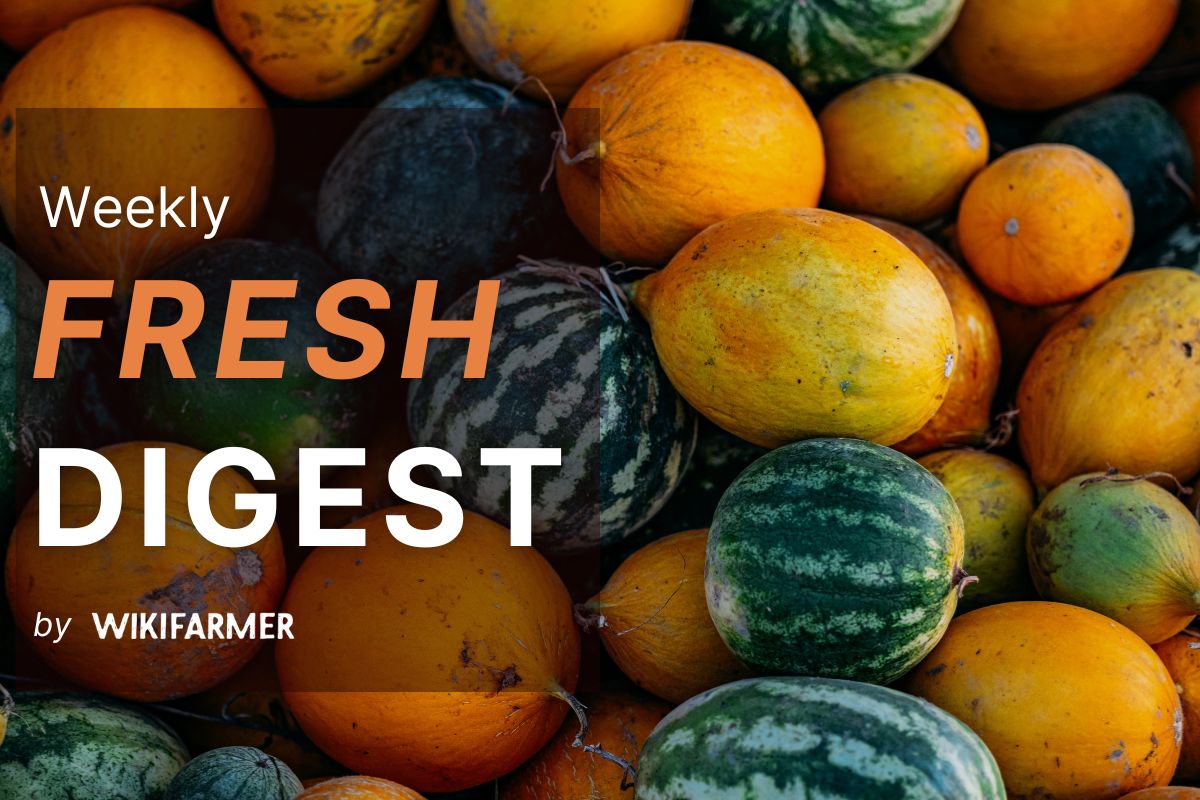
- Melons and Watermelons: Peak harvest continues in Spain and Italy. As supply surpasses demand, prices have eased slightly, particularly for standard grades.
Learn more about global melon production and pricing
Production Challenges & Market Risks
Weather Volatility
- Summer heatwaves across Southern Europe (Spain, Portugal, Italy) accelerated fruit ripening and increased sugar content, especially in melons and late stone fruits, but also caused sunburn, notably in thin-skinned apricots. This resulted in compressed harvest windows, some loss in fruit quality, and sharp daily surges in market volumes that pressured mid-grade prices, especially in Spain.
- Spring frost damage continues to impact production in parts of Central and Eastern Europe. These frosts sharply reduced cherry and plum yields, resulting in persistently high prices for cherries above €9/kg in several markets.
Labour & Input Costs
- Seasonal labor shortages persist across the European Union, forcing growers to rely on more expensive temporary workers.
- Input costs for energy, packaging, and machinery continued to pressure producer margins and planning, despite stable production volumes.
Wholesale Market Prices (Week 29)
Greece
The Athens Central Market reported overall price stability for Week 29, with most seasonal fruits holding close to previous weeks' levels. Cherries at €2.00-6.00 and Diamantopoulou apricots at 3.00-4.00 stood out with premium pricing, driven by peak-season quality and strong demand. In contrast, watermelons experienced price declines to 0.30-0.40 due to abundant supply, offering consumers value while putting pressure on producers. Galia melon prices rose slightly to 0.50-0.90, likely reflecting firm demand and tighter availability. Peaches and nectarines maintained steady prices at or above seasonal averages, supported by consistent consumer interest. With the season ending and volumes declining for early varieties like Bebekou apricots, prices held firm or rose slightly.
 (6).jpg)
France
At the Rungis Market, Week 29 marked the peak of the summer fruit season, accompanied by active intra-European trade. Belgian strawberries led the premium end of the market, trading at €7.60–8.00/kg, showing sustained demand for high-quality berries despite a tapering domestic supply. Apricot prices varied widely, with Spanish imports selling at a low €1.20–1.40/kg, while locally grown French orange apricots reached €2.50–2.80/kg, highlighting the premium on regional produce and quality. Domestic cherries were moderately priced at €4.00/kg, showing balanced supply and midsummer demand. Peaches showed clear price differentiation by origin, with Spanish white and yellow varieties at €2.00–2.30/kg, and French equivalents commanding up to €3.00/kg.
 (5).jpg)
Germany
The German wholesale fruit market in Week 29, as reported by the Federal Office for Agriculture and Food (BLE), showed abundant domestic harvests supplemented by steady imports. High-quality cherries from Germany and Poland reached nearly €8.00/kg, while French nectarines peaked at €5.13/kg. Rain-affected strawberries saw price declines, showing quality shifts. Meanwhile, plums and peaches enjoyed steady demand, supported by arrivals from Italy and France.
 (1).jpg)
Italy
In Italy's Bologna wholesale market, Week 29 data showed price stability across the board for key summer fruits. Apricots held firm at €1.40–1.55/kg and nectarines remained in the €1.05–1.15/kg range, indicating ample availability and mild price pressure. Yellow-flesh peaches continued at €1.10–1.20/kg, with solid demand. Prices for Black Group plums remained consistent at €0.95–1.15/kg. As peak volumes hit the market, watermelons experienced a slight price drop, ranging between €0.35 and €0.85/kg. Melon prices, on the other hand, stayed steady between €1.35 and €1.50/kg, reflecting ongoing consumer demand and balanced trade.
 (3).jpg)
Spain
Spain's MercaMadrid market for Week 29 showed strong seasonal supply and consumer demand shaping price trends. Stone fruits dominated in volume, with prices mostly between €1.80 and €2.70/kg. Yellow peaches commanded a premium at €4.70/kg, showing demand for high-quality fruit. Berries continued to fetch high prices: strawberries priced around €4.88/kg, blueberries at €8.00/kg, raspberries at €12.60/kg, and blackberries at €11.50/kg. Meanwhile, watermelons and melons faced pressure from seasonal oversupply. Seedless watermelons dropped to €0.63/kg, while melons were priced competitively at €1.14–1.42/kg to help move high volumes.
 (2).jpg)
Market Outlook
- Supply: High stone fruit volumes are expected to continue into early August. As early varieties (Bebekou apricots, cherries) wind down, select categories may face tighter supplies and upward price pressure.
- Prices: Melon and watermelon prices, especially from Spain and Italy, will likely remain under pressure unless unusually hot weather or a surge in exports lifts demand.
- Demand & Quality: Overall demand should remain stable, with consumers favouring sweet, high-quality varieties and local produce. Premium grades will continue to attract price premiums, while lower-grade and weather-affected fruit may see discounts.
Conclusion
Week 30 shows a strong European fresh fruit market, balancing abundant summer crops with regional weather challenges. High volumes of melons, watermelons, and mid-season stone fruits see steady demand and stable prices for premium quality fruit, while cherries and apricots are becoming scarcer, leading to price adjustments. Weather extremes are shaping supply and quality, especially in mid-tier fruit. Retail and foodservice demand remains steady, particularly for high-sugar fruits. As the peak season continues, the market remains active and competitive.
Disclaimer: The information provided on this website, including market prices, insights, and projections, is for general informational purposes only. While we strive to ensure accuracy and timeliness, we make no guarantees regarding the completeness, reliability, or suitability of the information presented. Users are solely responsible for independently verifying the data and assessing its relevance to their specific circumstances before making any decisions. Wikifarmer and its operators shall not be held liable for any losses, damages, or consequences arising from the use of the information provided herein.
Sources
EU Agri-Food Data Portal: EU Agri-food Data Portal
EU Fruit & Vegetables Observatory: EU Agriculture
Central Market of Athens Statistika Deltia Timon – Okaa
MercaMadrid: https://www.mercamadrid.es/estadisticas/
Rungis International Market: Note de conjoncture hebdomadaire Rungis marchés de gros
German Federal Office for Agriculture and Food: BMEL Agricultural Statistics (Germany)
Bologna Chamber of Commerce: Bologna Chamber of Commerce
EU Agriculture and Rural Development: Fruit and Vegetables en – European Union
EU Fruit and Vegetables Market Observatory: Fruit and Vegetables en – European Union