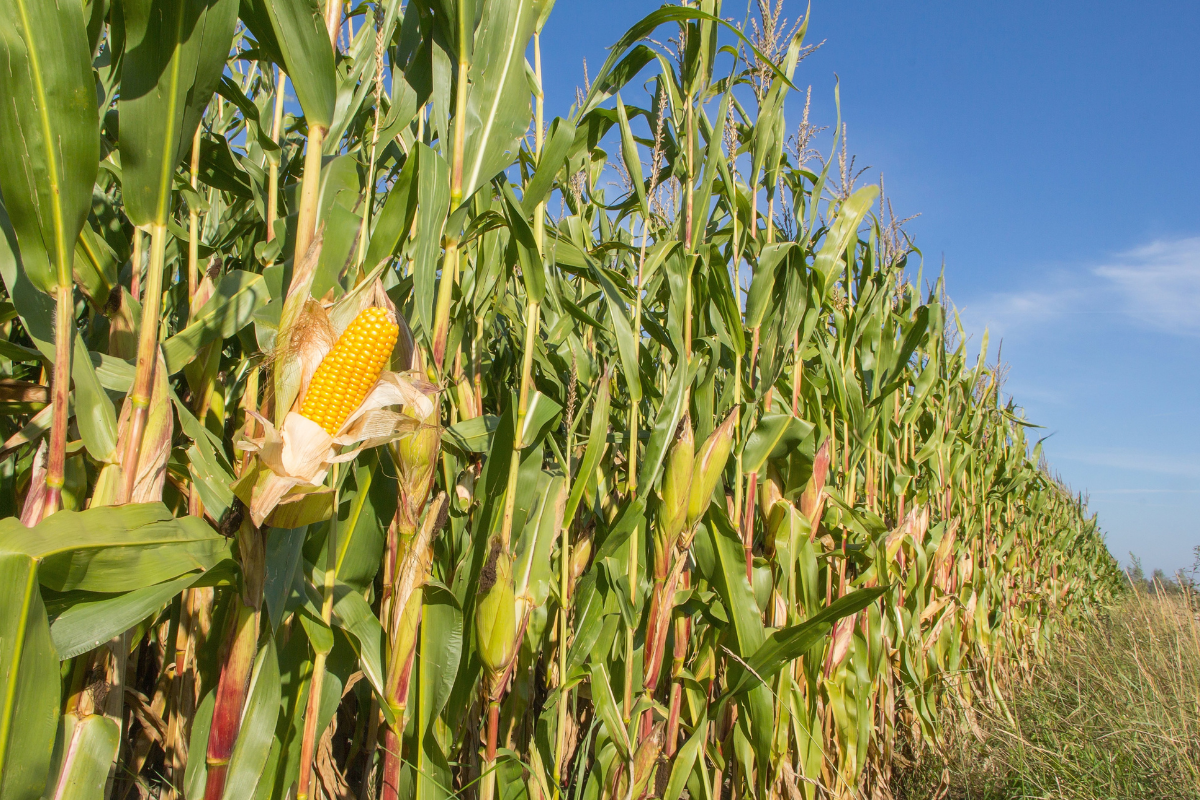
French grain maize production is heading for its lowest level since 1980. Agreste, the statistics service of the French agriculture ministry, put the 2026 harvest at 7.9 million tonnes in its September estimate, down 42% on the year, and FranceAgriMer now expects the collection to reach only 6.9 million tonnes, 41% below last season. The shortfall is now travelling through the rest of the French grain market, because the animal feed industry is replacing the maize it cannot get with wheat.
Feed manufacturers' organisations estimate that between 30% and 40% of the maize originally destined for feed could be replaced by wheat or other small-grain cereals. That substitution has already changed the national wheat balance. FranceAgriMer raised its forecast for soft wheat used in animal feed by 200,000 tonnes to 5.2 million tonnes on 16 September, and total domestic wheat consumption to 15 million tonnes, the highest since 2019/20.
Two cuts on the same crop
The maize loss came from two directions. The planted area fell by about 20% before the season began, to around 1.31 million hectares including seed maize, a reduction Agreste linked to the surge in fertiliser prices and a shift toward winter crops. Then the summer cut the yield. By 27 July only 34% of French grain maize was rated in good or very good condition, the lowest share since FranceAgriMer's Céré'Obs crop condition reports began in 2011, against a five-year average of 76% at the same date.
The yield figures show where the damage fell. Irrigated fields are expected to average 98.6 quintals per hectare against 112 last year, a fall of about 12%. Non-irrigated fields drop from 77 to 54.9 quintals per hectare, a fall of close to 29% on the year. Irrigation covers only about a quarter of the French maize area, which is why the national average fell so far, and why the contrast with countries where maize is almost entirely irrigated has been so sharp this season, as Greek maize finishing above its five-year average while French yields hit a record low showed.
Some of the crop never reached the grain market at all. Agreste notes that around 120,000 hectares of poor non-irrigated maize were harvested for silage instead, a switch encouraged by the lack of fodder in livestock regions, the same shortage recorded when drought left European livestock farms short of winter fodder.
What remains in store
FranceAgriMer's first maize balance for 2026/27 cuts domestic consumption by 710,000 tonnes compared with the previous season's 5.6 million, and expects a sharp fall in exports to other EU countries. Even with those cuts, the ending stock is forecast to fall by 510,000 tonnes on the year to about 1.5 million tonnes. The French market is being balanced by using less maize and sending less of it abroad, rather than by drawing on reserves.
Forecasts have also diverged by more than a million tonnes. Argus Media puts the French maize crop at 6.5 million tonnes against Agreste's 7.9 million, and FranceAgriMer's collection figure of 6.9 million sits between them. The spread reflects how much of the crop has been diverted to silage and how uncertain final yields remain, and it will narrow only as harvest data come in.
Wheat pays for the maize gap
Using more wheat in French feed rations leaves less of it to export. FranceAgriMer cut its forecast for French soft wheat exports from 14.5 million tonnes in July to 13.5 million tonnes, with 700,000 tonnes less going to third countries and 300,000 tonnes less to other EU member states. Total soft wheat availability for the season was revised down to 31.9 million tonnes from 33.2 million, and the ending stock of wheat was cut by 650,000 tonnes to 3 million.
FranceAgriMer warns that the second half of the marketing year may bring competitiveness problems for French wheat against Romanian, Bulgarian and Ukrainian origins. That links the French maize failure directly to the shift in grain flows towards south-east Europe recorded when the Black Sea region covered the grain gap left by western Europe. Maize delivered to Bordeaux traded at EUR 262.50 per tonne on 17 September for October to December shipment.
A chain that started with fertiliser
The sequence behind the French numbers runs across several markets at once. Fertiliser prices high enough to push growers out of maize reduced the area before sowing. A summer that cut non-irrigated yields by almost a third reduced what the remaining area produced. A fodder shortage diverted part of what survived into silage. The feed industry then filled the gap with wheat, which cut French wheat exports and opened space for Black Sea and Balkan origins in markets France would normally supply.
Each step is visible separately in the data. Together they show how a single crop failure in the EU's largest maize producer moves from the field into feed rations, trade flows and the competitive position of an entire grain export sector within a single season.
Sources
- Agreste. (2026). Estimations précoces de productions, grandes cultures, 1er août 2026. Ministère de l'Agriculture.
- La France Agricole. (2026). La production française de maïs grain chute de 42 % sur un an. September 2026.
- Terre-net. (2026). FranceAgriMer annonce un bilan maïs très tendu. 16 September 2026.
- Réussir La Dépêche. (2026). Marché des céréales du 16 septembre 2026. 17 September 2026.
- La France Agricole. (2026). La production de maïs chuterait de près de 30 %, au plus bas depuis 26 ans. 1 July 2026.