EU Parliament Approves New Tariffs on Russian and Belarusian Agricultural Goods: Critical Implications for European Farmers
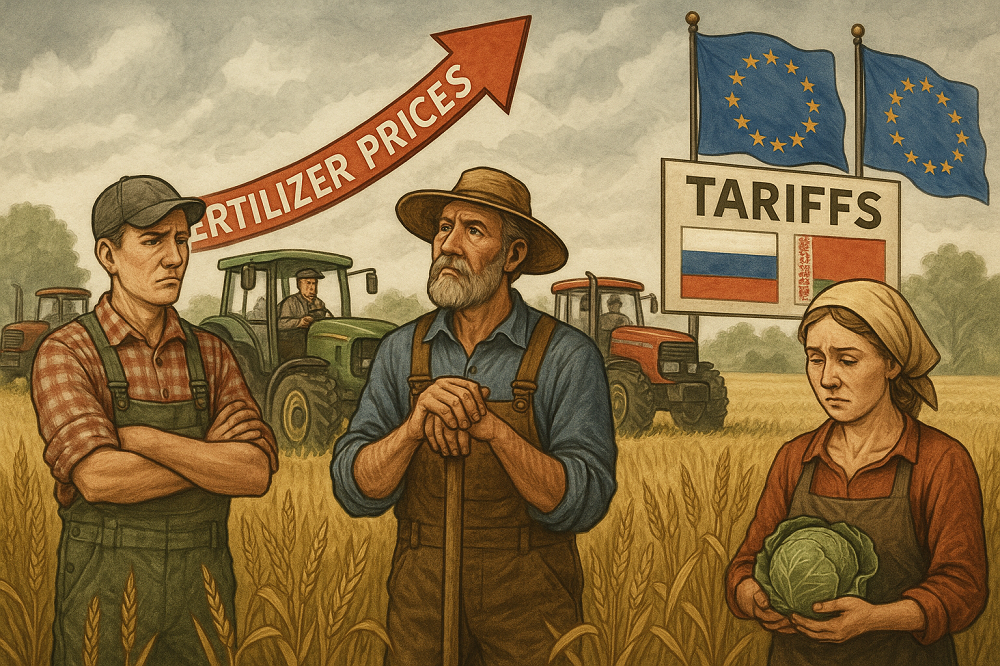
The European Parliament's decisive vote on May 22, 2025, to impose steep tariffs on Russian and Belarusian agricultural products and fertilizers marks a watershed moment for European agriculture. This landmark decision, passed with 411 votes in favor and 100 against, will fundamentally reshape the EU's agricultural supply chains and significantly impact farming costs across the continent. For European farmers already grappling with rising input costs and market volatility, these new measures present both challenges and opportunities that will redefine agricultural economics in the coming seasons.
Background and Parliamentary Decision
The European Parliament's endorsement of the Commission's proposal represents a strategic shift in EU agricultural policy, targeting the bloc's continued dependency on Russian and Belarusian imports despite ongoing geopolitical tensions. The legislation specifically addresses agricultural products that had previously escaped enhanced customs duties, covering approximately 15% of agricultural imports from Russia that remained untaxed as of 2023. This comprehensive approach underscores the EU's commitment to reducing economic ties with these countries while addressing concerns about indirect funding of military activities through agricultural trade.
Standing rapporteur Inese Vaidere emphasized the urgency of this action, stating that "it is not acceptable that three years after Russia launched its full-scale war, the EU is still buying critical products in large volumes". The decision reflects growing pressure from member states and industry leaders who have advocated for swift action to bolster the EU's strategic independence in agricultural inputs.
Understanding the New Tariff Structure
The approved legislation implements a dual-tier approach targeting both agricultural products and fertilizers with escalating tariff schedules. For agricultural commodities including sugar, vinegar, flour, and animal feed, the regulation imposes an immediate 50% increase in existing tariffs. These products, representing significant trade volumes between the EU and the targeted countries, will face substantially higher import costs effective immediately upon implementation.
The fertilizer tariff structure follows a more gradual but ultimately more severe trajectory. Beginning with a 6.5% tariff on nitrogen-based fertilizers, the legislation establishes additional duties ranging from €40 to €45 per tonne for the 2025-2026 period. However, the most significant impact will emerge as these tariffs escalate dramatically to €430 per tonne by 2028, effectively rendering Russian and Belarusian fertilizers commercially unviable. This phased approach aims to provide farmers with adjustment time while ensuring eventual market elimination of these imports.
Impact on EU Farmers and Agricultural Sector
European farmers face immediate and long-term consequences from these tariff implementations, with fertilizer costs representing the most significant concern for agricultural operations. Russia currently supplies approximately 25% of the EU's nitrogen-based fertilizers, representing an estimated €1.3 billion in annual trade. The elimination of these competitively priced inputs will force farmers to seek alternative suppliers, inevitably at higher costs.
Copa-Cogeca, the EU's primary farming organization, has expressed substantial concerns about the policy's impact on agricultural competitiveness. Dominique Dejonckheere, representing the organization, emphasized that Russian fertilizers have remained "the most competitive in terms of price" due to well-established logistics networks. This competitive advantage has allowed many farmers to maintain manageable input costs, particularly crucial during periods of volatile commodity prices.
The timing of these measures coincides with an already challenging period for European agriculture. Current fertilizer markets show significant stress, with urea prices climbing to approximately €450 per tonne delivered on farm, representing a £40 per tonne increase in recent months. Additional pressure from the new tariffs threatens to exacerbate these cost increases, potentially pushing many farming operations toward financial difficulties.
Fertilizer Price Implications for Next Season
The 2025-2026 growing season presents unprecedented challenges for European farmers regarding fertilizer procurement and budgeting. Market analysts predict sustained upward pressure on fertilizer prices, with RaboResearch indicating that farmers' purchasing power is decreasing as commodity prices have not increased correspondingly. The fertilizer affordability index suggests a transition from relative affordability to a period where fertilizers become increasingly unaffordable for many operations.
Current market conditions already demonstrate significant volatility, with urea reaching €525 per tonne in some European markets, while other nitrogen-based products follow similar upward trends. The implementation of Russian tariffs will compound these increases, as European farmers lose access to what has historically been their most cost-effective fertilizer source. Belgian farmer Amaury Poncelet highlighted the severity of the situation, noting that "some colleagues are already in the red" and expressing concern that farmers will "bear the brunt" of these policy changes.
The European Commission has acknowledged these concerns by tasking itself with monitoring price increases and potential damage to the internal market and agricultural sector. However, the effectiveness of these monitoring provisions in providing practical relief to farmers facing immediate cost pressures remains uncertain.
Industry Response and Farmer Concerns
The European fertilizer industry has welcomed the Parliamentary decision, viewing it as essential for bolstering domestic production capabilities that have struggled against cheap Russian imports. Fertilizers Europe, representing the industry, praised the move for addressing market distortions and undermining what they characterized as unfair competition. Norwegian fertilizer giant Yara, through spokesperson Tiffanie Stephani, emphasized that "time is running out" for addressing Russian market dominance while acknowledging that farmers' concerns are "more than legitimate".
However, farming organizations across Europe have expressed alarm about the potential consequences. Copa-Cogeca warned that the measures could be "potentially devastating" and insisted that "European farmers must not become collateral damage" in geopolitical maneuvering. The organization's concerns reflect broader anxiety within the agricultural community about bearing the economic costs of political decisions beyond their control.
Individual farmers have voiced practical concerns about operational viability under these new cost structures. The combination of rising fertilizer costs, stagnant commodity prices, and existing financial pressures creates a challenging environment for maintaining profitable farming operations. Many farmers worry that without adequate support measures, the policy could force significant numbers of agricultural businesses into financial distress.
Looking Ahead: Adaptation Strategies and Market Dynamics
The regulation includes provisions for the Commission to reduce customs duties on fertilizers from alternative suppliers, including North Africa, Central Asia, the United States, Trinidad and Tobago, and Nigeria. This approach aims to mitigate price increases by facilitating access to non-Russian sources, though the effectiveness of this strategy depends on global supply chain capacity and logistics arrangements.
Farmers must begin developing adaptation strategies that account for permanently higher fertilizer costs. This may include exploring precision agriculture techniques to optimize fertilizer application, investigating alternative nutrient sources, or adjusting crop selection based on input cost considerations. The transition period before 2028 provides an opportunity for these adjustments, though immediate price pressures require urgent attention.
Conclusion
The European Parliament's approval of tariffs on Russian and Belarusian agricultural goods represents a fundamental shift in EU agricultural policy with far-reaching implications for European farmers. While the measures aim to achieve important geopolitical objectives and support domestic fertilizer production, they inevitably transfer significant costs to agricultural producers. The success of this policy will depend largely on the EU's ability to facilitate access to alternative fertilizer sources while providing adequate support for farmers navigating this transition. As implementation begins, close monitoring of market developments and farmer welfare will be essential to ensure that agricultural competitiveness and food security are not compromised in pursuit of broader strategic objectives.
References used:
Meps Back New Tariffs on Russian and Belarusian Agricultural Goods – Pubaffairsbruxelles
Meps Back New Tariffs on Russian and Belarusian Agricultural Goods – European Union
Parliament Approves New Tariffs on Russian and Belarussian Agricultural Goods – European Union
The Eu Moves to Impose New Tariffs on Russian Belarusian Agri Imports – Occrp
Eu Backs Tariffs on Fertiliser Imports from Russia Belarus – Aljazeera
https://www.euronews.com/my-europe/2025/05/22/european-parliament-backs-steep-tariff-on-russian-and-belarusian-fertilisershttps://www.euronews.com/my-europe/2025/05/22/european-parliament-backs-steep-tariff-on-russian-and-belarusian-fertilisers
Eu Lawmakers Approve Tariffs on Russian Fertilizer Imports – Themoscowtimes
Semi-Annual Global Fertilizer Outlook
European Parliament parliamentary question E-000793/2025
Further reading
Tariff Tensions & Liquid Gold: The Olive Oil Trade Under Fire
Tariffs Explained: A Consumer Breakdown of Rising Food Prices in 2025
Europe's Food Security in the Face of US-EU Trade Tensions: Challenges and Opportunities
Trump’s Tariffs on Food Trade: How Farmers, Traders & Consumers Will Be Affected
What Farmers Are Searching For: 2025 Agrifood Sector Trends Shaping Global Agriculture