
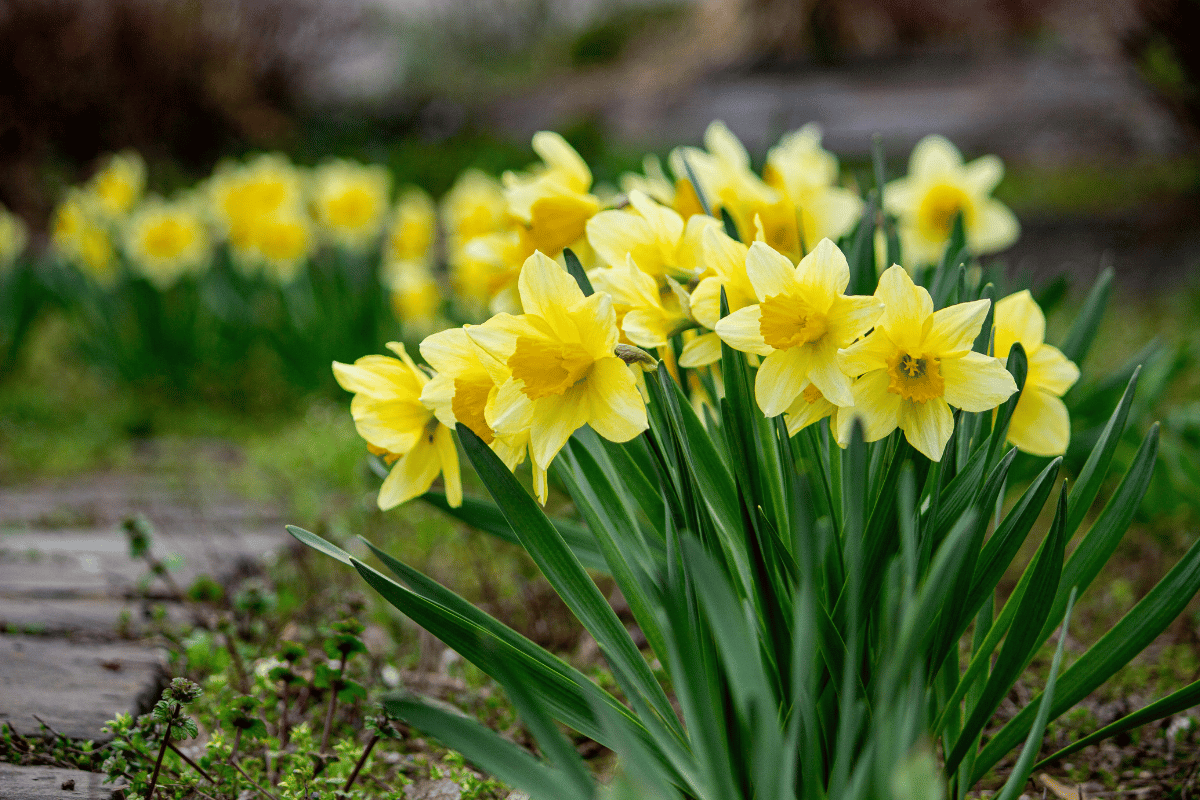
Daffodils are planted from September to December and flower from late winter through spring, in white, yellow and orange, often with a strong sweet scent. They are the most reliable of all the autumn bulbs, because unlike tulips they are genuinely perennial. The bulbs stay in the ground, sit out the summer dormant and return every year in ever-thicker clumps, a habit gardeners call naturalising. This guide covers the types of daffodil, when and how to plant the bulbs, care in the garden and in pots, what to do after flowering, why daffodils sometimes come up without flowers, and their toxicity to pets.
What is a daffodil
The daffodil (Narcissus) is a perennial bulbous plant in the amaryllis family (Amaryllidaceae), with around 40 species native to Europe, North Africa and western Asia, and the Mediterranean as its heartland. The flowers, single or double and often fragrant, have the unmistakable form of six petals around a central cup or trumpet. Daffodil, narcissus and jonquil are largely the same plant under different names, with narcissus the botanical genus, daffodil the common name for the large trumpet types, and jonquil properly referring to Narcissus jonquilla, a species with clustered, scented yellow flowers and rush-like leaves.
The name Narcissus is tied to the Greek myth of the youth who fell in love with his own reflection, and the nodding flower is said to lean like Narcissus over the water. The ancient Greeks made a perfume from the flowers, and narcissus absolute is still used in perfumery today.
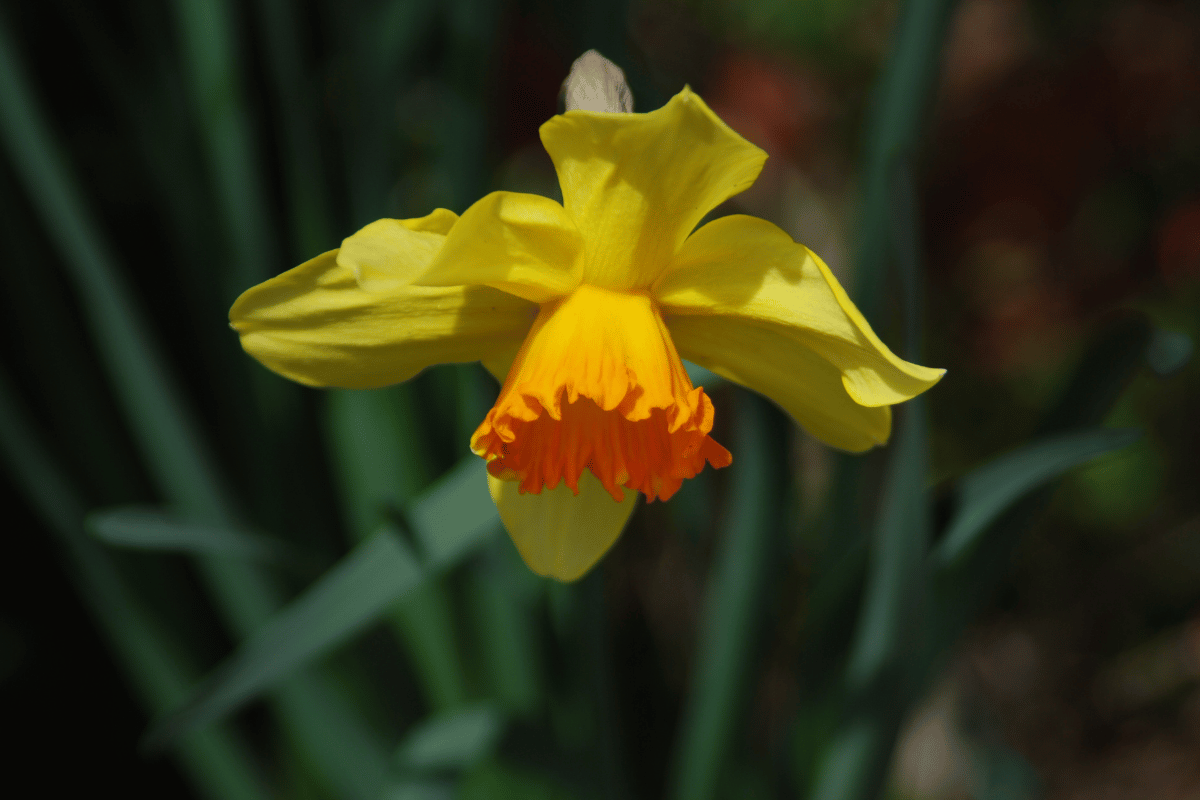
Trumpet daffodils
Types of daffodil
| Type | Characteristics | Flowering |
|---|---|---|
| Trumpet daffodils | The classic large-flowered types such as Carlton and Mount Hood, one bold bloom per stem | Spring |
| Tazetta types (N. tazetta) | Clusters of small, intensely fragrant flowers, including paperwhites, which need no winter chill | Winter to early spring |
| Poet's daffodil (N. poeticus) | Around 40 cm tall, a single white flower per stem with a small, red-rimmed cup | Late spring |
| Doubles and jonquils | Doubles such as Tahiti, Replete and White Lion, and scented, clustered jonquil hybrids | Spring |
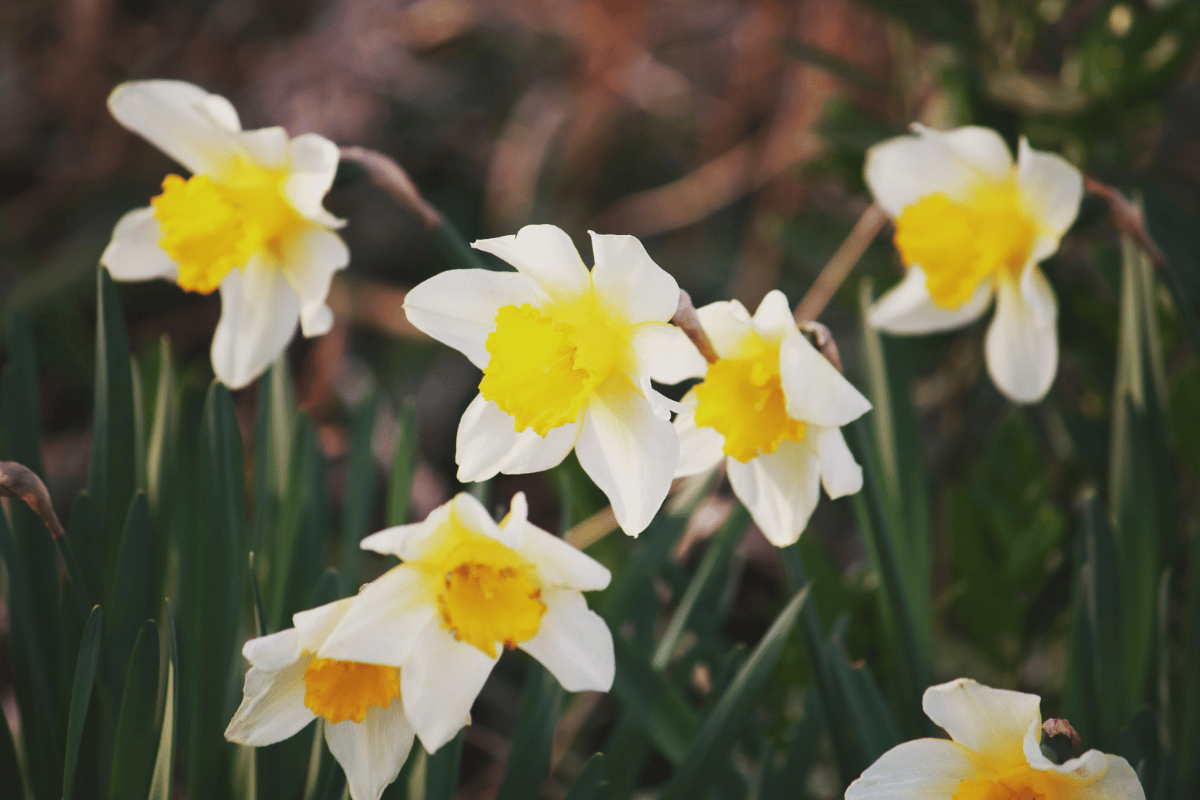
Tazetta daffodils
When and how to plant daffodil bulbs
Plant daffodil bulbs from September to December, and ideally by late autumn so they root well before the cold. The best varieties sell out early, so ordering in late summer, alongside the rest of the August garden jobs, secures the pick of the catalogue. They need a winter chill in the ground to flower, which a normal winter provides in most temperate regions without any refrigeration, and tazetta types such as paperwhites flower with no chill at all. Choose large, firm bulbs, work compost and a little fertiliser into the soil first, then follow four rules:
- Depth: 10 to 15 cm, which is two to three times the height of the bulb, with larger bulbs going deeper
- Spacing: 10 to 15 cm between bulbs in the ground
- Orientation: pointed tip up, root plate down
- Water: one thorough watering straight after planting to start root growth
Daffodils also naturalise beautifully in lawns and under deciduous trees, where the bulbs flower before the canopy leafs out. When planting in grass, lift a flap of turf, plant in loose drifts rather than rows, and mow only after the foliage has died down.
Position and soil
Daffodils need full sun or light shade, and in deep shade they gradually stop flowering. They grow in almost any soil but do best in light, fertile, well-drained ground with a slightly acidic to neutral pH. Standing water is their one real enemy, since it rots the bulbs, so heavy soils should be improved with organic matter and grit before planting.
Growing daffodils in pots
In containers, use a general-purpose potting mix in a pot at least 20 cm deep with drainage holes, since daffodils make tall stems and need root room. A piece of landscape fabric and a layer of pumice or gravel at the base keep the drainage fast. Plant the bulbs closer than in the ground, 5 to 7 cm apart, for a full display, always with the tips up. Paperwhites go one step further and flower indoors on a bright windowsill with no cold period, about four to six weeks after planting, which makes them the classic winter windowsill bulb.
Watering
Daffodils have moderate water needs. Water regularly through growth and flowering, but only when the soil surface has dried, and never let water sit around the bulbs. After flowering, reduce watering gradually as the foliage yellows, and stop completely over the summer dormancy.
Feeding
The base feeding is compost or organic matter worked in at planting. Apply a balanced fertiliser as growth starts in early spring, and then, most importantly, feed again immediately after flowering with a low-nitrogen, high-potassium fertiliser. That post-flowering feed is the one gardeners most often skip, yet it is when the bulb stores the reserves for next year's flowers.
After flowering, the step that decides next year
When the blooms fade, remove only the flower stem, which stops the plant wasting energy on seed. Leave the green leaves entirely alone. Do not cut them, and do not tie them into knots or braids, because the foliage feeds the bulb for at least six weeks after flowering, until it yellows and dies down on its own. Cutting the leaves early is the single most common reason daffodils fail to flower the following spring.
Beyond that, daffodils need nothing. The bulbs stay in the ground, rest through summer and regrow with the autumn rains, thickening year after year. This is the big practical difference from tulips, whose hybrid varieties weaken after the first display and are usually replanted annually.
Why daffodils go blind
A daffodil that produces healthy leaves but no flowers is called blind, and the causes are almost always one of four. The foliage was cut or mown too early the previous year, the clump has become overcrowded, the bulbs were planted too shallowly, or the position has grown too shady. The fixes follow directly, meaning leave the leaves to die down naturally, lift and divide congested clumps, replant shallow bulbs at two to three times their height, and move bulbs from deep shade into sun.
Propagation
Daffodils multiply through offsets, the small daughter bulbs that form around the parent. Every three to four years, once clumps thicken and flowering starts to decline, lift the bulbs after the foliage has died down, separate the offsets and replant them in new positions. Offsets usually take a year or two to reach flowering size.
Are daffodils poisonous to cats and dogs
Yes. All parts of the plant, and the bulb most of all, contain toxic alkaloids including lycorine. According to the ASPCA, daffodils are toxic to cats, dogs and horses, causing vomiting, drooling and diarrhoea, with larger amounts of bulb causing more serious effects. Never store daffodil bulbs near onions, which they dangerously resemble, keep pets away from planted bulbs and cut stems, and contact a vet if any part is eaten. The sap can also irritate skin, so gloves help when cutting stems for the vase, and a large bunch in a small, closed room can give some people a heavy-scented headache, so keep vases in ventilated spaces.
Frequently asked questions
When should I plant daffodil bulbs
From September to December, at a depth of two to three times the bulb's height, roughly 10 to 15 cm, and 10 to 15 cm apart, with the pointed tip facing up. Earlier planting gives better rooting before winter.
Do daffodils come back every year
Yes, daffodils are true perennials. The bulbs stay in the ground, return every spring and multiply into larger clumps, provided the foliage is left to die down naturally after flowering.
Why are my daffodils not flowering
The four usual causes are foliage removed too early the previous year, overcrowded clumps, bulbs planted too shallowly, and too much shade. Dividing congested clumps and leaving the leaves alone solves most cases.
Can daffodils grow in pots
Yes, in a container at least 20 cm deep with free-draining mix, with bulbs spaced 5 to 7 cm apart. Paperwhite types even flower indoors with no cold period, four to six weeks after planting.
When do daffodils bloom
From late winter to late spring depending on the type, with tazetta and early trumpet varieties first and poet's daffodils among the last.
Are daffodils toxic to pets
Yes, the whole plant and especially the bulb contain lycorine and other alkaloids toxic to cats and dogs. Keep bulbs and cut flowers out of reach and call a vet if any part is eaten.
Important notes
Every garden is different, and results depend on your climate, soil and exposure, so treat the guidance above as a general starting point.
Because bulbs and foliage are toxic and the sap can irritate skin, handle daffodils with gloves, store bulbs well away from anything edible, and site them out of reach of pets that dig or chew.