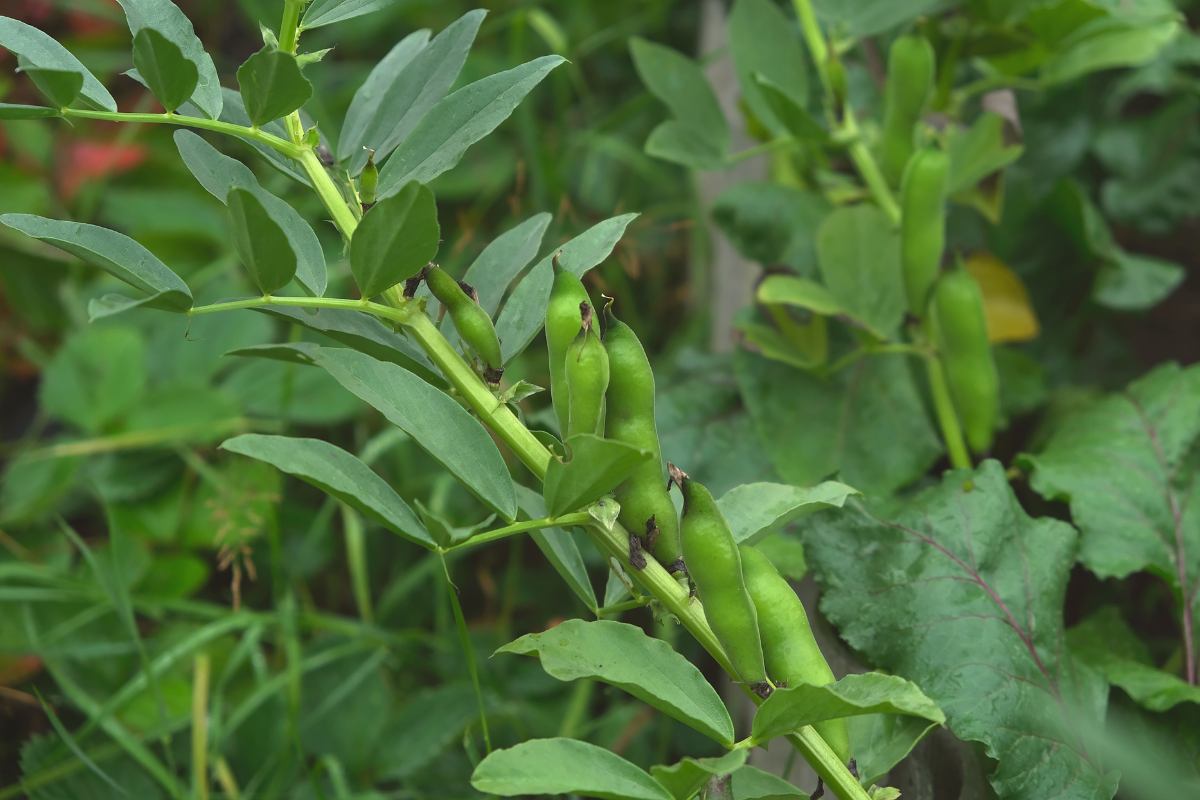
Faba bean (Vicia faba) is grown commercially for three distinct purposes, fresh pods and green beans for the vegetable market, dry grain as a pulse, and livestock feed or green manure. After decades of decline, the crop is regaining ground across the Mediterranean because of growing demand for plant protein, and feed-type faba beans are increasingly seen as a home-grown alternative to imported soybean. As a legume, it also fixes nitrogen and improves soil fertility for the winter cereals that follow it. This guide covers the three production types and their varieties, the crop's place in the rotation, sowing with densities and seed rates per hectare, fertilisation, irrigation, broomrape and diseases, and yields.
The three production types
| Production type | What is harvested | Indicative yield per hectare |
|---|---|---|
| Fresh vegetable | Fresh pods and green beans, in successive pickings in spring | 6 to 10 t of fresh pods |
| Dry grain | Mature seed as a pulse, once the pods have dried | 2 to 5 t of dry grain |
| Feed and green manure | Grain for livestock, or green biomass incorporated into the soil | Similar to dry grain, harvested in May in the Mediterranean |
Yields depend heavily on variety, soil and season, because faba bean is sensitive to spring drought and heat. For comparison, in the United Kingdom, where around 190,000 hectares of field beans are grown each year, the average dry grain yield reaches 4.2 t per hectare.
Varieties
Varieties divide into large-seeded types, which dominate the fresh vegetable market, and small-seeded types, which dominate feed production.
Vegetable varieties
The most widespread vegetable variety in the Mediterranean is Aguadulce, a mid-late type with long pods measuring 30 to 40 cm that hold 7 to 8 seeds, suited to fresh use and autumn sowing. Extra Violetto is very early, producing in around 80 days from sowing, with purple seeds. Many regions also keep traditional local populations, maintained by growers for their flavour and adaptation to local conditions.
Feed varieties
Feed varieties are small-seeded, sown at higher densities and bred for grain protein and standing ability. Local breeding programmes across the Mediterranean are also releasing new cultivars selected for yield stability and resistance to chocolate spot and broomrape.
Soil and rotation
Faba bean thrives on loamy, alkaline and calcareous soils with good drainage, and adapts fairly easily to poorer ground. What it cannot tolerate is standing water, which rots the roots and encourages disease.
Its place in the rotation is its greatest agronomic strength. The beneficial effect of faba bean on the winter cereals that follow has been documented by many researchers, and the crop slots easily into a cereal system because it uses the same machinery for seedbed preparation and harvest. Nitrogen fixation is substantial. In multi-year trials in Canada, faba bean took up an average of 230 kg of nitrogen per hectare, and 88% of it came from the atmosphere. To avoid disease buildup, faba bean is returned to the same field only every four years.
Seedbed preparation
Preparation involves one or two deep ploughings and harrowings, so the field is weed-free and even for sowing. Well-rotted manure applied before sowing improves yields considerably. In fields with no history of faba bean, inoculating the seed with the appropriate bacterium, Rhizobium leguminosarum bv. viciae has shown a positive effect on yield because it ensures that nodules form on the roots.
Sowing
Sowing season
In mild and warm regions, sowing takes place from mid-autumn, October to November. Feed faba beans are usually sown in November, at the same time as winter cereals, with a seed drill. In cold regions and uplands, sowing moves to February and March.
Depth and spacing
Seeds are placed 4 to 5 cm deep. The crop is grown either as a row crop for inter-row cultivation, with 50 to 60 cm between rows, or as a dense crop, with 30 to 50 cm between rows and 15 to 20 cm within the row. Dense planting generally has the advantage, but with autumn sowing and large-seeded varieties, the spacing widens, usually to 30 to 35 cm, because the plants tiller more.
Density and seed rate
The target density is around 15 plants per square metre for large-seeded and 40 plants per square metre for small-seeded varieties. That translates to 120-170 kg of seed per hectare for large-seeded types and around 110 kg for small-seeded types, with the literature citing up to 250 and 177 kg, respectively. For feed crops, the rate runs to 80 to 150 kg per hectare, depending on the variety and whether the seed is drilled or broadcast.
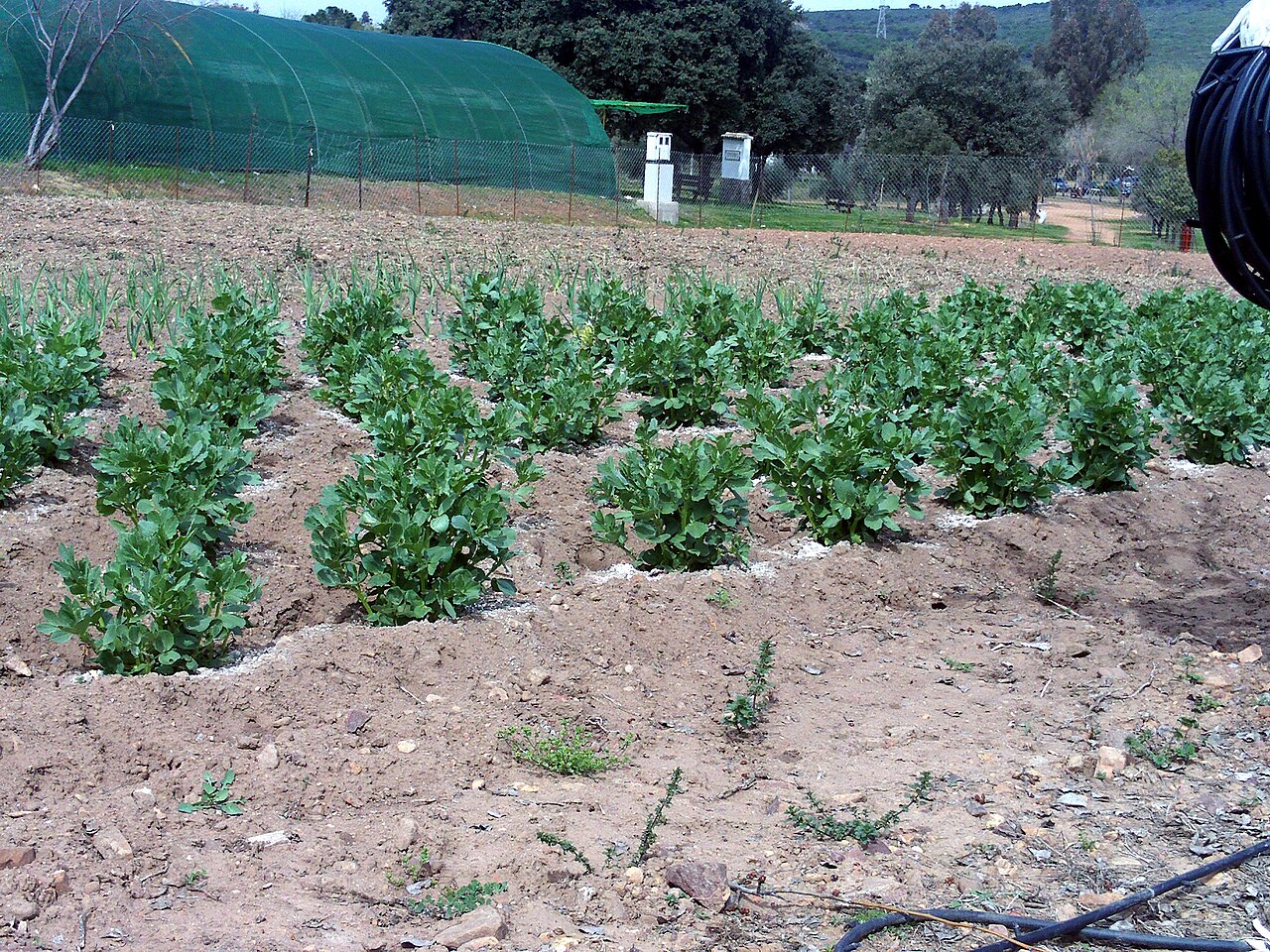
Sown as a row crop, faba beans leave room between the rows for hoeing out winter weeds.
Fertilisation
Faba bean needs no nitrogen fertiliser, because it secures its nitrogen through symbiosis with the root bacteria. Applying nitrogen actually harms the crop. In three-year trials in China, nitrogen fertilisation increased the incidence of chocolate spot by 5.8% to 42% compared with unfertilised plots, because the denser canopy lowered temperature and raised humidity within the crop.
Base fertilisation targets phosphorus and, where needed, potassium. For vegetable faba beans, a common application is around 300 kg of 0-20-0 per hectare, while for feed crops, a base dressing of 800 to 1,000 kg of 0-12-6 per hectare is reported. The rate, however, should always follow a soil analysis, and well-rotted manure before sowing covers much of the requirement.
Irrigation
Faba bean has modest water needs, and with autumn sowing, the winter rains usually cover the vegetative period. The critical stages are flowering and pod fill in spring, when water shortages and high temperatures noticeably reduce pod set. In dry springs, one or two irrigations at these stages make a large difference to the final yield.
Weeds and broomrape
Faba beans are recommended even in fields troubled by winter and summer weeds, because inter-row cultivation of the crop destroys winter weeds. Control relies on cultural methods and, where necessary, registered herbicides.
The most serious threat in the Mediterranean, however, is broomrape (Orobanche crenata). It is a holoparasitic plant with no chlorophyll that attaches to faba bean roots and draws all its nutrition from them, causing severe losses across the region's legume crops. Its seeds persist in the soil for many years, so the main defences are avoiding fields with a history of infestation, long rotations with non-host crops, and, where available, resistant varieties.
Pests and diseases
- Black bean aphid (Aphis fabae): dense colonies on the soft growing tips. In small areas, it is kept down by pinching out once the first pods set, while on large areas, the decision to treat aphids rests on colony density and the presence of natural enemies
- Pea and bean weevil: adults cut scalloped notches in the leaf edges, while the larvae feed on the root nodules
- Chocolate spot (Botrytis fabae): the most important and most destructive faba bean disease worldwide. Epidemics in Egypt have resulted in losses exceeding 25%, reaching 100% under severe conditions. It is favoured by humidity, dense planting and nitrogen fertilisation
- Ascochyta blight (Ascochyta fabae), rust, downy mildew (Peronospora viciae) and Cercospora leaf spot (Cercospora zonata): the other major foliar diseases
Prevention rests on rotation, avoiding dense planting in damp fields, healthy seed and avoiding nitrogen. Where treatment is needed, only fungicides registered for the crop are used, in accordance with local plant protection guidance.
Harvesting
Fresh beans
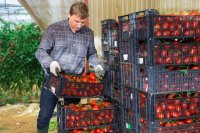
Fresh pods are harvested by hand, in successive pickings from the lowest to the highest pods, once the seeds have filled but are still tender. With autumn sowing, harvest starts in spring.
Dry grain
Dry grain is harvested with a combine harvester once the pods have dried and blackened and the seeds have hardened, as for cereals.
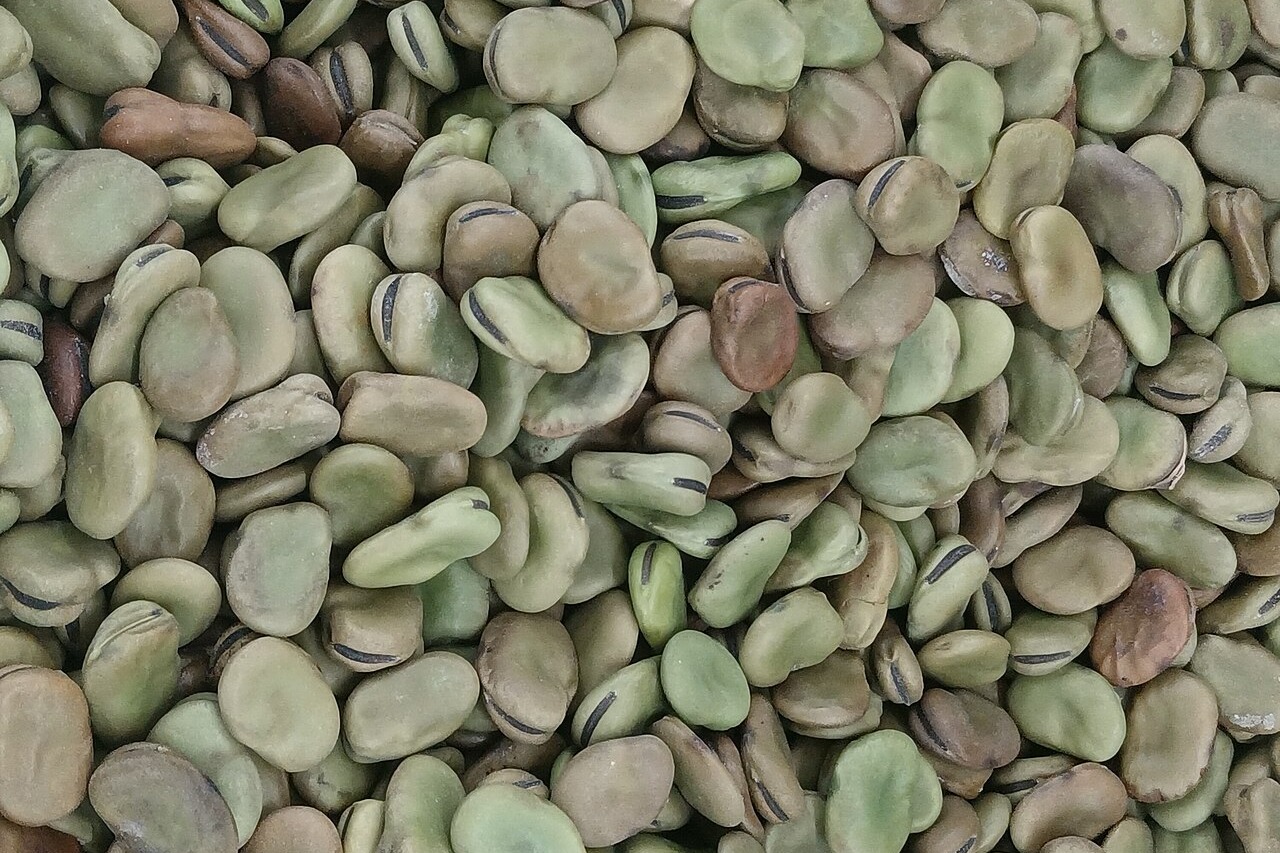
Dry grain is harvested once the pods have dried and blackened and the seeds have hardened.
Feed crops
Autumn-sown feed faba beans are usually harvested in May in the Mediterranean. Where the aim is green manure, the biomass is incorporated into the soil at early flowering, when its nitrogen content is high.
Feed faba bean as an alternative to soybean
The high protein content of feed faba bean makes it an excellent home-grown alternative to soybean for ruminants, meaning cattle, sheep and goats. For growers who also keep livestock, the crop reduces dependence on imported protein feed while enriching the field with nitrogen for the next cereal crop, at low input cost.
For vegetable faba beans sold on the market, it is worth remembering that they are the cause of favism in people with G6PD deficiency, which also bears on consumer information.
Frequently asked questions
What is the yield of faba beans per hectare
For fresh pods, around 6 to 10 t per hectare. For dry grain, 2 to 5 t, depending on variety, soil and season, since spring drought and heat cut yields considerably.
How much seed is needed per hectare
Around 120 to 170 kg for large-seeded varieties and about 110 kg for small-seeded ones. For feed crops, 80 to 150 kg, depending on the variety and sowing method.
Do faba beans need nitrogen
No. The plant draws its nitrogen from the atmosphere through the root bacteria. Nitrogen fertiliser does not raise yield and makes the crop more vulnerable to chocolate spot.
When are feed faba beans sown
Usually in November in the Mediterranean, at the same time as winter cereals, with a seed drill. Harvest takes place in May.
What is broomrape in faba beans
It is Orobanche crenata, a holoparasitic plant that attaches to the roots and feeds on the faba bean. Its seeds survive for years in the soil, so the main defences are avoiding infested fields and long rotations.
Does faba bean improve the following crop
Yes. Its roots leave fixed nitrogen in the soil, and its beneficial effect on the winter cereals that follow has been documented by many researchers.
Important notes
Sowing dates, seed rates and fertilisation are adapted to region, soil and variety, and treatment dates follow local plant protection guidance.
Use only products registered for the crop in your country, follow the label and the maximum number of applications per season, and apply cultural measures first.
References
- Agronomic performance of faba bean in Mediterranean environments, Agronomy, 2025.
- Canadian Agronomist, Nitrogen fixation and nutrient uptake in faba bean.
- Effects of nitrogen management and intercropping on faba bean chocolate spot disease development, Crop Protection, 2019.
- Identification of faba bean genetic loci associated with quantitative resistance to Botrytis fabae, Frontiers in Plant Science, 2024.
- Efficacy of mushroom metabolites for the suppression of broomrape in faba bean, Plants, 2020.