
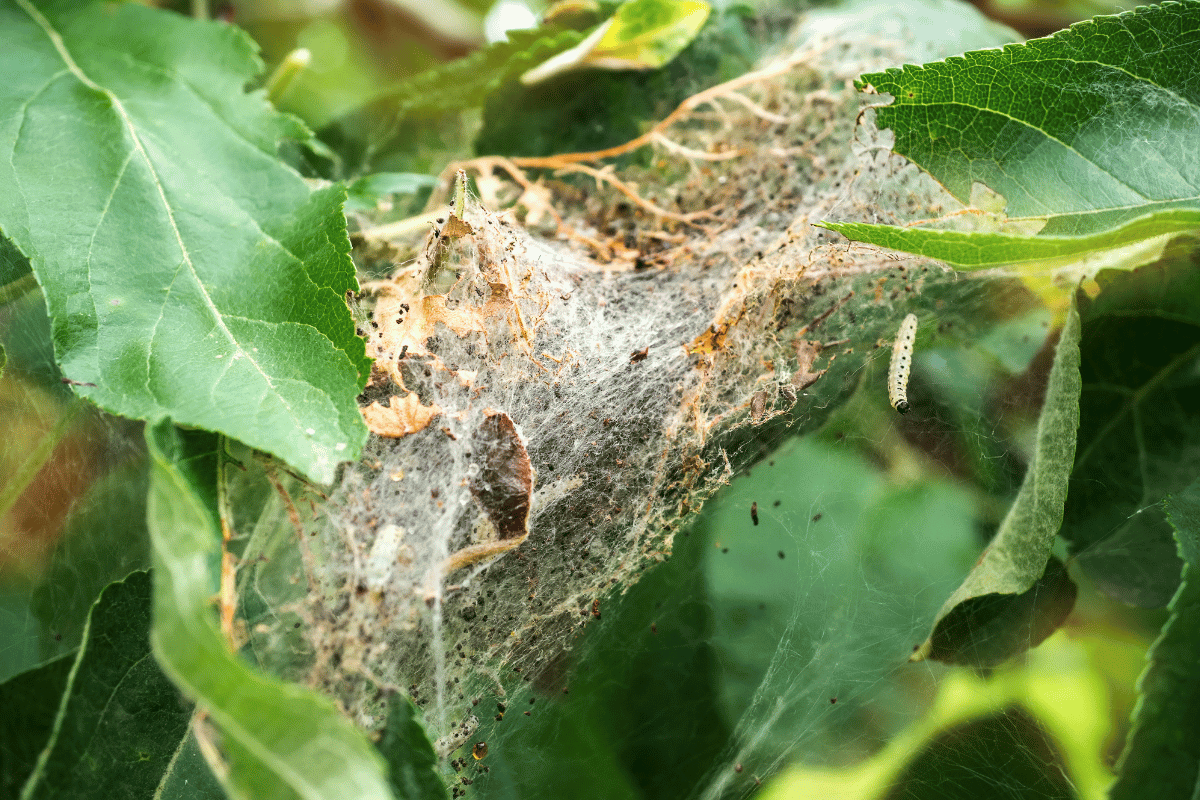
The codling moth is the most serious pest of apples and pears because its larva tunnels into the fruit and reaches the core, leaving a hole and rot. The June 2026 advisory bulletins show that the new generation is underway and that egg hatching falls in the second half of the month, while the unsettled weather also keeps the risk of scab high. Below, we look at the life cycle, the appropriate timing of the intervention, and the diseases that require attention during the same period.
The life cycle and the damage of the codling moth
The codling moth (Cydia pomonella) completes two to three generations a year. The adults lay their eggs on the fruit and the leaves, and after hatching, the larvae open a tunnel inside the fruit, so every infested apple or pear is effectively lost or downgraded.
Control is effective only while the eggs and young larvae are still outside the fruit, so the timing of the intervention is determined by the traps and temperatures, which indicate the start of egg-laying and hatching. The same treatment also controls the leaf miners (Phyllonorycter spp.).
Timing the spray
From the trap data, the new flight started on 6-8 June, most egg-laying is estimated at 11-13 June, and hatching at 16-18 June. The timing of the spray depends on the product's mode of action.
| Product type | Target | Indicative spray window |
|---|---|---|
| Products applied to egg-laying bulletin of 9 June, Imathia, Pella, Pieria |
Eggs | 13-16 June |
| Products targeting the young larvae bulletin of 9 June, Imathia, Pella, Pieria |
Young larvae | 17-20 June |
When choosing products, we rotate modes of action to prevent resistance from building, an issue that is especially critical with the codling moth.
Scab and Septoria, the diseases of the season
The unsettled weather with humidity and high temperatures sharply raises the risk of scab on pome fruit, on both the fruit and the foliage, with the damage reaching as far as harvest. Immediate protection with an approved fungicide is advised, with particular attention to orchards that already show symptoms, that have a history of severe attacks, or that border infected orchards. To prevent the development of resistant strains, we rotate fungicides from different chemical groups.
The same conditions favor Septoria leaf spot on pear, so in pear orchards the protection is organized together with the control of scab.
Choosing and applying the products
Use only products approved for pome fruit and for the specific pest or disease in your country, and follow the label for the dose, method, and timing of application, as well as the pre-harvest interval. In varieties sensitive to certain products, watch the risk of phytotoxicity.
The dates above are from the regional bulletins and reflect a general trend. The course of the flight differs from orchard to orchard, so the final decisions rest on your own traps and on the most recent local bulletin. For serious or uncertain infestations, consult an agronomist and use only approved products in accordance with the label and operator protection measures.
Sources
All data come from the plant protection advisory bulletins of the Greek Ministry of Rural Development and Food (ΥΠΑΑΤ):
- Regional Plant Protection Centre of Thessaloniki, apple codling moth bulletin No36 (9 June 2026).
- Regional Plant Protection Centre of Volos, pome fruit disease bulletin No7 (11 June 2026).