In the semi-mountainous and mountainous areas of western Greece, apples and pears are at the green-tip and pink-tip stage right now, just before the flowers open. A bulletin from the Achaia Regional Plant Protection Service (no. 3/26-05-2026) focuses on two diseases that have their window of opportunity at exactly this stage: fire blight and apple scab. Both start quietly inside the bloom, and by the time they are visible, they have usually advanced.
Fire blight, the threat inside the blossoms
Fire blight attacks pome fruit mainly during flowering, provided rain or high humidity coincides with mild temperatures between 12 and 21°C. The blossom is the entry point. From there the bacterium moves into the shoot and works its way into the tree, leaving shoots and branches that look as though they have been scorched by fire, which is where the name comes from.
How severe the infection turns depends on three things. First, the tree itself, meaning the variety, its age, its vigor, and how many blossoms it carries. Second, whether the bacterium is already present in the area, either from this season or from earlier years. Third, the weather of the preceding days, which determines whether the bacteria have had the chance to multiply inside the blossoms. That is why disease pressure shifts from one area to the next, and peaks after spells classed as high or extreme infection risk.
Control is mostly preventive. A copper-based spray is recommended at the green-tip stage, or, as an alternative, an approved biological product. Just as important is the work inside the orchard. Inspect weekly, and wherever infected twigs or branches appear, cut and destroy them along with a healthy section twenty to twenty-five centimeters below the point of infection. Pruning tools must be disinfected often, as they carry bacteria from tree to tree. After a hailstorm, which opens countless wounds, the copper spray should go on immediately. It also helps to avoid unnecessary nitrogen fertilization, which pushes the tree into the soft growth the bacterium prefers. The broader picture of apple pests and diseases is worth keeping in mind, since fire blight rarely arrives alone.
Apple scab is the most common fungal threat
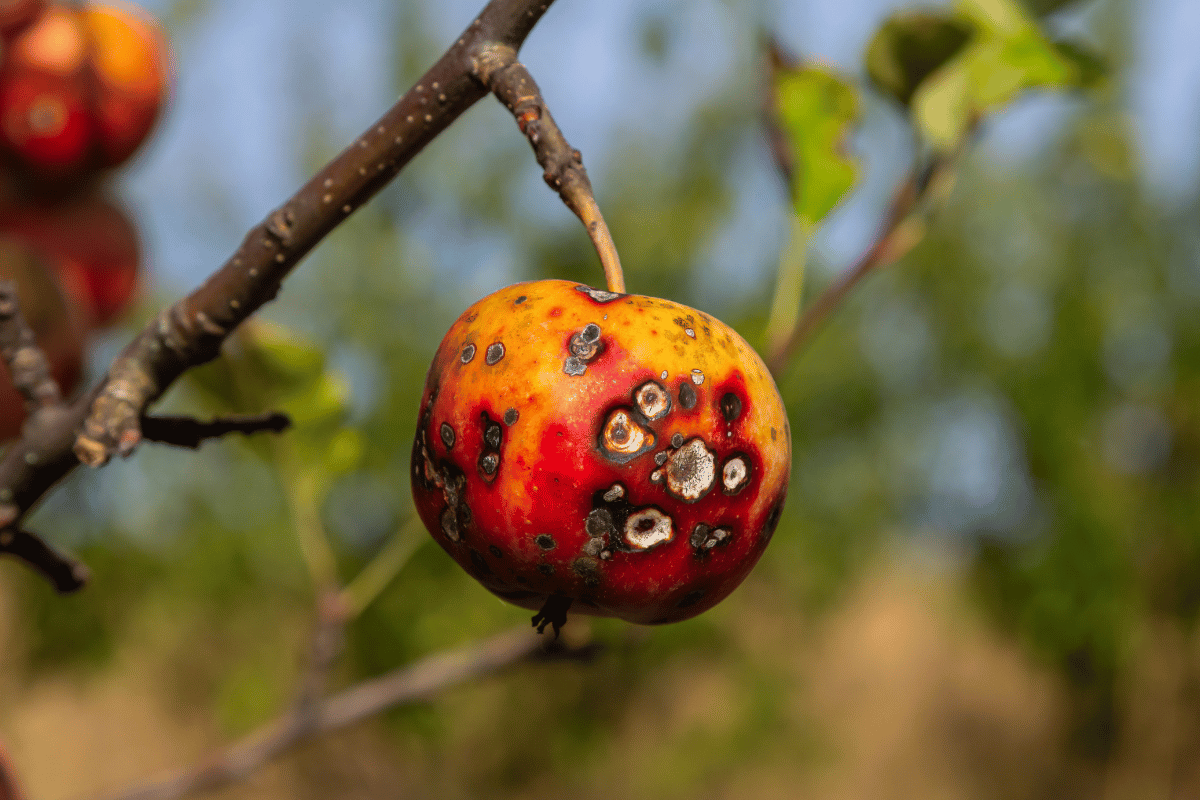
Alongside the bacterium, the air at this time carries mature ascospores of scab, ready to cause the first, primary infections on the new growth. In many areas, the humidity favors those infections, and the goal is clear: to protect the vulnerable tissues of the tree, the young growth, the blossoms, and the small fruit before the fungus can establish itself.
Protection rests on preventive sprays at the critical stages, green tip for both apple and pear, and pink tip for apple. In apple varieties susceptible to powdery mildew, that disease can be dealt with in the same pass as scab, sparing a separate spray.
When to spray
The aim in both diseases is the same: to provide protection to the vulnerable tissue before infection rather than after. Once the bacterium is in the blossom or the fungus in the leaf, treatment is difficult and often impossible. That is why the sprays are placed by phenological stage, according to where each crop is, rather than on fixed calendar dates. An orchard in a mountainous area can run a week or two behind one lower down, and the timing follows the tree, not the calendar.
Choose products approved for the crop and the pathogen, and cross-check the active ingredient against the national register of approved plant protection products before applying.
Every plant and growing environment is unique. Conditions vary considerably with region, exposure, water quality, soil pH and overall plant health.
If you suspect a serious nutrient deficiency or disease that doesn't respond to basic practices, consult a qualified agronomist for an accurate diagnosis.
Plant protection products must be used with care and responsibility. Always try non-chemical methods first (cultural practices, insecticidal soap, summer oil). When chemical intervention is necessary, use only approved products and follow label instructions.