
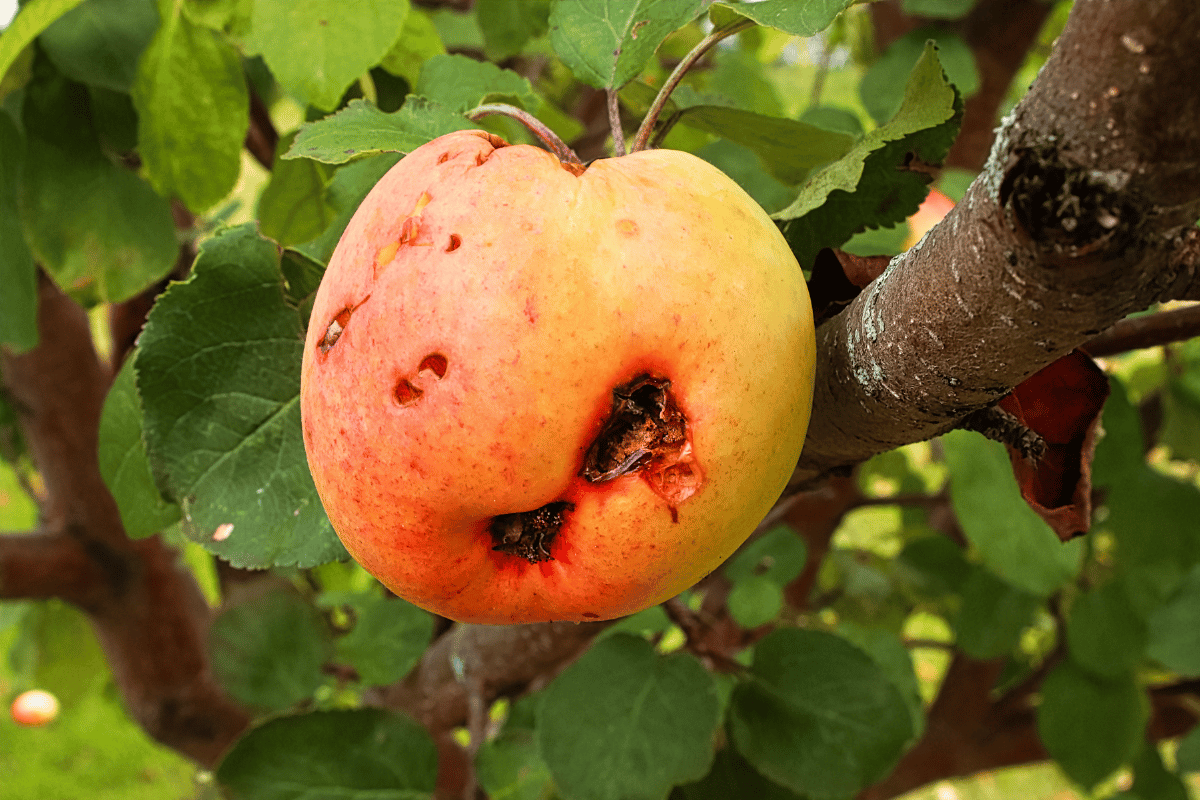
Codling moth (Cydia pomonella) is the most widespread fruit-boring pest of apple and pear, and the most serious when its narrow spray window is missed. A 2026 technical bulletin from the Kavala Regional Plant Protection Centre (no. 18/14-05-2026) tracks the first flight across northern Greece, but the timing logic it lays out applies to any pome fruit orchard in a temperate climate.
How codling moth works and why timing is critical
The insect overwinters as a developed larva inside a cocoon, usually in cracks in the bark or in the soil. In spring, once temperatures climb above 13°C, the adults begin to fly. Eggs are laid on the fruit, and the newly hatched larvae bore into the fruit after a very short period out in the open.
Everything is decided in that short period. Once the larva is inside the fruit, no spray can reach it, which is why the larvicide has to go on before it enters, exactly when the eggs are hatching. Egg laying is favoured at temperatures between 12 and 27°C, and codling moth completes three to four generations a year. For the first generation, which is the current one, the timing is set by the pheromone trap network.
Coverage and product choice
A spray against codling moth succeeds or fails on two points, coverage and the choice of product.
Coverage means wetting the canopy thoroughly, and the upper parts of the tree in particular, where most of the eggs are laid. In dense orchards or on tall trees, a simple knapsack sprayer is not enough. High-pressure sprayers, or knapsack sprayers with a long lance that reaches the tops, are what the job calls for.
As for the product, the approved larvicides against codling moth belong to several active-ingredient groups, and rotating them sensibly is essential so that resistance does not build up. Always cross-check the active ingredient against the national register of approved plant protection products, and check the PHI so you are not left trapped just before harvest. A broader overview of apple pests and diseases helps place codling moth within the season's wider pressure.
Walnut, why we hold off for now
The same bulletin covers walnut. Flight has begun there too, in early May, but the crop is at the flowering to early fruit-set stage, which is not considered susceptible. A spray now would carry a clearly negative balance, wiping out natural enemies for no gain. The window for walnut comes later, once the nuts have passed fruit set and become vulnerable.
Monitoring comes before spraying
With codling moth, monitoring is what makes the difference in the result. Pheromone traps, or even careful observation of egg laying on the larger trees, give a reliable picture of when to step in. If your orchard sits far from the network's trap sites, it is worth setting a trap of your own, since its cost is recovered in the very first season.
Application of plant protection products requires a certified professional user and proper personal protective equipment, including a spray suit, an FFP3 mask and gloves.
Every plant and growing environment is unique. Conditions vary considerably with region, exposure, water quality, soil pH and overall plant health.
If you suspect a serious nutrient deficiency or disease that doesn't respond to basic practices, consult a qualified agronomist for accurate diagnosis.
Plant protection products must be used with care and responsibility. Always try non-chemical methods first (cultural practices, insecticidal soap, summer oil). When chemical intervention is necessary, use only approved products and follow label instructions.