
Food recall notifications in Europe | Week 7, February 9–15, 2026
Last week, the total number of notifications sat within the range we have seen throughout this winter. The more meaningful signal lies in where enforcement pressure is concentrated.
Fresh produce is responsible for most recalls because inspection intensity follows trade flows. February means high volumes of imported vegetables, dried fruit and nuts moving through European entry points. It also means closer scrutiny of high-value fruit categories where a single non-compliant lot can shift buying decisions quickly.
For farmers and procurement teams, risk is becoming increasingly product and origin-specific. It is less about a country’s general reputation and more about how a particular item performs over consecutive weeks. When the same combination appears repeatedly, inspection routines tend to tighten and clearance times start to stretch.
Highlights at a glance
- 88 notifications were recorded across food, feed, and food contact materials.
- Fresh fruits and vegetables led all categories (22 cases, 25 per cent of the total), confirming that produce remains at the centre of border scrutiny during winter trade.
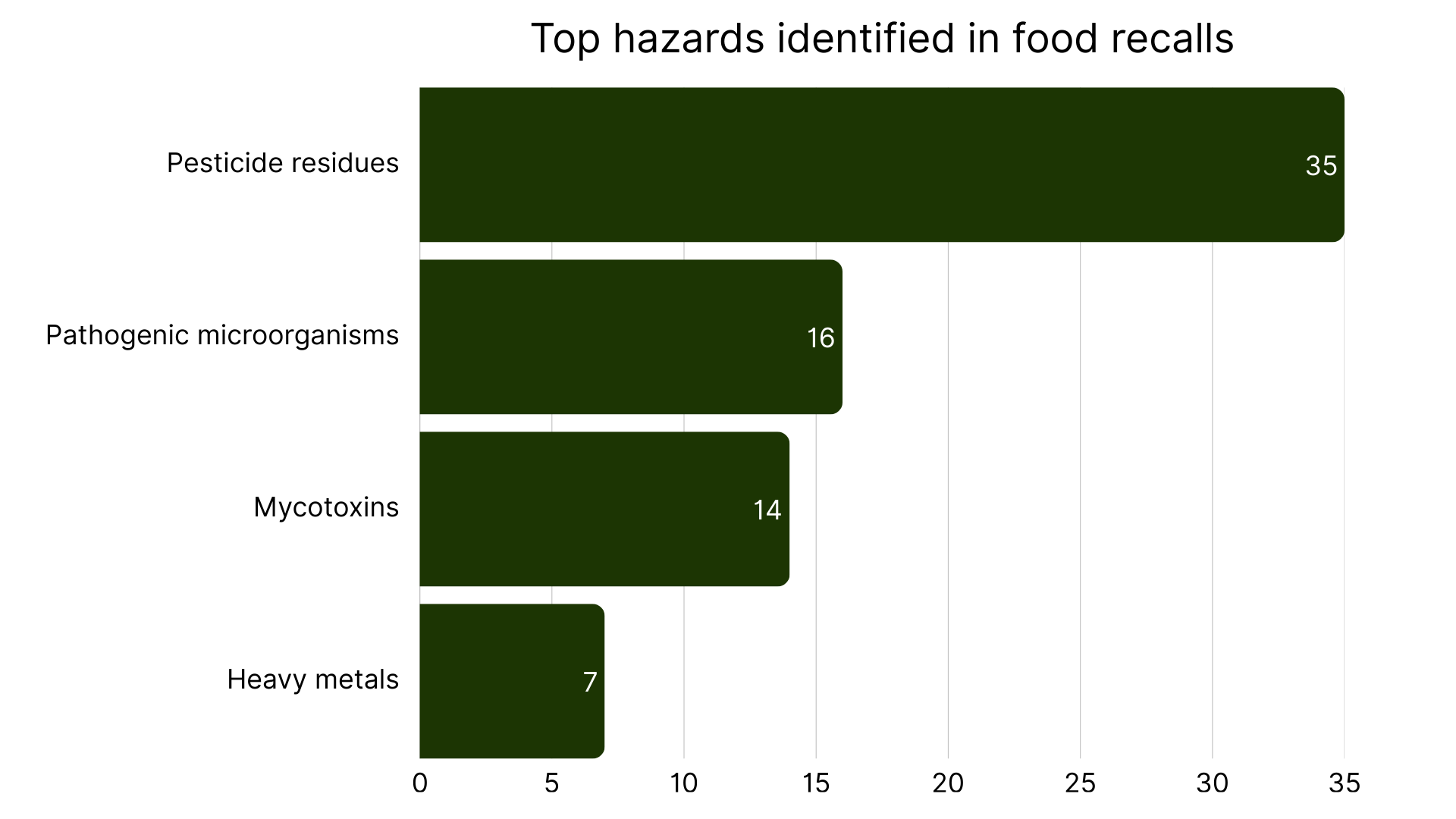
- The week was shaped by chemical compliance rather than outbreaks. Pesticide residues were the most frequent hazard group, followed by mycotoxins, mainly aflatoxins, and then heavy metals.
Two patterns drew particular attention:
- Repeated pesticide findings in beans from Bangladesh
- Cadmium in Colombian avocados
Top product categories affected
1) Fruits and vegetables (22 cases)
This category combined:
- Several pesticide exceedances,
- heavy metals such as cadmium,
- and non-chemical failures, including foreign bodies, pest traces and control gaps.
2) Nuts, nut products, and seeds (10 cases)
Aflatoxins dominated this group, alongside Salmonella in seeds. These are familiar hazards, yet commercially significant. Repeated aflatoxin findings often lead to intensified sampling and slower container clearance, which, in turn, affects cash flow and logistics planning.
3) Poultry meat and poultry products (9 cases)
Poultry meat and products featured prominently, underscoring that while plant products were driven mainly by chemical compliance issues, animal products continued to be closely monitored for microbiological risks.
4) Cereals and bakery products (5), and herbs and spices (3)
Lower in volume, but sensitive from a reputational perspective. Allergen mislabelling, foreign bodies and pesticide residues in widely distributed products can travel quickly through mixed supply chains.
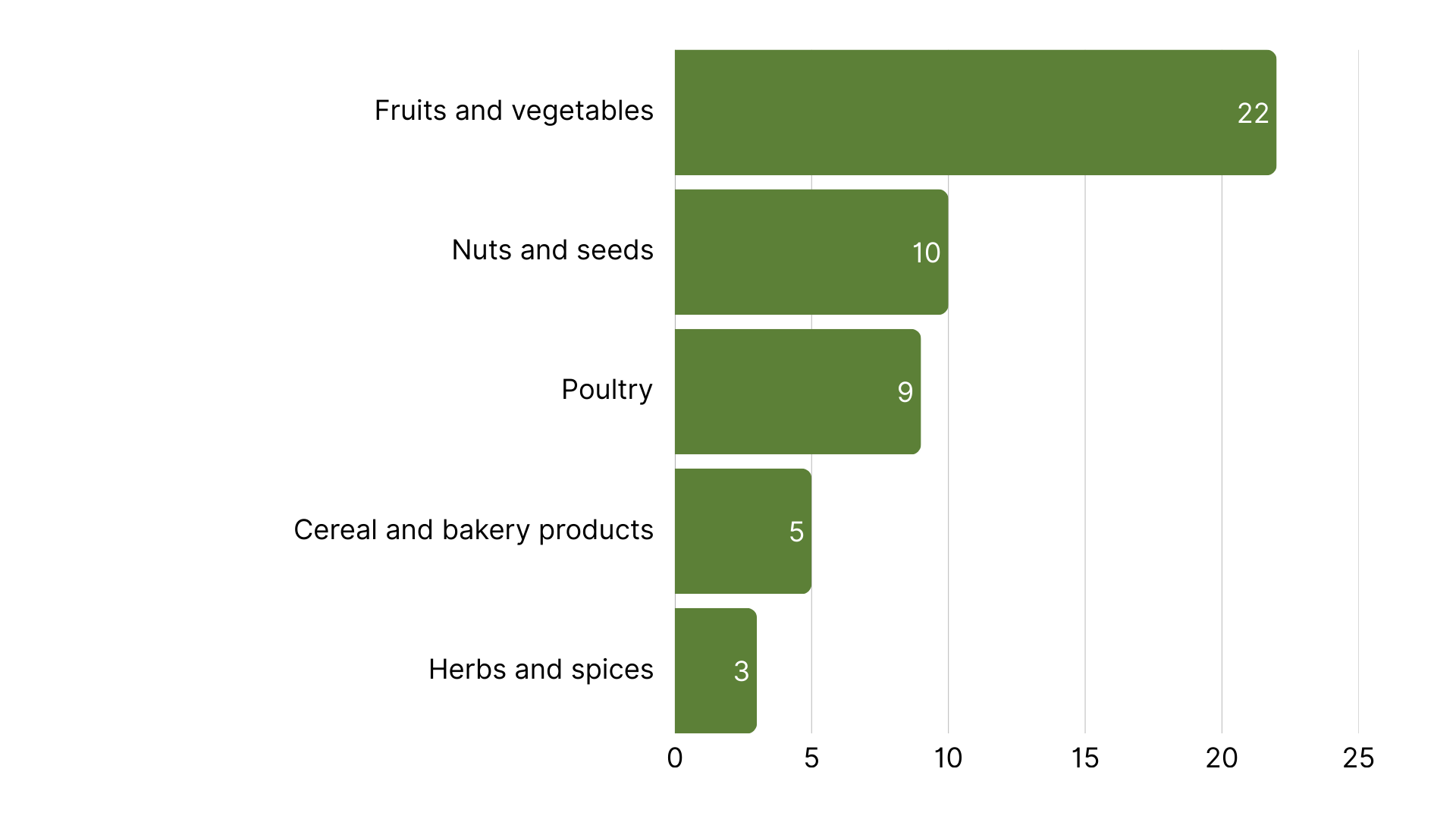
Graph 1: Top 5 Product Categories with the Most RASFF Alerts (Week 7)
Fresh produce focus
A supply lane under pressure: Beans from Bangladesh
Several notifications involved beans from Bangladesh with unauthorised or excessive pesticide residues. When this happens more than once in a short period, it changes the tone of trade discussions.
Inspection authorities become familiar with the product lane. Detection rates tend to rise. At the same time, buyers begin adjusting quietly. They may increase private residue testing, narrow supplier lists, or diversify origins. None of this requires a new regulation. It is a commercial response to perceived risk.
For growers in alternative origins, that shift can translate into short-term demand support. For exporters in the flagged lane, it often means stricter verification requirements and longer border procedures.
Heavy metals and premium fruit: cadmium in avocados
Cadmium findings in avocados from Colombia deserve separate attention. Unlike a pesticide exceedance, which can often be addressed by refining spray programmes and observing pre-harvest intervals, cadmium is linked to soil background and long-term environmental factors.
Avocados sit at the premium end of the fresh produce retail market. They are marketed around quality, origin and increasingly around sustainability credentials. When heavy metals appear in that context, the conversation moves beyond compliance into brand protection.
We recently analysed why cadmium is becoming more commercially relevant for exporters in our article on Peru’s agro-export growth and heavy metal risk. The same structural logic applies here. Heavy metals are slower to correct, harder to isolate to a single operational error, and more demanding in terms of verification.
That does not imply disruption. It implies caution. Expect more screening and origin segmentation in premium fruit programmes where soil variability is known.
Europe was not only catching imports
A number of notifications were linked to EU origins or internal EU market handling. These were not always about farm-level chemistry. Some involved foreign bodies, pest contamination or labelling failures.
For wholesale buyers, that underlines a simple reality. Risk control is supply chain-wide. Packing, storage, documentation and allergen management can create just as much disruption as field-level residues.

Graph 2: Top 5 food hazards in Europe, week 7, 2026
Fruit and vegetable recalls in Europe
All fruits, vegetables, cereals, herbs and related products from Week 7 are listed below.
Fruits and vegetables
- Chilli pepper (Thailand): chlorfenapyr
- Raisins (Sweden): sulphite undeclared
- Eggplant (Turkey): indoxacarb
- Frozen blueberries (Belarus): sold without mandatory official controls
- Grape leaves (Turkey): dimethomorph
- Avocado (Colombia): cadmium
- Pears (Netherlands): traces of pests (mouse) in a batch
- Tamarillo (Burundi): omethoate
- Garlic powder (India): lead
- Raisins (Uzbekistan): ochratoxin A
- Beans (Turkey): acetamiprid
- Frozen vegetables (Poland): foreign body (glass)
- Kaki fruit (persimmon) (Spain): lambda-cyhalothrin
- Rice (Italy): cadmium
- Tomatoes (Burkina Faso): chlorpyrifos (unauthorised)
- Beans (Bangladesh): chlorfenapyr (unauthorised)
- Helmet beans (lablab beans) (Bangladesh): chlorfenapyr (unauthorised)
- Beans (Bangladesh): chlorpyrifos (unauthorised)
- Beans (Bangladesh): dimethoate
- Beans (Bangladesh): dimethoate and omethoate
- Avocado (Colombia): cadmium
Cereals and bakery products
- Corn snack (Philippines): undeclared allergen gluten
- Flour/flour mixes (Belgium, Ukraine): glass fragments
- Rice (India): acephate (unauthorised)
Herbs and spices
- Coriander (Ukraine): glufosinate (unauthorised)
- Oregano (dried) (Greece): pyrrolizidine alkaloids
Nuts and seeds
- Sunflower seeds (Romania): Salmonella
- Brazil nuts (Bolivia): Aflatoxin B1; aflatoxin total
- Peanuts/groundnuts (Romania): peanut undeclared
- Oats (Spain): chlorpyrifos (unauthorised); mineral oil aromatic hydrocarbons (MOAH)
- Peanuts/groundnuts (China): Aflatoxin B1; aflatoxin total
- Sesame seeds (Nigeria): Salmonella spp
- Pistachios (United States): Aflatoxin B1; aflatoxin total
- Peanuts/groundnuts (United States): Aflatoxin B1; aflatoxin total
- Pistachios (Turkey): Aflatoxin B1; aflatoxin total
- Pistachios (Iran): Aflatoxin B1; total
Where recalled products came from
Across produce-related categories, Turkey and Bangladesh appeared frequently, with India close behind. The reasons differ:
- Bangladesh has repeatedly experienced pesticide issues in beans, suggesting a concentrated supply chain challenge.
- Turkey combined vegetable residue findings with aflatoxin cases in nuts, reflecting its high trade volume across diverse products.
- India appeared in both pesticide and heavy metal cases, reinforcing the need for category-specific monitoring rather than broad assumptions.
EU-origin cases remind buyers that internal market controls remain just as relevant as border checks.
Graph 3: Top 5 Countries with the Most RASFF Alerts (Week 7)
Outlook for the coming weeks
Product-origin pairs that appeared repeatedly may face more sampling and longer clearance times. Buyers may spread sourcing across additional origins to reduce exposure. That can support prices in substitute suppliers even when the total supply remains stable.
In premium fruit segments, especially avocados, heavier screening around cadmium is plausible. Documentation and pre-export testing will remain central to maintaining smooth access.
For consumers, changes tend to be subtle: shifting origins on labels, occasional price firmness, and gradual strengthening of private standards upstream.
The broader pattern remains consistent. EU enforcement is systematic and increasingly predictable. Once a weakness is identified, it is closely monitored. For farmers and produce buyers, the advantage lies in reading these weekly signals early and adjusting before formal restrictions appear.