
Chiara Capretti is improving cow welfare to reduce greenhouse gas emissions and boost sustainability in Parmigiano Reggiano production.
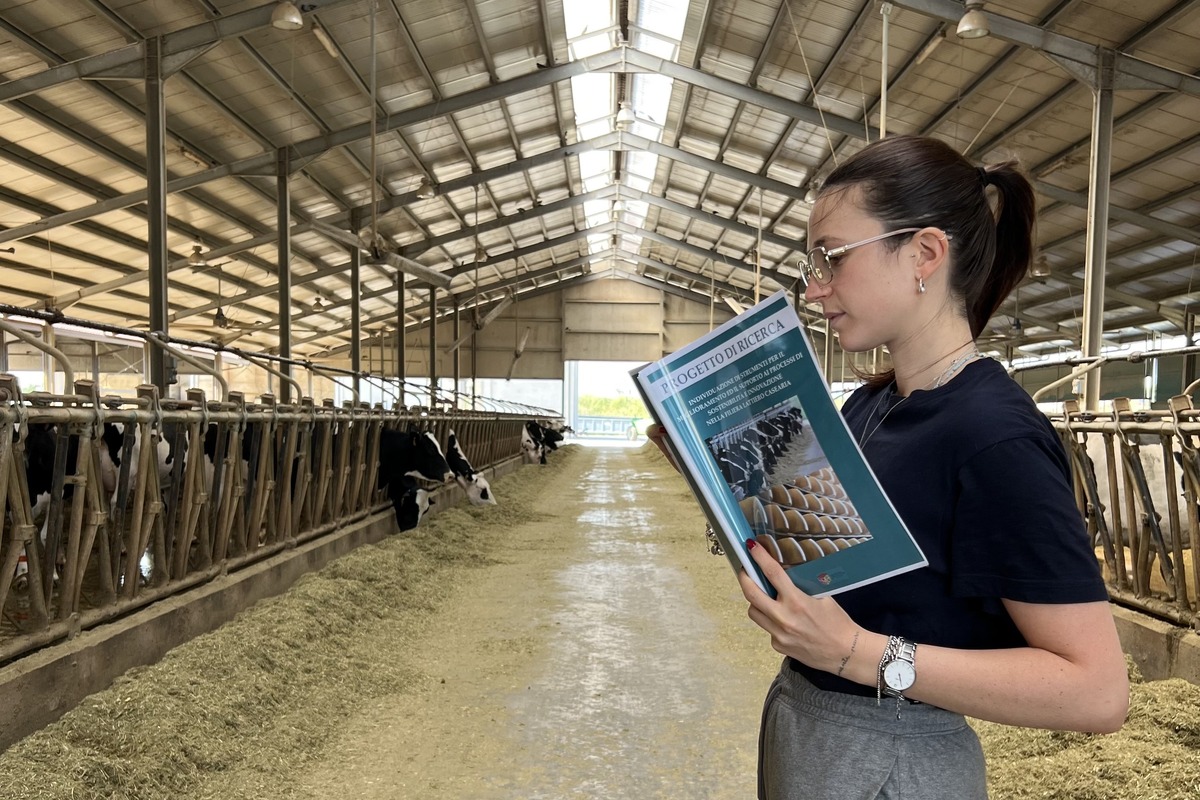
MANTUA, ITALY – In the countryside of Mantua, at the heart of Italy's Parmigiano Reggiano (PDO) production region, a quiet dairy revolution is underway. At Serraglio 2 Farm—a fourth-generation producer of milk for one of the world's most famous cheeses—researcher Chiara Capretti begins each morning surrounded by 700 cows and a network of digital dashboards. Her mission is clear: to show that healthier cows benefit both the environment and farm profitability.
A passion born in the classroom
Unlike many farmers, Capretti didn't grow up on a farm. "I didn't come from a farming family," she says. "It's a passion that was born with my studies and the experiences I had at university."
Growing up, she had a natural affinity for animals and dreamed of becoming a small animal veterinarian. In university, she chose to study food systems and the sustainability of livestock.
"One of my professors really inspired me," Capretti recalls. "He was different from the others because he taught at a university but also worked for a company that produced feed for dairy cows. I loved his passion for his work, and the way he gave us skills for real-world farming."
That connection set her on a path to pursuing a PhD in sustainable dairy farming at a commercial Parmigiano Reggiano dairy.
Smart farming in the Parmigiano Reggiano heartland
Serraglio 2 Farm produces milk exclusively for Parmigiano Reggiano (PDO), a cheese with Protected Designation of Origin status. "If you are in the Parmigiano production area, you can only sell milk for Parmigiano Reggiano," Capretti explains.
The farm is run by a dynamic team that blends tradition with innovation. Pietro, a fourth-generation farmer, oversees production and sustainability, while his partner, Francesca, leads technological innovation in step with Capretti's research. Pietro's mother, Sara, provides guidance on finance and overall management.
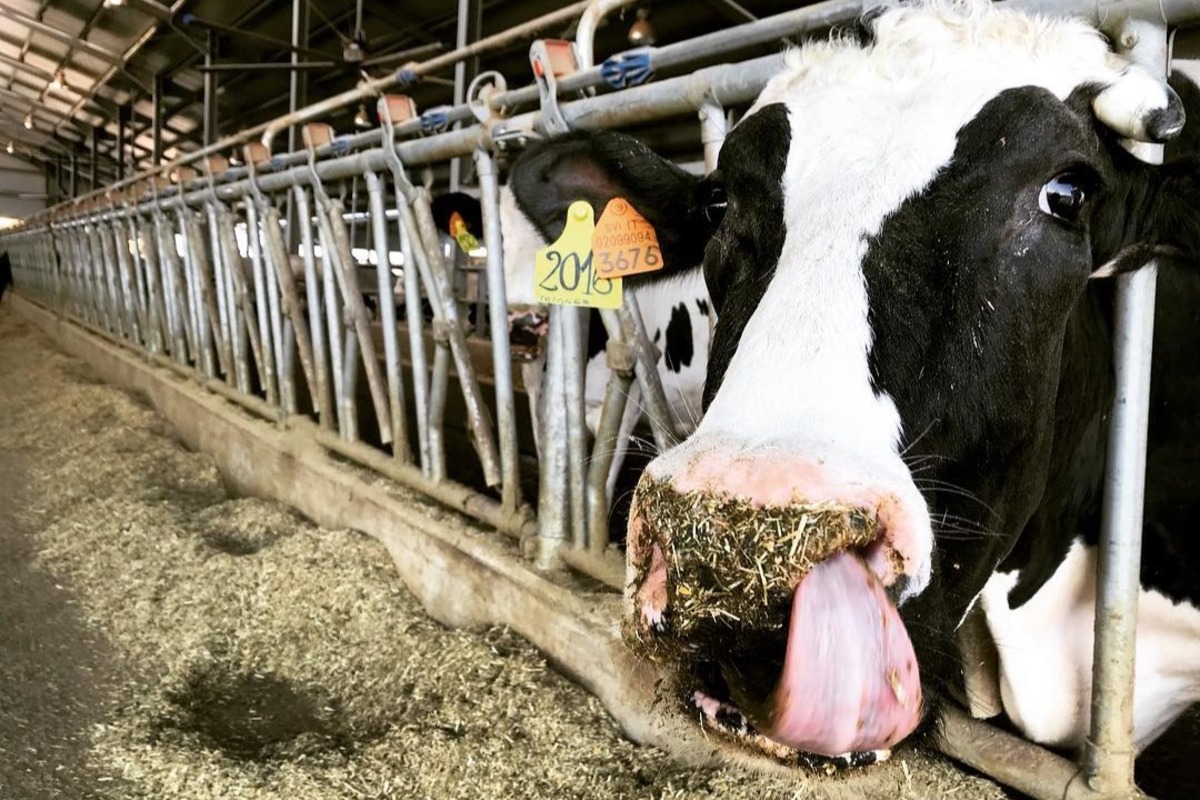
The herd includes about 320 milking cows and 700 total animals, raised in freestall barns with a Total Mixed Ration (TMR) feeding system. "Feeding is customised for the nutritional needs of the animals in each period," she says. "Everything is designed to maintain high welfare and consistent production."
Her role blends tradition with technology. "We use several management systems — one for cows, one for heifers, and one for both," she says. "There's also a national platform where, by law, we record every veterinary treatment."
Each animal wears a pedometer and activity collar linked to the farm's software. "Thanks to these systems, we can monitor milk yield, detect disease early, and identify estrus. We're able to prevent many issues before they start."
Research that connects welfare and the environment
Capretti's PhD project explores the relationship between animal welfare and greenhouse gas emissions. Her research covers four commercial farms across northern Italy, including Serraglio 2.
"The goal is to assess the environmental impact of dairy farms and understand how animal health can reduce emissions," she says.
Her fieldwork happens in the barn. Using Welfare Quality® protocols—an internationally established system for assessing farm animal welfare—her team evaluates indicators such as hoof health, mastitis, ketosis, hock and nasal discharge, body condition, cleanliness, and overall comfort, providing a standardised way to measure how well the animals are cared for. Then, they perform a Life Cycle Assessment (LCA) using the Agrecalc tool to calculate the farm's total emissions.
The data are then cross-referenced: do healthier cows correlate with lower emissions? "We're trying to prove that maximising cow health is good for the planet and for profitability," Capretti explains.
Unlike many academic studies, this one is conducted in real, competitive farms — not controlled university facilities. "That's what makes it interesting," she adds. "These are commercial dairies producing milk every day for the market."
Changing mindsets: Why sustainability pays
Convincing farmers that sustainability is profitable remains Capretti's toughest challenge. "Sometimes farmers think sustainability is only about emissions and that it's expensive," she says. "But in reality, it improves herd health and reduces costs. It's economic and environmental sustainability together."
Each year, her team reviews results with farm owners and vets, adjusting welfare protocols and management practices based on the data. "That's how we innovate within tradition," she explains.
Her findings have already shown measurable results. "When I was performing a statistical analysis on the farm, the data showed that as hoof health improved, milk production also increased," she says proudly. "The owner was happy too — it was a win for both animal welfare and production."
Tradition protected by innovation
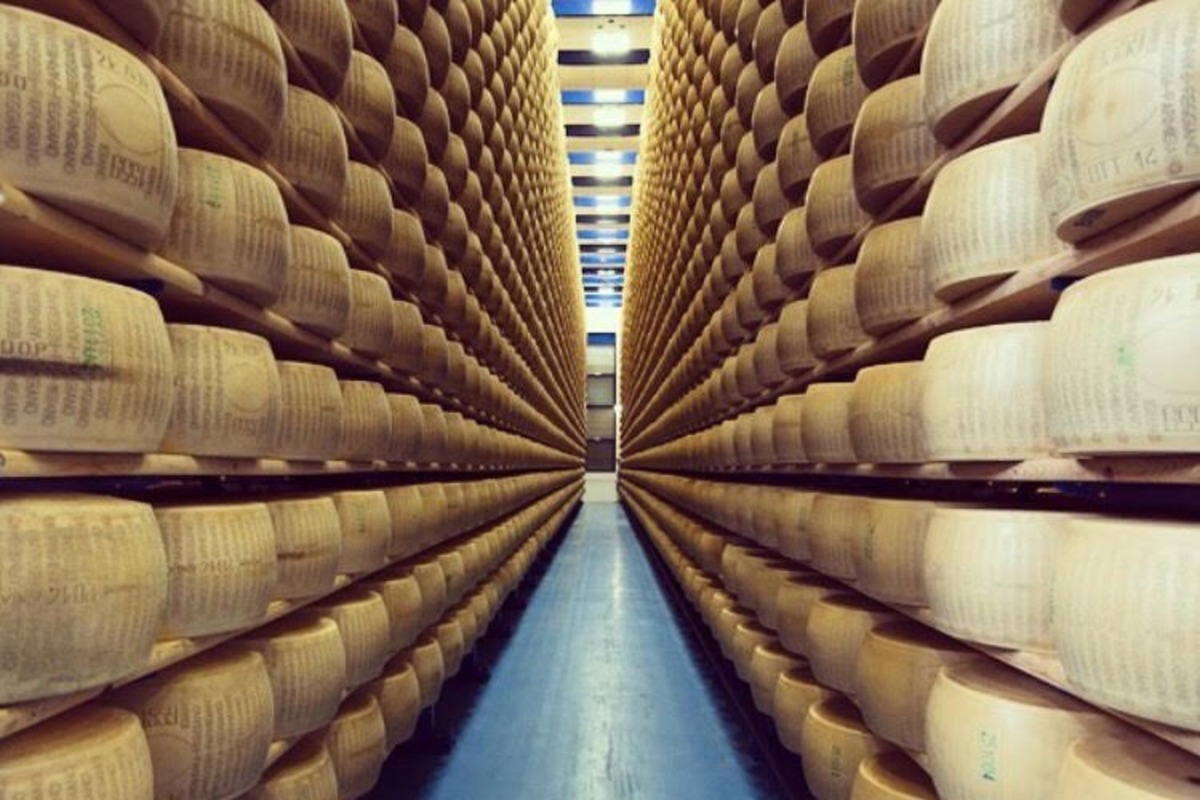
Parmigiano Reggiano production follows centuries-old regulations that ensure its unique quality and preserve traditional cheesemaking methods. For Capretti, these standards create an opportunity rather than a limitation.
"The cheesemaking process is carefully protected by law, which maintains its authenticity," she says. "This allows us to focus innovation on how we manage the animals and monitor their health."
Her research also aims to strengthen Parmigiano Reggiano's reputation internationally. "People in countries like France or the U.S. want proof that what they're buying is sustainable," she explains. "If farmers can demonstrate that, their products gain even more value on the market."
Breaking barriers and inspiring others
Her advice for researchers entering the field is simple but heartfelt:
"Don't give up. It's a really, really difficult topic, and it's a competitive field, but with collaboration and sharing of knowledge, we can reach our goals," said Capretti.
As one of the few women in livestock science in her region, Capretti hopes to inspire others: "It is a male-dominated world, but I like working here. It challenges me."
Her days end much like they begin — in the barn, reviewing data, synchronising files, and ensuring every number tells the story she hopes to prove: that sustainability is not just a buzzword, but a business advantage.
"I hope my work helps other farms," she says. "That's the goal — to find practical ways to apply what we learn."