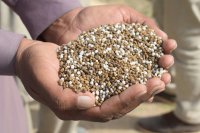

Zeolite is a natural mineral, one of the hydrated aluminosilicates, with a crystalline structure full of microscopic pores and channels. The type used in gardening is clinoptilolite. It is not a fertiliser and it does not feed plants on its own. For a gardener it is a soil conditioner, a material added to a potting mix or worked into a bed so that the soil holds and delivers water and nutrients more efficiently.
What zeolite does for potted plants and garden soil
The clinoptilolite structure carries a negative charge that attracts and holds positively charged nutrients. This gives it a very high cation exchange capacity, far higher than that of most soils, with a particular preference for ammonium and potassium. Nutrients sit on these exchange sites and are released gradually as the roots take them up, which softens the feast and famine of ordinary feeding. At the same time the pores hold water, so zeolite improves water-holding capacity and cation exchange capacity as a soil conditioner. Because it is a mineral and not organic matter, it does not break down, so a single addition keeps working for years.
Why gardeners add it to a potting mix
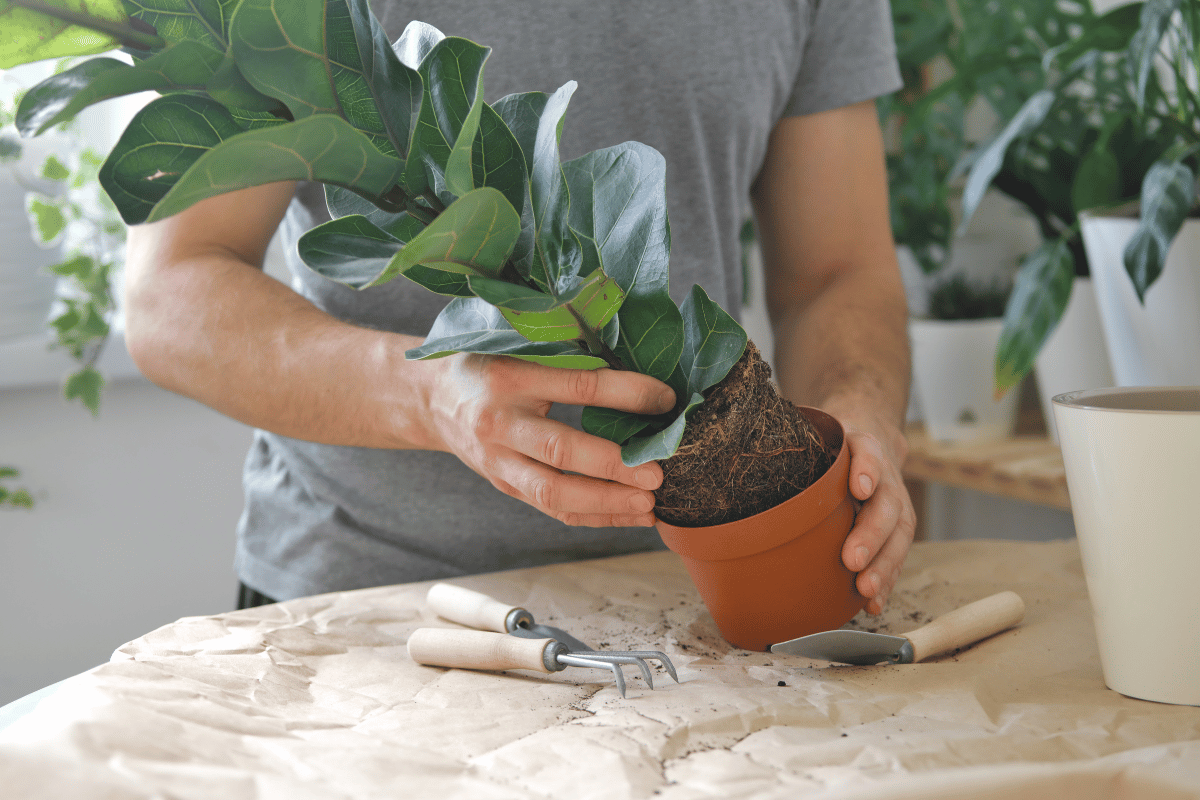
Inside a pot the root system works in a small volume that dries out fast and loses nutrients with every watering. A share of around 10 to 15% zeolite in the blend holds more water and nutrients near the roots, so watering can be less frequent and less feed is washed out of the drainage holes. It pairs well with the usual mix, holding nutrients while perlite keeps the air spaces open and coir or peat carries the bulk of the water. Good drainage in a container comes from the mix and the holes at the base, not from a layer of gravel at the bottom; zeolite instead works throughout the medium to balance water and air.
How zeolite differs from perlite and vermiculite
All three materials improve a growing mix, but in different ways. Perlite acts purely physically, opening pores for air and drainage without holding nutrients. Vermiculite holds water and some nutrients but compacts over time. Zeolite stands out because it combines water retention with genuine chemical activity, meaning the high cation exchange capacity that holds and releases nutrients, and it stays stable for years.
| Material | Main action | Nutrient retention | Durability |
|---|---|---|---|
| Zeolite | Holds water and nutrients, improves aeration | High, through cation exchange capacity | Very long, does not decompose |
| Perlite | Aeration and drainage | Minimal | Long |
| Vermiculite | Water retention | Moderate | Shorter, compacts over time |
Using zeolite in raised beds and garden soil
In a bed, the same properties help at ground level. Worked into the root zone before planting, zeolite holds water and nutrients where the roots reach them, which matters most in light, sandy soils that drain too fast and lose feed quickly. In heavy soils it adds pore space and improves how water moves through. A modest amount mixed into the top layer is enough, and because it does not decompose, the effect lasts for years from a single application. It also works well alongside organic amendments such as compost or worm castings, which supply the nutrients that the zeolite then holds and releases.
Zeolite in organic gardens
As a natural, non-fibrous mineral, clinoptilolite is allowed in organic growing and is safe for vegetable beds and edible containers. It is often used both as a conditioner and as a carrier that gives approved fertilisers a slower release. The quality depends on the clinoptilolite content and the particle size, so a garden-grade product matched to the use gives the best result.
What to watch
Zeolite does not replace feeding and does not deliver nutrients straight away, so it should not be treated as a fertiliser. The benefit shows gradually, through better use of the water and feed you already give. A share of around 10 to 15% in a pot is plenty, since more does not add benefit and takes space from the parts of the mix that hold water and air. Finally, the quality and purity of the product matter, because they set its real capacity to hold nutrients.
Frequently asked questions
What is zeolite and what does it do for plants
It is a natural mineral with a porous structure and a high cation exchange capacity. In the garden it acts as a soil conditioner, holding water and nutrients near the roots and releasing them gradually, so watering and feeding are used more efficiently.
Is zeolite a fertiliser
No. It does not provide nutrients in feeding amounts. It helps the soil or the mix hold and deliver more efficiently the nutrients already present or added through feeding.
How much zeolite do I add to a potting mix
A share of around 10 to 15% of the blend improves water and nutrient retention and structure, alongside materials such as perlite and coir. More than that gives no extra benefit.
Zeolite or perlite for pots
Perlite only opens air spaces and improves drainage. Zeolite also holds and releases nutrients through its cation exchange capacity, so many gardeners use both, perlite for aeration and zeolite for water and nutrient retention.
Does zeolite help with overwatering
It helps balance water and air in the mix, but it does not cure overwatering on its own. Drainage still depends on drainage holes and a well-structured mix, and on watering only when the medium needs it.
Is zeolite safe for a vegetable garden
Yes. The clinoptilolite used in gardening is a natural, non-fibrous mineral and is allowed in organic growing, so it is suitable for edible beds and containers.
Sources
- Zeolites Enhance Soil Health, Crop Productivity and Environmental Safety, Agronomy, MDPI (2021).
- Application of Zeolites for Sustainable Agriculture, a Review on Water and Nutrient Retention, Water, Air and Soil Pollution (2017).
- Effects of clinoptilolite zeolite on phosphorus dynamics and yield of Zea Mays L., PLOS One (2018).