
Unsettled weather over the current period, combined with high temperatures, sharply raises the risk of two walnut diseases, anthracnose and bacterial blight, according to the agricultural warning bulletins. Both attack leaves and nuts and are favoured by moisture, so a timely spray with full coverage of the tree is decisive. Below, we look at the symptoms, the timing of treatment, and the insect pest that often accompanies it in mountainous areas.
The two diseases and the damage
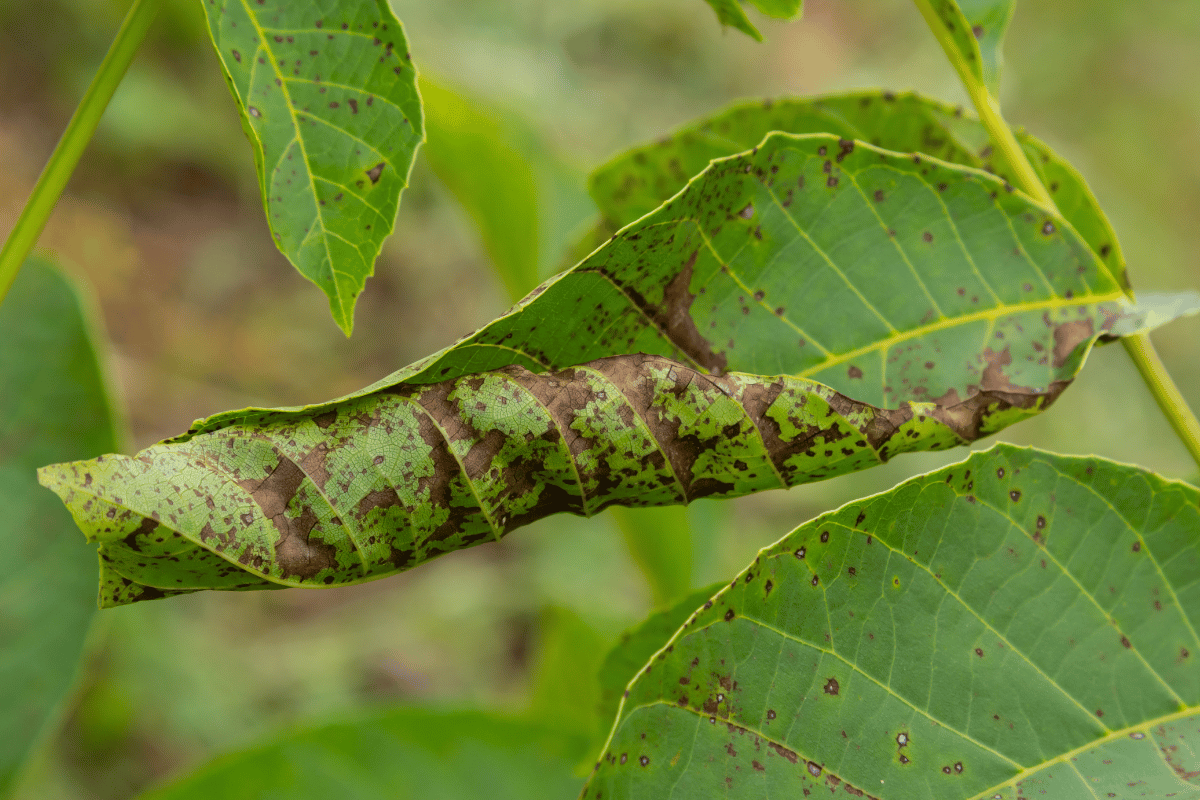
Anthracnose (Gnomonia leptostyla) is a fungal disease that shows as brown to black spots on the leaves and the green husk, leading to premature leaf fall and downgrading of the nuts. The fungus overwinters on fallen leaves, and infections start in spring, favoured by rain and high humidity.
Bacterial blight (Xanthomonas arboricola pv. juglandis) is caused by a bacterium and produces black, necrotic lesions on leaves, tender shoots, catkins, and nuts. When it attacks young nuts early, it causes nut drop, and later it lowers quality. It too is favoured by wet, rainy weather during catkin emergence and the early development of the nuts.
When and how to treat
Control of both diseases depends on timely, repeated protection, since there is no cure once the attack is established. The spray needs full coverage of the whole tree with the spray solution, and it is repeated as long as conditions favourable to the diseases persist.
| Region | Situation | Recommendation |
|---|---|---|
| Central Greece and other regions Bulletin 18 June |
Unsettled weather and high temperatures raise the risk of anthracnose and blight | Immediate spray with an approved product, especially where symptoms or a history exist, with repeat treatments under high humidity |
| Mountainous Crete Bulletin 19 June |
First codling moth flight underway, also on walnut | Indicative window 20-22 June, with good wetting of the nuts and the foliage |
Cultural measures that reduce humidity inside the canopy, such as proper pruning and the removal of the fallen leaves where the anthracnose fungus overwinters, strengthen the effect of the sprays.
The insect pest of the season
In mountainous areas, the codling moth (Cydia pomonella) attacks walnut as well as apple and pear, with the first flight underway and catches increasing. Protection continues with repeat sprays at intervals determined by the product, with good wetting of the nuts and foliage.
How to choose and apply the products
Use only products approved for walnut and for the specific disease or pest, from the official ministry database, and follow the label for dose, method, and timing. For the two diseases, suitable fungicides are used, often copper-based products, while for the codling moth, an approved insecticide is chosen.
The guidance above comes from each region's bulletins and serves as a general trend. The picture varies from orchard to orchard, depending on the region, microclimate, and history of attacks, so final decisions rest on your own inspections and the most recent local bulletin. For serious or doubtful attacks, consult an agronomist, and use only approved products in line with the label and the operator safety measures.
Sources
All data come from the agricultural warning bulletins of the Greek Ministry of Rural Development and Food (ΥΠΑΑΤ):
- Regional Plant Protection Centre of Volos, nut tree bulletin No 14 (18 June 2026).
- Regional Plant Protection Centre of Heraklion, apple, pear, and walnut bulletin No 4 (19 June 2026).