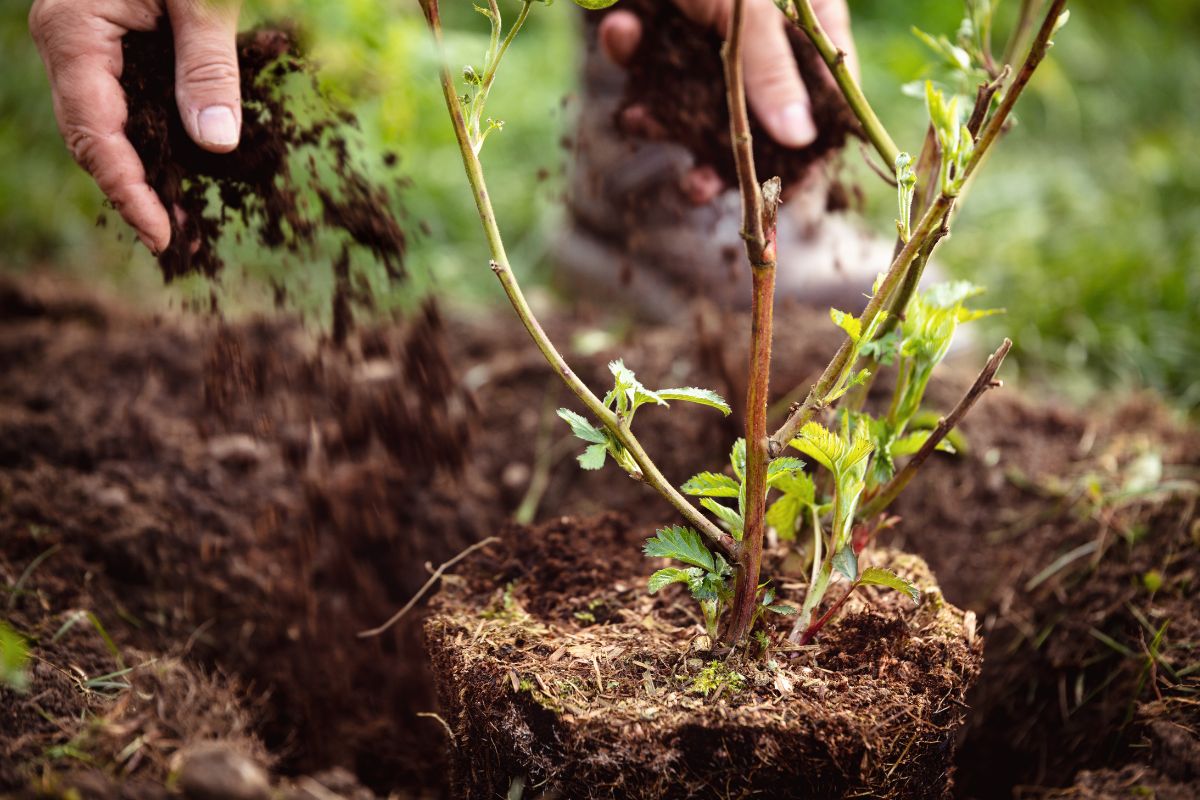
Environmental and Soil requirements for blackberries
It is essential always to do a soil analysis of your field so that you know what and how to apply any necessary fertilizers or fungicides. Generally, Blackberries and Raspberries have very similar soil requirements. They prefer sunny, open areas where the air can circulate through crops easily. Rubus sp. thrives in well-drained, rich, organic, and sandy loam soils, with a slightly acidic to neutral pH of 5.5 to 7 (ideally 6-6.8). Compared to other fruit trees/bushes, blackberries can tolerate a relatively wide range of soils (even clay) but need relatively deep soils, where the plant's roots can grow without a problem in 2.5 feet to 3 feet (0.76-0.9 m). In regions with spring frost problems and strong southwest winds during summer, choosing a site with a north-facing slope is best. This will also maximize the sun exposure of the plants and increase fruiting.
You can avoid choosing land near rivers or lakes because the damage can be irreversible if flooding occurs. Blackberries cannot grow on alkaline or wet soils, which can cause root rot. It is better not to plant Blackberries on soil that previously cultivated vegetables, such as peppers, potatoes, eggplants, and tomatoes. This is essential because the crop residues from vegetable plants may carry diseases, such as Verticillium wilt, that can contaminate your new plants.
Blackberries are very heat and frost-tolerant, and as a result, they can be grown in many parts of the globe, in USDA hardiness zones 4-9. Low-lying areas are susceptible to late frosts, which can damage young shoots and blossoms. Selecting higher ground helps mitigate frost risks. Blackberries can withstand temperatures from +5°F to -20°F (-15°C to -28°C), but they can be injured at lower temperatures. A late spring frost can also create extensive problems since the open flowers can be injured by temperatures below 28°F to 30°F (-2 to -1 °C).
When buying your plants, you can address the best-accredited nursery available in your region to obtain healthy and certified starting material. You can purchase blackberries as transplants, suckers, tips, root cuttings, or tissue-cultured plants. Taking root cuttings or transplants from a neighbor farmer is not recommended as they might carry diseases. With nursery plants, you will get more vigorous and long-lived Blackberries. Most local nursery stores sell Blackberries and Raspberries as potted plants. You can easily transplant these at any time, but the sooner in the season you transplant them, the faster they will establish.
It is best to do a soil analysis to determine the pH and what kind of fertilizers you need to apply before planting your crop. Incorporating organic matter (compost or well-rotted manure) in the planting rows some months before planting the blackberries will boost plant growth and facilitate crop establishment.
Weeds compete for nutrients and harbor pests. For this reason, it is important to prepare the site by removing all perennial weeds through cultivation or applying herbicides several months before planting. A clean start prevents competition during the critical establishment phase.
Tip—There are a couple of things to remember before planting. Whichever plant propagation material you use, remember to remove any weeds, prepare a loose and friable planting bed, and add the necessary fertilizers. Always water the plants after planting them so the roots do not dry. You can apply mulch around the plants to keep insulation and soil moisture and prevent weeds from growing.
The farmer can plant the blackberries in raised beds (6-10 in high and 2-3 feet wide) for better drainage. Like raspberries, blackberries can also be cultivated in high tunnels to protect the plants from frost and expand the harvesting period. The tunnels may have a distance of 10-15 feet between them and should be oriented parallel to the strongest prevailing winds.
Planting Blackberries
You can plant bare-root blackberries in late fall or early spring when the soil is workable. Planting can occur at any time for potted plants, though extra care with watering is essential during hot months.
Usually, farmers plant blackberries 3-4 feet (90-120 cm) or 6.5 - 8 feet (2.0 - 2.4 m) apart between plants in a single row and 8-12 feet (2.5-3.6 m) between rows, depending on the type. More specifically, trailing blackberries that will be supported can be placed in relatively narrow rows 8 feet (2.5 m) apart, while erect types that spread more are recommended to have a 10-12 feet (3-3.6 m) row distance. The planting hole should be deep enough (around 0.5 inches or 1.27 cm) so that the soil covers the tops of the root balls well, but you need to leave some space so the roots can grow without bending.
For blackberries, the farmer can use a two-wire trellis supported on metal fence posts (wire distance: 3 and 5 feet (0.9 - 1.52 m) from the ground). The trellis can be established together with planting or a couple of months later. The row width should not exceed 12 inches (30 cm). It is important that you train your plants accordingly.
After planting care and mulching
Always apply fertilizers before planting and never directly in the planting hole so you do not burn the roots. Additionally, you can make a small basin around the cane so the water stays there and does not run off. You can water at least twice or three times a week, providing the plants with 1-2 inches of water (25-50 mm) (weekly). Overwatering should be avoided since soggy soil can increase the risk of root rots.
You can also add mulch around the plants to prevent excessive water evaporation, insulate the roots, and prevent weeds from growing. The mulch can be bark mulch, wood chips, or shavings. If possible, avoid sawdust because it tends to compress the soil over time, making it difficult for water to reach the roots. If you are growing blackberries at home, you can also use pine needles as mulch. Remember that pine needles tend to make the soil a little acidic after a while, but adding a little bit of lime will solve this problem.
Once the plants grow, use a trellis and tie the canes because some varieties need support. Support allows the air to circulate and the sunlight to come through, preventing any disease from spreading and making picking easier and faster. When you are planting Blackberries, do not prune the canes. Pruning for training is done after the plant has been established in the field (1 year after planting). Most blackberries need around 3 years to start producing fruits and will remain productive for 8 to 12 years if no significant problems due to pests or diseases occur.
References
- Blackberries (PDF) – Arizona
- Blackberry and Raspberry Culture for the Home Garden – Oklahoma State University Extension
- Blackberries for the Home Garden – Ncsu
- Blackberries for the Home Garden – Ncsu
- Viewcontent Cgi – usu.edu.
- Commercial Blackberry Production – Oklahoma State University Extension
- UC ANR publication 27140 (PDF)
Further reading
- Blackberry Nutritional Value and Health Benefits
- Blackberry vs Black Raspberry - Similarities and Differences
- Blackberry Plant Information - How to Identify Blackberries
- Site Selection, Soil Preparation, and Planting of Blackberries
- Blackberries Propagation and Pollination
- How to Prune and Train Blackberries
- Water Needs and Irrigation of Blackberries
- Nutrient Needs and Fertilization of Blackberries
- Blackberry Pests, Diseases and Weed Management
- Blackberry Yield, Harvest, and Storage