
A mineral fertiliser terminal on the Baltic coast has been handling grain since August, and a port inside the Arctic Circle is preparing to load its first cargoes in October. Both are improvisations forced by the same problem. Drone and missile strikes have disrupted the Black Sea ports through which almost 90% of Russia's seaborne grain moved last season, and the world's largest wheat exporter is rebuilding its route to market roughly 2,700 kilometres to the north.
Reuters reported on 21 September, citing five sources in the shipping and grain industries, that Russian companies have been re-purposing fertiliser, coal and other cargo terminals at Baltic and Arctic ports to handle grain. The scale of the mismatch is the story. Grain-handling capacity at Russia's Baltic ports was estimated by analysts at between 2 and 7 million tonnes a year, against more than 60 million tonnes in the southern ports where the traffic is leaving.
A fertiliser terminal that had never shipped grain
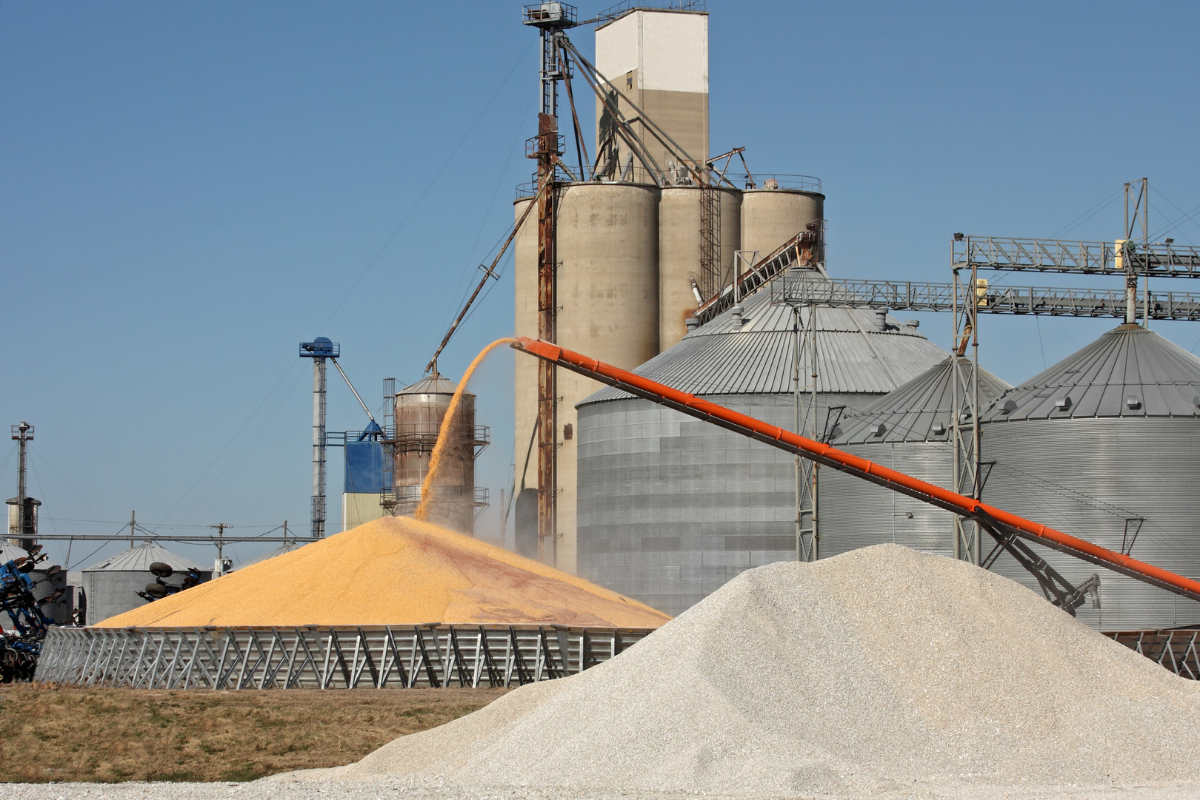
The clearest example is Ultramar, a privately owned terminal at the port of Ust-Luga with a declared capacity of 37 million tonnes a year. It specialises in mineral fertilisers and had not previously handled grain. According to Reuters' sources, it was quickly adapted, began grain transhipment in August, and received rail applications of about 260,000 tonnes for September, with the cargoes destined for Egypt and Saudi Arabia. Grain traded by Demetra is also moving through the facility.
St Petersburg has been drawn in as well, with the Modul terminal able to handle up to 70,000 tonnes of grain a month in containers, a more expensive method than bulk loading. Russian Railways has given high priority to grain shipments bound for the Baltic and Arctic, and these movements have already received state subsidies.
Murmansk is the more unusual move. Russia's fourth-largest port, with an annual capacity of up to 24 million tonnes, said it is preparing to start grain exports in October. It normally handles ore, metals, and coal, and no new construction has been reported, suggesting existing terminals are being adapted. The first 40,000 tonnes from Stavropol Krai have been agreed for delivery by rail. Murmansk stays ice-free year-round and can take Panamax vessels, so the physical constraints are manageable even if the logistics are new.
The numbers behind the redirection
The volumes leaving the south are far larger than the north can absorb. Russia shipped 46.3 million tonnes of grain through Azov and Black Sea ports in the 2025/26 season, while its Baltic ports handled about 1 million tonnes in the same period. Baltic throughput has been rising, reaching roughly 1.2 million tonnes in the first half of 2026, up from 865,000 a year earlier, with Vysotsk at 694,000 tonnes, Ust-Luga at around 260,000 tonnes, and the Big Port of St Petersburg at 105,000 tonnes. Those are meaningful increases on a small base and remain an order of magnitude short of what the southern ports moved.
Rail bookings show the shift in intent. Requests for grain shipments by rail to Baltic ports reached 5 million tonnes by 18 August, mostly for August and September delivery, against 6 million tonnes for the Black Sea ports of Novorossiysk and Tuapse. A route that carried a twentieth of the traffic is being asked to carry almost as much as the main one.
Russia is also using the Caspian. In the first ten days of September, Astrakhan shipped 87,500 tonnes of grain, and Makhachkala shipped 14,200 tonnes, with Iran as the main destination.
A record harvest with a collapsing export programme
The constraint sits in logistics rather than in supply. Russia's agriculture ministry reported 120 million tonnes of grain harvested, including more than 90 million tonnes of wheat, as of 18 September. Moscow also set export duties on wheat, barley and corn to zero from 1 September to 31 December, removing a charge that had stood at 787.5 roubles a tonne on wheat, which is the action of a government trying to push volume out rather than restrain it.
The exports have fallen anyway. SovEcon estimates Russian wheat exports for July to September at 5.4 million tonnes, 53% below a year earlier and 58% below the five-year average of 12.9 million, which would make it possibly the weakest quarter since 2010/11. Monthly forecasts have recently been revised up, with SovEcon at 2.1 million tonnes for September, IKAR above 2.0, and Rusagrotrans at 2.2, so the floor may have been reached. IKAR quoted 12.5% protein wheat at USD 268 a tonne FOB Vysotsk and Ust-Luga for November delivery, down 6 dollars on the week.
That gap between a record-scale harvest and a collapsing export programme is the same pattern visible at the world level, where supply and trade have moved in opposite directions, and it feeds the price pressures recorded when world food prices reached their highest level since November 2022.
The Baltic states are pricing the transit
The northern route runs partly through countries that do not want the traffic. Latvia's Saeima voted on 17 September, by 53 votes to 12, to accelerate revisions of rail fees for Russian grain transit. The Cabinet has asked the rail regulator, LatRailNet, to assess a charge of up to 300% of the current rate, meaning up to triple the current rate. The bill itself fixes no percentage, leaving LatRailNet to set the rate within a week of the law taking effect, and it cuts the publication period for fee changes from two months to two weeks. The regime runs until 31 December 2026, and the criterion is the dispatch station in Russia rather than the cargo's declared origin.
A bill for a complete ban on Russian and Belarusian grain transit sits in the National Economy Committee, unvoted. On the day of the vote, farmers from Jēkabpils drove several dozen tractors to Krustpils station, demanding exactly that. Estonia has called the Russian use of its ports for grain unacceptable.
What it means for buyers around the Mediterranean
Egypt and Saudi Arabia are the named destinations for the first Ultramar cargoes, and they are the buyers that Mediterranean millers compete with for Black Sea wheat. Cargo loading at Ust-Luga instead of Novorossiysk entails a longer voyage, higher freight, and a route through waters where transit policy is being rewritten, and the cost is reflected in the offer price.
The wider consequence is the concentration of risk. When a single exporter that supplies a third of the world's wheat trade has to move its volume through terminals designed for fertiliser and ore, the market's tolerance for any further disruption falls. That is the condition under which weather and trade turbulence move global cereal markets faster than fundamentals alone would suggest, and it is why importers are paying attention to which port a cargo loads at rather than only to the price per tonne.
Sources
- Reuters. (2026). Exclusive: Russia adapts fertilizer, coal terminals in Baltic, Arctic ports to export Black Sea grain. 21 September 2026.
- Maritime Professional. (2026). Russia repurposes fertilizer, coal terminals to export grain. 21 September 2026.
- Ukrainian Shipping Magazine. (2026). Russia to convert fertilizer and coal terminals into grain due to problems in the Black Sea. 22 September 2026.
- World Grain. (2026). Russia rerouting grain exports to Baltic Sea.
- UkrAgroConsult. (2026). Russia expands grain exports via the Baltic and Caspian routes. September 2026.
- UkrAgroConsult. (2026). Russia converts Baltic and Arctic terminals for grain exports. 22 September 2026.