The hot, dry conditions of summer limit the spread of scab, yet in irrigated orchards with a humid microclimate infections continue. At the same time, this period is right for managing fire blight and for preventing bitter pit in the fruit. Each of the three problems has a different cause and calls for a different approach.
| Problem | Cause | Recommendation |
|---|---|---|
| Scab | A fungus favoured by moisture | Repeat sprays, alternating or mixing fungicides from different groups |
| Fire blight | A bacterium overwintering in cankers | Remove infected shoots with 30 cm of healthy wood and burn them in October |
| Bitter pit | A shortage of calcium in the fruit | 4 to 5 calcium sprays every 10-14 days, the last two weeks before harvest |
Scab persists in humid microclimates despite the heat
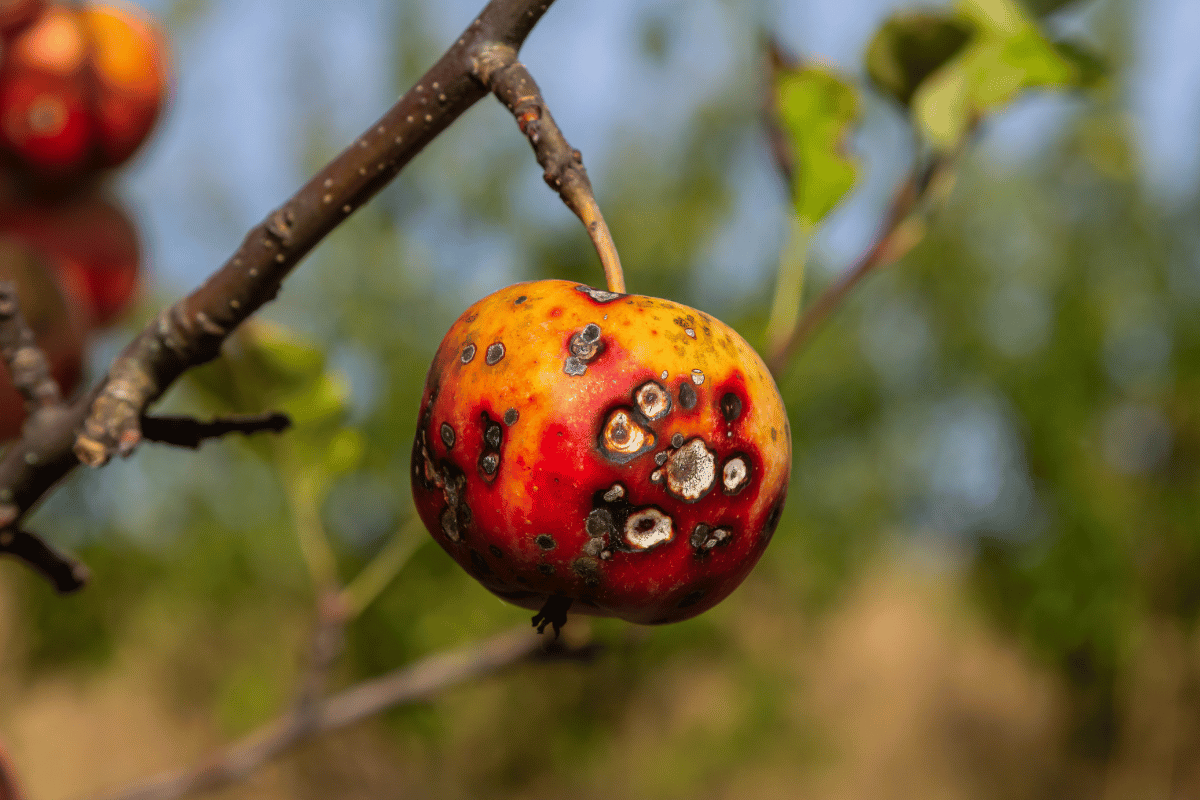
Scab is caused by a fungus that overwinters in fallen leaves and needs leaf wetness to infect. High temperatures and drought limit its spread, but in orchards in humid areas or where irrigation increases the microclimate's relative humidity, infections persist. On leaves and fruit, it produces brown, corky spots that downgrade quality and can cause cracking. Where symptoms have appeared or there is a history of serious infections, sprays are repeated, alternating fungicides from different chemical groups or applying a mixture of products from different groups, so that resistant strains do not develop.
The heat inactivates the bacterium and opens the removal window
Fire blight is caused by a bacterium that overwinters in cankers on the tree and spreads in spring through the blossoms and the tender growth, causing a shepherd's crook wilt and blackening of shoots. The hot, dry conditions now keep the bacterium inactive, which is why this is the right time to collect and remove infected shoots, along with at least 30 centimetres of healthy wood. The dry branches are gathered at one edge of the orchard and burned in October. Because the disease is more severe on vigorous trees with abundant tender growth, balanced nitrogen fertilisation and irrigation are advised, without the excess that fuels new infections.
Bitter pit comes from a shortage of calcium in the fruit
Bitter pit is a physiological disorder, not an infection, and is caused by a shortage of calcium in the fruit. Calcium moves poorly within the plant and reaches the fruit with difficulty, especially when growth is vigorous, the crop load is heavy, or irrigation is uneven, producing brown or black spots beneath the skin that reduce marketability. In orchards with a history of it, 4 to 5 sprays with approved calcium products are recommended every 10-14 days, with the last one two weeks before harvest, while temperatures above 28-29°C are avoided to prevent toxicity. Balanced nitrogen fertilization, steady irrigation, and the removal of excess vegetation, which competes with the fruit for calcium, also help. How calcium is taken up by the fruit, and why the spray is directed straight at it, is covered in our guide on foliar fertilization.
Sources
- Regional Plant Protection Centre of Volos, technical bulletin on pome fruit diseases No 9 (6 July 2026).