
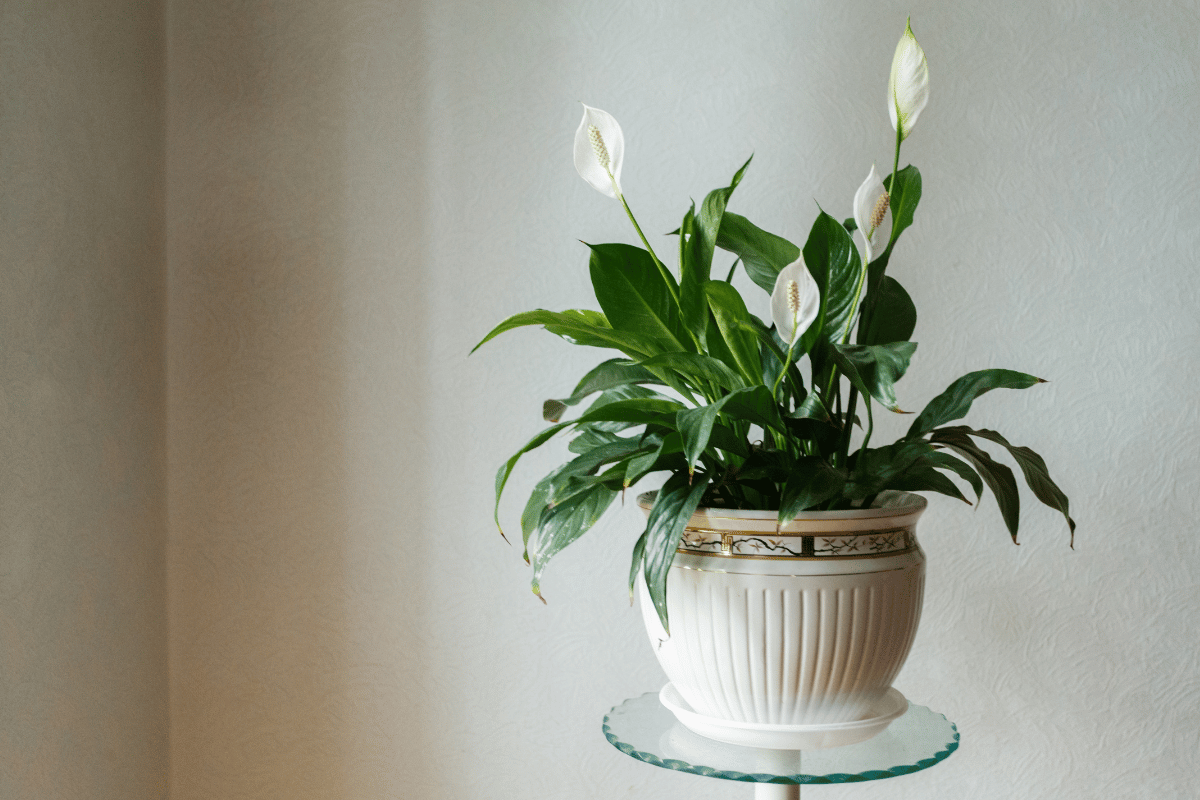
The peace lily (Spathiphyllum), sometimes called spathe flower or white sail plant, is one of the most rewarding houseplants you can grow. Native to the tropical forests of Central and South America and parts of the Pacific islands, it belongs to the Araceae family and produces glossy, dark green leaves on long petioles alongside elegant white spathes. These leaf-like bracts surround a central spadix and give the plant its distinctive calla lily appearance.
Mature plants typically reach 30 to 120 cm (1 to 4 feet) tall, though dwarf varieties stay compact at around 30 to 38 cm (12 to 15 inches). Peace lilies are semi-evergreen perennial herbs that form dense clumps over time, and under the right conditions they can bloom throughout the year. Their combination of attractive foliage, tolerance of lower light, and air-cleaning properties has made them a staple in homes, offices, and indoor gardens around the world.
Light and placement
Bright, indirect light produces the best growth and the most flowers. Peace lilies tolerate low light surprisingly well and will survive in a dim corner, but bloom production drops off significantly without adequate brightness. A good rule of thumb: if there's enough light to read comfortably, your peace lily will likely flower.
Place the plant near a north- or east-facing window, or about 60 to 90 cm (2 to 3 feet) back from south- or west-facing windows where direct sun won't hit the leaves. Morning and late afternoon sun is generally safe, but harsh midday rays will scorch foliage, leaving bleached or brown patches. Equally important is keeping plants away from cold drafts, air conditioning vents, and heating registers, all of which cause stress and leaf damage.
Watering
Peace lilies prefer evenly moist soil but absolutely cannot sit in standing water. The simplest approach: push a finger into the top 2.5 to 5 cm (1 to 2 inches) of potting mix and water thoroughly when it feels mostly dry. During active growth this often works out to roughly once a week, though pot size, humidity, and season all affect frequency.
When you do water, soak the mix until about 10 to 15 percent drains from the bottom of the pot, then empty the saucer. Use room-temperature water, as cold water can shock the roots. In winter or cooler months, cut watering back by roughly 25 to 50 percent, since the plant's growth slows and the mix stays moist longer.
One of the peace lily's most endearing traits is its built-in watering indicator: the leaves droop dramatically when the plant gets too dry, then perk back up within hours of a good drink. That said, it's better not to rely on wilting as your routine cue, since repeated drought stress weakens the plant over time. On the other end of the spectrum, chronically soggy soil invites root rot, the single biggest killer of indoor peace lilies.
If your tap water is heavily chlorinated or fluoridated, consider letting it sit in an open container overnight before using it. Peace lilies are sensitive to these chemicals, and fluoride in particular can cause brown leaf tips over time.
Soil and potting
A rich, well-drained potting mix is ideal. Peat- or bark-based indoor mixes with plenty of organic matter work well. If the mix feels too dense or holds water for days after watering, lighten it by stirring in a handful of perlite or orchid bark to improve aeration and drainage.
Peace lilies actually prefer to be slightly root-bound, so resist the urge to pot them in an oversized container. Choose a pot only 2.5 to 5 cm (1 to 2 inches) larger in diameter than the current root ball. Larger pots hold excess moisture around the roots and increase the risk of rot.
Repot every one to two years, ideally in late winter or early spring before the main growing season begins. Signs that it's time include roots circling the inside of the pot, growing through drainage holes, or pushing up above the soil surface. When repotting, gently loosen any circling roots so they can spread into the fresh mix.
Fertilizing
Peace lilies have modest nutrient requirements and are easily overfed. A balanced liquid houseplant fertilizer (such as 20-20-20) diluted to quarter strength every six to eight weeks during spring and summer is plenty. Some growers feed as little as three times a year with good results. Plants growing in low light need even less, since slower growth means lower nutrient demand.
Excess fertilizer is a common cause of brown leaf tips and can damage roots. If you notice salt crust forming on the soil surface or persistent tip browning, flush the potting mix thoroughly with plain water, running several pots' worth through to leach out accumulated salts. Skip fertilizing entirely through autumn and winter when growth naturally slows. For those interested in organic fertilizer options, diluted compost tea or worm casting extract can work well for peace lilies, though the same principle of restraint applies.
Temperature and humidity
These tropical plants thrive in warm conditions. Daytime temperatures of 18 to 29°C (65 to 85°F) are ideal, with nighttime temperatures dropping no more than about 5°C (10°F) cooler. Growth slows noticeably below 16°C (60°F), and prolonged exposure to cold can cause leaf damage or outright collapse.
Humidity at or above normal indoor levels suits peace lilies well, but dry air, common in heated or air-conditioned spaces, frequently causes brown, crispy leaf edges. If this is an ongoing problem, try misting the foliage every few days, placing the pot on a tray of damp pebbles (with the pot sitting above the waterline, not in it), or grouping the plant with other houseplants to create a more humid microclimate. For most homes, maintaining humidity somewhere in the range of 40 to 60 percent prevents issues.
Pruning and maintenance
Peace lilies are low-maintenance plants, but regular grooming keeps them healthy and looking their best. Trim yellowed or browned leaves at the base using clean, sharp scissors, since once a leaf discolors it won't recover. Cut spent flower stalks at soil level after blooms fade; removing them encourages the plant to redirect energy toward new growth and future flowers.
Every few weeks, wipe the leaves with a soft, damp cloth to remove accumulated dust. This isn't just cosmetic. Dusty leaves photosynthesize less efficiently, and the buildup can harbour pests like spider mites or mealybugs. Clean foliage also allows the plant to play its role in improving indoor air quality more effectively.
How to propagate by division
Peace lilies don't grow from stem cuttings or leaf cuttings, so division is the way to go. Spring is the best time, ideally when you're already repotting.
Gently lift the entire root clump from its pot and shake off excess soil. You'll see that the plant is made up of multiple crowns, each with its own cluster of leaves, stems, and roots growing from a shared rhizome. Separate these sections carefully by hand, teasing roots apart, or use a clean, sharp knife to cut through thicker connections. Each division needs at least a few healthy leaves and a good portion of roots to establish successfully.
Pot each division into fresh, slightly moist potting mix in a container just a bit larger than the root mass. Water well to settle the soil around the roots, then place in bright indirect light. Keep the new plants warm and the soil consistently moist, but hold off on fertilizing for two to four weeks while the roots recover and begin growing into the new mix. Most divisions establish quickly and resume normal growth within a month or so.
Common pests and diseases
Peace lilies are relatively resistant to serious pest problems, but they're not immune. Mealybugs and scale insects are the most common culprits, showing up as cottony white clusters or small brown bumps on leaves and stems. Wipe them off with a cloth dipped in rubbing alcohol, or treat heavier infestations with insecticidal soap. An integrated approach to pest management that combines good hygiene, early detection, and targeted treatment works best for indoor plants.
Fungus gnats sometimes appear when soil stays consistently wet. They're mostly a nuisance rather than a threat, but you can discourage them by letting the top layer of soil dry out a bit more between waterings and ensuring pots drain freely.
Root rot is by far the most serious disease risk. It's almost always caused by overwatering or poor drainage rather than a pathogen entering on its own. If you notice yellowing leaves, a mushy stem base, or a sour smell from the soil, unpot the plant immediately, trim away any dark, soft roots, and repot into fresh mix in a clean container with good drainage.
Browning leaf edges or spots are common but usually trace back to environmental stress (dry air, inconsistent watering, or fertilizer burn) rather than disease. Address the underlying cause and the new growth should come in clean.
Troubleshooting common problems
Wilting or drooping leaves almost always mean the plant is too dry. Water thoroughly and the foliage should recover within a few hours. If the soil is already wet and the plant is still limp, suspect root rot and check the roots for dark, mushy tissue. Repot if necessary.
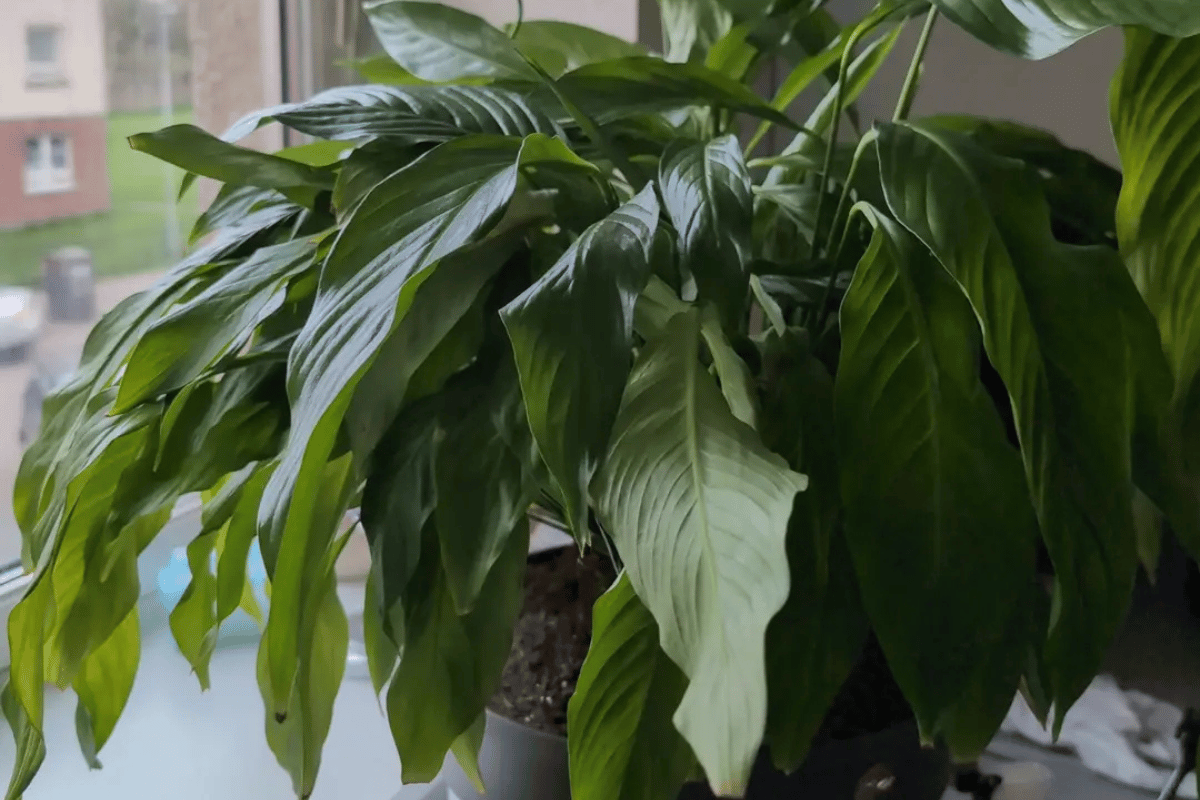
Yellow leaves typically signal inconsistent watering or a nutrient deficiency. Remove discolored leaves at the base, even out your watering routine so the soil stays evenly moist, and resume light fertilizing during the growing season. Some yellowing of the oldest, lowest leaves is perfectly normal as the plant redirects resources to newer growth.
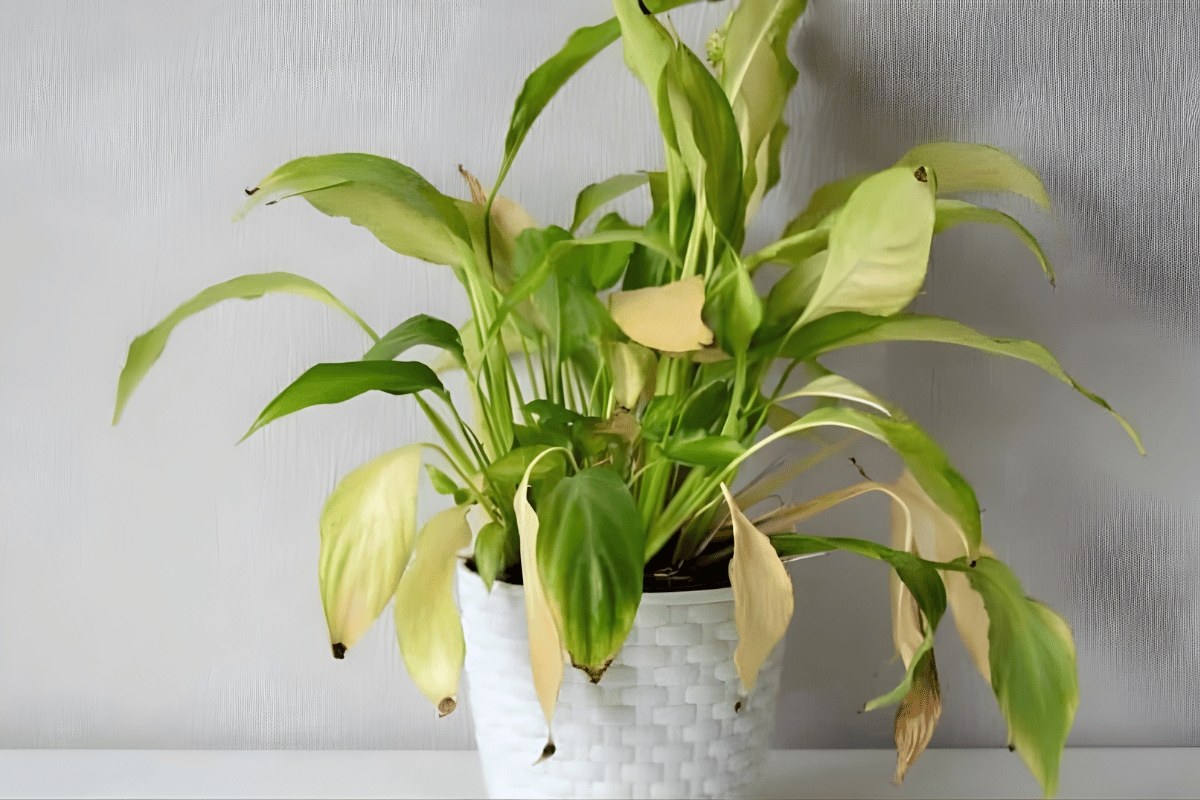
Brown leaf tips point to dry air, underwatering, or salt buildup from fertilizer. Increase humidity, trim the crispy tips with clean scissors (cut just inside the brown margin to avoid wounding healthy tissue), and flush the soil with plenty of fresh water to wash out excess salts.
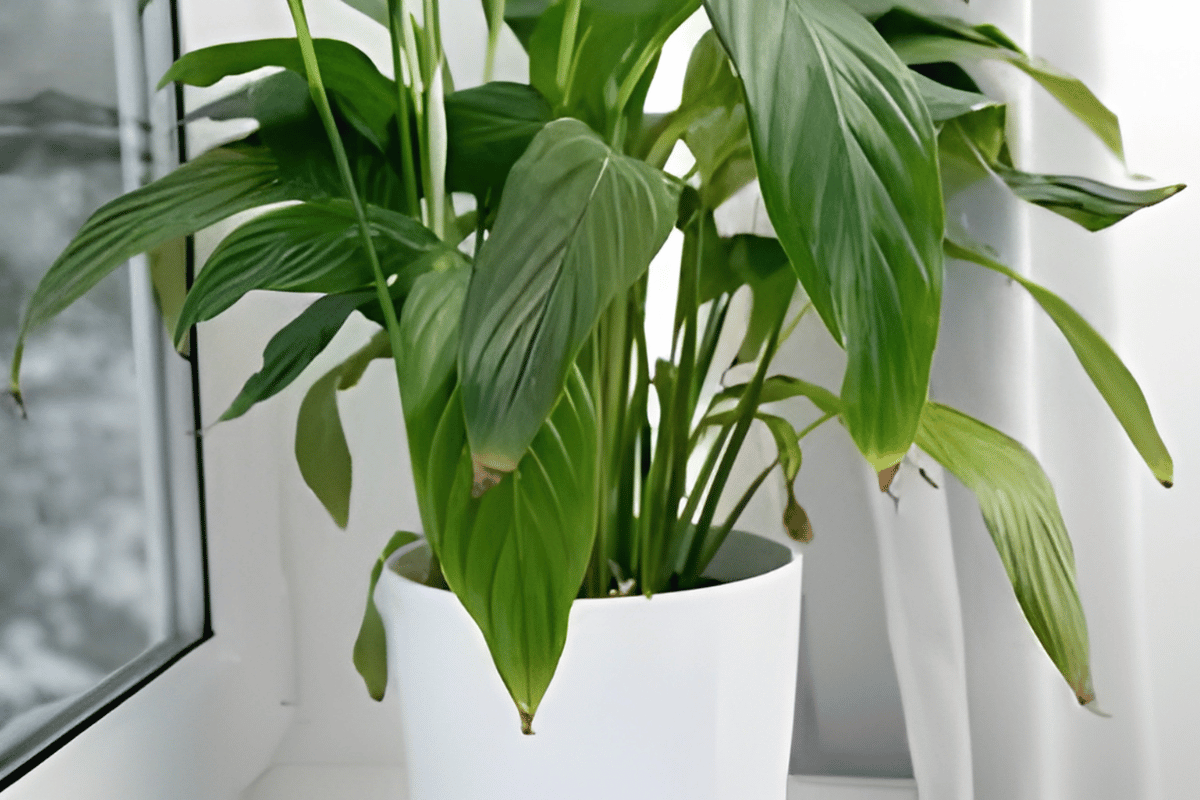
No flowers is usually a light problem. Move the plant to a brighter spot with strong indirect light. A light feeding with balanced fertilizer during spring can also help trigger blooming. Plants that have been recently divided or repotted may also skip flowering for a season while they re-establish.
Toxicity and safety
All parts of the peace lily contain calcium oxalate crystals, which cause immediate irritation to the mouth, tongue, and throat if chewed or swallowed. Symptoms in pets and children include drooling, difficulty swallowing, and vomiting. The crystals can also irritate skin in sensitive individuals.
Keep peace lilies out of reach of curious cats, dogs, and young children. If you're handling the plant extensively during repotting or division, wearing gloves is a sensible precaution. While peace lily ingestion is rarely life-threatening, it's unpleasant enough to warrant caution.
Popular varieties worth growing
Not all peace lilies are alike, and choosing the right variety for your space makes a real difference. Spathiphyllum wallisii is the classic compact form, topping out around 30 to 40 cm (12 to 15 inches), making it perfect for desks, shelves, and small rooms. 'Mauna Loa' is a larger, vigorous cultivar that reaches about 90 cm (3 feet) with broad leaves and generous flowers, making it a strong statement plant. For truly dramatic scale, 'Sensation' grows up to 1.8 m (6 feet) tall with enormous ribbed leaves, ideal as a floor specimen. And for something a little different, 'Domino' features striking white-variegated foliage that adds visual interest even when the plant isn't in bloom.
Conclusion
Peace lilies reward minimal effort with maximum impact. Give them warm temperatures, consistent moisture without waterlogging, bright indirect light, and the occasional light feed, and they'll provide glossy foliage and graceful white blooms for years. They're forgiving enough for beginners and interesting enough for experienced growers, especially once you start dividing mature plants and experimenting with different varieties. Just remember to keep them away from pets and small children, and you'll have one of the most reliable and attractive houseplants around.
References
- Clemson University Home & Garden Information Center. (n.d.). Peace lily. Clemson Cooperative Extension.
- South Dakota State University Extension. (n.d.). Care of peace lilies. SDSU Extension.
- NC State University. (n.d.). Spathiphyllum. NC State Extension Gardener Plant Toolbox.
- University of Florida IFAS. (n.d.). Florida foliage house plant care: Spathiphyllum.
- Iowa State University Extension. (n.d.). Easy low-maintenance houseplants. Yard and Garden.
- Iowa State University Extension. (n.d.). How to propagate houseplants by division and offsets. Yard and Garden.
- University of Arkansas Division of Agriculture. (n.d.). Spath (Peace lily). Plant of the Week.