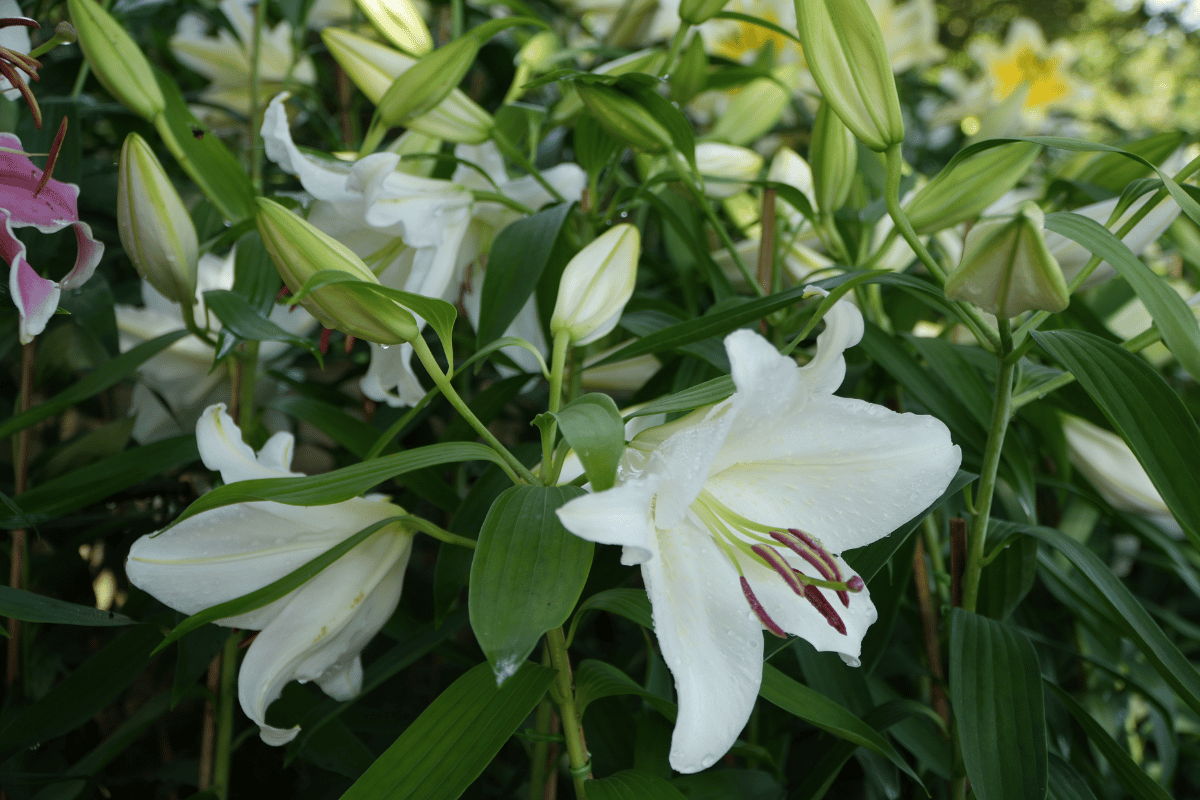
The lily (Lilium) is one of the most spectacular flowering bulbs you can grow, with large trumpet- or bowl-shaped blooms, a powerful fragrance, and colors that command attention. It grows in the garden and in containers, and it's a favorite for cut flowers.
Before we go further, a clarification that saves a lot of confusion. Many different plants get called "lily", but the true lily is the genus Lilium, a summer-flowering bulb. It shouldn't be confused with the calla lily (Zantedeschia), the daylily (Hemerocallis), the lily of the valley (Convallaria), or amaryllis, which are separate plants with different needs.
This guide covers how to plant and care for lilies, from bulb to bloom, along with one critical point for anyone who owns a cat, because lilies are among the most dangerous plants of all for them.
The Madonna lily, one of the oldest cultivated flowers
One of the best-known species is the white Madonna lily (Lilium candidum), among the oldest ornamental plants in cultivation, grown for around 3,000 years and depicted in ancient Mediterranean art. It carries strong symbolism of purity and has long been associated with religious imagery.
The Madonna lily is native to the eastern Mediterranean and is one of the few species that tolerate slightly alkaline, limey soils. It also has a quirk in how it's planted, which we'll come to, since it wants very shallow planting, unlike most other lilies.
Types and varieties
The genus Lilium includes dozens of species and hundreds of hybrids. In gardens and florists, you'll mostly meet a few broad groups.
Asiatic hybrids: the easiest and toughest, in rich colors. They flower early in summer. They have no scent but are ideal for beginners.

Oriental hybrids: with large, intensely fragrant flowers that bloom later in summer. The popular Stargazer type belongs here.
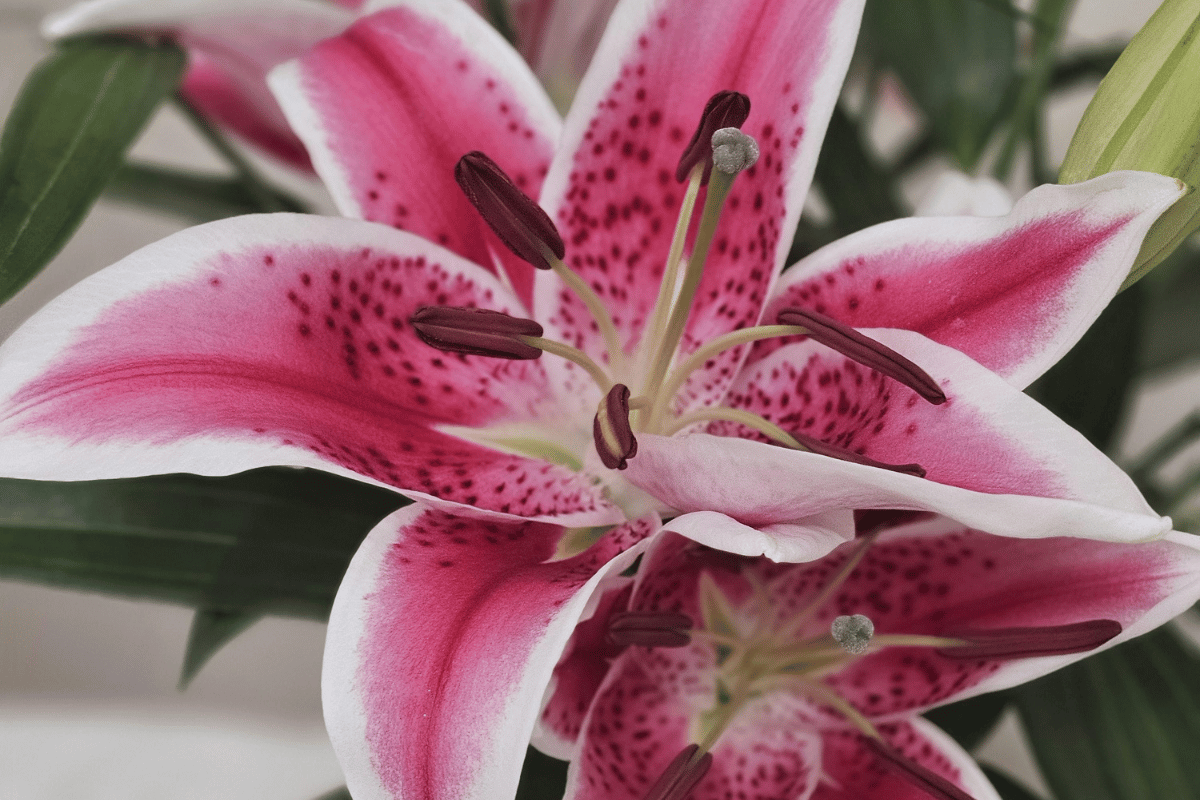
Lilium candidum (Madonna lily): the white, fragrant lily with deep historical significance.
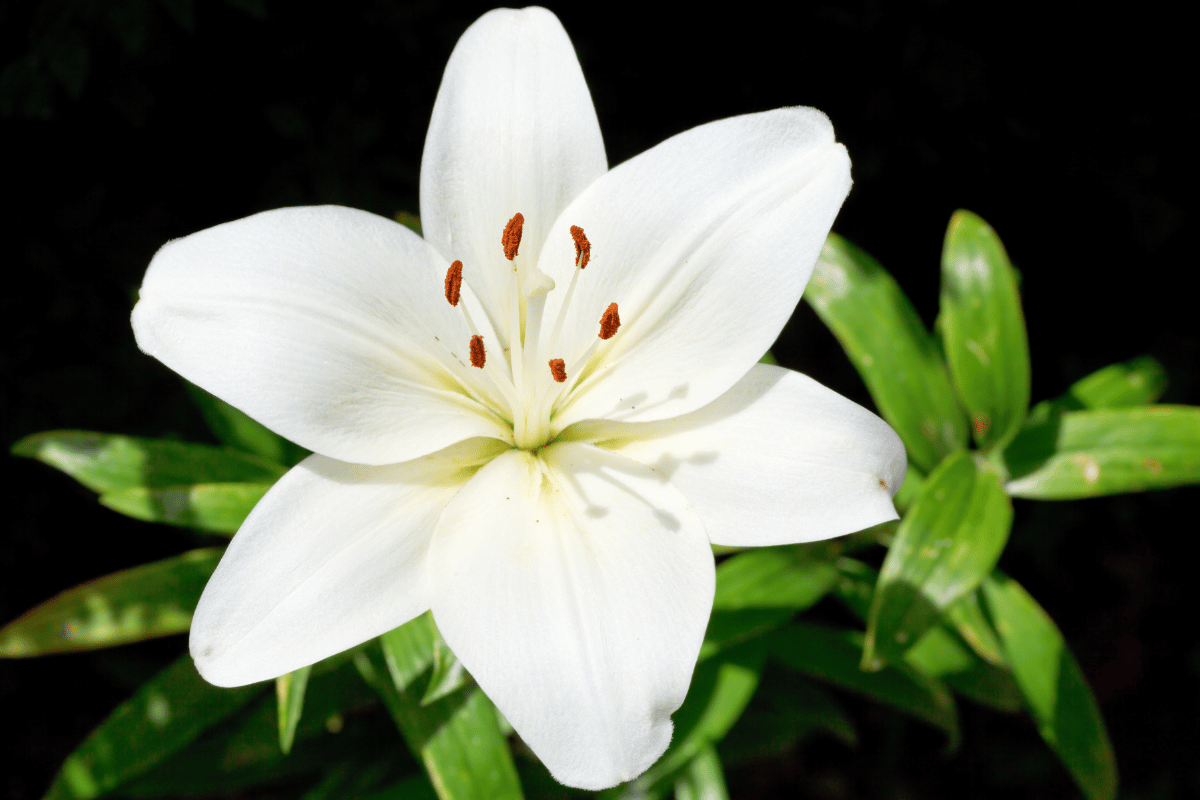
Lilium longiflorum (Easter lily): with large white trumpet-shaped flowers.
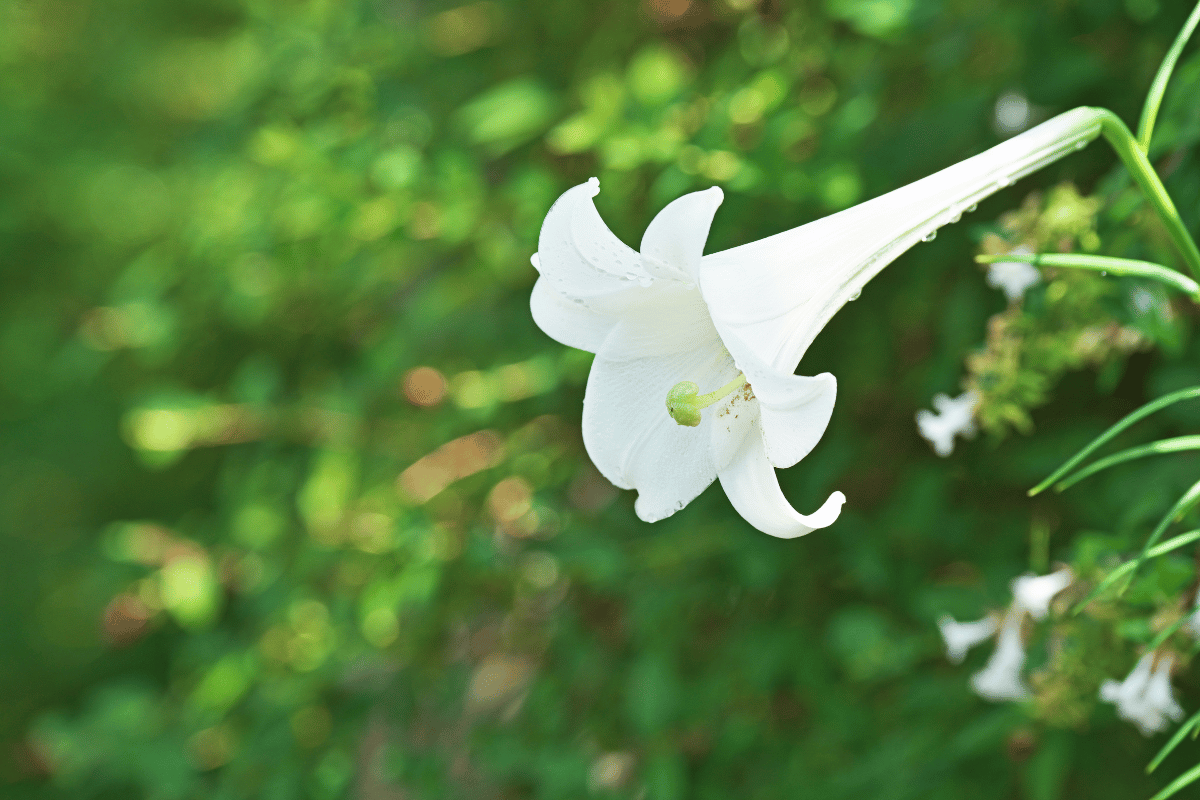
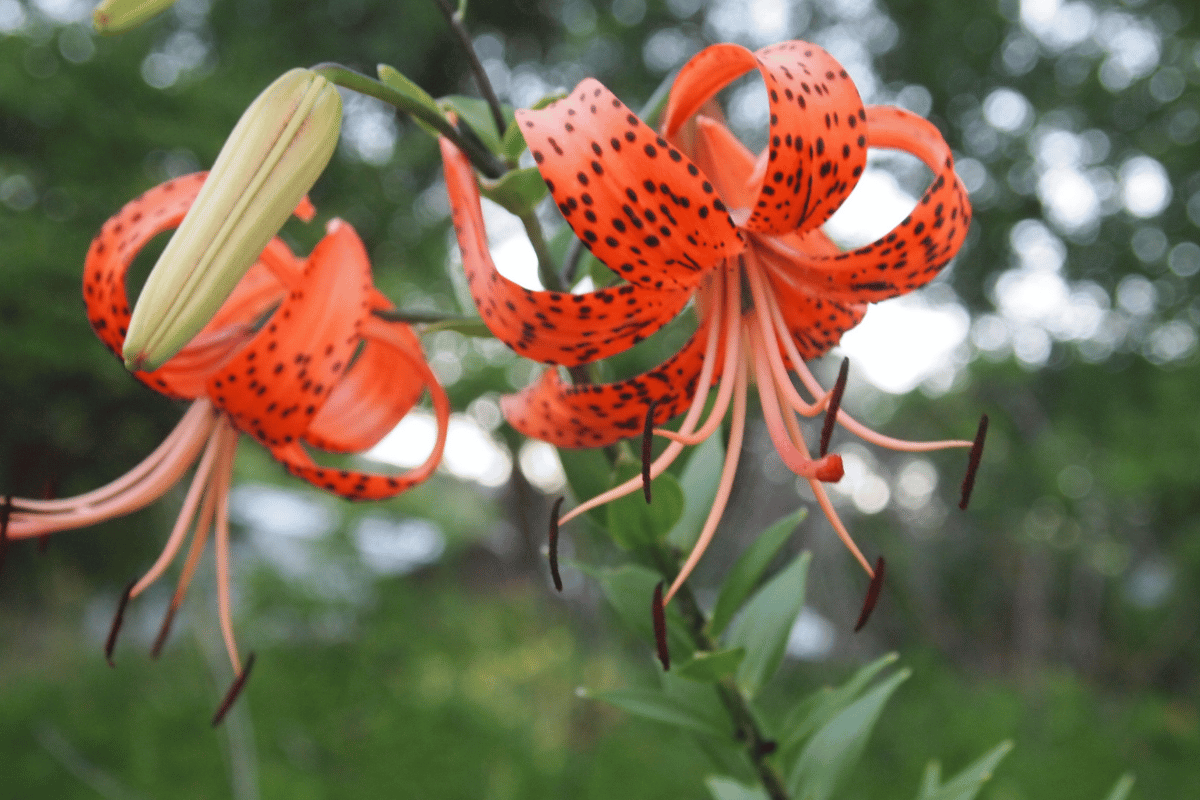
Lilium lancifolium (tiger lily): with orange-spotted, turk's-cap flowers.
Where to grow lilies
Lilies want a position in the sun but with cool roots. The traditional rule is heads in the sun, feet in the shade. Ideally, choose a spot where the flowers see the sun while the base of the plant is shaded by lower plants or shaded during the hottest hours.
Most lilies also tolerate light shade, especially in hot regions where intense midday sun can fade the blooms faster.
Lilies are fairly cold-hardy, and most overwinter in the ground without protection across temperate gardens (roughly USDA zones 4 to 8, depending on the type). They grow equally well in containers, which makes them ideal for patios and balconies.
Soil
The most important thing for lilies is very good drainage. The bulb rots easily in soil that holds water, especially in winter when the plant is dormant. On heavy clay, work in coarse sand and organic matter to improve drainage, or plant in a raised bed or container.
Most lilies prefer neutral to slightly acidic soil enriched with well-rotted organic matter. The exception is the Madonna lily (Lilium candidum), which tolerates slightly alkaline, limey soils.
Planting bulbs
The best time to plant is autumn or early spring. Autumn planting gives the bulbs time to root before winter. Buy bulbs close to planting time, since they deteriorate if left out of the ground for long, and choose firm, healthy bulbs.
Planting steps
- Dig over and loosen the soil well, adding organic matter and sand if needed for drainage
- Plant the bulb at a depth of about three times its own height, with the pointed end facing up
- Leave 15-20 cm between bulbs. Groups of 3-5 bulbs give a more striking effect
- Water well after planting
There's an important exception. The Madonna lily (Lilium candidum) is planted much more shallowly than any other lily, with the top of the bulb just 2-3 cm below the surface. It's also planted early, in late summer, because it produces a rosette of leaves in autumn. Plant it deep, like other lilies, and it often won't flower.
Growing lilies in a container
Almost all lilies do well in containers.
- Choose a deep pot with plenty of drainage holes to allow for the bulb's planting depth
- Use a good-quality potting mix with added sand or perlite for drainage
- Plant the bulbs closer together than in the garden, leaving a few centimeters between them
- Place the container in a sunny spot and water when the surface soil dries out
Watering
During growth and flowering, in spring and summer, lilies want regular watering so the soil stays lightly moist, never waterlogged. A thorough soak once a week, depending on the heat, is usually enough.
After flowering, reduce watering gradually. In winter, when the plant is dormant, the bulb needs little or no water, and overwatering at this stage is the most common cause of rot.
Feeding
Feed from spring, as soon as new growth appears, until shortly after flowering. Use a fertilizer higher in potassium, like those for tomatoes, which supports flowering and the bulb. Avoid high-nitrogen fertilizers, which produce foliage at the expense of flowers.
After flowering, a final feed helps the bulb store energy for next year.
Care after flowering
This is the most neglected part of lily care, and it decides whether the lily will flower again next year.
When the flowers fade, remove only the spent blooms, but leave the stem and leaves green on the plant. The leaves continue to feed the bulb with energy through photosynthesis. Cut the stem back only when it has yellowed and dried out completely, usually in late autumn.
If you remove the green foliage early, the bulb weakens, and the lily won't flower well the following year.
Propagation
Lilies can be propagated in several ways; the easiest is the natural method.
From bulblets. Over the years, the parent bulb forms smaller bulbs around it. While dormant in autumn, carefully lift the clump, detach the bulblets, and plant them separately. They'll take a year or two to flower.
From aerial bulbils. Some species, such as the tiger lily (Lilium lancifolium), form small dark bulbils in the leaf axils. Collect and sow them in seed compost.
From bulb scales. Detach a few healthy scales from the bulb, plant them in moist compost, and within a few weeks, tiny bulblets form at their base.
Pests and diseases
- Lily beetle: a bright red beetle that, along with its larvae, eats the leaves and can strip the plant. Pick them off by hand as soon as you see them, as they cause the most damage to lilies
- Aphids: small sap-sucking insects that, beyond the direct damage, transmit viruses to lilies. Rinse off with water or spray with insecticidal soap
- Botrytis: a fungal disease in damp, poorly ventilated conditions, with brown spots on the leaves. Improve airflow and avoid wetting the foliage
- Bulb rot: from overwatering or poor drainage, especially in winter. Prevent it with well-drained soil and careful watering
Lilies are deadly to cats
This is the single most important point for anyone who owns a cat. True lilies (Lilium) and daylilies (Hemerocallis) are among the most dangerous plants there are for cats.
Every part of the plant is extremely toxic: the leaves, stem, flowers, pollen, and even the water from the vase. A cat can suffer acute kidney failure just from licking a little pollen off its fur or drinking water from a vase that held lilies. A tiny amount is enough, and without prompt veterinary care, the poisoning is often fatal within a few days.
If you have a cat, the safest choice is to not bring lilies into the home at all, neither as plants nor as cut flowers. If you suspect your cat has come into contact with a lily, contact a vet immediately, since fast treatment is critical.
Note that this toxicity mainly affects cats. In dogs, lilies usually cause milder stomach upset, without the kidney damage cats suffer.
Frequently asked questions
When do lilies flower? Most lilies flower in summer. Asiatic hybrids bloom early, in the first part of summer, and Oriental hybrids later. By choosing different types, you can have flowers over a long period.
Do lilies come back every year? Yes, the lily is a perennial and flowers again each year from the same bulb, as long as you let the foliage feed the bulb after flowering and don't cut it back early.
Why didn't my lily flower? Often, because the foliage was cut too early the previous year, or because the bulb is in too shady a spot, in poorly drained soil, or has rotted from too much water.
Can I leave the bulbs in the ground over winter? In most temperate gardens, yes, lilies overwinter in the ground. All they need is good drainage, so the bulb doesn't rot in winter wet.
Are lilies dangerous to pets? Yes, and especially to cats, for which they're deadly even in tiny amounts. If you have a cat, don't bring lilies into the home.
Important notes
Every garden and every plant is unique. Conditions vary significantly depending on your region, sun exposure, soil type, and drainage. The guidance above is general and a starting point rather than a strict rule.
Given the serious toxicity of lilies to cats, if you have a cat, avoid the plant entirely, and in case of suspected contact, contact a vet immediately.
If you suspect a serious disease or problem that doesn't respond to the basic practices, consider consulting a horticulturist for an accurate diagnosis. Use plant protection products with care. Try non-chemical methods first, such as handpicking pests and using insecticidal soap. When chemical intervention is needed, use only approved products, follow the dosage on the label, and avoid spraying when bees are active.
References
- Royal Horticultural Society. Growing lilies in containers.
- Royal Horticultural Society. Lilium candidum Madonna lily.
- RHS Lily Group. What do lilies need.
- ASPCA Animal Poison Control. Which Lilies Are Toxic to Pets.
- U.S. Food and Drug Administration. Lovely Lilies and Curious Cats: A Dangerous Combination.