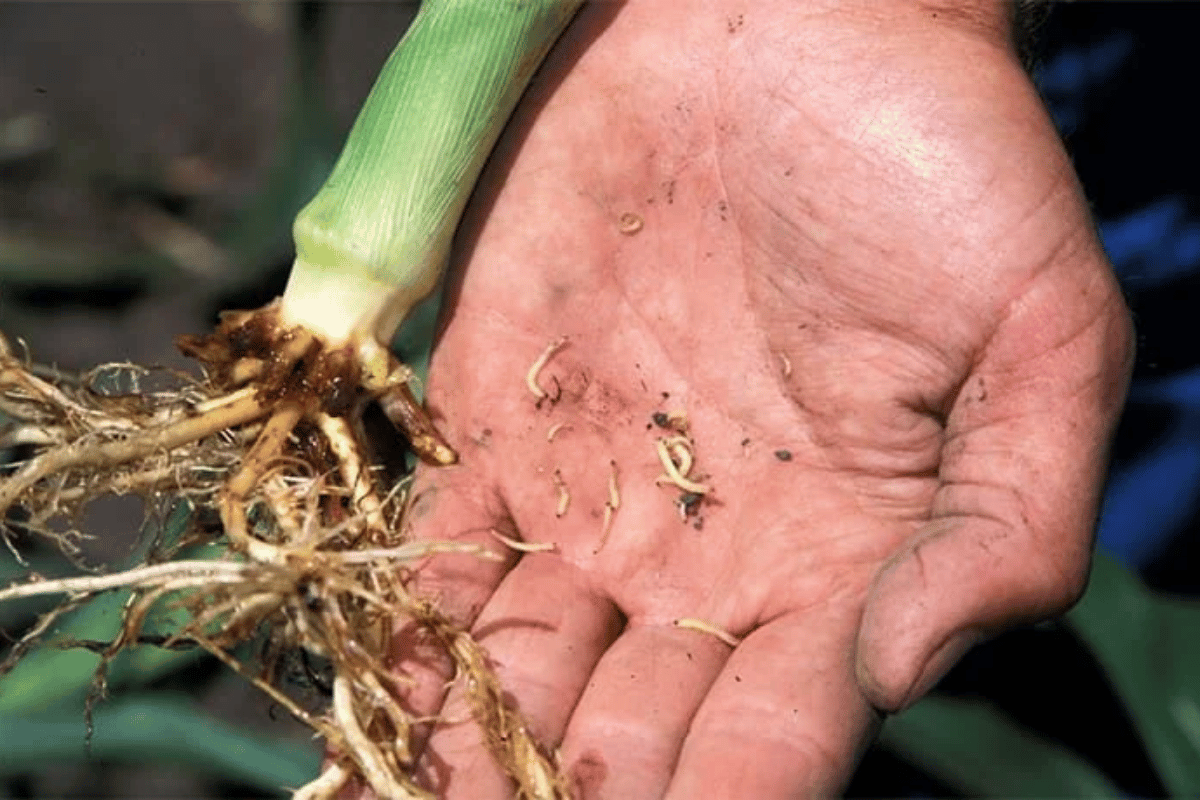
Western corn rootworm (Diabrotica virgifera) is the most serious pest of maize in areas of intensive cultivation. It has one generation a year, and the damage is caused mainly by the larvae, which feed on the root system. The result is poor anchorage, deficient nutrition, lodging of the plants, and ultimately a drop in yield, with the biggest problems appearing where maize is grown as a monoculture without crop rotation.
Life cycle and damage
The insect overwinters as an egg in the soil, and the larvae hatch in spring, around May. Across their three larval stages they feed on the maize roots, tunnelling through them and destroying the fine root system. Pupation follows in the soil, and the adults emerge in summer, when they feed on the silks, pollen, and leaves. At the end of summer the females lay their eggs in the soil of the maize field, closing the annual cycle.
The destruction of the roots reduces the plant's ability to anchor itself and to take up water and nutrients. In heavy infestations the plants lodge and develop a characteristic bent stem base as they try to straighten up, which hampers mechanical harvesting. The adults, when they appear before pollination is complete, can clip the silks and affect the setting of the cob.
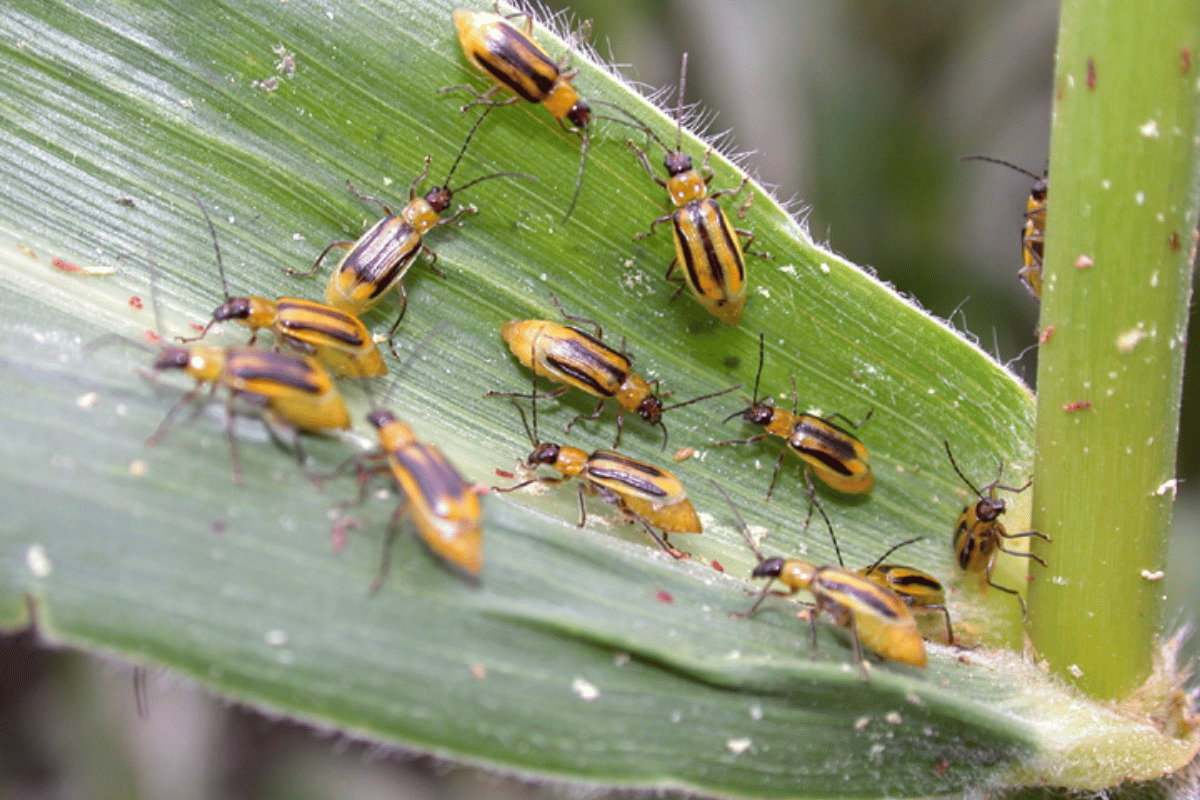
Western corn rootworm adult
Why monoculture favours the insect
The eggs laid in autumn in a maize field give rise in spring to larvae that need maize roots to survive. When the same field is sown again with maize, food is guaranteed and the population builds up year after year. By contrast, when a different crop follows the next season, the young larvae do not find suitable roots and the cycle is broken.
What applies this period
The flight of the adults began in the first fortnight of June, and monitoring with traps continues until harvest. In most areas fertilisation is complete and the grain is filling, so the feeding of the adults on the silks is no longer a threat to fruit set. For this reason, no foliage sprays are advised now to control the insect, nor any combined use with products for other diseases. A spray at this stage would bring no benefit to the crop, would add to costs, and would harm natural enemies. The final assessment of the populations is made after harvest and sets the guidance for the next season.
Crop rotation and irrigation
The most effective measure against western corn rootworm is crop rotation, alternating maize with another crop for at least one year. Because the larvae feed almost exclusively on maize roots, breaking the monoculture disrupts the cycle and sharply reduces populations, at no cost in products. At the same time, an adequate supply of irrigation water keeps plants vigorous and helps them replace roots and better withstand the damage.
When chemical control has a role
Chemical control of western corn rootworm does not target the foliage but the soil, and aims at the young larvae during their spring hatch. It is an intervention with a narrow time window, decided for the next sowing and only in fields where monitoring showed high populations. Combined with crop rotation and, where available, with resistant hybrids, the need for chemical intervention is greatly reduced.
Sources
- Regional Plant Protection Centre of Kavala, 1st information bulletin on western corn rootworm in maize No 26 (8 July 2026).