Verticillium wilt is the most serious soilborne disease of the olive and the only one with no chemical cure. The fungus Verticillium dahliae lives in the soil, enters the tree through the roots and plugs the vessels that carry water, which puts it beyond the reach of any spray. Its survival structures, the microsclerotia, have been documented to persist in soil for at least 30 years without a host. The fight against Verticillium is won or lost before the first tree goes in the ground. This guide covers how the two forms of the disease are recognised, which varieties hold up, what to check before planting, and what can be done in a grove already affected.
What Verticillium wilt is
This is a vascular wilt, a disease of the water-conducting system. The fungus enters through the feeder roots, moves up into the xylem and plugs the vessels, restricting water movement to the canopy. The symptoms visible above ground, the wilting and dieback, are effectively due to thirst.
Its host range is enormous, covering more than 300 plant species, including fruit trees, vegetables, legumes and field crops. The fungus survives in soil as microsclerotia, microscopic black resting bodies that germinate when the root of a susceptible plant comes into close proximity.
In olives, the disease is most severe in irrigated groves, among young and especially middle-aged trees, and on land with a history of susceptible crops. It is favoured by cool conditions and becomes active once soil temperatures rise above about 8°C in late winter.
The two forms of the disease
| Form | When it appears | What the tree looks like |
|---|---|---|
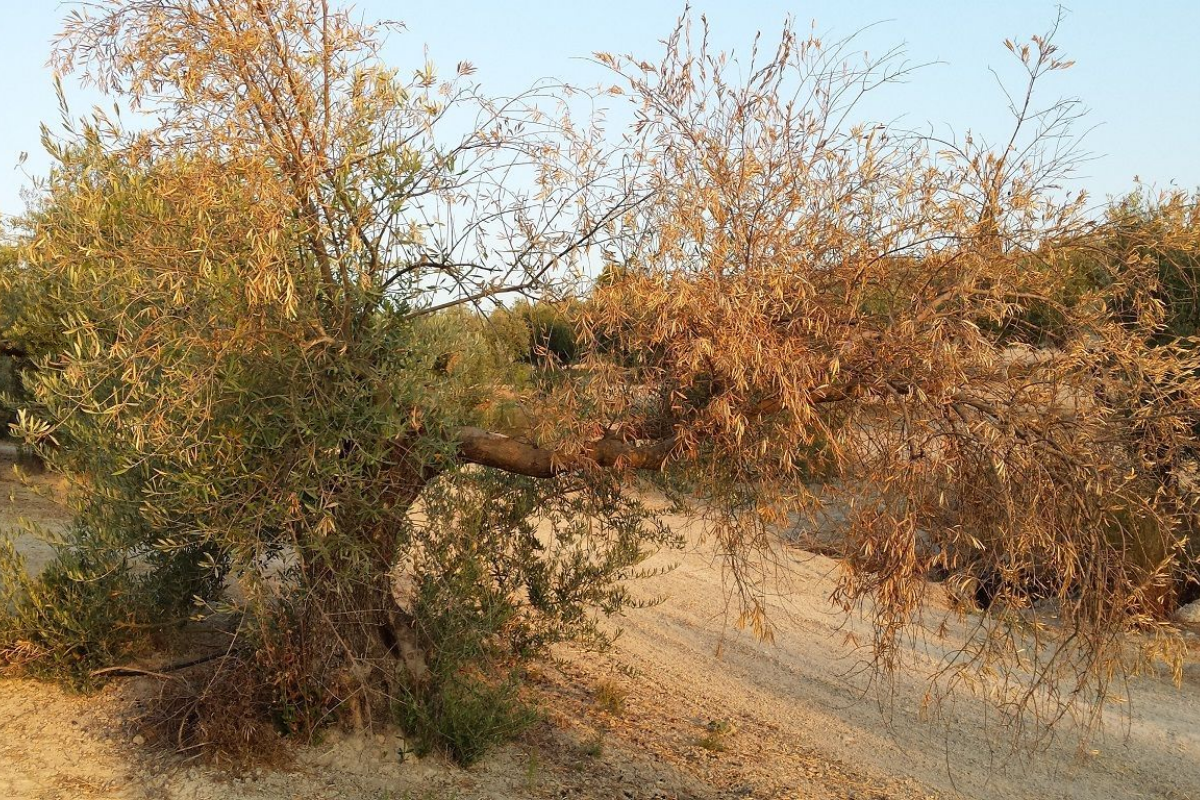
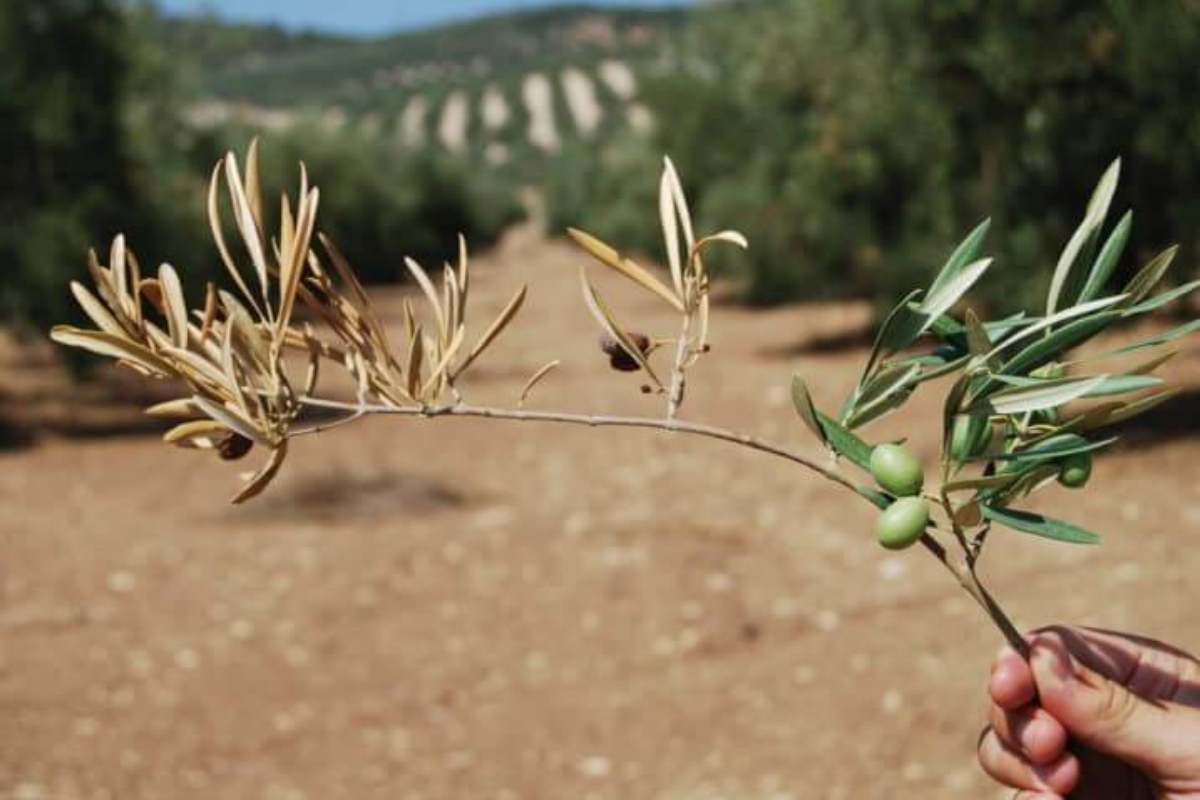
| Apoplexy, the acute form | Mainly in spring | Sudden wilting and death of the whole tree or of major limbs within days. Leaves turn brown or dark grey and stay attached to the tree. |
| The chronic, slow form | Gradually over years | Progressive branch dieback, reduced growth, leaf drop and often hemiplegia, meaning only one side of the tree dies back |
Hemiplegia is the most telling sign in the grove, because nothing else kills half a canopy while leaving the rest apparently healthy.
Telling it apart from other causes of dieback
Two details help. The first is that, in apoplexy, the dead leaves do not fall but remain clinging to the branches, a picture neither drought nor frost produces. The second is more difficult and often misread. In many crops, Verticillium is identified by dark discolouration of the xylem beneath the bark, yet in olive this discolouration is frequently not apparent, so its absence does not rule out the disease. Confirmation requires laboratory analysis of a sample.
Susceptible and resistant varieties
Variety choice is the strongest preventive tool on infested land. Among Greek varieties, Kalamon, Konservolia (also known as Amfissis or Volos) and Tsounati are considered susceptible. Koroneiki is described as practically or partially resistant, though under conditions highly favourable to the fungus, it too can show symptoms.
Internationally, the most widely tested resistant variety is the Italian Frantoio, with increased tolerance also reported for the Spanish Empeltre and Changlot Real. Recent research has produced new clonal selections from crosses of Frantoio with Koroneiki, showing encouraging resistance results.
In every case, resistance does not mean immunity. It means the tree has a better chance of surviving an infection and recovering.
Measures before planting
The most effective actions all happen before the grove is established:
- Field history: avoid land cropped for years to cotton, potato, tomato, eggplant, pepper or cucurbits, since the pathogen is usually present in those soils
- Soil testing for inoculum: soils carrying more than one microsclerotium per gram are considered unsuitable for a new planting
- Certified planting material: trees from nurseries that screen for the fungus, because infected stock carries the disease into clean ground
- Reducing inoculum: several seasons of grass cover crops such as rye or sudangrass, and flooding the field during summer
- Variety and drainage: a resistant variety on well-drained soil, with the irrigation system planned from the outset
Soil solarization
Solarisation substantially reduces the inoculum without chemicals and is used mainly for new plantings or for replacing trees. The process has four steps:
- Season: July and August, at peak solar radiation
- Preparation: plough and level the ground well, so no clods or stones prevent the plastic from contacting the soil
- Irrigation: wet the soil thoroughly to depth, since moisture carries the heat downward
- Covering: a thin, clear polyethylene film, well anchored at the edges, left in place for 4 to 6 weeks
Managing trees already affected
In an established grove, the objective changes. It is not about eradicating the fungus, which is not achievable, but about supporting the tree so it can hold on and recover. Some trees recover naturally after an initial infection. In contrast, others die, and the outcome depends largely on the strain of the fungus, whether it is defoliating or non-defoliating, on tree age, and on overall condition.
- Pruning and destruction: dead limbs are cut 20 to 30 cm below the visible point of damage, and the prunings are removed and burned rather than left in the grove
- Tool disinfection: secateurs and saws are disinfected between trees with alcohol or a chlorine solution, as are machines before moving to another property
- Sound irrigation: avoid overwatering and standing water, particularly in spring, since both favour the fungus
- Restraint with nitrogen: heavy nitrogen fertilisation worsens the picture, while balanced nutrition strengthens the tree's defences
- Shallow cultivation: deep ploughing injures roots, opening entry points, while spreading inoculum around the property, as covered in the guide to soil management in olive farming
- Supporting the root system: applications of beneficial soil microorganisms and soil improvers raise tree vigour without curing the disease
Pruning in affected groves is always done with clean tools in dry weather, and the prunings are never incorporated into the soil.
Why is there no chemical cure
The fungus sits in the soil and in the tree's vessels, two places no systemic fungicide reaches at a concentration that would kill it. The products used against olive foliar diseases, such as the coppers applied for peacock spot, act on the leaf surface and do not affect whatsoever on Verticillium. Management is therefore entirely a matter of prevention, variety choice and cultural practice.
Frequently asked questions
Can Verticillium wilt in olive be cured?
No. No registered chemical product eliminates the fungus, because it lives in the soil and inside the tree's vascular system. Management rests on prevention and cultural measures.
How do I know it is Verticillium?
The most characteristic signs are dieback on only one side of the tree and dead leaves that remain attached to the branches rather than falling. Certain identification requires laboratory analysis.
Which olive varieties resist Verticillium
Frantoio is the best-tested resistant variety internationally, and Koroneiki is described as practically resistant. Kalamon, Konservolia and Tsounati are susceptible.
Can I plant olives where cotton or tomatoes grew
It is not advisable. Those crops are highly susceptible to Verticillium, so their soils usually harbour high inoculum levels. Where no alternative exists, soil testing and inoculum reduction come first.
How long does the fungus survive in soil?
Microsclerotia have been documented to survive for at least 30 years without a host, which is why infested land remains risky for decades.
Can an affected tree be saved?
Some trees recover naturally, particularly younger ones and those given correct irrigation and balanced nutrition. Others are lost, depending on the strain of the fungus and the severity of infection.
Important notes
Dieback in a grove can have other causes, from root rots and water stress to root damage, so before acting, get a diagnosis from an agronomist and, where needed, laboratory analysis of a sample.
For the other olive diseases, use only products registered for the crop in your country, follow the label, and apply cultural preventive measures first.
References
- UC Statewide IPM Program, Verticillium wilt in olive.
- UC Statewide IPM Program, Verticillium wilt, symptoms and pathogen biology.