
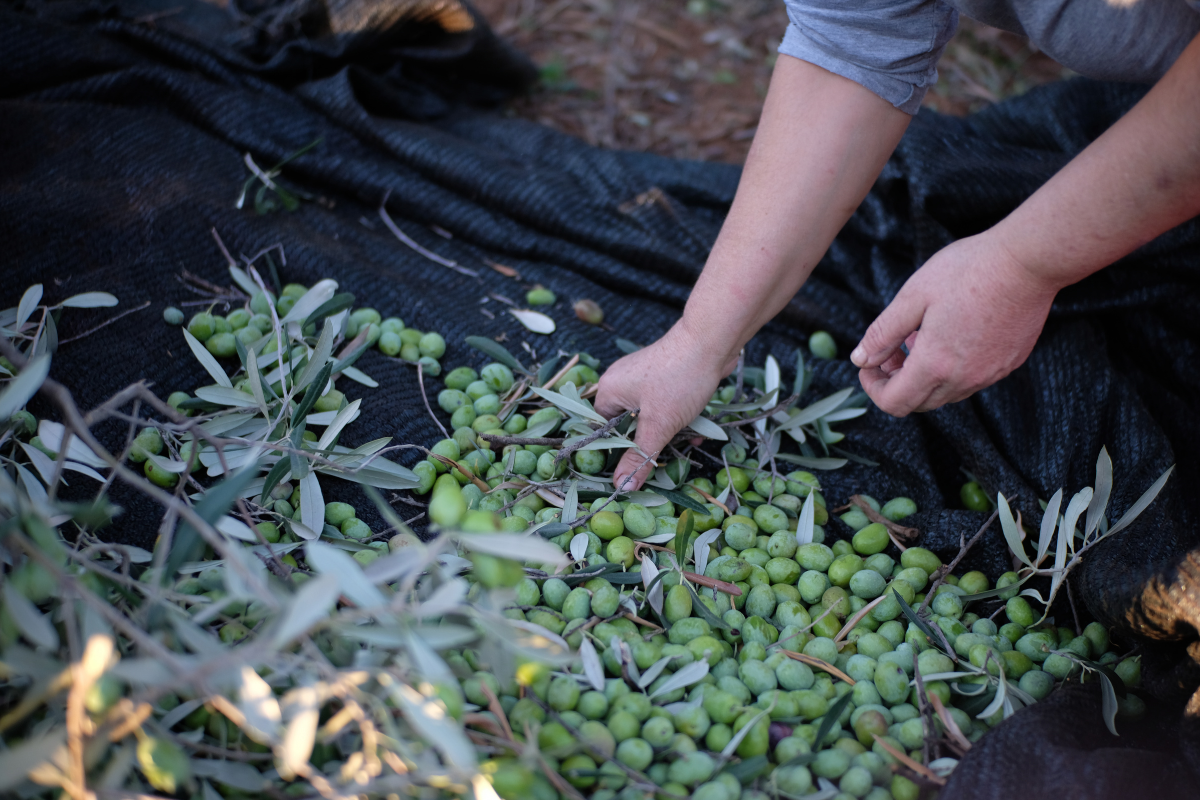
The olive harvest declaration becomes mandatory for every holder of olive parcels in Greece from 1 October 2027, and fines for failing to file, or for filing incorrect figures, will not be imposed before 1 October 2028. The postponement was introduced by Ministerial Decision 220379/2026, published in the Government Gazette B' 5397 on 1 September 2026. For the 2026/27 season, there is therefore no obligation and no risk of a fine, but the olive registry on which the declaration depends needs updating now. The rules apply to anyone who holds olive trees in Greece, including foreign owners of groves and holiday properties with olive trees.
The obligation has been postponed twice
The declaration was introduced by Ministerial Decision 77979/2025 (Government Gazette B' 1749), which implements article 49 of Law 5035/2023 and collects harvest data for Greece's reports to the European Commission and the International Olive Council. The original decision set penalties from 1 October 2026, but the pilot rollout in several regional units encountered technical problems updating the olive registry.
A first amendment, Decision 266683/2025, moved the obligation to the 2026/27 season. The second, in August 2026, pushed it back by another year to 1 October 2027, with a further transition year before fines apply. Many news reports and automated search answers still say the declaration is mandatory this year, so the date to rely on is the one in the consolidated text of the decision.
Who has to file
The obligation covers every legal holder of olive parcels, including owners and anyone farming an olive grove under a lease or other legal agreement. The decision makes no distinction between professional farmers, pensioners or private owners with a few trees, and the declaration is filed even when the year's production is zero.
The scale of fines for not filing starts at holdings with 21 olive trees. The decision imposes no fine for not filing that number below, but the obligation itself is worded to apply to all holders without exception.
The olive registry comes first
Every olive parcel in the country must be recorded in the olive registry, including the number of trees, the cultivar, planting density, irrigation status, and the geospatial data for each parcel, namely its code, location, corner coordinates, area, and perimeter. The harvest declaration draws on this data, so a grove missing from the registry or recorded with the wrong number of trees cannot be declared correctly. Keeping each parcel's entry up to date is the responsibility of its holder.
Registration and changes are made by application to the Directorate of Agricultural Economy and Veterinary Medicine (DAOK) of the regional unit, in person, by post or online through gov.gr with Taxisnet credentials, in the regions that have joined the digital service. The procedure is free and takes 20 to 40 days. It covers every change, from personal details and the transfer of all or part of a parcel to adding a new parcel or changing the number or cultivar of the trees.
Documents for the registry
The National Registry of Administrative Procedures lists three supporting documents. Owners submit a title deed, meaning an extract from the land registry where it operates or a transfer deed, such as a notarial contract, acceptance of inheritance or court ruling, with a certificate of registration. Holders who are not owners submit the officially stamped lease, sharecropping, or loan-for-use agreement, always accompanied by a copy of the owner's title.
Any change to the position or boundaries of a parcel also needs a diagram showing the Cartesian coordinates of its corners. Where a title deed is demonstrably hard to obtain, a solemn declaration with a copy of the stamped E9 property tax form may be accepted in exceptional cases, after an on-site inspection by the DAOK. Regional authorities often publish their own detailed lists and application templates, so the local notice is worth checking too.
When and how the declaration is filed
The declaration is filed via the "Olive Harvest Declaration" digital service on gov.gr using Taxisnet credentials, from 1 October each year until midnight on 31 May of the following year. It is made as soon as harvesting is finished and the fruit has been delivered to the olive mill or to the table olive processing plant, and it has the legal status of a solemn declaration.
Before final submission, the grower confirms the areas, cultivars and yields of each parcel, and if the registry data are wrong, asks for them to be updated first. Responsibility for an accurate declaration lies with the grower, and the DAOK carries out checks.
What the olive mill's receipt must show
When the mill or table olive plant receives the fruit, its invoice or delivery note must show the grower's full name and tax number, the olive cultivar and the 13-digit parcel code from the olive registry. When a load comes from several parcels, the document records the quantity from each one.
In practice, growers need to bring their parcel codes from their registry record to the mill and to know which olive cultivar grows on each parcel, which, in old groves with mixed trees, is not always obvious. These receipts also form the basis for the quantities to be declared.
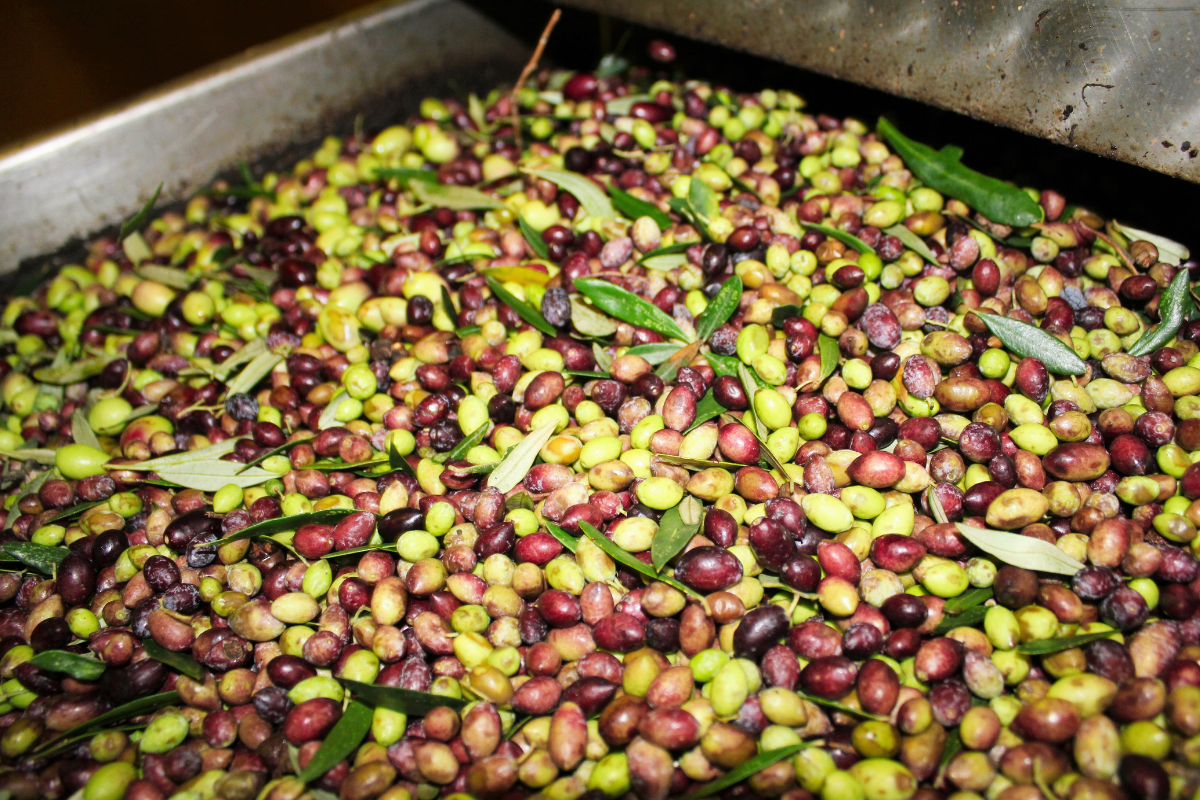
When the fruit reaches the mill, the invoice or delivery note must record the cultivar and the registry code of each parcel.
The fines that will apply from 2028
Each year, the DAOK will check a risk-based sample of at least 5% of declarations. From 1 October 2028, declaring the wrong number of trees will carry a fine of €60 per tree above or below the real number, and declaring the wrong quantity will carry a fine of €60 per 100 kilograms of olives for oil or €150 per 100 kilograms of table olives.
Fines for not filing on time rise with the size of the holding.
| Olive trees on the holding | Fine for not submitting |
| 21 to 50 | €100 |
| 51 to 100 | €500 |
| 101 to 500 | €1,000 |
| 501 to 1,000 | €3,000 |
| More than 1,000 | €5,000 |
Source: Ministerial Decision 77979/2025, article 6, as amended by Decision 220379/2026. Fines do not apply before 1 October 2028.
Fines rise by 50% for each repeat offence. They do not apply in cases of force majeure or exceptional circumstances, and obvious errors in a declaration can be corrected by the DAOK at the grower's request upon submission of the relevant documents.
What growers can do this season
The 2026/27 season is effectively the last year to prepare. Growers can check their record in the olive registry, correct the number of trees, the cultivars and any parcels that have changed hands, and keep this year's mill receipts with the parcel codes. Because a registry update can take up to 40 days and regional offices receive many requests at once, the earlier it is done, the smaller the risk of reaching autumn 2027 with a registry that does not match the grove.
The Ministry of Rural Development and Food had already advised growers, owners and tenants of olive groves to contact their local agricultural directorates to update their records before the obligation begins. This year's harvest therefore goes ahead without any new filing requirement, and growers who want to compare timing with other regions can read how producers across Greece harvest.
Frequently asked questions
Is the olive harvest declaration mandatory this year?
No. Under Decision 220379/2026, the obligation applies from 1 October 2027, and fines will not be imposed before 1 October 2028. The olive registry is still worth updating now.
What is the deadline for the harvest declaration?
From 1 October until midnight on 31 May of the following year, straight after harvesting is finished and the fruit has been delivered. The dates are fixed.
Do I have to file if I only have a few olive trees?
The decision defines all legal holders of olive parcels as obliged to file. The scale of fines for not filing starts at 21 trees, so no fine for not filing is set for smaller groves, but the obligation has no exemption.
What if I did not harvest any olives?
The declaration is still filed, with zero production.
Where do I register in the olive registry?
At the DAOK of the regional unit where the grove lies, in person, by post or through gov.gr in the regions that have joined the digital service. The procedure is free and takes 20 to 40 days.
What is the fine for declaring the wrong number of trees?
From 1 October 2028, €60 for each tree above or below the real number, rising by 50% for a repeat offence. The number of trees in the registry, therefore, needs to match the number in the declaration.
Important notes
This information reflects the consolidated text of Ministerial Decision 77979/2025, as amended by Decision 220379/2026, on 24 September 2026. The framework has already changed twice and may change again, so for its current form, and each region's document requirements, the reliable sources are the local DAOK and the official website of the Ministry of Rural Development and Food. This article is for information only and is not legal advice.
Sources
- Taxheaven. Ministerial Decision 77979/21-03-2025 on the olive harvest declaration, consolidated with amendments 266683/2025 and 220379/2026 (in Greek).
- e-nomothesia. Ministerial Decision 220379/2026, Government Gazette B' 5397/1-9-2026 (in Greek).
- Taxheaven. Article 49 of Law 5035/2023 (in Greek).
- National Registry of Administrative Procedures. Olive registry, registration and amendment (in Greek).
- gov.gr. Olive registry (in Greek).
- Taxheaven (2026). Mandatory olive harvest declarations moved to the 2026-2027 season (in Greek).
- Agrotypos (2026). Mandatory olive harvest declarations postponed to 2026/2027 (in Greek).