

June 2025 delivered a stark warning to Europe's agricultural sector: 418 food safety recalls triggered across the EU reveal a system under unprecedented strain, with agricultural products accounting for over half of all contamination incidents. This comprehensive analysis of the European Union's Rapid Alert System for Food and Feed (RASFF) data exposes critical vulnerabilities that every farmer, wholesale buyer, and supply chain manager must understand to protect their operations.

Graph 1: Food categories with the most recalls in June 2025 EU market
The agricultural crisis: Over half of all recalls target farm products
The data reveals a sobering reality: agricultural products account for 51.7% of all food recalls, with 216 incidents affecting crops, nuts, and cereals that farmers work tirelessly to produce. This represents a significant threat to the agricultural supply chain, with nuts and seeds leading the crisis at 79 recalls, followed closely by fruits and vegetables at 63 cases.
The breakdown of agricultural recalls shows:
- Nuts, nut products and seeds: 79 cases (18.9% of total recalls)
- Fruits and vegetables: 63 cases (15.1% of total recalls)
- Herbs and spices: 40 cases (9.6% of total recalls)
- Cereals and bakery products: 34 cases (8.1% of total recalls)
Geographic Hotspots: Where Contamination Originates

Graph 2: Top origin countries for EU food recalls in June 2025
The analysis reveals distinct geographic patterns that fresh produce buyers must monitor closely. India emerges as the highest-risk origin, responsible for 49 recalls (11.7% of all cases), followed by Turkey with 32 incidents (7.7%). This concentration suggests systemic issues in agricultural practices and food safety protocols in these regions.
For fresh produce specifically, the risk profile shows:
- Turkey: 15 cases in fruits and vegetables alone
- India: Major issues across multiple crop categories
- China: Persistent contamination problems, particularly in processed products
- Egypt and Peru: Emerging concerns in specific crop exports
The aflatoxin emergency: A silent threat to global trade
Aflatoxin contamination represents the single greatest threat to agricultural imports, with Aflatoxin B1 responsible for 48 cases and total aflatoxins adding another 34 incidents. This cancer-causing mycotoxin primarily affects:
- Nuts and seeds: 34 cases of aflatoxin contamination
- Cereals and grains: 6 confirmed cases
- Dried fruits: Multiple incidents from Mediterranean regions
The concentration of aflatoxin cases in nuts from the United States (14 cases), India (13 cases), and Sudan (12 cases) indicates widespread contamination in major export regions, threatening global supply chains.
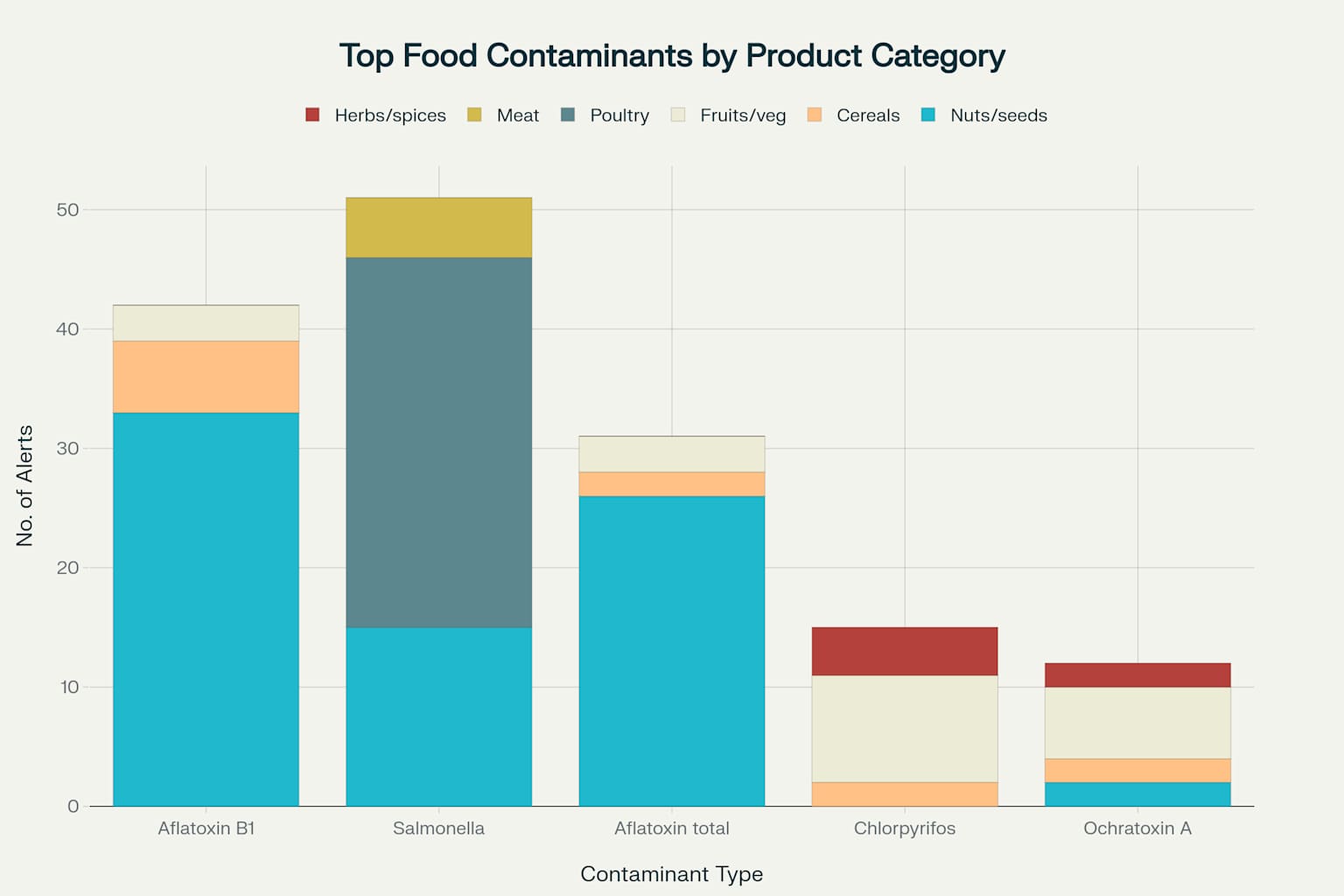
Graph 3: Analysis of the most common food contaminants and which agricultural product categories they primarily affect
Bacterial contamination: The Salmonella threat
Salmonella contamination affects 64 products, with poultry leading at 31 cases, but significantly impacting agricultural products as well:
- Nuts and seeds: 15 Salmonella cases
- Processed meats: 5 cases affecting livestock farmers
- Feed materials: 5 cases threatening animal health
This bacterial contamination pattern suggests inadequate sanitation protocols across the agricultural processing chain, from farm to fork.
Pesticide residue crisis: Chemical contamination patterns
The analysis identifies 26 cases of pesticide residue violations, with unauthorized or excessive levels of:
- Chlorpyrifos: 11 cases, particularly in Asian imports
- Acetamiprid: 9 cases across multiple crop categories
- Lambda-cyhalothrin: 8 cases in fruits and vegetables
These violations indicate either poor agricultural practices or inadequate understanding of EU pesticide regulations among international suppliers.
High-risk products: What farmers and buyers must monitor
Critical Risk Categories:
- Nuts from South Asia and Middle East: Extreme aflatoxin risk
- Herbs and spices from Turkey and India: Pesticide and alkaloid contamination
- Fresh produce from Mediterranean regions: Ochratoxin and pesticide issues
- Cereals from Pakistan and India: Aflatoxin and unauthorized pesticide residues
Emerging Threats:
- Pyrrolizidine alkaloids in herbs (7 cases)
- Ochratoxin A in dried fruits and nuts (13 cases)
- Heavy metal contamination (cadmium and lead) in fresh produce
Strategic Recommendations for Market Participants
For Farmers:
- Should mplement rigorous mycotoxin testing for all grain and nut crops
- Should review pesticide application protocols to ensure EU compliance
- Should establish traceability systems for contamination source identification
- Should monitor soil and water quality for heavy metal contamination
For wholesale buyers:
- Should diversify the supplier base to reduce geographic concentration risk
- Should implement enhanced testing protocols for high-risk product categories
- Should establish direct relationships with primary producers for better quality control
- Should monitor RASFF notifications for emerging contamination patterns
For supply chain managers:
- Should develop contingency plans for rapid product withdrawal
- Should invest in cold chain management to prevent bacterial growth
- Should create supplier scorecards based on contamination history
- Should implement blockchain tracking for improved traceability
Market outlook: The cost of contamination
The 418 recalls in June 2025 represent not just regulatory violations but massive economic losses affecting farmers, distributors, and retailers throughout the supply chain. With agricultural products comprising over half of all incidents, the sector faces unprecedented scrutiny from both regulators and consumers.
The concentration of issues in developing country exports suggests that global agricultural trade may experience significant disruption as EU food safety standards continue to tighten. Farmers and buyers who proactively address these contamination patterns will gain competitive advantages as supply chains consolidate around quality-assured producers.
Conclusion: Vigilance as a competitive advantage
The June 2025 recall data reveals that food safety failures are not random events but follow predictable patterns based on product type, origin, and contamination source. Agricultural stakeholders who understand and act upon these patterns will protect their operations while capturing market share from less vigilant competitors.
The message is clear: in today's interconnected food system, contamination anywhere affects markets everywhere. Farmers and wholesale buyers must elevate food safety from a compliance requirement to a strategic business advantage, using data-driven insights to make informed sourcing and production decisions.
Those who treat these recall patterns as early warning signals rather than historical curiosities will build more resilient, profitable agricultural businesses in an increasingly complex global marketplace.