
Catches of the peach twig borer have been rising in recent days in peach and plum, according to the agricultural warning bulletins. The insect tunnels into the fruit, with gum exuding at the same time and downgrading the crop. Its egg-laying and hatching dates coincide with those of the summer fruit tortrix and the fruit moth, so a single well-timed treatment covers all three pests. Below we look at the life cycle, the damage, and the timing of treatment by region.
The life cycle and the damage
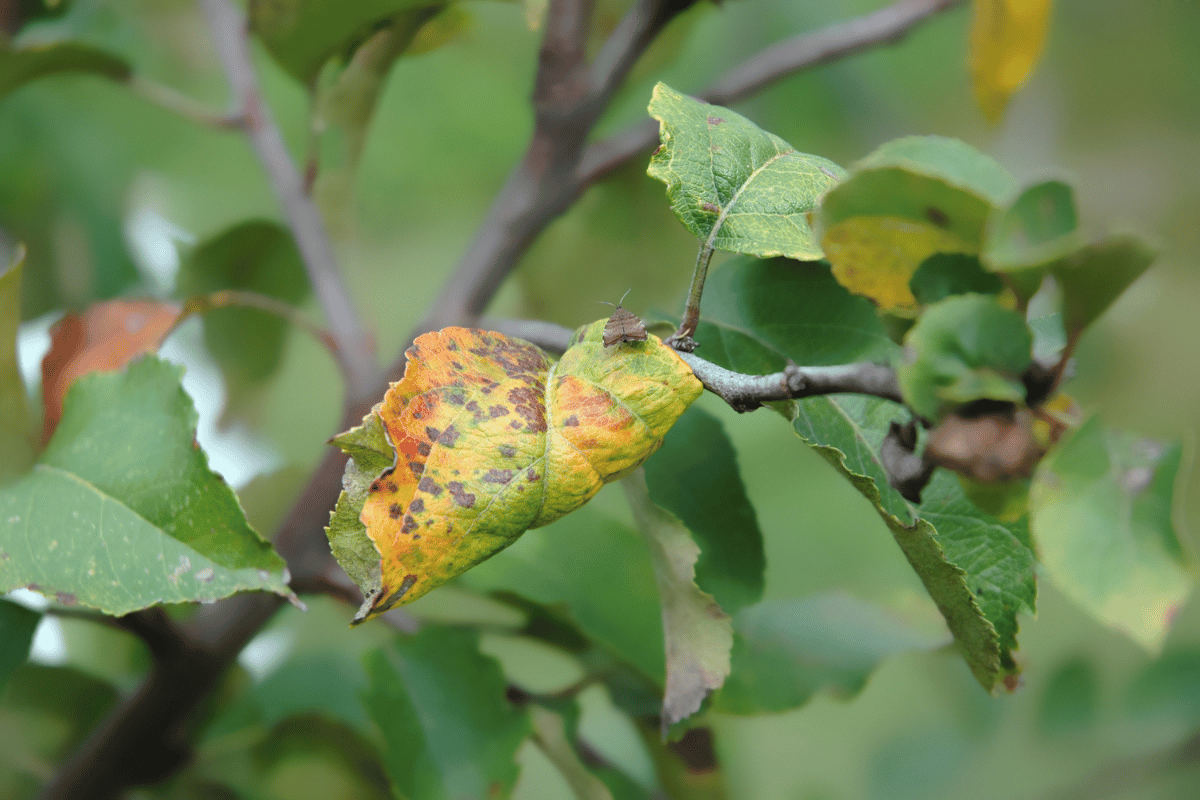
The peach twig borer (Anarsia lineatella) is a moth whose main host is peach and, secondarily, the other stone fruits. It overwinters as a larva inside the bark and in young shoots, and in spring it first attacks the tender tips. At the current crop stage, the larvae bore galleries inside the fruit and cause gum to exude, downgrading the final product.
In plum, the most serious pest is the plum fruit moth (Cydia funebrana), whose larvae feed on the flesh and open galleries, with gum appearing at the exit point. Under heavy attack the crop is downgraded in both quality and quantity.
When to treat
The dates below come from the current bulletins and differ by region and crop. They serve as a guide, with local traps and inspections giving the final picture in each orchard.
| Region and crop | Stage | Indicative treatment window |
|---|---|---|
| Peach, Central Macedonia Bulletin 19 June |
Summer fruit tortrix, peach twig borer, and oriental fruit moth with egg-laying 24-26 June | Hatching 27-30 June, with one treatment covering all three pests |
| Plum, Central Macedonia Bulletin 17 June |
Plum fruit moth, egg-laying 17-20 and hatching 21-24 June | 20-22 June for ovicides, 23-26 June for larvicides |
| Eastern Macedonia and Thrace Bulletin 22 June |
Peach twig borer and plum fruit moth on the rise | Immediate spray, the borer combined with the fruit moth |
More weight goes to the later varieties and to orchards with a history of attack, while the number of days from treatment to harvest is kept in mind.
The other pests covered
The same treatment effectively controls the oriental fruit moth (Grapholita molesta), whose egg-laying and hatching coincide with those of the peach twig borer. The summer fruit tortrix (Adoxophyes orana) is handled in the same window, with priority on the later varieties, while these treatments usually also keep aphids and thrips in check. When choosing products, attention goes to alternating modes of action so as to avoid the build-up of resistance.
How to choose and apply the products
Use only products approved for stone fruit and for the specific pest, from the official ministry database, and follow the label for dose, method, and timing. The spray needs good coverage of the whole canopy, so that it reaches the fruit and the tender tips.
The dates above come from the bulletins of each region and hold as a general trend. The course of an attack differs from orchard to orchard, so final decisions rest on your own traps and on the most recent local bulletin. For serious or doubtful attacks consult an agronomist, and use only approved products in line with the label and the operator safety measures.
Sources
All data come from the agricultural warning bulletins of the Greek Ministry of Rural Development and Food (ΥΠΑΑΤ):
- Regional Plant Protection Centre of Thessaloniki, peach summer fruit tortrix bulletin No 39 (19 June 2026).
- Regional Plant Protection Centre of Thessaloniki, plum fruit moth bulletin No 38 (17 June 2026).
- Regional Plant Protection Centre of Kavala, stone fruit bulletin No 24 (22 June 2026).