
Mango cultivation has spread far beyond its tropical heartland over the past four decades. Spain, Italy, Portugal, Cyprus, Israel, and most recently Greece have established commercial mango orchards along their southern coasts, taking advantage of mild winters, warm summers, and proximity to European consumer markets. Spain occupies a special place in the international mango trade, having propelled itself into the leading pack of suppliers to the European market since the early 2000s, and other Mediterranean countries are following the same path.
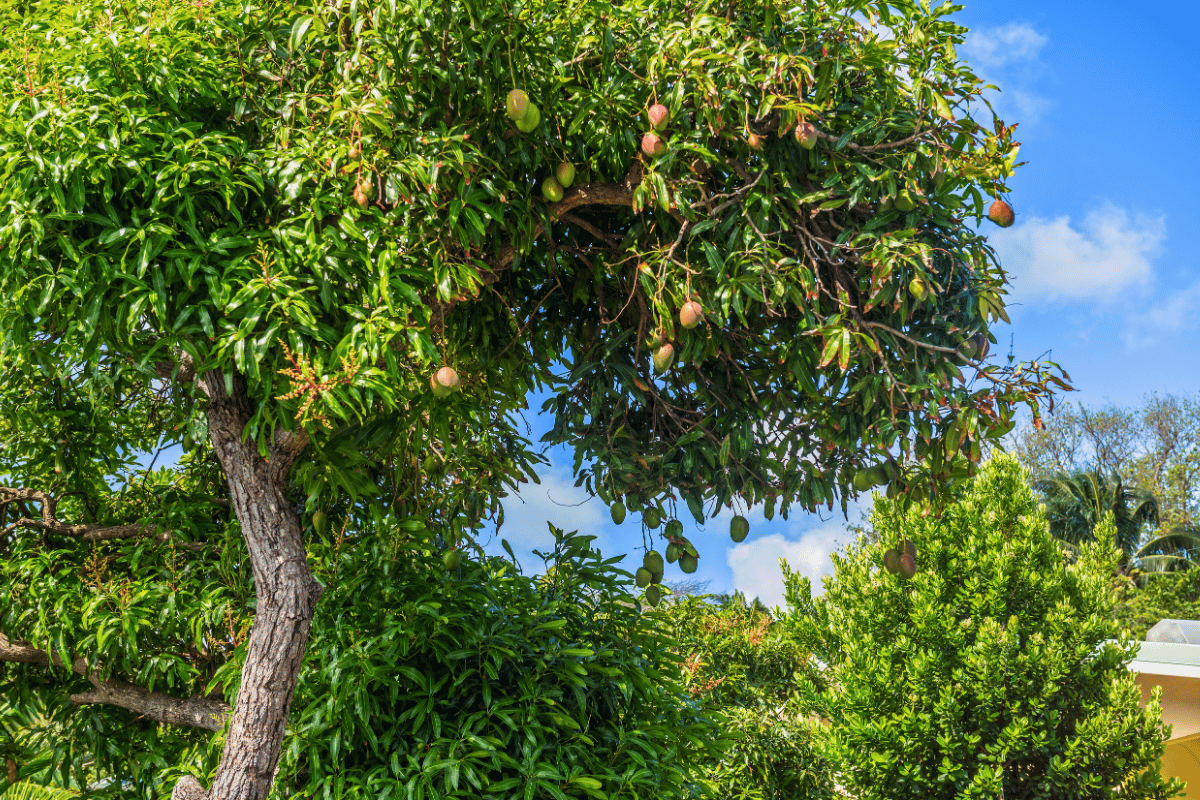
Mango (Mangifera indica) is an evergreen fruit tree from the Anacardiaceae family that can live up to 100 years. Cultivated varieties originate primarily from Asia, in regions with a monsoonal tropical environment (USDA hardiness zones 10-11). Globally, more than 5.4 million hectares are under mango. This guide focuses on commercial mango production in Mediterranean and cool subtropical conditions, drawing on production data from Spain, Italy, Greece, and other Mediterranean producers.
Where mango thrives in the Mediterranean basin
Mango remains primarily a tropical fruit because of its cold sensitivity. In Mediterranean climates it succeeds along southern coastal strips with mild winters and frost-free conditions. The current distribution shows the geographic constraints clearly.
Spain leads European production. Spain is the leading producer and the third-largest supplier of tropical fruits in the European Union, behind the Netherlands and Peru. Mangoes cover 6,044 hectares, concentrated almost entirely in Andalusia. The province of Malaga accounts for the majority, with 4,598 hectares (around 90% of the region's mango-growing area), followed by Granada with 472 hectares. Total Andalusian production reached close to 20,000 tons in 2024.
Italy has expanded rapidly. From 500 hectares dedicated to mango cultivation in 2019, the figure rose to nearly 1,215 hectares in 2023, mostly in Sicily but increasingly in Calabria and Puglia.
Greece entered commercial mango production through Chania, Crete, where the first plants were introduced from Israel approximately 40 years ago. Six commercial varieties are now grown in the Chania region, and in 2024 the Institute of Olive, Subtropical Plants and Viticulture of ELGO-DIMITRA published the first scientific data on mango cultivation in Greek soil, evaluating 12 varieties in a greenhouse in western Crete (Tzatzani et al., 2024).
Portugal produces mangoes mainly in the Algarve, on a smaller scale than Spain and Italy but with consistent results.
Cyprus has roughly five decades of mango cultivation history. The Paphos area provides optimal conditions, and four varieties are commonly grown: Kensington, Zebdah, Payri, and Owais.
Israel is a long-established producer, with mangoes grown mainly in the subtropical climate near the Sea of Galilee and the Jordan River Valley. The Israeli season runs from May to October.
Temperature thresholds and frost protection
A productive mango orchard needs temperatures between 15 and 27°C during the growing season. Trees grow successfully from sea level to 600 m elevation, in some regions up to 1,400 m. Mature trees can tolerate temperatures up to 48°C, but at that point there is significant risk of sun-scald on fruit or reduced fruit set.
The critical limits are at the low end. Below 5°C, flowers and developing fruits are affected. Below 0°C, young trees and fresh flush are destroyed. Mature trees can survive brief frosts down to -4°C, but young plantings need active protection during their first winters.
Mediterranean growers use several frost-protection techniques. In Sicily, growers usually protect mango trees, especially the young ones, with various techniques and materials such as windshields, be they natural or artificial, cultivation under full plastic greenhouses, also used for other tropical species such as papaya, or other systems of protection from low temperatures. Anti-frost sprinklers that create a warm mist below 4°C are increasingly common in Spanish and Portuguese orchards. In Greek and Italian smallholdings, growers wrap young trees with cloth or plastic on construction mesh frames during cold events.
Variety selection for Mediterranean conditions
Globally there are more than 1,000 mango varieties, but only about 350 are cultivated commercially and even fewer have a strong presence in international markets. Spain is distinguished by its varietal selection, estimated at around 85% Osteen, a variety completely unknown before its emergence in Spain. Different Mediterranean countries have settled on different varietal portfolios.
Spain. Osteen dominates with around 78-85% of marketed production, followed by Keitt (17%), with smaller plantings of Kent, Tommy Atkins, and Sensation.
Italy. Kensington Pride is the most produced variety, considered the most resistant to the Mediterranean climate, together with Glenn (which is proving superior to Kensington in both productivity and organoleptic characteristics), and to a lesser extent Tommy Atkins, Keitt, Maya, Van Dyke, Osteen, and Kent.
Canary Islands. Gomera-1, a cold-hardy rootstock that originated in the Canary Islands, is widely used as a graft stock for varieties planted across Mediterranean Europe.
Greece. The 2024 ELGO-DIMITRA study evaluated 12 varieties in a greenhouse in western Crete (Carrie, Keitt, Kensington, Kent, Lippens, Osteen, Palmer, Sabre, Sensation, Tommy Atkins, Van Dyke, Zill). The main findings have direct practical value for anyone planning a new planting in cool subtropical conditions.
- Kent. The largest mean fruit weight at 625.6 g (range 512.4-765 g), the highest dry matter concentration at 25.3% and soluble solids at 19.84% Brix. Fruit with low fibre and length of 12.6 cm.
- Osteen. Weight 317.1-484.2 g and length 12.2 cm, with high juice pH of 4.52. Remains the dominant commercial variety across the Mediterranean basin.
- Tommy Atkins. Weight 307.2-559.4 g, high total sugars (24.82 g glucose per 100 g juice), and long shelf life valued in importing markets.
- Kensington. Weight 221-548.4 g. Popular in Australian and European markets.
- Palmer. The highest vitamin C concentration recorded in the trial (82.79 mg per 100 g juice).
For cooler areas of southern Europe or for cultivation without greenhouse cover, Lippens and Gomera-1 (used as a rootstock) are valued for their relative cold tolerance.
Selection criteria
Beyond fruit chemistry, the final choice depends on harvest window (early, mid, or late season for continuous supply), adaptability to local conditions, water requirements and salt tolerance, mature tree size, pest and disease resistance, and commercial traits like colour, uniformity, and shelf life. With grafted trees, you can combine rootstock and scion to fine-tune cold and drought tolerance for your microclimate. Gomera-1 rootstock is the standard choice for coastal Mediterranean conditions. For deeper comparison of variety characteristics, see our guide to mango varieties and how to choose the right one.
Soil requirements and site preparation
Mango grows on a wide range of soils, from alkaline calcareous to clay. It tolerates different soils, including rocky and calcareous soils, deep soils with up to 50% clay content, and resists well to salinity and alkaline pH up to 8.7, although chlorosis problems can occur at high pH. Production is best on well-drained sandy or stony soils that dry out quickly after the wet period, since this forces the tree into the dormancy needed for good flowering the following year.
Avoid both very poor and very rich soils. Very fertile soils encourage excessive vegetative growth at the expense of flowering and fruit development. Salinity and brackish groundwater also reduce yields. Heavy irrigation can flush salts beyond the root zone if drainage is adequate. The water table should sit at least 3 m below the soil surface. When it rises to within 1.5 m, yields drop sharply.
Planting and spacing
The type of planting material (standard, semi-dwarf, or dwarf) determines the mature tree size and therefore planting distances, trees per hectare, training system, years to fruiting, and time to economic return.
Well-developed seedlings from a certified nursery produce more fruit at maturity and have lower per-tree purchase and planting cost. Smaller seedlings have higher initial planting cost because more trees are needed for high-density layouts, but dwarf and semi-dwarf trees enter production earlier and simplify field operations (pruning, grafting, fruit thinning, pest management, harvesting). When operations can be done from the ground without ladders, efficiency and safety are both higher.
Planting in coastal Mediterranean areas takes place in spring, after the last frost has passed. Holes are dug at minimum 40×40 cm for young trees with rootballs. In commercial orchards, spacings range from 6×4 m to 8×6 m depending on variety and intended canopy shape. Most Spanish mango orchards are on gentle slopes or wide terraces along the coastal lands of Malaga and Granada provinces, with average farm size of 2 to 4 hectares.
Irrigation
Water management is one of the most critical production factors. The best yields come when a dry period of about two months precedes flowering. For this reason, irrigation should be reduced or avoided during this window so the tree enters dormancy and flowering is promoted.
A suitable irrigation regime is heavy watering at long intervals, applying enough water to reach a depth of around 1.2 m. Most Mediterranean orchards use drip irrigation, with two to four emitters per tree, adjusted as the canopy grows. In Cyprus, mango orchards require around 700 cubic metres per 1,000 square metres per year, especially after fruit setting. Water scarcity is a recurring constraint in the region. In Andalusia, mango orchards have steadily moved to drier hillsides as avocados claim valley bottoms with deeper soils.
Lack of irrigation at critical stages (fruit set and fruit development) can reduce production by 10-15% or more in rain-fed plantings.
Fertilisation
Nitrogen is essential for growth and production. In the first three years after planting, enough nitrogen is supplied to suppress premature flowering and promote the vegetative growth that builds the tree canopy. After trees enter production, fertilisation is balanced across nitrogen (N), phosphorus (P), and potassium (K) based on soil and foliar analysis.
In the alkaline calcareous soils common in southern Spain, Greek islands, and Cyprus, chlorosis from iron, zinc, or manganese deficiency is frequent. It is corrected with foliar sprays or chelated micronutrients delivered through the drip system.
Pruning and tree shaping
Some mango trees reach 15 m in height and harvesting becomes difficult when size is not controlled. Modern methods produce smaller trees through grafting of young plants onto selected dwarfing rootstocks with more controlled growth. Formation pruning during the first three to five years establishes the permanent framework. Productive trees receive maintenance pruning after harvest, removing dead branches, crossing limbs, and tops to keep height in check.
How to grow a mango from seed at home
Many home gardeners start their relationship with mango by planting a seed from a supermarket fruit. It is a satisfying experiment, but two important caveats apply. First, a tree grown from seed does not necessarily reproduce the characteristics of the parent variety. The fruit may be smaller, taste different, or not appear at all. Second, a seedling mango may need 6 or more years to fruit, compared with 3-4 years for a grafted tree. Commercial production almost always uses grafting. For detailed propagation techniques, see our guide on how mango is propagated.
Step-by-step planting from seed
- Clean the seed. After eating the mango, carefully remove any remaining flesh from the seed husk and rinse it. Let it dry for one or two days in a shaded place.
- Open the outer husk. The mango seed has a hard outer husk surrounding the actual seed. Use a knife to carefully open the husk along its edge and extract the inner seed. If a small root has already emerged, do not break it.
- Pre-germinate. Wrap the seed in moist absorbent paper or place it in a small plastic bag with damp substrate. Keep it in a warm spot (24-30°C) for 1-3 weeks, checking moisture regularly. When a root of 1-2 cm appears, it is ready to plant.
- Plant in a pot. Choose a pot at least 25-30 cm in diameter with good drainage. Use a light, well-draining substrate (a mix of potting soil, perlite, and sand). Plant the seed with the root pointing down and the top 1-2 cm below the surface.
- Light and position. Place the pot in a bright spot with indirect light initially. When the first leaves appear, move it to a sunny location. In an apartment, southern or eastern exposure works best.
- Watering. Keep the soil lightly moist but never waterlogged. Overwatering is the most common cause of loss in young mango plants. Let the surface dry slightly before the next watering.
- Move outdoors. After the risk of frost has passed (typically late April in southern Mediterranean regions), the pot can be moved outside. In cooler climates, the plant must come indoors or into a greenhouse for the winter months.
Many home growers raise mango as an indoor plant in bright spaces, without expecting fruit, simply for its ornamental value and large leathery leaves.
Harvest and post-harvest handling
In commercial orchards in Crete, harvest begins in the first days of August, with variety determining the exact schedule. This early harvest is a significant competitive advantage, since European markets are mostly supplied by imports picked unripe to withstand transport.
Trees enter production after year 4-6, peak between years 10 and 15, and remain productive for around 40 years. Average yields range from 5 to 22 tonnes per hectare, with 400-600 fruits per tree in a mature orchard.
Because of rapid ripening and sensitivity to bruising, post-harvest handling is critical for commercial value. For detailed guidance on harvest timing, ripeness indicators, post-harvest treatments, and storage, see our guide on mango yield, harvest, and post-harvest handling.
Fungal diseases such as anthracnose (Colletotrichum gloeosporioides) and powdery mildew (Oidium mangiferae) can reduce total production by 10-15%. Mediterranean summer humidity, especially in Sicily and western Crete, favours anthracnose, particularly on fruit injured during harvest.
Why grow mango in the Mediterranean
The Mediterranean has two structural advantages over tropical mango producers when serving European markets. First, proximity to the consumer. Fruit can be harvested closer to full ripeness and reach consumers within days, while imported fruit is picked unripe to survive transit. The product from Sicily is appreciated by European markets due to its advanced ripening degree at harvest and the smaller environmental cost of the supply process.
Second, the seasonal window. Mediterranean producers harvest from August through November, complementing rather than competing with tropical Northern Hemisphere supplies. Production zones at the northern limit of the optimum mango range have made Spain an essential part of the European supply calendar. Greek producers harvest several weeks ahead of Spain, opening a potential early-season window for Greek mango on European markets.
For detailed information on marketing strategy, quality standards, and the economics of mango production, see our guide on mango marketing and quality assurance.
Frequently asked questions
- How many years does a mango tree need to fruit? Grafted mango trees enter production 3-4 years after planting. Seedling trees grown from a stone may need 6 years or more.
- Can mango be grown in northern Europe? Outdoor production is generally not viable above the southern European coastal strip. Mango can be grown as a container plant in heated greenhouses or as an ornamental indoor plant in bright spaces, but fruiting is unreliable without controlled conditions.
- When is mango harvested in Mediterranean Europe? The Mediterranean season runs roughly from August to November. Greek crops in Crete start in early August, Italian Sicilian fruit follows, Spanish Osteen peaks in September and October, and late varieties like Keitt extend into November.
- Which variety is best for Mediterranean conditions? Osteen dominates commercially in Spain because of its consistent performance and market acceptance. Sicily favours Kensington Pride and Glenn for their cold tolerance and quality. Greek research data points to Kent for fruit quality and Tommy Atkins for shelf life. The right choice depends on your microclimate, market channel, and harvest window.
- Is mango from seed the same as the parent fruit? Not necessarily. Most commercial mangoes are hybrids or varieties propagated by grafting. A seedling from a supermarket fruit may produce fruit with different taste, colour, or size from the parent.
References
- Tzatzani, T.-T., Filippidis, S., & Kalantzakis, G. (2024). Comparative study of mango cultivars at the ready-to-eat stage: The case of Western Crete, Greece, a cool subtropic region of the Mediterranean. Notulae Scientia Biologicae, 16(2), 11886.
- Farina, V., Gentile, C., Sortino, G., Gianguzzi, G., Palazzolo, E., & Mazzaglia, A. (2020). Tree-Ripe Mango Fruit: Physicochemical Characterization, Antioxidant Properties and Sensory Profile of Six Mediterranean-Grown Cultivars. Agronomy, 10(6), 884.
- Lauricella, M., Emanuele, S., Calvaruso, G., Giuliano, M., & D'Anneo, A. (2017). Multifaceted Health Benefits of Mangifera indica L. (Mango): The Inestimable Value of Orchards Recently Planted in Sicilian Rural Areas. Nutrients, 9(5), 525.
- Liguori, G., Gentile, C., Sortino, G., Inglese, P., & Farina, V. (2020). Food Quality, Sensory Attributes and Nutraceutical Value of Fresh "Osteen" Mango Fruit Grown under Mediterranean Subtropical Climate Compared to Imported Fruit. Agriculture, 10(4), 103.
- Department of Primary Industries and Regional Development, Western Australia. Mangoes.
- National Horticulture Board, India. Mango Production Manual.