

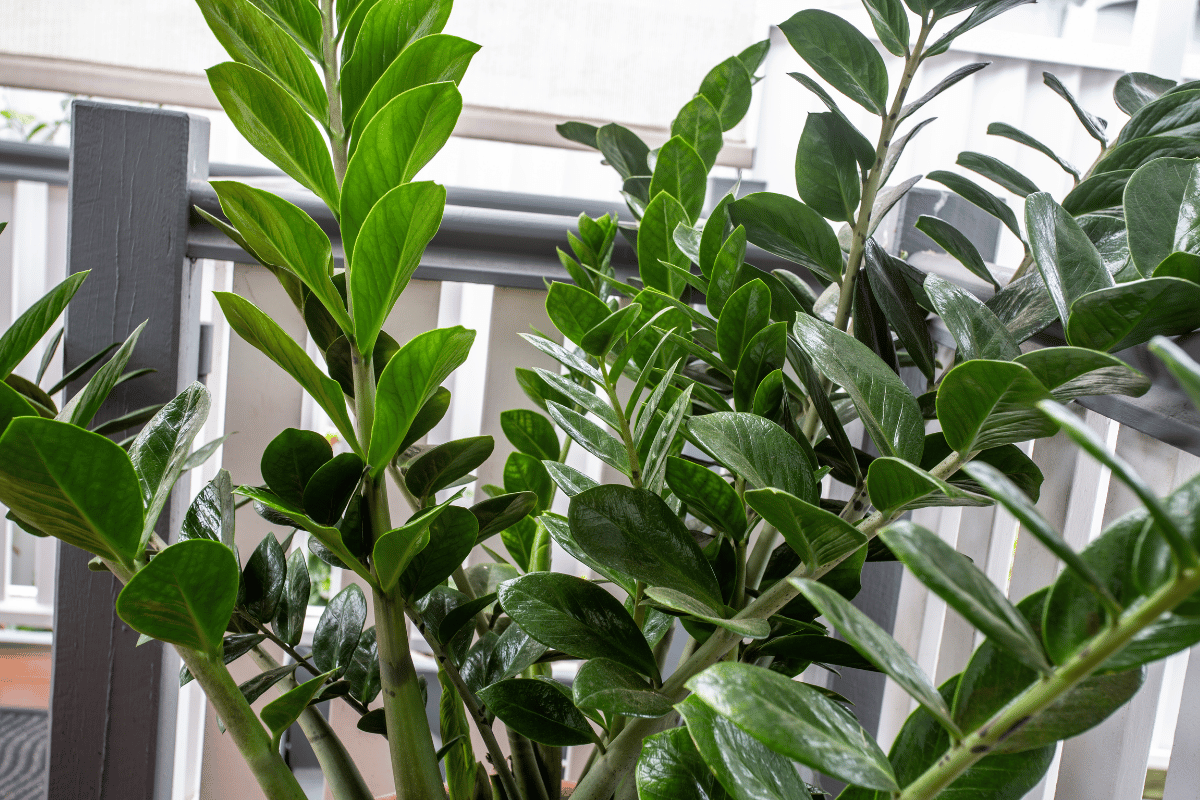
The ZZ plant is one of the toughest and most popular indoor plants, with glossy, dark green leaves and a clean, sculptural look. It tolerates low light, drought and general neglect, which makes it an ideal choice for beginners and for spaces like offices.
The ZZ plant (Zamioculcas zamiifolia) belongs to the arum family (Araceae), the same as the peace lily and the philodendron. Its scientific name refers to the resemblance of its foliage to the cycads of the genus Zamia, but the two plants are not botanically related.
This guide covers how to care for the ZZ plant, with particular emphasis on watering, which is the most delicate point and the most common cause of failure.
Why the ZZ plant is so tough
The ZZ plant's resilience comes from its root system. Beneath the soil it forms thick rhizomes, which resemble tubers and store water and nutrients. Combined with the waxy surface of the leaves, which limits water loss, this lets the plant endure long periods without watering.
In the wild, the ZZ plant comes from the seasonally dry regions of East Africa, where periods of drought alternate with rains. In those conditions it developed its natural ability to store water and survive drought.
Where to put a ZZ plant
The ZZ plant thrives in a bright spot with indirect light, but also tolerates low light, a trait that sets it apart from most indoor plants. One distinction is worth making, though. In low light the ZZ plant survives but grows very slowly. In bright, indirect light it grows better and forms denser foliage.
Avoid exposure to direct, strong sun, which scorches and yellows the leaves. A spot near a north, east or west-facing window, out of the path of direct rays, is suitable.
Temperature
The ideal temperature for the ZZ plant is between 15 and 24°C. The plant is sensitive to cold, so the room temperature should not drop below 8°C. Keep it away from draughts and air conditioning too.
Soil and pot
The ZZ plant needs a light, porous mix with very good drainage, so it doesn't stay wet. A blend of potting soil with perlite or coarse sand, or even a mix for succulents and cacti, works well. The pot must have drainage holes.
The ZZ plant doesn't need frequent repotting, since it grows slowly. Repot every two to three years, or when the rhizomes fill the pot.
Watering
Watering is the most critical point in ZZ plant care. The greatest danger is overwatering, which leads to rhizome rot and is the most common cause of the plant's death.
Water only when the soil has dried out completely, throughout its depth. In practice this means watering every two to four weeks, depending on the season, the temperature and the light in the room. Water thoroughly so it runs from the holes, then empty the saucer immediately, since the ZZ plant must never sit in standing water. In winter, when growth stops, reduce watering even further.
Because the rhizomes store water, the ZZ plant copes far better with underwatering than with excess moisture. When in doubt, hold off on watering.
Feeding
The ZZ plant is not a demanding feeder. During the growing season, in spring and summer, apply a liquid fertiliser for foliage plants once a month, at a diluted dose. Stop feeding in winter.
Propagation
The ZZ plant can be propagated several ways, though the process is slow and takes patience.
By division: at repotting, a large plant can be split into smaller ones, carefully separating the rhizomes so each piece has stems and roots.
By leaf cuttings: detach whole leaves along with their base and set them in a light mix. Small rhizomes form at their base over time. The method is slow and can take several months.
In water: a healthy stem can also root in water. Place it in a clear container, in a bright spot out of direct sun, and change the water every one to two weeks. Once roots a few centimetres long have formed, you can pot it up in soil.
Common problems
- Yellow leaves with soft stems: almost always from overwatering and rhizome rot. Reduce watering immediately and check the drainage
- Wrinkled, soft stems: rarer, caused by prolonged lack of water, as the rhizomes have used up their reserves. Water thoroughly
- Brown, scorched patches on the leaves: from exposure to direct, strong sun. Move the ZZ plant to a spot with indirect light
- The plant isn't growing: the ZZ plant is naturally slow, especially in low light. For faster growth, move it to a brighter spot with indirect light
Pests and diseases
The ZZ plant is rarely affected by pests and diseases, thanks to its tough, waxy leaves.
- Rhizome rot: the most common problem, from overwatering and poor drainage. Prevent it with the right mix and careful watering
- Scale and mealybugs: small insects that may appear on the stems. Clean them off with cotton dipped in an alcohol solution
Is the ZZ plant toxic?
The ZZ plant is toxic. All parts of the plant contain calcium oxalate crystals, which cause oral and digestive irritation and burning in dogs and cats, as well as skin irritation in sensitive people.
Keep the plant away from pets and small children that might chew the leaves. When handling the ZZ plant, especially during repotting or propagation, wear gloves and wash your hands after contact with the sap. If a pet ingests part of the plant, contact your veterinarian.
Frequently asked questions
How often do I water a ZZ plant? Only when the soil has dried out completely, usually every two to four weeks, and even less in winter. Overwatering is the most common cause of the plant's death.
Why are my ZZ plant's leaves turning yellow? Almost always from overwatering, which rots the rhizomes. Check whether the soil is soggy, let it dry out completely, and reduce the frequency.
Can a ZZ plant live in a dark room? It tolerates low light but won't survive in complete darkness, and it grows very slowly. For better growth it needs a bright spot with indirect light.
Why isn't my ZZ plant growing? The ZZ plant is naturally slow and can stay dormant for months. Growth speeds up in a brighter spot, with correct watering and feeding in spring and summer.
Is it dangerous to pets? Yes, all parts are toxic because of the calcium oxalate crystals. Keep it away from animals and children.
Important notes
Every home and every plant is unique. Conditions vary significantly with the light, the temperature, the humidity and the ventilation of the room. The guidance above is general and a starting point rather than a strict rule.
Given the ZZ plant's toxicity, place it somewhere pets and small children can't easily reach, wear gloves when handling it, and in case of ingestion contact a vet or doctor.
If the plant shows persistent problems that don't respond to the basic practices, it's worth consulting a horticulturist or your local nursery. For pest control, try non-chemical methods first, such as insecticidal soap. When a product is needed, use only ones approved for indoor plants and follow the label instructions.
References
- Royal Horticultural Society. Zamioculcas zamiifolia.
- New York Botanical Garden. Houseplant Care, ZZ Plant (Zamioculcas zamiifolia).
- Gardening Know How. ZZ Plant Care.
- Garden Design. ZZ Plant, how to grow and care for Zamioculcas zamiifolia.