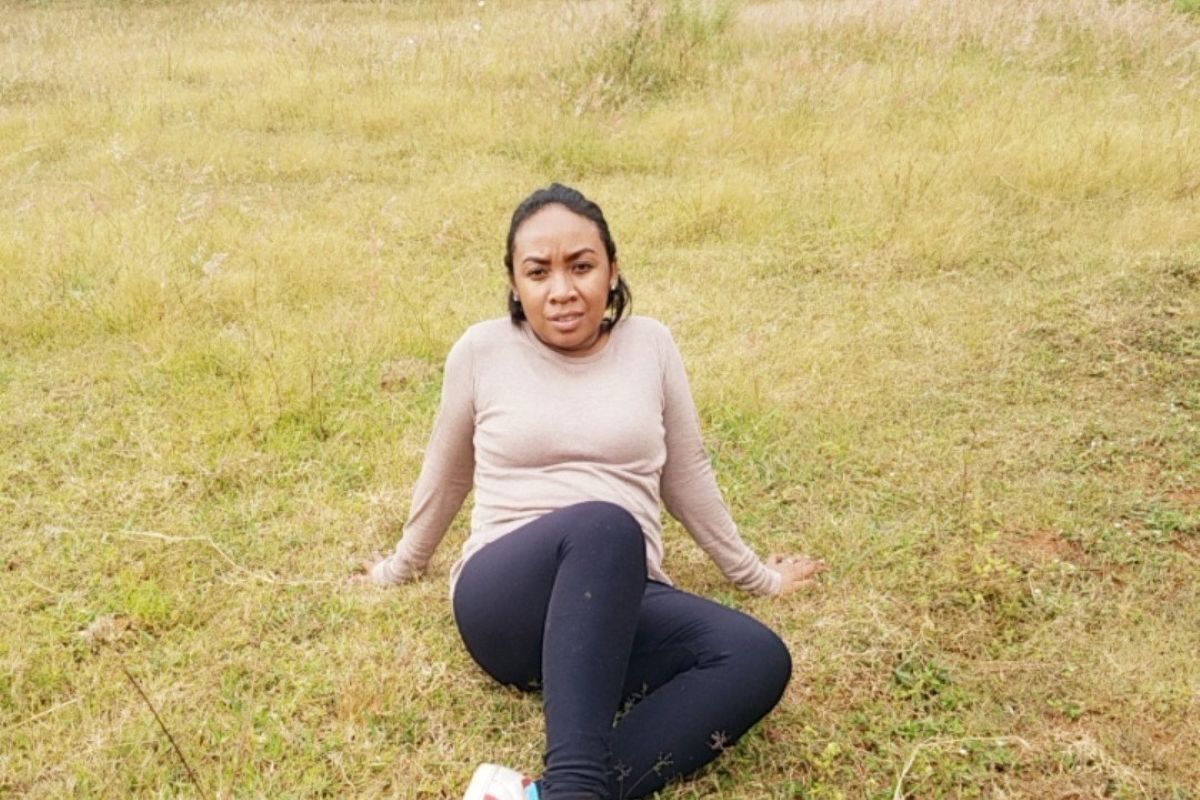
On a 36-hectare plot in Ambohimasina, Madagascar, where a mountain stream cuts through rice paddies and strong winds threaten fragile crops, Sarah Andriamihajarimanana is building a farm designed for resilience: diversified, organic, and rooted in community.
A childhood in the fields
Andriamihajarimanana's journey began long before she planted her first rice field in 2015.
"My grandparents were farmers, and during school holidays, they always took us to the countryside to learn about agriculture," she recalls. "Growing up in that environment, I developed a deep passion for farming."
The land she manages today carries that history. Purchased and cultivated by her grandparents, it represents decades of continuity. After their passing, parts of it lay unused — too large for one person to manage, yet too significant to let go.
"After they passed away, I decided to continue their work to preserve and develop this heritage," she says. She approached her mother and uncles and asked for permission to cultivate the 35.9-hectare family plot, and they agreed. "That is how my project began."
Building a community-model farm
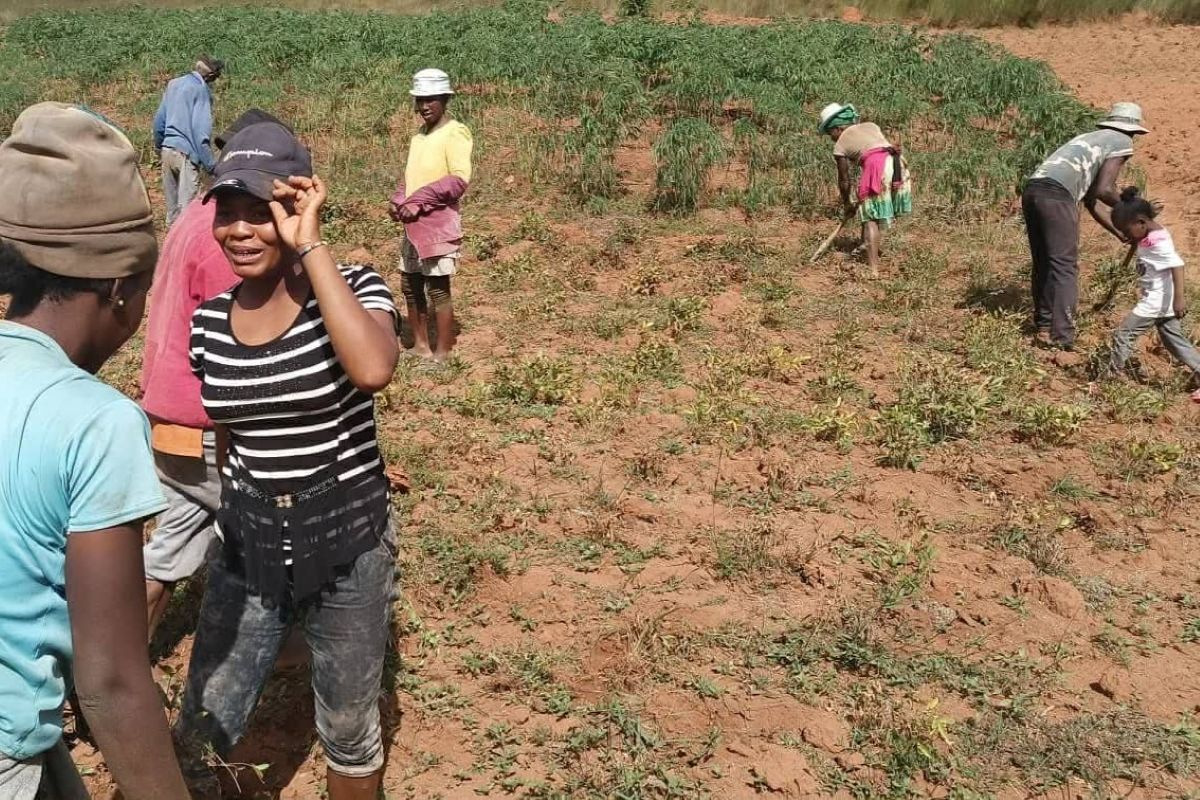
Andriamihajarimanana chose a collaborative path. She works alongside five local families, many of whom share deep ties to the land. Their grandparents once farmed alongside her own, creating a foundation of trust that shapes the project today.
"We work collectively, and we share the harvest fairly," she explains. "Over time, these families have become like extended relatives."
The families are stakeholders — contributing labour, sharing risk, and benefiting directly from production. In a region marked by economic hardship, this approach provides steady work, modest income, and improved food security. Children in these households sometimes miss school due to financial constraints, seasonal food insecurity persists, and income remains modest even in productive years. The farm is not just a business — it is a buffer against poverty.
A diverse farm with untapped potential
The farm stretches from mountainous terrain down to flat plains and rice paddies, with a river along its lower boundary and a permanent mountain spring providing a natural water source. Two fish ponds have already been added, laying the groundwork for integrated aquaculture.
Despite its size, only about 20% of the land is currently cultivated. Challenges include limited labour, lack of mechanization, insufficient irrigation infrastructure, and scarce financial resources — barriers that constrain even the most innovative farmers across Madagascar's agricultural sector.
"We mainly grow rice, chickpeas, beans, and green vegetables," Andriamihajarimanana says.
Crop choices are strategic. Chickpeas and beans require less water and adapt well to local soil conditions, making them more resilient to unpredictable rainfall. Vegetables feed the families and supply small-scale local market sales. Average production stands at roughly 50 sacks of rice (250 kg each) per season and about 60 sacks of chickpeas and beans, while vegetables are consumed at home or sold at nearby markets. But these outputs represent only a fraction of the farm's potential.
Farming organically by design
Andriamihajarimanana has committed to organic farming as both a practical and sustainable approach.
"We use organic fertilizers such as cow, pig, and poultry manure," she explains. "For pest control, we prioritize natural and biological methods."
This reduces costs, preserves soil health, and strengthens long-term productivity — while aligning with traditional practices long used by farmers across Madagascar. Her system is built on efficiency: using locally available resources, minimizing waste, and selecting crops suited to environmental conditions.
Water: The defining challenge
Despite access to a river and a permanent spring, water remains the farm’s greatest constraint.
"The lack of irrigation significantly reduces yields," she says. "In some seasons, we harvest only half of the expected production. Rice is particularly affected."
The issue is not water availability — but infrastructure. Without pumps, pipes, and storage systems, crops depend heavily on increasingly erratic rainfall.
To adapt, Andriamihajarimanana is gradually introducing solutions: drip irrigation systems, water storage infrastructure, drought-resistant crops, and natural methods to strengthen plant resilience.
"The most difficult moments occur during drought periods," she says. "But I remain determined to find sustainable solutions. I have never considered giving up."
The missing link: Investment
Unlocking the farm’s full potential depends on one critical factor: access to capital.
"To cultivate the entire area, we need a tractor or power tiller, water pumps, irrigation pipes, and water storage tanks," Sarah says. These are standard tools in well-funded agricultural systems — but in Madagascar, they remain out of reach for many smallholders, who also contend with restricted credit, high interest rates, weak infrastructure, poor roads, and low market prices.
Andriamihajarimanana has launched a fundraising initiative to secure this equipment. She continues to seek partners and investors, convinced that the farm can scale with the right support.
A vision for circular agriculture
Looking ahead, Andriamihajarimanana is not just expanding production — she is designing a system. Her long-term vision centres on a fully integrated, circular farm: livestock (cattle, pigs, poultry), compost produced from animal waste, and biogas generation to reduce reliance on firewood.
"It's about using everything we have, without waste," she explains.
In this model, outputs become inputs — closing nutrient loops, reducing costs, and increasing resilience. It is a vision grounded entirely in local experience.
A microcosm of a larger challenge
Andriamihajarimanana’s farm reflects broader realities across the country’s agricultural sector.
“Agriculture in Madagascar faces many challenges,” she says, citing limited access to equipment, restricted credit, high interest rates, weak infrastructure, poor roads, and low market prices. These systemic barriers constrain even the most innovative farmers.
Her project illustrates both the potential and the limits: a farm that supports multiple families, produces diverse crops, and applies sustainable practices—yet still struggles to meet year-round needs due to structural constraints.
Never give up
For those considering a future in agriculture, Andriamihajarimanana returns to a simple principle:
“My advice to future farmers is simple: never give up, even when resources are limited or when others doubt you,” she says. “The world will always need committed and courageous farmers.”
In Ambohimasina, across a landscape of mountains, paddies, and ponds — on land her grandparents first cleared and her family nearly left behind — Andriamihajarimanana is proving that such farmers already exist—innovative, determined, and showing that resilience can be grown.