
Innovations in Crop Protection for Sustainable Farming
How common is an image to pass by fields and see farmers till the land or spray their crops? Well, today, the rise of interest in alternative more sustainable crop protection measures shows that this “normality” is about to change. The agricultural sector is undergoing a significant transformation driven by a confluence of policies, consumer demands, and environmental imperatives. Central to this evolution is the shift from traditional chemical pesticides and fungicides to more sustainable crop protection methods.
And there are numerous innovations and new products in this area to choose from. These techniques and products not only are safer for the environment and biodiversity but also promise to restore the lost effectiveness of crop protection. Because today, whether you are a farmer or an agronomist, you can verify that the loss of many active compounds and the rise of resistance of many pests and pathogens on the “traditionally” used chemical protectants have become a major hurdle for agricultural production.
So, let's dive into these new solutions and innovations in plant protection and analyze the general picture of plant protection in light of new policies, farmers’ needs, and consumers’ preferences.
Policies and Trends Driving the Shift
Governments worldwide are implementing stricter regulations to curtail the use of chemical pesticides, motivated by concerns over environmental degradation and public health. More specifically, in the European Union, the "Farm to Fork" strategy under the Green Deal aims to reduce pesticide use by 50% by 2030 while promoting biological alternatives and integrated pest management. The EU also enforces strict regulations on pesticide residues in food, compelling farmers to transition towards sustainable practices. Based on a recent article in the Guardian, the UK government has announced plans to reduce pesticide use on arable farms by 10% by 2030 to protect pollinators like bees. This initiative includes promoting integrated pest management and introducing penalties for irresponsible pesticide use.
On the other side of the ocean, in the United States, while the Biden administration initially encouraged sustainable agriculture through initiatives supporting regenerative farming and pesticide reduction, the return of Donald Trump to the presidency in 2025 has raised concerns about the potential deregulation of chemical pesticides and the rollback of environmental policies. Trump's previous tenure saw efforts to loosen restrictions on chemical use in agriculture, favoring large agribusiness interests. If such policies return, they could challenge the momentum toward sustainability and widen the regulatory gap between the U.S. and the EU.
Globally, other regions are adopting varying approaches. China has been actively reducing chemical pesticide use by promoting biopesticides and integrated pest management. India has implemented strict guidelines on highly hazardous pesticides, with several bans enforced in recent years. Moreover, many of these countries are large exporters of agricultural food products for the EU, and the stricter regulation in the limits of pesticide residues and banned substances is already costing them, pressuring them to take action. More specifically, the top exporting countries of food with EU-banned pesticides are: India, Uganda, China, Kenya, and Brazil, based on a publication by PAN Europe.
The Global South faces significant challenges in transitioning to sustainable crop protection, including limited access to biopesticides, insufficient agricultural extension services, and financial constraints that hinder the adoption of advanced pest management technologies. Many farmers in developing regions continue to rely on older chemical pesticides due to their affordability and availability, despite the associated environmental and health risks. In African nations, particularly those reliant on subsistence farming, these challenges are even more pronounced, as access to new technologies and financial resources remains scarce. Additionally, multinational agribusinesses play a major role in shaping agricultural practices in the Global South, often promoting pesticide-intensive farming. As a result, the shift toward sustainable alternatives has been significantly slower than in the Global North, where stricter regulations and consumer demand are accelerating the adoption of eco-friendly solutions.
Innovative Practices and Products Driving the Trend in Biological Plant Protection
Biocontrol: A Sustainable Approach to Pest Management
Biocontrol, also known as biological control or bioprotection, involves managing pests, diseases, and weeds using naturally occurring compounds or organisms. While traditional forms of biocontrol have been applied in agriculture for centuries, modern advancements have significantly expanded its scope, making it a cornerstone of sustainable crop protection. The increasing global emphasis on environmentally friendly farming and regulatory pressures against chemical pesticides have driven the adoption of biological plant protection strategies.
The hype of biopesticides and biostimulants
While not a plant protective product or just a fertilizer, biostimulants are rising in farmers' preferences for building crop resilience to stressors (biotic and abiotic), and this can be reflected by the market. The Biostimulants Market has been valued at USD 4.3 billion in 2024 and is projected to reach USD 7.6 billion by 2029, according to MarketsandMarkets. However, let focus on a core plant protection product; biopesticides.
Biopesticides are eco-friendly pesticides that consist of or are created from natural materials (e.g., plants, animals, bacteria, and certain minerals).
Major Categories of Biopesticides
- Biochemical Biopesticides: These include naturally occurring substances like capsaicin and pyrethrum that control pests through non-toxic mechanisms.
- Microbial Biopesticides: Comprising microorganisms such as bacteria (e.g., Bacillus thuringiensis), fungi, viruses, and protozoa, these biopesticides effectively target pests while preserving beneficial organisms.
- Plant-Incorporated Protectants (PIPs): These are genetically modified plants that produce pest-resistant substances within their tissues.
A key advantage of biopesticides is their specificity, ensuring minimal impact on non-target species, thereby preserving biodiversity and reducing ecological disruption.
According to Fortune Business Insights, the biopesticides market was valued at USD 8.73 billion in 2024 and is projected to reach USD 28.61 billion by 2032. North America is expected to hold the majority of the market share. Companies are leveraging AI to rapidly discover and commercialize new biopesticides, enhancing pest control effectiveness and optimizing market strategies. Leading market players in plant protection products such as BASF SE, Syngenta, Certis U.S.A. L.L.C., SOLASTA Bio, and Marrone Bio Innovations have been actively securing funding to advance biopesticide development and meet the growing demand. For example, in April 2023, U.K.-based agritech company SOLASTA Bio raised USD 4.95 million to accelerate the development of nature-inspired pesticides and expand its presence in the U.S. and U.K.
Breeding and genetic engineering for creating new resistant varieties
One of the most effective ways to protect plant health against pathogens and pests is to make the plants immune or tolerant to these “enemies”. This has been the work of plant breeders to recognize and introduce resistance genes to the crops, creating new superior varieties. However, the large pressure crops are facing from these organisms has led, in many cases, to resistance break. Nowadays, researchers and breeders worry that we are losing resistance genes at great speed and running out of options.
To deal with this problem, breeders are looking for new solutions in the wild ancestors of crop plants. With the pathogens breaking the resistance within just a few years, breeders are deploying new ways to introduce and pyramid new resistance genes faster. In this case, genetic engineering, especially CRISPR-cas, seems to hold the key. According to Precedence Research, the CRISPR-based gene editing market is projected to grow from $4.46 billion in 2025 to $13.39 billion by 2034
Moreover, RNAi-based crop protection is an emerging field that utilizes gene-silencing mechanisms to target specific pest species. By disrupting essential genetic functions in pests, RNAi technology offers a highly targeted approach to pest control with minimal impact on non-target organisms. While still in the early stages of commercialization, this approach holds great promise in reducing dependency on chemical insecticides.
While amazing breakthroughs come using these techniques (e.g. potato plants resistant to late blight disease caused by Phytophthora infestans, created by Wageningen University researchers) still, the varieties produced fall under the genetically modified organisms face many restrictions due to legislation in many countries, the EU included. However, experts expect to see a shift in the policies and broader use of these varieties soon due to the urgency of the problem and their great potential to offer a viable solution for plant protection without depending on chemical pesticides and fungicides.
Artificial Intelligence (AI) and Precision Agriculture
The integration of digital tools and precision agriculture is revolutionizing pest management. Technologies such as remote sensing, AI-powered monitoring, and data analytics are enabling real-time detection of pest outbreaks, optimizing pesticide application, and reducing waste. Smart algorithms can analyze environmental conditions and predict pest infestations, allowing farmers to take proactive measures.
More specifically, AI is revolutionizing pest control by enabling precise pest identification, predictive analytics, and automated monitoring systems. AI-driven smart traps can detect pest activity in real-time, guiding timely interventions and minimizing crop damage. These technologies optimize resource use, reducing dependency on broad-spectrum pesticides and fostering sustainable practices.
Precision Spot Spraying
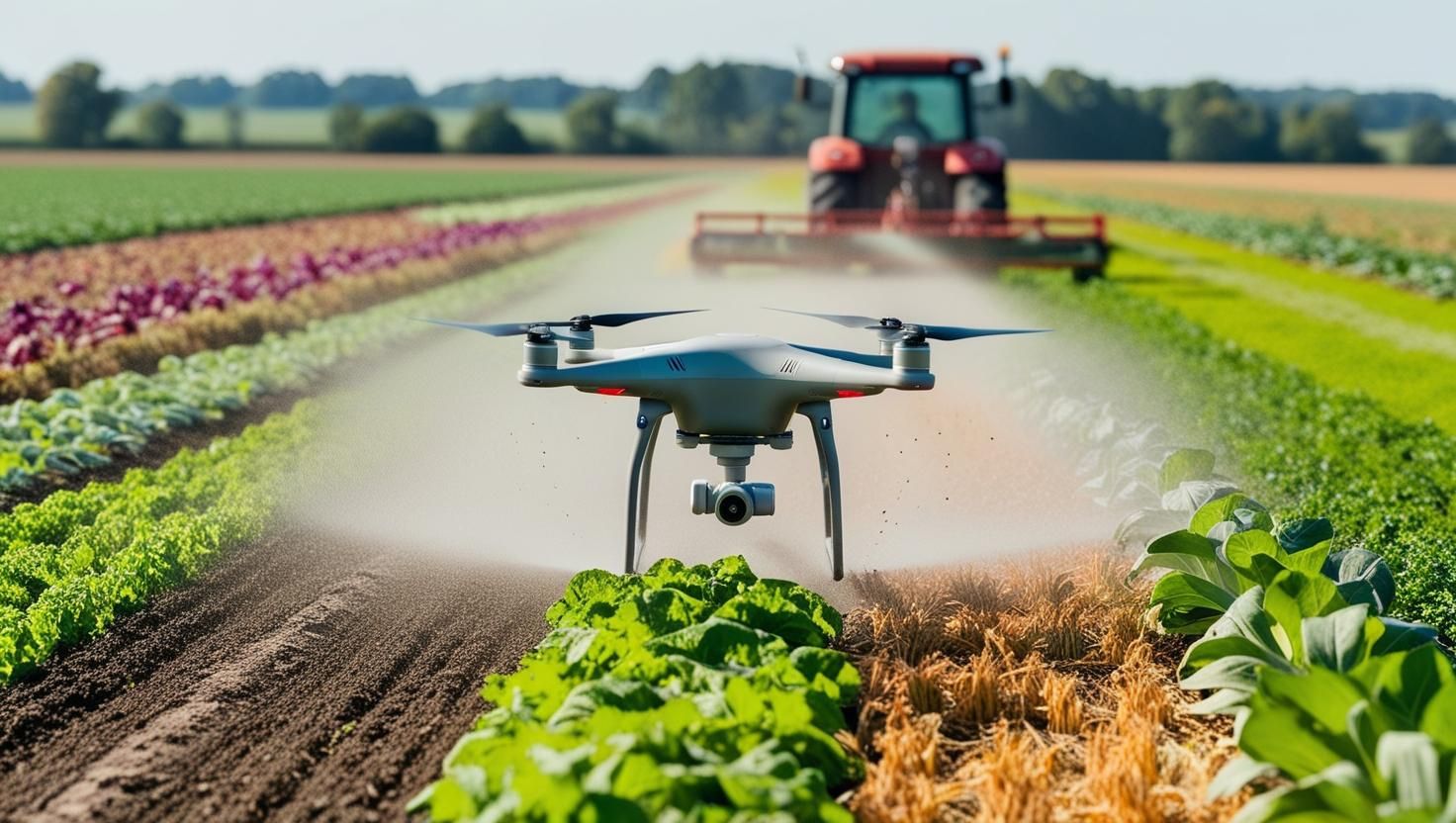
Precision spot spraying technology, such as that developed by Niqo Robotics and Augments (CNH Industrial), utilizes AI-assisted systems or cutting-edge Computer Vision Machine Learning (CVML) to target specific areas affected by pests or weeds. This approach has led to significant reductions in chemical usage, with early adopters reporting up to 60% savings without compromising efficacy. This more precise application with the need for less applied products is also unlocking the potential of drones and robotics for applying plant protective products in the filed.
Next-Generation Formulations and Delivery Systems
Advancements in nanoformulations and improved delivery mechanisms are enhancing the efficacy and stability of crop protection products. Encapsulation technologies ensure the controlled release of active ingredients, reducing environmental drift and increasing on-target precision. These innovations help optimize pesticide usage, reducing overall chemical inputs while maintaining pest control effectiveness.
Behavioral Disruption and Precision Pest Control
The innovations don’t stop here. Rather than relying on broad-spectrum chemical pesticides, scientists have found and deployed methods that target pests' natural communication, reproduction, and navigation systems, reducing their populations with high precision and control.
Pheromone-Based Pest Control
Pheromone traps and disruption techniques provide targeted pest management by mimicking the chemical communication signals of pests. These methods interfere with mating patterns, reduce reproduction rates, and are highly specific, minimizing the impact on non-target species.
Sterile Insect Technique (SIT)
SIT involves releasing sterilized male insects to control pest populations, effectively disrupting reproduction cycles without affecting beneficial organisms or ecosystems. This method has shown promise in managing pests like fruit flies and mosquitoes.
Receptor Interference Techniques
Innovative receptor interference strategies target the chemical pathways pests use for communication and navigation. By disrupting these pathways, these methods effectively reduce pest activity and prevent infestations, offering an eco-friendly alternative to chemical pesticides.
Conclusion
The shift towards sustainable crop protection is both a necessity and an opportunity. With growing regulatory pressures, consumer awareness, and technological advancements, the agricultural sector is set to embrace eco-friendly solutions that enhance productivity while minimizing environmental impact. Farmers and agronomists must stay abreast of these innovations to ensure resilient and sustainable farming systems. By integrating biological control, AI-driven technologies, and precision agriculture techniques, the future of plant protection is poised to be both sustainable and efficient.
References
- Use of Pesticides on Uk Farms to Be Cut By By to Protect Bees – Theguardian
- https://thehill.com/policy/energy-environment/5196158-trump-toxic-chemicals-pollution/
- The return of EU-banned pesticides: dangerous residues found in imported food | PAN Europe.
- https://www.wur.nl/en/research-results/research-institutes/plant-research/show-wpr/breakthrough-in-fight-against-devastating-potato-disease.htm
- The Role of Crop Protection Industry in Driving Sustainability in the Agriculture Sector (PDF) – pwc.in
- RISE CP EU Final (PDF) – Organicseurope
- Innovations in plant protection — CORDIS, European Commission
- A review on fungal-based biopesticides and biofertilizers production — Ecotoxicology and Environmental Safety
- Recent innovations in crop protection research
- EPRS STU(2021)656330(ANN2) en (PDF) – European Union
- Innovations in plant protection — CORDIS, European Commission
- Innovations Plant Protection Alternatives Reduce Use Pesticides Focusing Candidates Substitution – Gouv