

Olive Oil Prices & Market Digest: Week 4, 2026
As the 2025/26 harvest season matures, the global olive oil market is navigating regional supply imbalances, tightening quality standards, and shifting Mediterranean dynamics. While the International Olive Council (IOC) projects total global production at 3.44 million tonnes, down 4% from last year, the real story lies in evolving producer landscapes and the challenge of securing high-quality EVOO.
Stay up to date with our Weekly Olive Oil Digest
Global production trends: A return to stability?
According to the IOC, global olive oil production has stabilised following the low of 2.59 million tonnes in the 2023/24 season.
 (1).jpg)
While the 2025/26 harvest shows a slight year-over-year decline, production remains well above 2023/24 levels, reflecting a return to more consistent global supply. However, local conditions are creating significant divergence across producing countries, affecting availability, quality, and pricing.
Spain: Steady production with focus on quality
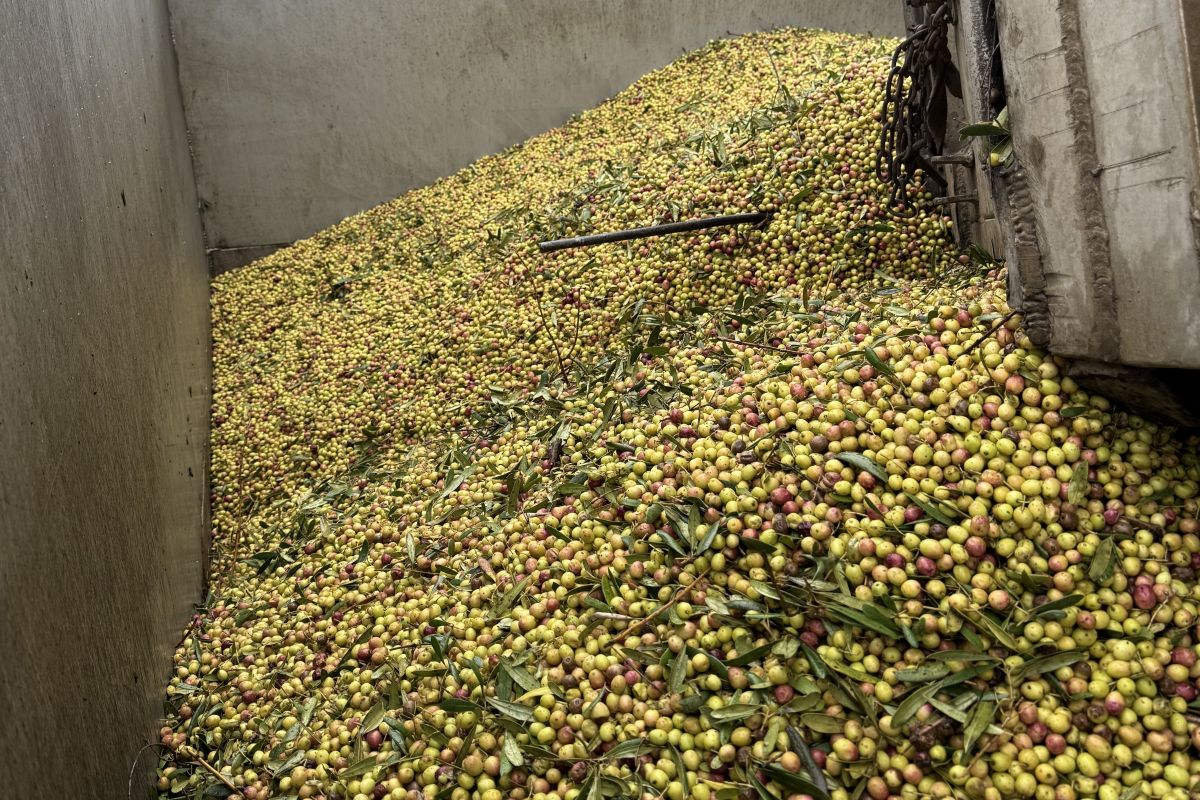
Arbosana olives harvested in Córdoba, Spain, January 2026.
Spain’s olive oil production remains strong and reliable, with late-season harvesting continuing amid minor weather variability.
- Production levels are sufficient to meet domestic and export demand.
- Operators prioritise price stability over rapid sales.
- Stocks are largely held at the mill level, minimising logistical bottlenecks.
Although production is slightly below last year's, sales remain steady, supported by strong campaigns across key regions.
.jpg)
Greece: Organic scarcity and quality concerns
The Greek olive oil market is under significant pressure, with acute scarcity affecting the sector. Key market dynamics include:
- Low production volumes and elevated acidity are limiting the availability of high-grade EVOO.
- Most commercial activity involves lampante and pomace oils, while premium EVOO moves slowly and selectively.
- Packers increasingly rely on last season’s stock, risking quality degradation; some oils are approaching acidity limits.
- The organic sector is particularly constrained, creating supply pressure and occasional quality compromises.
- Trade activity, especially toward Italy, is limited due to tight supply and rising risks.
Italy: Production recovering, prices holding premium
Italy’s olive oil sector continues to recover from the drought‑impacted previous season, with the 2025/26 harvest expected to show a notable rebound. High-quality EVOO continues to command a premium price, supported by strong domestic demand and superior product quality.
- Current EVOO prices: €6.30 to €7.20 per kg
Italian producers leverage quality differentiation and origin branding to sustain leadership in domestic and export markets. Recovery is supported by consistent demand for Italian-origin oils and limited supply from previous seasons.
Portugal: Cautious market activity
Portugal has sold approximately half of its harvest.
- Producers are in no rush to sell, keeping market activity moderate.
- Pricing remains stable, reflecting a measured approach to supply management.
Tunisia: A rising global contender
Tunisia is undergoing a historic shift, emerging as a key supplier in the global olive oil market.
- Record harvest projected: 450,000 tonnes, positioning Tunisia as the world’s second-largest producer.
- Prices are competitive, and producers are eager to sell.
- International buyers, including Italy, Spain, and the USA, are sourcing Tunisian oil to offset Greek shortages and secure organic and bulk volumes.
- Contingent oils are priced higher than temporary imports, and sales are expected to remain strong through April.
This surge provides a vital safety valve for global supply, with active negotiations for full-load shipments to major markets.
Market outlook: Stability amid regional volatility
The global olive oil market is expected to remain relatively stable, though regional disparities—particularly in Greece and Tunisia—will continue to shape trade flows, pricing, and sourcing strategies.
Producers, packers, and retailers are advised to:
- Monitor supply closely
- Verify quality parameters
- Diversify sourcing to navigate tight markets effectively
Source olive oil with confidence on Wikifarmer's Marketplace:
Looking for gold standard EVOO?
Disclaimer: The information provided on this website, including market prices, insights, and projections, is for general informational purposes only. While we strive to ensure accuracy and timeliness, we make no guarantees regarding the completeness, reliability, or suitability of the information presented. Users are solely responsible for independently verifying the data and assessing its relevance to their specific circumstances before making any decisions. Wikifarmer and its operators shall not be held liable for any losses, damages, or consequences arising from the use of the information provided herein.