

Your weekly food recall & compliance tracker w51/2025
The final whole week before the 2025 holiday season delivered 135 food and feed safety notifications through the European Union's Rapid Alert System for Food and Feed (RASFF), revealing troubling concentration patterns that wholesale buyers and fresh produce professionals should monitor closely heading into 2026. Two countries dominated the alerts: Turkey and Poland, but for different reasons. One struggles with endemic mycotoxin contamination in dried fruit exports, while the other faces a microbiological crisis in its poultry processing sector that has persisted for half a decade.
Highlights at a glance
- 135 total notifications in the dataset (food, feed, and food contact materials combined).
- Food notifications: 120, plus 12 feed and 3 food contact material notifications.
- Top category: fruits and vegetables (27 alerts, 20% of all notifications).
- What drove the week (hazard groups): pesticide residues (43), mycotoxins (36), pathogenic micro-organisms (34)
- Fresh produce: fig products were the single loudest signal, especially dried figs from Turkey (multiple mycotoxin notifications, mainly Ochratoxin A).
- Animal products: poultry recalls were heavily concentrated, with Poland standing out and Salmonella types recurring.
Top product categories affected
Last week's alerts concentrated heavily on the fresh produce and animal protein sectors. Fruits and vegetables led with 27 alerts (16% of total notifications), followed closely by poultry meat products at 20 (12%), and nuts/seeds at 13 (10%). The combined plant-based categories (fruits, vegetables, nuts, seeds, herbs, spices, and cereals) accounted for 45 of 130 alerts (35%), demonstrating that botanical products continue to face the most complex hazard profiles during the European winter import season.
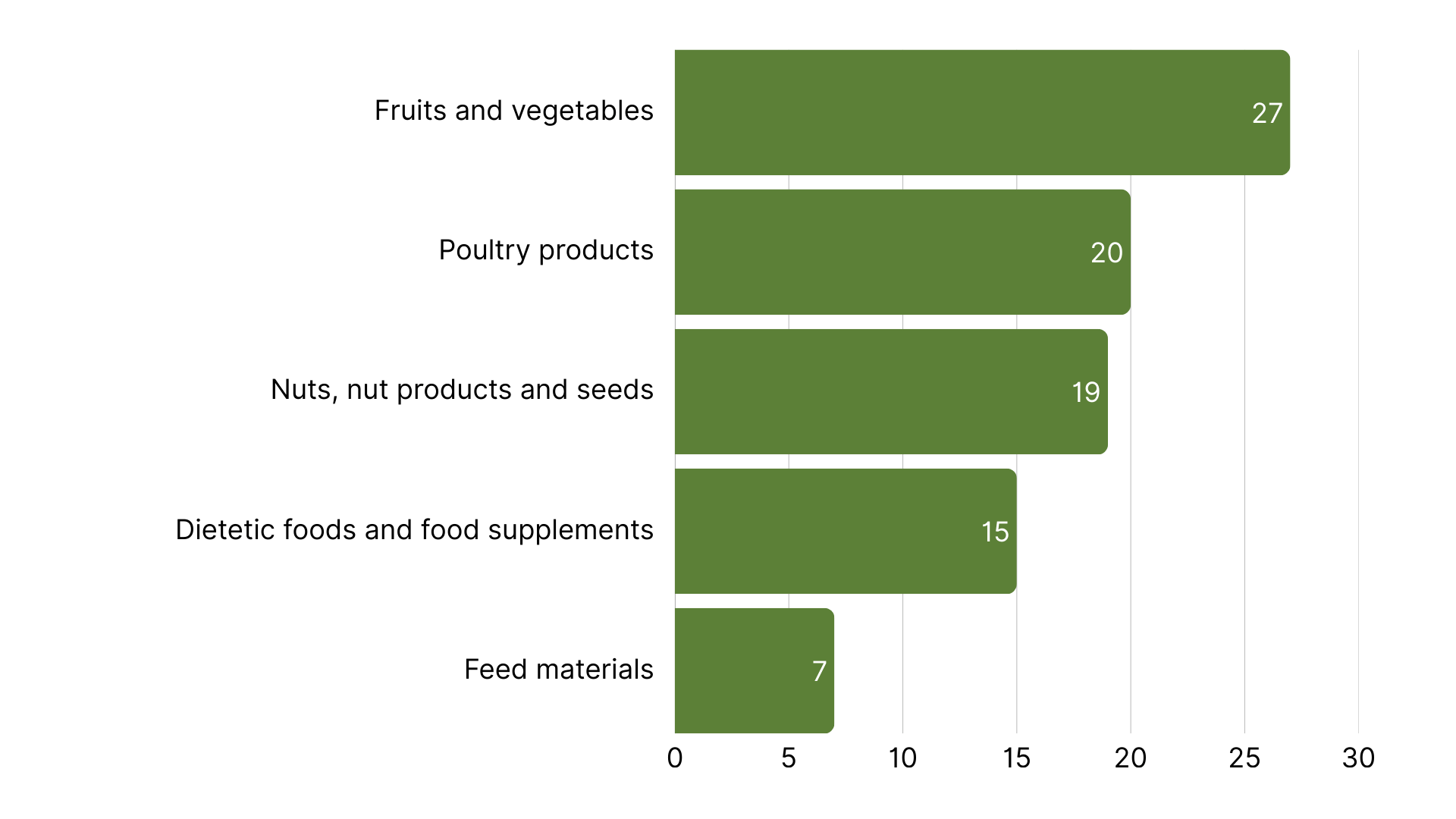
Graph 1: Top 5 Product Categories with the Most RASFF Alerts (Week 51)
Poultry meat's 20 alerts represented 100% microbiological contamination—19 Salmonella detections across various serovars (Enteritidis, Infantis, Newport) and one Campylobacter case. The uniformity of hazard type and geographic origin (Poland and neighbouring processing regions) points to endemic rather than sporadic control breakdowns in Central European poultry facilities.
Fresh produce focus
1) Figs were the week's "repeat offender" product
Within fruits and vegetables, fig-related notifications dominated:
- Dried figs (Turkey): 11 alerts, with ochratoxin A appearing again and again, plus aflatoxin findings.
- Additional fig signals appeared as "Turkish figs" and fig paste, also tied to ochratoxin A.
Why it matters commercially: dried fruit is a high-value, high-visibility product in winter trade. Repeated mycotoxin findings tend to trigger stricter controls and increased sampling, which can slow down logistics and increase rejection risk for the entire origin program, not just one exporter.
2) Pesticide residues hit both "everyday" items
A big chunk of the week's plant alerts were residue-related, with examples that matter to produce buyers:
- Fresh peppers (Turkey): formetanate (two separate alerts)
- Peppers (Albania): formetanate + nickel
- Yard long beans (Sri Lanka): chlorothalonil + metalaxyl
- Green beans (Kenya): bifenthrin
- Mandarins (Peru): propiconazole
- Dragon fruit (Vietnam): carbendazim
- Brown rice (Paraguay): hexaconazole (unauthorised substance)
And then there are the "small ingredient, big consequence" cases:
- Cumin (India): multiple pesticide findings in two notifications, with several actives listed as unauthorised.
- Parsley (Uzbekistan): chlorpyrifos (unauthorised)
Why it matters commercially: These are the products that can blow up a mixed container, a processing batch, or a retailer's specifications. The volume can be small, but the downstream cost is not.
3) "Organic" labels still showed up alongside findings
Week 51 also included several products marketed as organic, where the hazard was still serious:
- Organic kidney beans (China): Carbofuran
- Organic dates (Iran): Cypermethrin
- Organic dried vine fruits (Belgium): Ochratoxin A
- Dried organic figs (Spain): Ochratoxin A
That mix is a reminder for buyers: organic is a market claim, not a safety shortcut. It still needs the same (or stronger) supplier verification and testing logic.
Complete list of recalled fresh produce
Fruits and vegetables
- Dried Figs (Turkey): ochratoxin A (13 alerts)
- Dried Organic Figs (Spain): ochratoxin A
- Organic Dried Vine Fruits (Belgium): ochratoxin A
- Fig Paste (Turkey): ochratoxin A
- Frozen Strawberries (Austria): oxamyl
- Fresh Peppers (Turkey): formetanate (2 alerts)
- Fresh Peppers (Albania): formetanate + nickel
- Organic Dates (Iran): cypermethrin
- Mandarins (Peru): propiconazole
- Yard Long Beans (Sri Lanka): chlorothalonil + metalaxyl
- Green Beans (Kenya): bifenthrin
- Organic Kidney Beans (China): carbofuran
- Dragon Fruit (Vietnam): carbendazim
- Garlic Chive Leaves (Vietnam/Thailand): cypermethrin
Herbs & spices
- Parsley (Uzbekistan): chlorpyrifos
- Cumin (India): multiple pesticides - acetamiprid, benomyl/carbendazim, chlorpyrifos, clothianidin, dinotefuran, fipronil, flonicamid, hexaconazole, metalaxyl, picoxystrobin, thiamethoxam, tolfenpyrad, tricyclazole (2 alerts)
Cereals & grains
- Brown Rice (Paraguay): hexaconazole
Nuts & seeds
- Nutmegs (India): aflatoxins B1 + total
- Hazelnuts (Georgia): aflatoxins B1 + total (4 alerts)
- Pistachios (United Arab Emirates): aflatoxins (3 alerts)
- Pistachios (USA via Netherlands): aflatoxins B1 + total
- Sunflower Seeds (Turkey): ochratoxin A
- Black Sesame Seeds (Bolivia): alternariol monomethyl ether, fipronil, haloxyfop
- Poppy Seeds (Czech Republic): opium alkaloids
- Popcorn Maize (Argentina): undeclared allergen (soya)
- Sesame Seeds (Sudan): absence of official certificates (4 alerts)
Geographic risk patterns
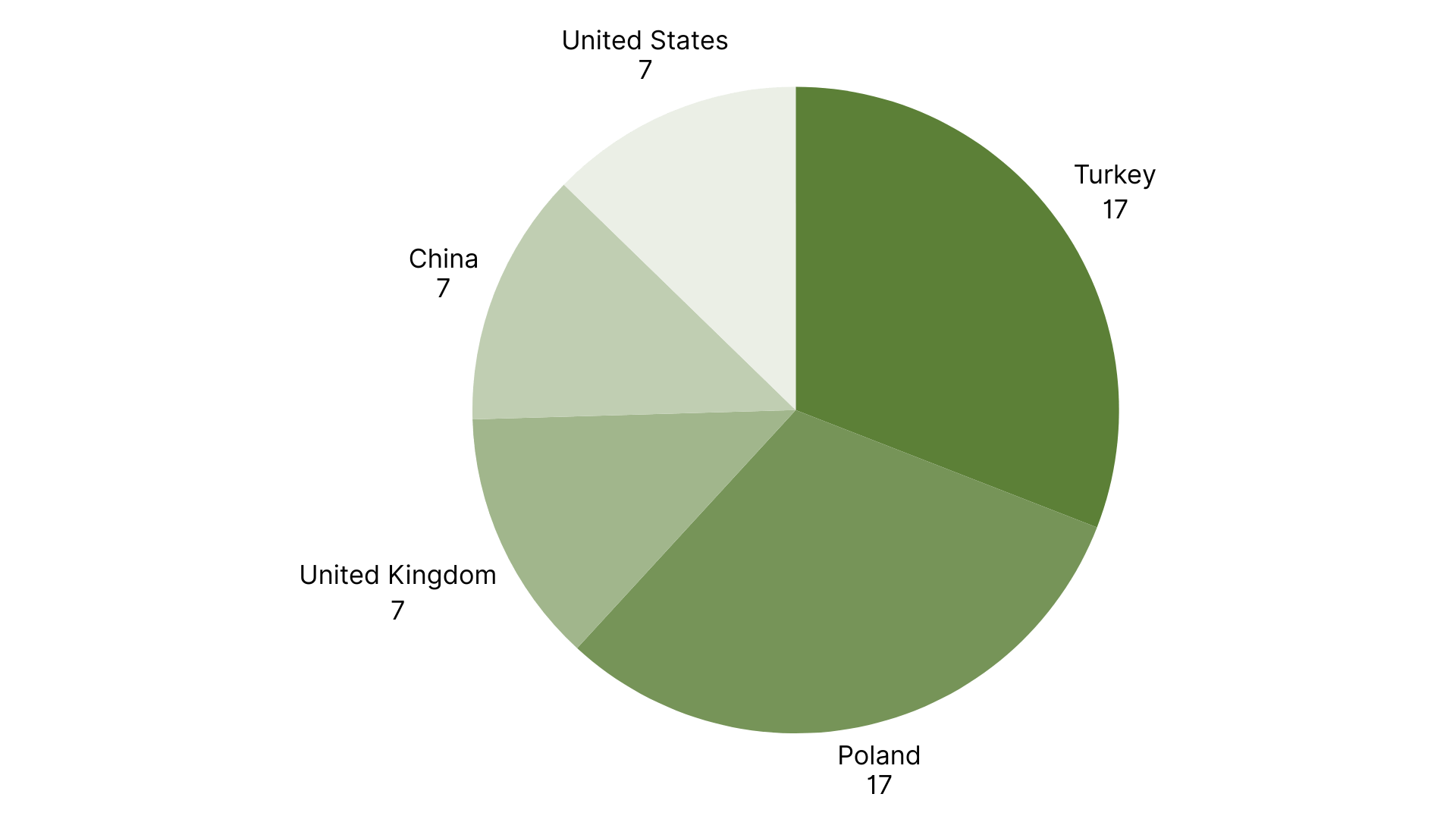
Graph 2: Top 5 Countries with the Most RASFF Alerts (Week 51)
Turkey – 17 notifications
Turkey shared the top position this week. The notifications were spread across dried figs and fig products, seeds, and fresh produce, with hazards mainly linked to mycotoxins and pesticide residues.
Poland – 17 notifications
Poland also ranked first numerically. The alerts were overwhelmingly related to poultry meat and poultry products, with Salmonella spp. dominating.
From a market perspective, this kind of concentration often leads to intensified controls on specific supply chains rather than country-wide trade disruption.
United Kingdom – 7 notifications
The UK appeared mainly through processed and composite foods, often involving labelling and allergen-related issues, rather than primary production failures. This pattern is typical for highly processed food flows and less relevant for fresh produce sourcing, but it still affects downstream buyers.
China – 7 notifications
China's notifications covered beans, supplements, and processed food items, with several cases involving unauthorised pesticide residues. The presence of unauthorised substances keeps this origin under close regulatory attention, especially for mixed or "health-positioned" products.
United States – 7 notifications
US alerts were issued for nuts, cereals, and processed products, including aflatoxin findings and allergen-related issues. Although volumes are smaller compared to those in Turkey or Poland, the consistency across categories makes the US a notable origin in this week's data.
What stood out last week
The PFAS as an emerging pattern
Four alerts this week involved per- and polyfluoroalkyl substances (PFAS), synthetic chemicals commonly referred to as "forever chemicals" due to their exceptional environmental persistence. Hungarian pork exceeded maximum levels for both PFOS (perfluorooctane sulfonic acid) and PFHxS (perfluorohexane sulfonic acid), while French mackerel contained total PFAS above advisory thresholds. Two Indonesian smoked seafood products (fish and shrimp) contained polycyclic aromatic hydrocarbons (PAHs), often associated with traditional smoking methods but also linked to environmental contamination.
EU Regulation 2023/915 established maximum levels for four priority PFAS (PFOS, PFOA, PFNA, PFHxS) in meat, fish, eggs, and dairy effective January 1, 2023. For fish, limits range from 8 μg/kg (sum of four PFAS) for most species to 45 μg/kg for high-risk species, such as eel and pike-perch. For meat, the limit is 1.3 μg/kg for the sum of four PFAS.
High prices for verified-clean origins are justified
When systemic contamination affects entire regional supply chains, such as Turkish figs, Polish poultry, or Indian spices, paying more for verified/clean origins is justified. Buyers should reasonably accept 15–25% higher prices for suppliers that can prove batch-by-batch testing, full traceability to specific farms or facilities, and consistent compliance over several years.
Supplier qualification protocols need hazard-specific frameworks
Generic audit checklists fail to address product-specific risks. Dried fruit suppliers must demonstrate validated ochratoxin monitoring at intake, mid-storage, and pre-shipment, with documented corrective actions when levels approach 50% of maximum limits. Poultry processors must provide third-party Salmonella testing data covering both pre-chill and post-chill stages across multiple production dates.