Your weekly food recall & compliance tracker w49/2025
The first week of December 2025 brought 108 food and feed safety notifications across the European Union's Rapid Alert System for Food and Feed (RASFF), with fresh produce accounting for more than half of all food-related alerts. Farmers, cooperatives, and wholesale buyers watching market developments will find this week's patterns particularly instructive, as mycotoxin contamination in dried fruits and unauthorized pesticide residues continue to shape the regulatory landscape heading into year-end.
Highlights at a Glance
- Fresh produce under pressure: Fruits, vegetables, nuts, seeds, herbs, spices, and cereals combined for 55 alerts, representing 56% of all food product recalls. This concentration highlights the increased scrutiny of plant-based supply chains during the winter import season.
- Turkish dried figs remain high-risk: Turkey accounted for 16 of the 46 fresh produce recalls with identified origins, representing a 29% share. Ten of these alerts involved dried figs contaminated with aflatoxins or ochratoxin A, continuing a pattern observed throughout 2025.
- Banned pesticides still appearing: Five separate alerts flagged chlorpyrifos, an organophosphate insecticide banned across the EU since 2020 due to neurodevelopmental risks in children. Detections spanned limes from Brazil, hot peppers from Morocco, dill from Uzbekistan, basmati rice from Pakistan, and coriander seeds from India.
- Mycotoxins dominate hazards: Of 46 traceable fresh produce hazards, 22 (48%) involved mycotoxins, primarily aflatoxins and ochratoxin A in dried figs, apricots, groundnuts, and almonds. Pesticide residues followed at 13 alerts (28%).
- Salmonella in poultry: Three of 6 poultry recalls originated from Poland, highlighting persistent microbiological control challenges in Central European meat processing.
Top product categories affected by food recalls
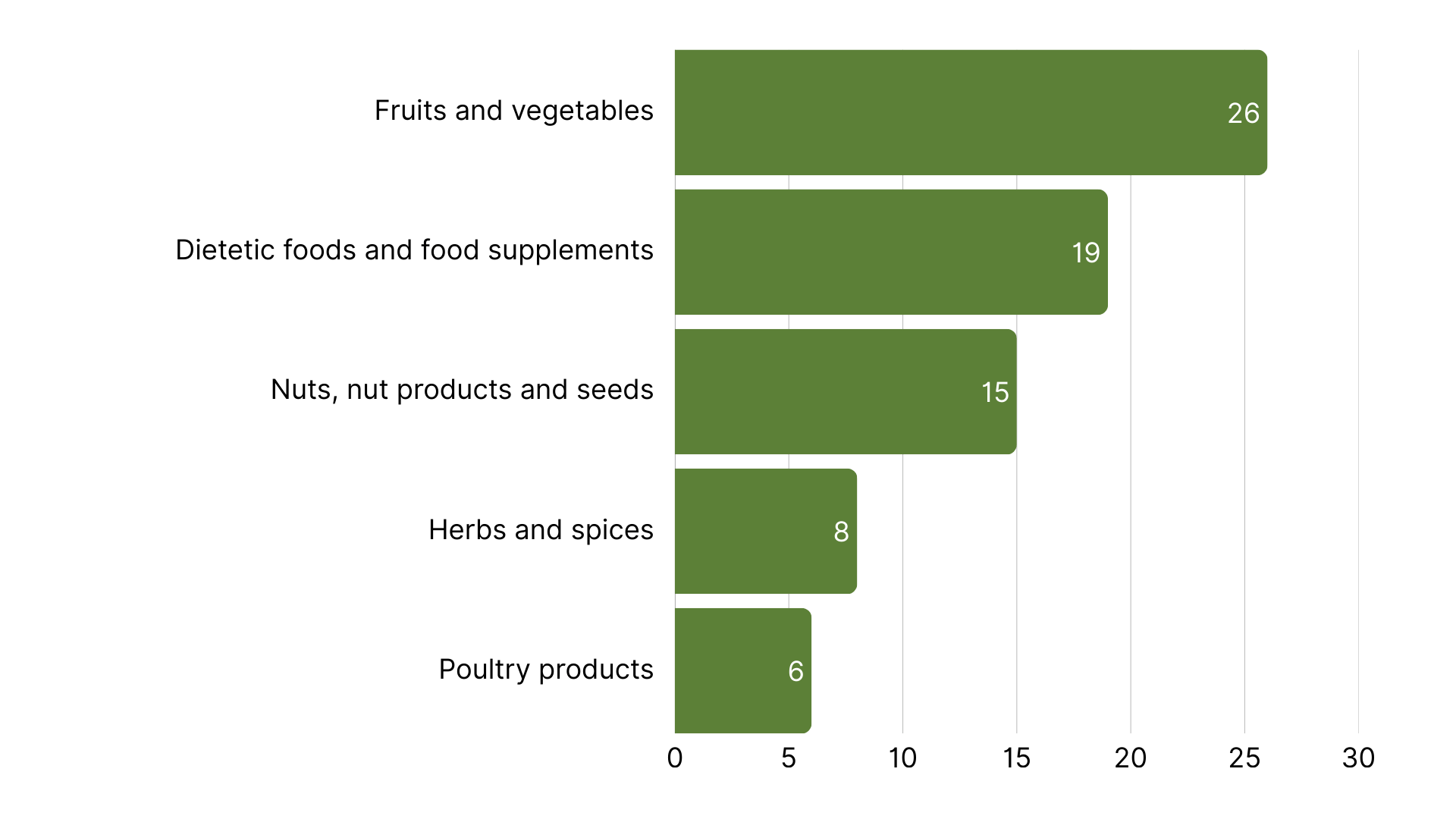
Graph 1: Top 5 Product Categories with the Most RASFF Alerts (Week 49)
Looking at all 108 notifications, the most frequently affected product categories were:
Fruits and vegetables led with 26 alerts (24% of total), followed by dietetic foods and food supplements at 19 (18%), nuts and nut products at 15 (14%), herbs and spices at 8 (7%), and both poultry meat products and cereals and bakery products at 6 each (6% each).
The dominance of plant-based categories reflects both the sheer volume of imports during Europe's off-season and the complexity of managing chemical and biological hazards across diverse growing regions. Supplements and fortified foods, largely originating from the United States, continue to face scrutiny for the presence of unauthorized novel ingredients, a category that has grown steadily throughout 2025.
Fresh Produce Focus
For fresh-produce professionals, four trends stand out:
1. Dried fruit and nuts stay under intense mycotoxin pressure
Dried figs from Turkey accounted for 11 of the 22 mycotoxin-related alerts. Seven figs lots tested positive for ochratoxin A, while six exceeded limits for aflatoxins (B1 and total aflatoxins). One batch carried both contaminants simultaneously.
2. Residue compliance in everyday fruits and vegetables
Thirteen fresh produce alerts involved pesticide residues, with five detections of chlorpyrifos—a substance banned EU-wide in 2020 and added to the Stockholm Convention's global elimination list in May 2025.
The chlorpyrifos detections this week came from:
- Limes (Brazil)
- Hot peppers (Morocco)
- Dill (Uzbekistan)
- Basmati white rice (Pakistan)
- Black eyed beans (Cameroon, combined with lambda-cyhalothrin and acetamiprid)
Products containing banned actives face automatic rejection at EU borders, and repeat violations can trigger enhanced controls on entire export programs
Other pesticide alerts included acetamiprid in grapes (Italy, Greece) and tomatoes (Turkey), indoxacarb in peppers (Turkey), chlorfenapyr in passion fruit (Colombia), and fipronil (unauthorized in the EU) in spring onions from Thailand. One batch of grape leaves from Turkey tested positive for five separate pesticides
3. “Small ingredients” with big risk profiles
Herbs, spices and cereals appear less frequently in absolute numbers, but with high-impact hazards:
- Oregano from Greece with pyrrolizidine alkaloids.
- Coriander seeds, ginger and frozen mixed herbs with chlorpyrifos, Bacillus cereus and Salmonella spp.
- Ground nutmeg with undeclared gluten, relevant for allergen-free claims.
- Cinnamon powder with elevated lead and mercury, a reminder that metal contamination is not limited to fish or water.
- Rye from Germany with ergot sclerotia, and durum wheat from Kazakhstan with T-2 toxin and ochratoxin A.
Even if these ingredients represent a small share of the volume, they often carry a large share of the risk for retailers and brands.
4. Cereals and bakery products with toxin and contamination issues
Rye, durum wheat, soy flour and maize-based products appear with ergot sclerotia, T-2 toxin, ochratoxin A, pesticide residues and even insect contamination in bread mixes. For feed-food systems, this risk is relevant both at farm and mill level.
Complete list of recalled fresh produce
Fruits and vegetables
- Black Eyed Beans (Cameroon): Chlorpyrifos
- Dill (Uzbekistan): Chlorpyrifos
- Dried Apricots (Turkey): Ochratoxin A
- Dried Figs (Turkey): Aflatoxins (6 alerts), Ochratoxin A (7 alerts), both contaminants (2 alerts)
- Grapes (Italy): Acetamiprid
- Grapes (Greece): Acetamiprid (2 alerts)
- Grapes (Turkey): Multiple pesticides (azoxystrobin, difenoconazole, flutriafol, lambda-cyhalothrin, metrafenone)
- Limes (Brazil): Chlorpyrifos
- Passion Fruit (Colombia): Chlorfenapyr
- Peppers (Morocco): Chlorpyrifos
- Peppers (Türkiye): Indoxacarb
- Spring Onions (Thailand): Fipronil
- Tomatoes (Türkiye): Acetamiprid
Herbs & Spices
- Cinnamon Powder (Netherlands): Lead & Mercury
- Ginger (India): Bacillus cereus
- Nutmeg (Indonesia): Undeclared Gluten
- Oregano (Greece): Pyrrolizidine Alkaloids
- Pandan Leaf (Thailand): Salmonella
Cereals & Grains
- Basmati White Rice (Pakistan): Chlorpyrifos
- Durum Wheat (Kazakhstan): Ochratoxin A
- Rye (Germany): Ergot Sclerotia
- Toasted Soy Flour (Netherlands): Salmonella
Nuts & Seeds
- Almond Kernels (United States): Aflatoxins (2 alerts)
- Flax Seeds (origin unknown): Cyanide
- Groundnuts (Argentina): Aflatoxins (3 alerts)
- Groundnuts (Nigeria): Aflatoxins
- Linseed (Netherlands, Spain): Cyanide
- Pistachios (Turkey): Ochratoxin A
- Poppy Seeds (Poland): Opium Alkaloids
- Sunflower Seeds (Turkey): Ochratoxin A
Where do the recalled products come from?
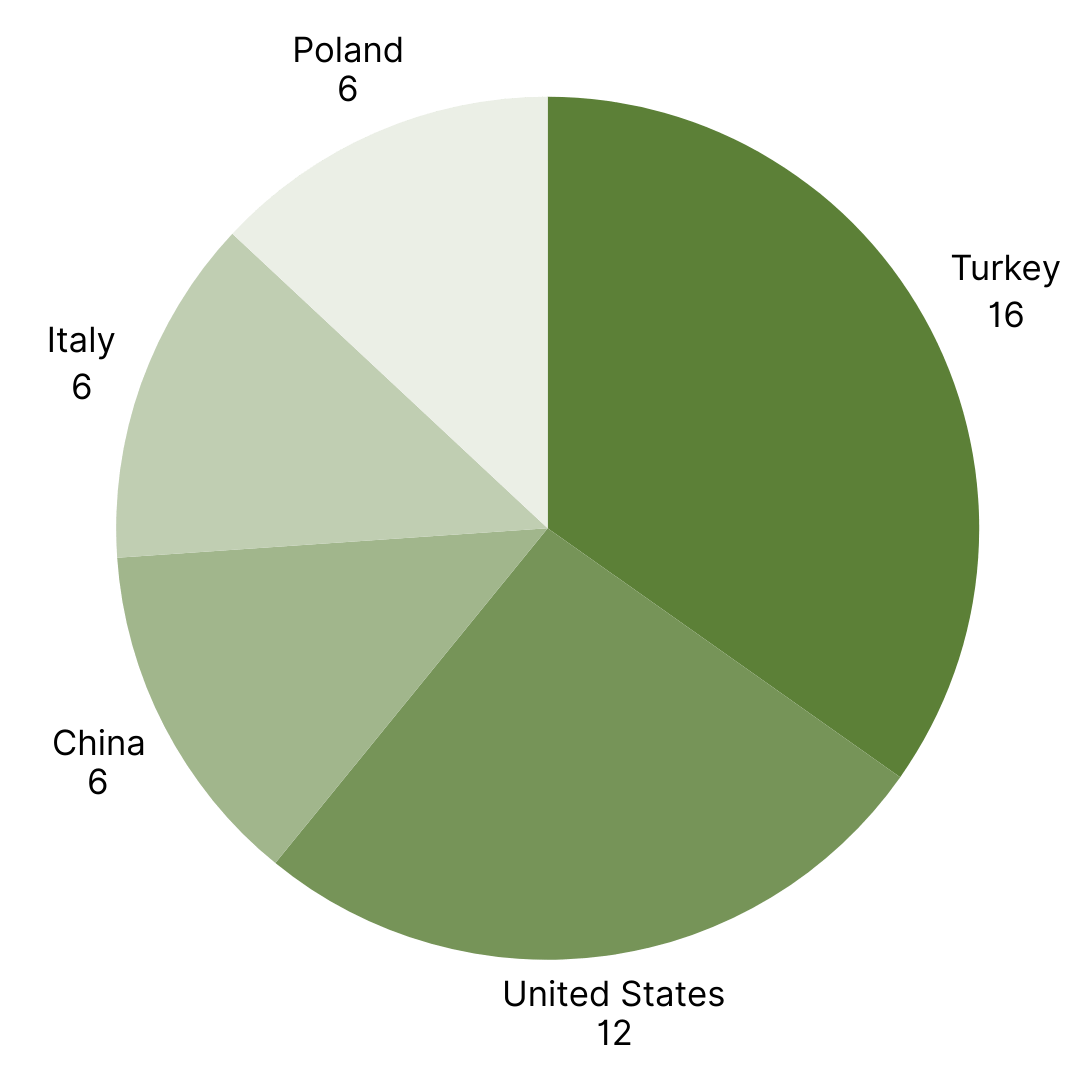
Graph 2: Top 5 Countries with the Most RASFF Alerts (Week 49)
Several clear geographic patterns emerge from week 49 data:
Turkey
- 16 of the 55 fresh-linked alerts,
- including the majority of dried fig and sunflower seed mycotoxin cases, plus some apricot and pistachio issues.
Latin American origins
- Brazil (limes), Argentina (groundnuts and kernels), Colombia (passion fruit) and Ecuador (ají) appear with pesticide and mycotoxin issues.
Asian origins
- India (coriander seeds, ginger, nutmeg) and Thailand (spring onions, pandan leaf) show both pesticide and microbiological hazards.
- Uzbekistan appears with chlorpyrifos in fresh dill.
EU countries
- Greece, Italy, Germany, Spain, the Netherlands, Belgium, Poland and Sweden feature both as origins and as processing or trade hubs.
- Issues range from acetamiprid in grapes and ergot in rye to insect contamination in bread mixes and heavy metals in cinnamon powder.
Overall, around 67% of all last week’s alerts involve non-EU origin countries, while 33% relate to EU origins. For fruits and vegetables alone, nearly 9 out of 10 notifications concern non-EU origin consignments.
This does not mean that these origins are “unsafe” by definition. It more likely reflects:
- strong trade flows towards the EU, and
- intensive official controls at key entry points.
For buyers, the practical answer is not automatic exclusion but stronger documentation, testing and supplier approval in high-volume trade routes.
Turning weekly alerts into everyday decisions
Looking across last week’s notifications, three broader lessons emerge for farmers, cooperatives and wholesale buyers:
- Dried figs and oilseeds are still a structural mycotoxin hotspot: When a single product group such as dried figs generates so many alerts within one week, it points to structural rather than accidental problems. Variety choice, orchard hygiene, drying practices and storage conditions are fundamental. Producers who invest in these steps, and who back them with regular mycotoxin testing, are likely to become preferred partners for European buyers.
- Residue management is turning into a commercial differentiator: Recurrent issues with acetamiprid, chlorpyrifos and other actives show that MRL compliance is no longer just a regulatory box to tick. It is a market access condition. Growers who align their spray programmes with destination-market rules, leave comfortable pre-harvest intervals and maintain transparent records can negotiate better and more stable contracts.
- “Minor” ingredients and side products can decide whole-lot fate: Herbs, spices, nuts, seeds and cereal fractions often determine whether a mixed cargo passes or fails. A few grams of contaminated spice or a handful of ergot in a grain lot are enough to trigger rejection. Processors and packers who risk-assess all ingredients, including coatings, glazes and herbal additives, protect not only consumers but also their brand and farmer suppliers.