

Your weekly food recall & compliance tracker w39/2025
The latest data from the EU's Rapid Alert System for Food and Feed (RASFF) reveals the trends that every farmer and wholesale buyer needs to know. During week 39 (September 22-28, 2025), European authorities issued 125 food safety alerts, marking a significant surge in recalls that directly impacts agricultural markets and supply chains.
Highlights at a glance
- 125 total recalls across all food categories during the week
- Fresh produce dominated with 41 recalls (32.8% of all alerts)
- Pesticide residues triggered 15.2% of all notifications
- Biological contamination (aflatoxins, Salmonella, Listeria) caused 20% of recalls
- Turkey, India, and China were the most problematic origin countries
Top product categories affected by food recalls

Graph 1: Top 5 Product Categories with the Most RASFF Alerts (Week 39)
The data reveals a clear hierarchy of risk across food categories. Fruits and vegetables led with 23 recalls (18.4%), followed closely by nuts and nut products with 16 recalls (12.8%). This concentration of alerts in fresh produce sectors directly impacts farmers' market access and wholesale buyers' risk assessments.
Dietetic foods and supplements ranked third with 14 recalls (11.2%), while cereals and bakery products contributed 11 alerts (8.8%). The dominance of fresh produce categories underscores the ongoing challenges in maintaining food safety standards from farm to market.
Fresh produce focus
The fresh produce sector experienced unprecedented scrutiny during week 39, with 41 total recalls spanning fruits, vegetables, nuts, herbs, and cereals. This represents nearly one-third of all food safety alerts, highlighting the sector's vulnerability to contamination issues.
Pesticide residue violations were particularly troubling, with unauthorized substances detected in produce from major European suppliers. The Netherlands, typically considered a reliable source, faced cucumber recalls due to acetamiprid residues, while Italy, a cornerstone of European agriculture, saw grape recalls for lambda-cyhalothrin violations.
Geographic risk patterns emerged clearly, with Mediterranean countries dominating problematic shipments. Turkey contributed multiple pepper recalls involving Spirotetramat violations, while Egypt faced recalls for contaminated mangoes, sugar apples, and white beans.
Fruit and vegetable recalls in Europe
The following comprehensive list details every fresh produce item recalled during week 39, formatted for easy reference by farmers and buyers:
Fruits:
- Apricots (Spain): acetamiprid
- Blueberries (Peru): carbendazim
- Figs (Turkey): ochratoxin A
- Grapes (Italy): lambda-cyhalothrin
- Lemons (South Africa): imazalil
- Mangoes (Egypt): clothianidin, imidacloprid
- Maracuya (Peru): imidacloprid, lambda-cyhalothrin, thiamethoxam
- Sugar apples (Egypt): imidacloprid, acetamiprid, chlorpyrifos
- Sultana raisins (Iran): aflatoxin B1, aflatoxin total
Vegetables:
- Broccoli sprouts (Germany): E. coli shigatoxin-producing
- Cucumbers (Netherlands): acetamiprid
- Drumsticks (India): permethrin
- Green beans (Kenya): pyridaben
- Green chili (Cambodia): chlorfenapyr, clothianidin, fenvalerate, hexaconazole, lambda-cyhalothrin, propiconazole
- Green olives (Morocco): chlorpyrifos
- Onions (Belgium): cadmium
- Onions (Egypt): physical contamination
- Peppers (Morocco): flonicamid
- Peppers (Turkey): Spirotetramat, bifenazate, sulfoxaflor
- White beans (Egypt): physical contamination
- Wine leaves (Turkey): captan, difenoconazole, dithiocarbamates
Nuts and seeds:
- Almonds (United States): aflatoxin B1, aflatoxin total
- Hazelnuts (Azerbaijan): aflatoxin B1, aflatoxin total
- Hazelnuts (Georgia): aflatoxin B1, aflatoxin total
- Pistachios (Iran): aflatoxin B1, aflatoxin total
- Pistachios (Turkey): aflatoxin B1, aflatoxin total
- Pistachios (United States): aflatoxin B1, aflatoxin total
- Pumpkin seeds (Austria): Salmonella
- Sesame seeds (Sudan): regulatory non-compliance
- Sesame seeds (Uganda): Salmonella
- Sunflower seeds (Bulgaria): cadmium migration
Herbs and cereals:
- Dried basil (Egypt): Salmonella Kentucky
- Dried mushrooms (China): unauthorized species
- Dried oregano (Turkey): pyrrolizidine alkaloids
- Rice (India): thiamethoxam, chlorpyrifos, propiconazole, tricyclazole
- Rice (Pakistan): carbendazim, imidacloprid
- Wheat flour (Slovenia): chlorpyrifos
Geographic risk patterns
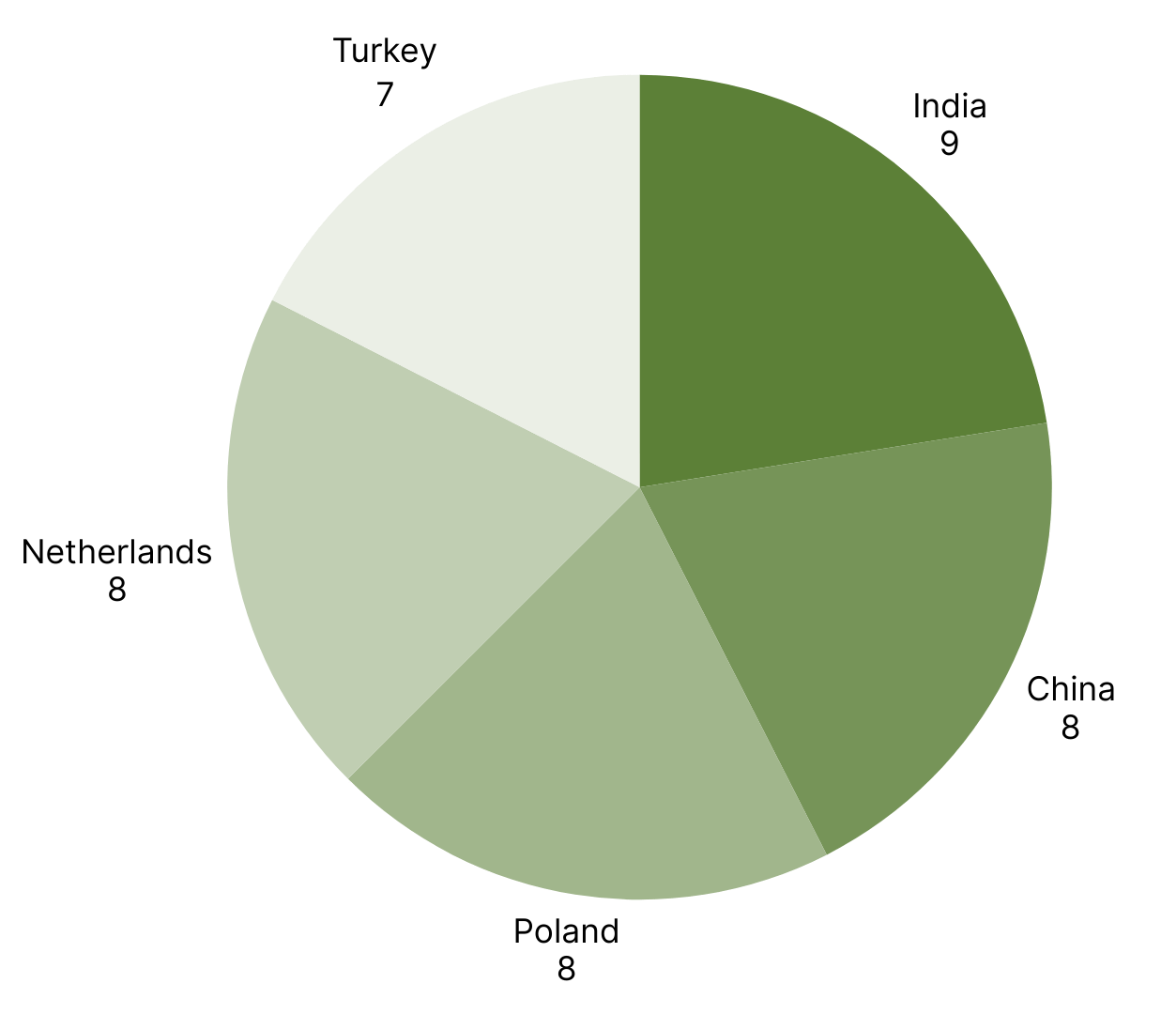
Graph 2: Top 5 Countries with the Most RASFF Alerts (Week 39)
The data reveals troubling geographic concentration of food safety violations. India led with 9 recalls (7.2%), followed by China, Poland, and the Netherlands each contributing 8 recalls (6.4%). This distribution challenges conventional assumptions about food safety standards across different regions.
Turkey's prominence with 7 recalls (5.6%) is particularly concerning given its role as a major EU supplier. The concentration of Turkish violations in peppers, figs, and processed products suggests systemic quality control challenges that buyers must factor into sourcing decisions.
Non-EU origins dominated problematic shipments, accounting for 84% of all recalls. This aligns with broader European trends showing increased vigilance at borders, particularly for fresh produce from developing markets.
Insights from our team of experts
Our analysis reveals a 15.2% pesticide-related recall rate, indicating that current monitoring systems are catching violations but suggesting widespread compliance failures at origin. The detection of unauthorized substances like chlorpyrifos (banned in the EU since 2020) in multiple products demonstrates gaps in supplier education and enforcement.
The 62.3% week-over-week increase from 77 to 125 total recalls is a concerning factor, but this escalation coincides with peak harvest seasons in Mediterranean regions, suggesting that seasonal factors compound underlying compliance challenges.
Beyond fresh produce and nuts, week 39 also highlights rising risks in the “other food product / mixed” category, which, although representing just 8% of total recalls, carries disproportionate safety concerns. Food supplements dominated these alerts, with cases involving mislabeled potassium iodide, psychoactive muscimol contamination, and semi-synthetic LSD derivatives marketed as legal supplements. Labeling and allergen failures were equally prevalent, including undeclared mustard and tortellini allergens. Geographic patterns suggest regulatory gaps in both EU hubs, like the Netherlands, and non-EU hubs, such as Moldova. For farmers, distributors, and wholesale buyers, these violations underscore emerging vulnerabilities in supply chains, particularly for products with botanical extracts or functional ingredients, where unknown or psychoactive contaminants present new public health and regulatory challenges.
Market intelligence for strategic sourcing
The concentration of recalls in specific country-product combinations provides actionable intelligence for buyers. Turkish peppers, Egyptian mangoes, and Iranian nuts show recurring problems that warrant enhanced due diligence and potentially alternative sourcing strategies.