


Your weekly food recall & compliance tracker
Recalls in Europe, September 2025 overview
The European Union's Rapid Alert System for Food and Feed (RASFF) documented 435 food safety alerts in September 2025, providing valuable market intelligence for farmers, wholesale buyers, and agricultural professionals. This comprehensive analysis of official EU data reveals important trends and patterns that can inform sourcing decisions and risk management strategies in the global fresh produce market.
Highlights at a glance
Fresh produce represented the largest category with 168 notifications (38.6%) of all alerts, reflecting the sector's significant role in international trade.
Key findings include:
- Turkey leads monitoring activity with 41 total recalls, representing 9.4% of all EU food safety notifications
- Fresh produce accounts for over one-third of all food safety monitoring, with fruits and vegetables alone generating 94 notifications (21.6%)
- Mycotoxins were the top threat this month, with 53 recalls, primarily aflatoxins in nuts and dried fruits
Fresh produce market overview
The fresh produce sector generated substantial monitoring activity in September 2025, with fruits and vegetables accounting for 94 recalls, representing 21.6% of all food safety reporting to EU authorities. When combined with nuts and seeds (58 notifications) and herbs and spices (16 notifications), fresh produce demonstrated its central importance in food safety monitoring systems.
Mycotoxin monitoring was particularly active in fresh produce, with 53 notifications (31.5%) involving natural fungal compounds like aflatoxins and ochratoxins. Pesticide residue testing resulted in 43 notifications (25.6%), reflecting the ongoing importance of Maximum Residue Level (MRL) compliance in international trade.
The data revealed high-risk products: Pistachios led with 18 mentions, followed by peanuts with 17 recalls and dried figs with 13 recalls. These products face particular challenges due to their susceptibility to mycotoxin contamination and complex drying and storage requirements.
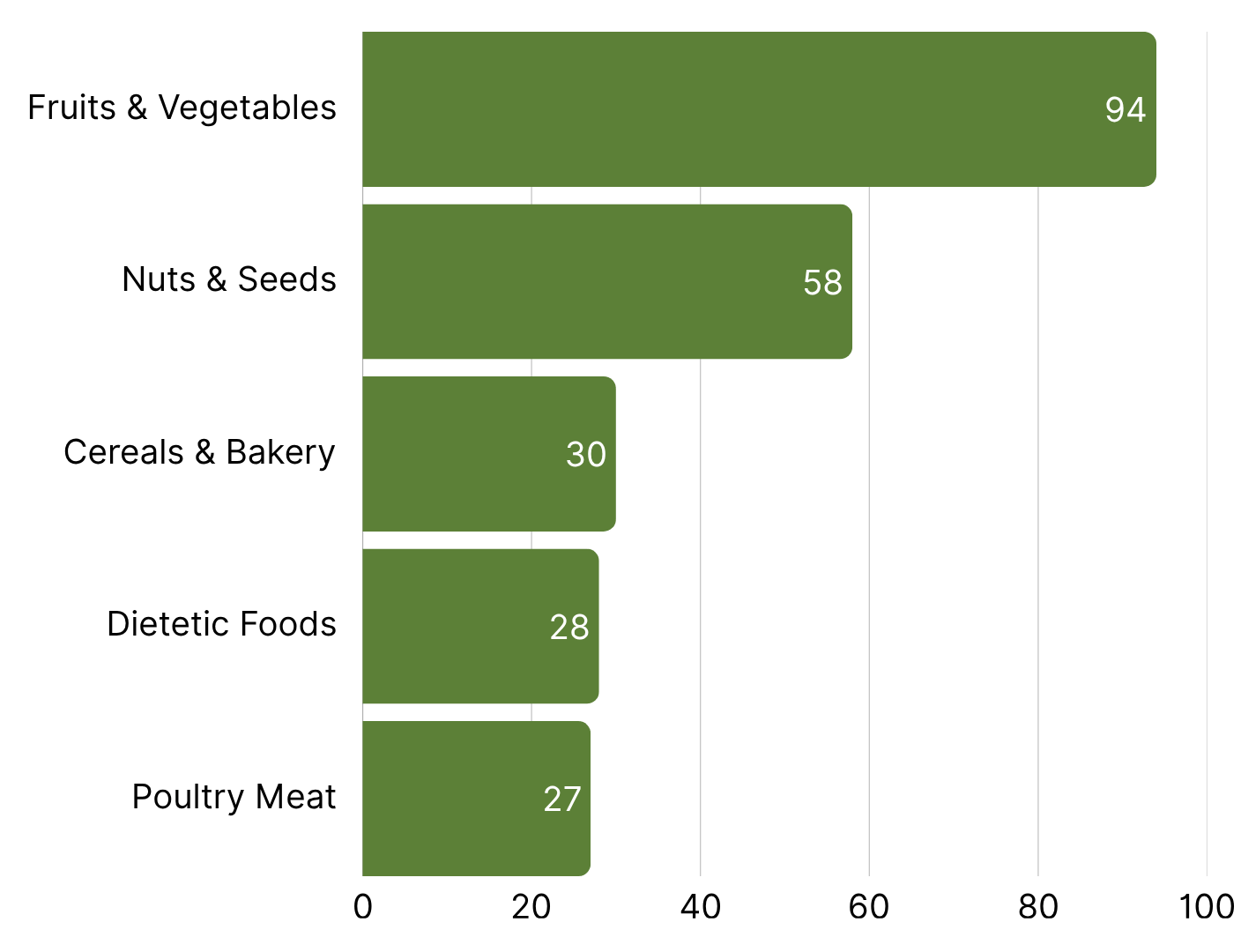
Graph 1: Food categories with the most recalls in September 2025 EU market
Unauthorized substances in the EU and MRL violations
The September 2025 data reveals specific unauthorized substances causing significant market disruptions, with chlorpyrifos leading at 18 incidents. This organophosphate insecticide was banned by the EU in 2020 following scientific evidence linking it to developmental neurotoxicity and potential genotoxicity. The ban came after studies found that chlorpyrifos causes "significant developmental delays, autism spectrum disorders, IQ deficits of up to seven points, and attention deficit disorder" in children.
Why chlorpyrifos violations persist
Despite the EU ban, European companies continue to manufacture and export chlorpyrifos to countries where it is legal. This creates a "double standard" where products treated with banned substances can still enter EU markets as imports. The main violating origins were India (6 incidents), Ukraine (2), and Egypt (1), primarily affecting fruits, vegetables, herbs, and spices.
Quality Assurance and Food Safety Engineer Hamza Fadli, who works with both Moroccan and European companies, explains the broader challenge: "The biggest challenge today is maintaining consistent quality across increasingly complex and globalized supply chains. Climate change, raw material variability, new ingredients, and emerging contaminants make quality assurance more difficult."
CBD and novel food issues generated 8 incidents, with Czech Republic (3) and France (1) being primary origins. CBD remains unauthorized in EU food products because "significant human consumption prior to May 15, 1997, was not demonstrated". All CBD food products require pre-market authorization as novel foods, but no CBD applications have been approved yet. The violations typically occur in food supplements and oils marketed without proper authorization.
Why do violations in MRLs occur?
Pesticide residue violations affected 43 fresh produce notifications, with Egypt leading at 7 incidents. The EU's Maximum Residue Level (MRL) system sets science-based limits for pesticide residues, with 96.1% of all EU food samples falling below MRL limits in routine testing.
Non-EU countries showed a 5-fold higher MRL exceedance rate (10.3%) compared to EU production (2.1%). This reflects differences in:
- Approved pesticide lists between producing countries and EU standards
- Application timing and rates differing from EU Good Agricultural Practices
- Harvest interval compliance varying between regulatory systems
- Detection capability improvements identifying previously undetectable residues
Which products are at risk of pesticide residues?
Data shows passion fruit (14.9%), pomegranates (12.8%), and chili peppers (13.9%) have the highest non-compliance rates. These products often come from regions with different pest pressures and limited access to EU-approved pesticide alternatives.
What are the origins of the most recalled products?

Graph 2: Top origin countries for EU food recalls in September 2025
The geographic spread of notifications reveals Turkey as the most monitored origin for fresh produce, with 41 recalls across all product categories. This pattern reflects both Turkey's role as a major supplier and systemic regulatory challenges rather than inherent food safety problems.
Turkey's aflatoxin challenge in dried figs: Research shows that Turkish dried figs intended for domestic consumption have contamination rates of 47.5%, compared to 23.6% for export products. This difference occurs because export figs undergo rigorous UV screening to remove visibly contaminated products, while domestic products receive less intensive monitoring. The natural cavity structure (ostiole) of figs makes them particularly vulnerable to fungal contamination, reducing UV screening effectiveness.
Egypt's pesticide focus: Egypt contributed 15 fresh produce notifications, primarily involving pesticide residues in mangoes and leafy vegetables. The high notification rate reflects intensive testing rather than poor agricultural practices, as Egyptian producers work to meet EU market requirements.
India's spice sector: India generated 12 notifications, with cumin and other spices frequently affected by chlorpyrifos residues. This occurs because chlorpyrifos remains legal in India for certain crops, creating compliance challenges when products enter the EU market, where detection limits are extremely low.
High-risk products
Pistachios led all fresh produce with 18 mentions, primarily due to aflatoxin contamination. Research shows pistachios have "the highest risk of contamination by aflatoxins" among tree nuts, largely due to shell splitting at maturation.
Why are pistachios vulnerable?
The early hull split process removes the protective shell covering, allowing Aspergillus fungi easy access to kernels. Environmental factors, including warm, humid climates and drought stress, increase susceptibility. Insect damage, particularly from Navel Orangeworm, creates entry points and provides nutrients for fungal growth.
Most pistachio notifications originated from Iran (8), Turkey (7), and the United States (7), regions where growing conditions favor the development of Aspergillus during harvest and storage periods.
Peanut recalls in Europe
Peanuts generated 17 mentions, with contamination occurring at both pre-harvest and post-harvest stages. Research indicates 60% of raw peanut samples and 100% of processed peanut butter samples in some regions exceed aflatoxin limits.
Peanuts grow underground, where soil-borne Aspergillus spores provide a constant source of inoculation. Poor storage conditions, excessive heat, humidity, and inadequate ventilation promote continued fungal growth. Processing in informal sectors often lacks proper quality control measures.
Dried fig recalls
Dried figs generated 13 mentions, with Turkey accounting for most incidents. The traditional sun-drying process creates optimal conditions for mycotoxin development, especially during humid weather.
Studies show lower-grade figs have higher contamination rates, with contamination levels reaching 112.3 ng/g for aflatoxin B1 in positive samples. Export products undergo more intensive screening than domestic market products, explaining the geographic notification patterns.
Expert market insights
Several factors contribute to the monitoring patterns observed in September 2025. Seasonal growing conditions affect natural compound levels in agricultural products, with warmer months typically showing higher monitoring activity for mycotoxins. Climate change impacts are increasingly affecting mycotoxin production, with rising temperatures and humidity creating more favorable conditions for the growth of Aspergillus.
Supply chain complexity continues to influence monitoring patterns, with multiple handling stages creating opportunities for contamination. Progress in regulatory harmonization between producing countries and EU standards varies significantly, creating ongoing compliance challenges for exporters seeking market access.
Technology improvements in detection methods enable the identification of contamination at increasingly lower levels. Rapid testing capabilities and improved sampling protocols contribute to the comprehensive monitoring approach evident in the September 2025 data.
These data provide essential market intelligence for understanding regulatory focus areas, seasonal patterns, and geographic considerations in fresh produce trade. For farmers and wholesale buyers, this information supports informed decision-making about product sourcing, quality management, and market access strategies.
Understanding these patterns helps agricultural professionals to navigate regulatory requirements and optimize their market strategies, while contributing to the overall goal of ensuring safe, high-quality food reaches consumers across the European Union.