

A record-breaking heat dome over Western and Central Europe in the final days of June has put the 2026 summer harvest under pressure, hitting maize, potatoes and field vegetables hardest and pushing grain and vegetable prices higher.
France, the EU's largest farm producer, recorded its hottest day on record on 24 June, with a national average of 30.0°C according to Météo-France and a single-station peak of 44.3°C at Pissos in the south-west. Top-level red alerts covered a record 58 French departments. Reuters reported on 27 June that preliminary all-time temperature records had also been set in Germany, Denmark and the Czech Republic, with Switzerland recording a new June high. The World Meteorological Organization noted that Europe, the world's fastest-warming continent, has warmed by around two degrees in the 50 years since the 1976 heatwave.
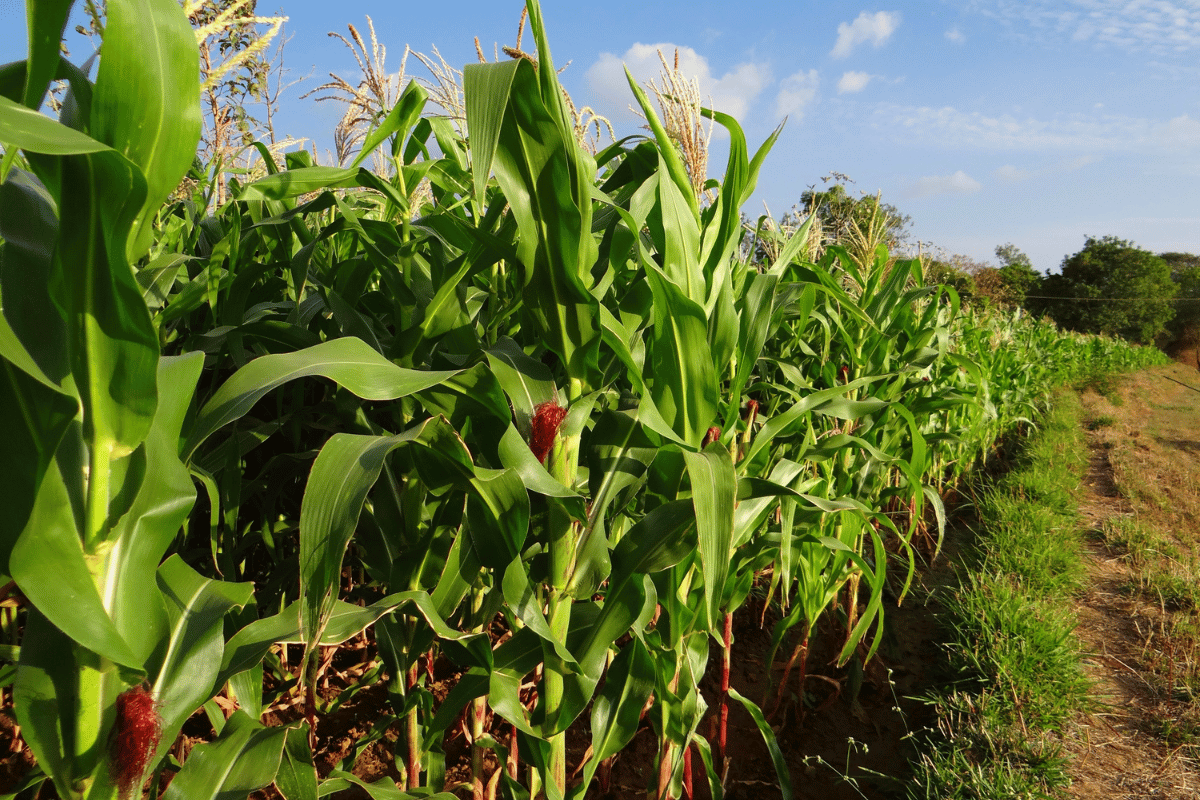
Maize has the most exposure of any arable crop. The heat settled over France just weeks after planting finished, and with less than a third of the French maize area irrigated, one analysis warned this year's crop risks coming in smaller than even 1990. In Spain's Ebro delta, irrigation canals were closed to keep saltwater out, affecting maize and rice growers. The EU's Joint Research Centre flagged rising crop water stress across central-western and eastern France, south-western Germany, southern Czechia, western Slovakia, Hungary, western Romania and western and central Ukraine.
Potato yields are already running below last year across several producers, according to the JRC MARS outlook, with Poland down 7%, the Netherlands down 6%, Belgium down 5% and Germany down 1%, while France was the exception at plus 1%. French greenhouse growers reported cucumber volumes down 15% to 20%, and open-field vegetable producers said the immediate priority was simply keeping plants and young seedlings alive. Greek coverage flagged poultry deaths and reduced milk output from heat-stressed pigs and dairy cows.
Euronext maize futures jumped to fresh contract highs on a warm, dry outlook for early July, while milling wheat eased as traders weighed French heat losses against a strong Black Sea harvest. Beyond the trading floor, the International Labour Organization estimates heat stress could cost the equivalent of 80 million full-time jobs and around 2.4 trillion dollars in output globally by 2030, with agriculture bearing roughly 60% of lost working hours.
The official June crop forecasts predate the heat. The JRC's mid-June bulletins still described a broadly favourable outlook for winter crops and summer crops close to trend, so the damage from this event will only show up in the July update. The next two to three weeks of field assessments across France, Spain, the Benelux, Germany and Poland will determine whether this becomes a short stress event or a lasting hit to the 2026 harvest.
Greece sat more on the margin of this particular heat dome, which was centred on Western and Central Europe before shifting east toward the Balkans, Hungary and northern Italy. The relevance for Greek and Mediterranean growers lies less in confirmed field losses this week and more in the water-stress trajectory and the knock-on effect on wheat, maize and vegetable prices, particularly as a developing El Niño raises the odds of further heat and erratic rainfall through the season, with consequences for crops and food prices that reach well beyond this one event.
Sources
- World Meteorological Organization. (2026). Records fall as extreme heat grips Europe.
- UN News. (2026). Europe swelters as early summer heatwave breaks records.
- European Commission Joint Research Centre. (2026). JRC MARS Bulletin, June 2026.
- European Drought Observatory (Copernicus / JRC). (2026). Current drought situation in Europe.
- Reuters. (2026). EU wheat subdued while maize at new highs as weather weighs.
- Potato News Today. (2026). Europe's heatwave puts potato crops under pressure.
- HortiDaily. (2026). French greenhouse vegetable volumes fall in the heat.
- International Labour Organization estimate, via in.gr. (2026). One in five EU workers exposed to high temperatures.