


European Nut Orchard Management in late August – Start of September
As European almond and pistachio growers approach the final days of August and enter September, this critical period demands intensive orchard management activities that will determine both current harvest success and next year's productive potential. The confluence of harvest operations, post-harvest care, and strategic planning creates one of the most demanding yet crucial periods in the nut production calendar.
European nut production has experienced remarkable growth, with Spain emerging as a major player in both almond and pistachio cultivation. Spanish pistachio plantations have expanded dramatically over the past decade, with over 70,000 hectares now under cultivation, positioning Spain to become the world's fourth-largest pistachio producer by 2030. Similarly, almond production across Mediterranean Europe continues to provide significant economic returns, with harvest activities beginning in earnest during late August.
Whether managing traditional almond groves in Spain's Andalusia region, expanding pistachio orchards in Castilla-La Mancha, or diversified nut operations across Southern Europe, the activities undertaken now establish the foundation for sustained orchard productivity and profitability.
Harvest timing and maturity assessment – When is the best time to harvest almonds and pistachios
European almond and pistachio growers must implement systematic approaches to determine optimal harvest timing, as premature or delayed harvesting significantly impacts nut quality, storage life, and market value. The assessment process requires careful evaluation of multiple physiological indicators that vary among varieties and regional growing conditions.
Almond Maturity Evaluation - Almonds Ripening
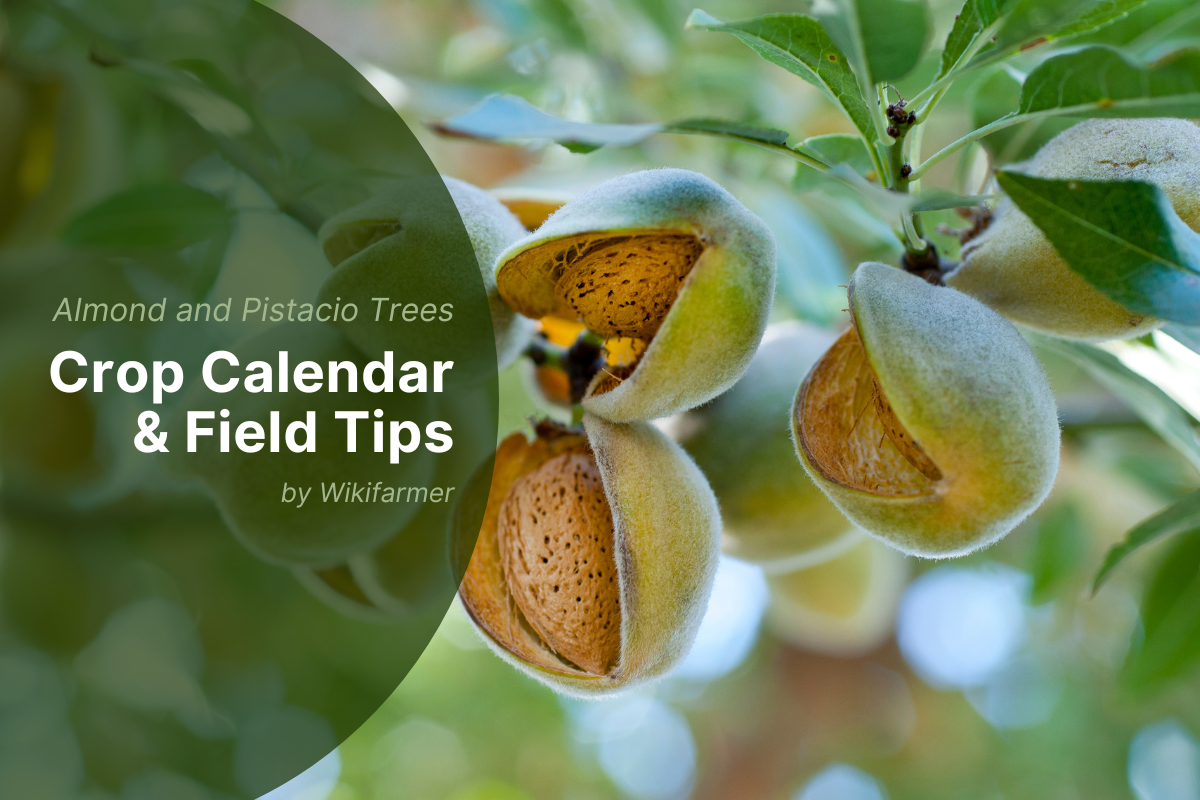
Almond starts to ripen when its hull begins to split. In the United States, the harvest usually begins in late summer (August) and continues until autumn (October), depending on the variety, and begins with monitoring hull splitting patterns. Almond growers start harvesting almonds when about 75% of the hulls have split. European almond varieties demonstrate distinct maturity patterns that require variety-specific management approaches. Early varieties such as 'Marcona' and 'Desmayo Largueta' typically reach optimal harvest maturity during the third week of August, while later varieties including 'Guara' and 'Ferragnes' continue development into September.
Quality assessment during hull splitting involves monitoring shell appearance and kernel development. Optimal harvest timing coincides with complete shell hardening and kernel moisture content declining to 25-30%. European quality standards emphasize the importance of harvesting before hull deterioration begins, as extended exposure to field conditions increases susceptibility to mold development and reduces kernel quality.
Pistachio Shell Splitting Monitoring
Pistachio harvest timing requires intensive monitoring of shell splitting patterns, which typically begin during late August in European growing regions. The process differs significantly from almond hull splitting, as pistachio shells split naturally to expose the kernel while the hull remains largely intact. Monitoring involves systematic sampling from representative trees throughout the orchard, focusing on the upper canopy where splitting typically begins first.
European pistachio operations must distinguish between different types of splits to optimize harvest timing and quality. Natural shell splitting indicates proper maturity, while early splitting that occurs 30-60 days before normal harvest creates vulnerability to aflatoxin contamination. Early split nuts comprise 1-4% of the total crop but require removal to maintain food safety standards and market acceptance.
The optimal harvest window occurs when 60-70% of nuts have achieved natural shell splitting, with hull color transitioning from green to rose-colored or ivory, depending on variety. European organic operations place particular emphasis on harvest timing, as post-harvest processing options may be limited compared to conventional systems.
Quality Parameter Documentation
Professional European nut operations implement quality documentation systems during harvest preparation to establish baseline parameters for storage management and marketing decisions. This process systematically evaluates size distribution, defect rates, and biochemical characteristics that determine market classification and pricing.
Moisture content monitoring becomes critical during late August, as nuts with excessive moisture levels face increased storage risks and potential quality degradation. European processing standards typically require almond kernel moisture below 6% and pistachio kernel moisture below 5% for optimal storage stability. Field testing using portable moisture meters enables real-time decision-making regarding harvest timing and post-harvest handling procedures.
Size grading assessment during pre-harvest evaluation enables efficient harvest planning and marketing strategy development. European marketing standards classify nuts into specific size categories, with premium grades requiring consistent sizing and freedom from defects. Understanding size distribution patterns helps growers optimize harvest sequencing and processing facility scheduling.
Post-harvest almond and pistachio management – How to care for your almond and pistachio trees after harvest
The post-harvest period represents one of the most critical irrigation phases in European nut production, directly influencing next year's flower bud development and overall tree health. Research consistently demonstrates that irrigation decisions made during late August and September have a greater impact on subsequent year yields than most other cultural practices.
Almond post-harvest water requirements
European almond orchards require intensive irrigation management immediately following harvest to support flower bud differentiation for the following year's crop. Almond flower bud differentiation occurs from mid-August through early September, coinciding with harvest activities and creating competing demands for water resources. Unlike other stone fruit crops, almonds differentiate fruit buds during the post-harvest period, making irrigation continuity essential for maintaining production capacity.
Research from leading agricultural institutions demonstrates that post-harvest water stress can reduce subsequent year yields by 40-77%, depending on the severity and duration of water deficit. The critical period extends from harvest through September, with trees requiring 12-15 inches of water during this timeframe. Approximately 70% of this demand occurs during the first six weeks immediately following harvest, when temperatures remain high and daylight hours are still extended.
European growers must balance immediate post-harvest irrigation needs with water availability constraints and infrastructure limitations. Deficit irrigation strategies during pre-harvest periods can reduce total seasonal water requirements, but post-harvest irrigation should not be compromised. The first 8 inches of water applied during the post-harvest period provides the most critical benefit for maintaining orchard productivity.
You can find more insights on Optimizing Water Retention in Almond Orchards: Comparing Contour, Keyline, and Conventional Designs in this specific article.
Pistachio water management strategies
Pistachio orchards require careful water management during the shell splitting period to optimize nut quality while maintaining tree health. European pistachio operations must monitor soil moisture levels closely during August to ensure adequate water availability for shell splitting while avoiding excessive moisture that can promote hull deterioration and fungal development.
Shell splitting sensitivity to irrigation deficits requires strategic water management throughout the critical development period. Research indicates that water stress during shell splitting can significantly reduce the percentage of nuts that split naturally, leading to lower-grade product and reduced market value. Irrigation should be maintained at levels that prevent tree stress while ensuring orchard floors remain dry enough to support harvest equipment operation.
Post-harvest irrigation for pistachios focuses on tree recovery and preparation for the following year's alternate bearing cycle. Pistachio trees exhibit strong alternate bearing tendencies, with high-yield years typically followed by lower production years. Proper post-harvest irrigation helps mitigate the severity of alternate bearing while supporting tree health during the recovery period.
Nutritional management and tree health
Late August nutritional management focuses on supporting current nut development while preparing trees for post-harvest recovery and winter dormancy. European research emphasizes the critical timing of nutrient applications to maximize uptake efficiency while supporting both immediate and long-term tree health objectives.
Late-season nitrogen management
Nitrogen application timing during late August requires careful consideration of tree developmental stages and harvest timing. European guidelines recommend completing nitrogen applications by mid-August for most almond varieties to prevent excessive vegetative growth that could interfere with harvest operations and tree preparation for dormancy. Late nitrogen applications can stimulate unwanted vegetative growth and delay natural senescence processes.
Post-harvest nitrogen applications provide essential nutrients for next year's flower bud development and early spring growth. Research suggests that 20% of annual nitrogen requirements should be applied during the post-harvest period, allowing nutrient uptake and storage in woody tissues for early-season utilization. This timing enables trees to accumulate nitrogen reserves without stimulating late-season vegetative growth that increases frost susceptibility.
European organic operations face additional challenges in late-season nitrogen management due to limited approved nitrogen sources and timing restrictions. Organic nitrogen sources typically require longer mineralization periods, necessitating earlier application timing to ensure nutrient availability during critical uptake periods.
Micronutrient applications
Zinc applications during late August provide critical support for enzyme systems involved in carbohydrate metabolism and flower bud development. European research indicates that zinc demand peaks during late summer when trees simultaneously support nut development and initiate flower bud differentiation for the following year. Foliar zinc applications during this period prove more effective than soil applications due to rapid uptake and translocation to developing tissues.
Boron management becomes particularly important for European nut crops during late August, as boron deficiency can significantly impact flower development and pollen viability. Foliar boron applications during post-harvest periods support flower bud development while avoiding potential phytotoxicity that can occur during active growth periods.
Calcium nutrition assumes critical importance during the final nut development stages, particularly for almond quality maintenance. Late-season calcium applications help prevent bitter pit development in almonds and support shell strength in pistachios. European quality standards increasingly emphasize calcium nutrition as consumer awareness of nutritional content continues growing.
Pest and disease management
Pest management requires intensive monitoring and strategic intervention timing, as many pest populations reach peak levels while harvest preparations create additional pressures for integrated management approaches. European integrated pest management (IPM) programs emphasize precision timing and selective intervention strategies that minimize disruption to beneficial organisms while maintaining effective pest control.
Navel orangeworm management
Navel orangeworm (NOW) - Amyelois transitella is a significant pest concern for European nut growers (for both almonds and pistachios) during late August, with second-generation flight activity typically peaking during hull-split periods. European monitoring programs rely on pheromone trapping systems to track flight activity and determine optimal intervention timing. Treatment thresholds typically require intervention when trap catches exceed five moths per trap per week during hull-split periods.
The most effective NOW management occurs during the narrow window between initial hull splitting and widespread nut exposure. European research demonstrates that applications made within five days of initial hull splitting provide optimal control while minimizing pesticide use and preserving beneficial organisms. Delayed applications lose effectiveness rapidly as nuts become increasingly vulnerable to infestation.
Organic European operations increasingly rely on granulosis virus applications timed with degree-day models and pheromone trap monitoring. The biological control agent requires precise timing at 50% egg hatch of the second generation, typically corresponding to 1,050-1,100 degree days from biofix establishment. Proper application timing and coverage prove critical for achieving control levels comparable to conventional materials.
Fungal disease prevention
Late-season fungal disease management focuses on preventing storage rots and maintaining tree health during the transition to dormancy. European humid conditions during late August can create favorable environments for fungal development, particularly in dense canopy situations with limited air circulation.
Hull rot prevention in almonds requires strategic timing of fungicide applications during the hull-splitting period. European research emphasizes the importance of preventive applications before symptoms appear, as curative treatments prove less effective once infections establish. Applications should target the period when hulls begin splitting but before nuts become fully exposed to environmental conditions.
Pistachio fungal disease management during late August focuses on preventing early split nut contamination and maintaining overall tree health. Aspergillus flavus, the fungus responsible for aflatoxin production, shows increased activity during warm, humid conditions typical of late summer periods. European food safety standards require strict monitoring and prevention strategies to maintain market access and consumer confidence.
Harvest operations and equipment management
European nut harvest operations require sophisticated coordination of multiple equipment systems and personnel to ensure efficient nut collection while maintaining quality standards. Modern harvest systems emphasize rapid nut removal from orchards to minimize quality degradation and reduce pest pressure.
Mechanical harvesting systems
European almond harvesting increasingly relies on mechanical systems that can efficiently handle the concentrated harvest window typical of Mediterranean climates. Mechanical harvesting equipment must be properly calibrated to minimize tree damage while maximizing nut recovery from the orchard floor. Pre-harvest equipment maintenance ensures optimal performance during the intensive harvest period.
Pistachio mechanical harvesting faces additional challenges due to the selective nature of pistachio maturity and the need to preserve nut quality during collection. European pistachio operations often require multiple harvest passes to collect nuts as they reach optimal maturity, necessitating flexible equipment scheduling and efficient logistics coordination.
Equipment coordination becomes critical during peak harvest periods when multiple operations compete for limited custom harvesting services. European growers increasingly invest in cooperative equipment ownership or long-term service contracts to ensure harvest capacity availability during optimal timing windows.
Post-harvest handling protocols for almonds and pistachios
Rapid post-harvest processing proves critical for maintaining European nut quality standards and meeting increasingly strict food safety requirements. European processing protocols emphasize minimizing the time between harvest and initial processing to reduce contamination risks and preserve quality characteristics.
Temperature management during post-harvest handling significantly impacts final product quality and storage life. European facilities increasingly invest in controlled environment storage systems that maintain optimal temperature and humidity conditions during the critical period between harvest and processing.
Traceability system implementation enables European nut operations to meet stringent quality assurance requirements and maintain access to premium markets. Digital tracking systems provide real-time documentation of harvest timing, handling procedures, and storage conditions throughout the supply chain.
Market Preparation and Quality Assurance
European nut markets demand consistent quality and adherence to strict standards that require systematic preparation during the harvest period. Understanding market requirements and implementing quality assurance protocols ensures optimal returns while maintaining long-term market relationships.
European Quality Standards Compliance
The European Union maintains comprehensive quality standards for nut classification that significantly impact market pricing and access. European almond classifications emphasize size consistency, freedom from defects, and adherence to maximum residue limits for pesticides. Quality control systems must document compliance throughout the harvest and processing sequence.
Pistachio quality standards in Europe focus on shell splitting percentages, size distribution, and freedom from contamination. European consumers increasingly demand organic production methods and transparent supply chain documentation, creating additional quality assurance requirements for producers.
Food safety compliance represents a critical aspect of European nut production, with strict limits on mycotoxin contamination and pesticide residues. European producers must implement comprehensive HACCP systems that document food safety measures from orchard management through final packaging.
Strategic Planning for Next Season
The late August period provides optimal timing for evaluating current season performance and developing strategic plans for the following year. European nut producers must integrate current season observations with market projections and resource availability to optimize next year's management decisions.
Conclusion
The comprehensive management approach required during late August and early September reflects the sophistication and precision demanded by modern European nut production. Success depends on integrating multiple management components while maintaining focus on quality, efficiency, and sustainability. Investment in proper late-season management provides the foundation for successful harvest operations and positions orchards for continued productivity and market competitiveness.
From Spain's expanding pistachio regions to traditional almond-growing areas across the Mediterranean, European nut growers who systematically implement these late August management practices establish the foundation for both immediate harvest success and long-term operational sustainability. The integration of traditional horticultural knowledge with modern technology and scientific understanding continues to elevate European nut production standards while meeting increasingly demanding market requirements and environmental stewardship expectations.
References
https://wikifarmer.com/library/en/article/pistachio-tree-harvest-and-yield
https://wikifarmer.com/library/en/article/almond-tree-harvest-yields
https://wikifarmer.com/library/en/article/almond-tree-fertilization
University of California Agriculture and Natural Resources (UC ANR)
Almond Post Harvest Irrigation
August 2024 Almond Market Report
Almonds Global Statistical Review
Find more information and complete cultivation guides for both almond and pistachio trees:
Almond tree
2.) How to grow an Almond Tree from seed
3.) Growing Almond Trees for Profit
4.) Almond Tree Climate Requirements
5.) Almond Tree Soil Requirements & Preparation
8.) Planting Almond Trees - Number of Almonds Trees per hectare and acre
10.) Almond Tree Water Requirements
11.) Almond Tree Fertilization
12.) Almond Tree Harvest & Yield
13.) Almond Tree Pests and Diseases
15.) Wholesale Almonds for Sale
Pistachio tree
1.) Pistachio Tree Information
2.) How to grow Pistachio Tree from nut
3.) Starting a Pistachio Orchard
4.) Pistachio Tree Growing Conditions
5.) Pistachio Tree Propagation and Pollination
6.) Pistachio Tree Soil Conditions and Preparation
8.) Pistachio Tree Training and Pruning
9.) Pistachio Tree Fertilizer Requirements
10.) Pistachio Tree Water Requirements
11.) Pistachio Tree Harvest & Yields
12.) Pistachio Tree Diseases & Pests