Gene-edited crops produced with new genomic techniques are assessed to be as safe as conventionally bred crops when the genetic change they carry is the kind that could also have arisen through ordinary breeding. That is the scientific judgment behind the EU's decision to treat the simplest of these plants, the NGT-1 category, like any conventional variety. The safety question turns on what was changed in the plant's DNA and how, not on the label "gene-edited".
New genomic techniques, or NGTs, cover two methods. Targeted mutagenesis changes one or a few precise points in the plant's own DNA without adding any genetic material from another organism. Cisgenesis adds genetic material only from a plant that the crop could naturally cross with. Neither inserts genes from an unrelated species, as transgenesis, the technique behind conventional GMOs, does.
What the safety question is really about
Every crop variety carries genetic changes. Conventional breeding has reshaped the genomes of wheat, maize, and tomatoes for thousands of years through crossing and selection, and for the last century through deliberate mutation. The relevant safety question for any new variety, however it was bred, is whether its composition has shifted in a way that matters: a new allergen, a higher level of a natural toxin, a change in nutrients.
A technique that makes fewer and more predictable genetic changes gives fewer opportunities for that kind of unintended shift. This is the core of the safety argument for targeted mutagenesis and cisgenesis, and it is why the comparison with older breeding methods matters.
How the techniques compare
The table sets the NGT methods against the two reference points: random mutagenesis, long used in conventional breeding, and transgenesis, the basis of conventional GMOs.
| Technique | Foreign DNA added? | Where changes occur | Regulatory status in the EU |
| Random mutagenesis | No | Many, scattered and unpredictable | Exempt from GMO rules since 1990 |
| Targeted mutagenesis | No | Precise, predictable points | NGT regulation; conventional-like plants are exempt after verification |
| Cisgenesis | Yes, only from a crossable plant | Defined insertion | NGT regulation: conventional-like plants exempt after verification |
| Transgenesis | Yes, from any species | Defined insertion | Full GMO legislation |
Source: European Commission, new genomic techniques factsheet, 2026.
The point the table makes is that random mutagenesis, which has been used to breed thousands of crop varieties and has never been regulated as a GMO, produces far more unintended genetic changes than the targeted techniques now being used. Targeted mutagenesis changes known locations and leaves fewer unintended modifications than conventional breeding does.
Why some NGT plants face full risk assessment
Not every gene-edited plant is treated as a conventional plant. The complexity of the genetic change varies, and so does the safety profile, which is why the EU framework sorts NGT plants into two groups. Plants whose changes could have occurred naturally or through conventional breeding form the NGT-1 group and, after a verification step, are handled like conventional varieties. Plants with more extensive or complex modifications form the NGT-2 group and remain under the full GMO regime, with mandatory risk assessment, authorization before sale, and traceability and labeling. The two-tier structure is set out in the EU's new two-category rules for gene-edited plants.
Oversight, in other words, scales with the extent of the change. A plant with a single precise edit that nature could have produced is not assessed the same way as one carrying a complex set of modifications.
What stays under the strict regime
The lighter treatment applies only to targeted mutagenesis and cisgenesis in plants. Transgenic crops that carry genes from unrelated species remain fully within the scope of GMO legislation. So do any applications of these techniques to animals or microorganisms, which the new plant rules do not touch. The European Food Safety Authority continues to conduct scientific risk assessments for plants that require them, drawing on its published opinions on how NGT plants should be evaluated.
Allergens, toxins, and nutrition
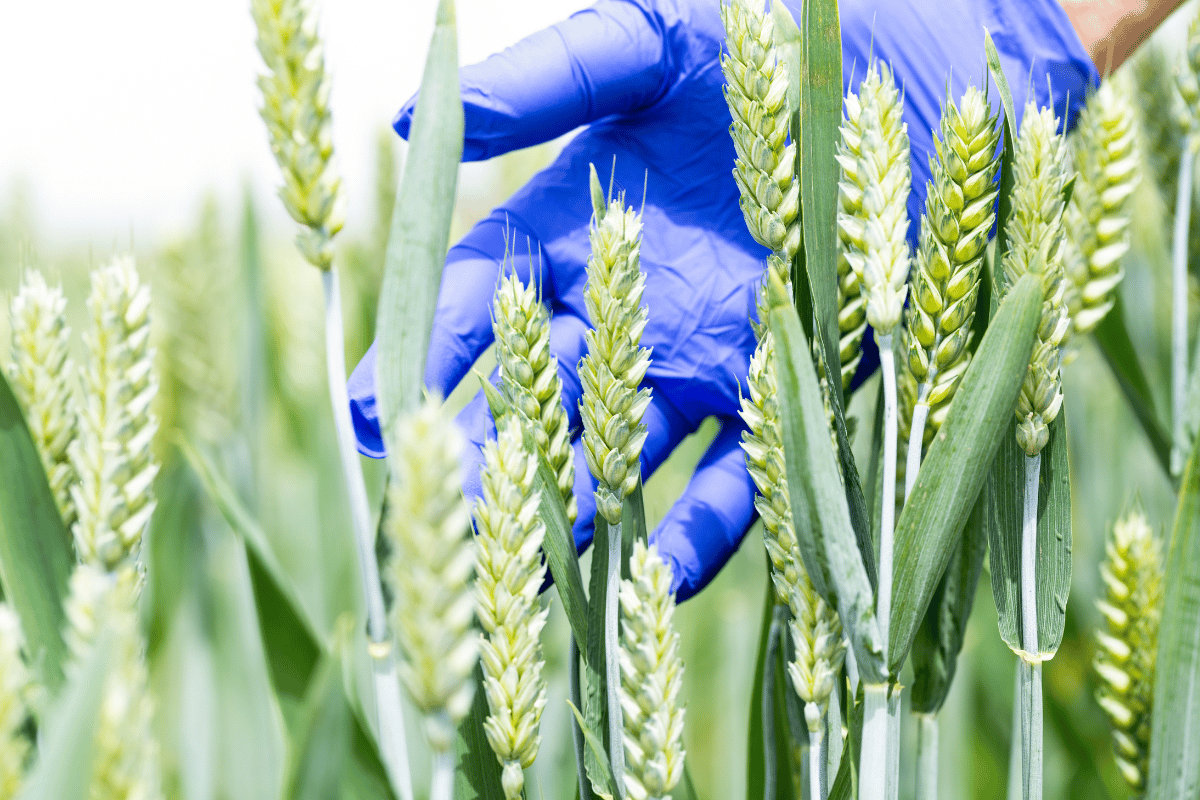
Some of the first NGT crops are designed to remove an undesirable trait rather than add a risky one. Low-gluten wheat lowers the proteins that cause problems for people with gluten sensitivities. Pathogen-resistant potatoes need fewer fungicide treatments. Where a change could plausibly affect allergens, natural toxin levels, or nutritional content, that is exactly what a composition assessment looks for, and the more complex changes that raise such questions fall into the NGT-2 group that undergoes full evaluation.
What it means if you want to avoid them
Choice is built into the framework. Seed and reproductive material from NGT-1 plants must be labelled NGT-1, and every NGT-1 variety is listed in a public EU database, so a grower can identify and avoid them. NGT-2 products carry full GMO labelling. Organic production remains free of NGTs of either category, though the technically unavoidable presence of an NGT-1 plant in an organic crop does not on its own break organic compliance.
Where the debate continues
Support for the new approach is not universal. Some environmental and consumer groups argue that all gene-edited products should carry consumer-facing labels, not just seed labels, and that their long-term and ecological effects warrant greater caution than the NGT-1 exemption allows. The organic sector has raised practical concerns about coexistence and about how the unavoidable-presence allowance will work in practice. The regulation addresses part of this by making mandatory monitoring of the economic, environmental, and social effects of NGT plants once they are on the market, providing a basis for revisiting the rules as evidence accumulates.
The scientific consensus reflected in the EU framework is that the safety of a plant depends on its genetic outcome, and that techniques making fewer and more precise changes than methods already accepted as safe do not, by themselves, create new safety concerns. The crops that do raise such questions are the ones the framework keeps under full assessment.
References
- European Commission. (2026). New genomic techniques in a nutshell. Factsheet, doi:10.2875/4672636.
- European Commission, DG Health and Food Safety. (2026). Legislation for plants obtained by new genomic techniques.
- European Parliament. (2026). New genomic techniques for plants to boost innovation in sustainable agriculture. Press release, 17 June 2026.