
AICA data | January 2026
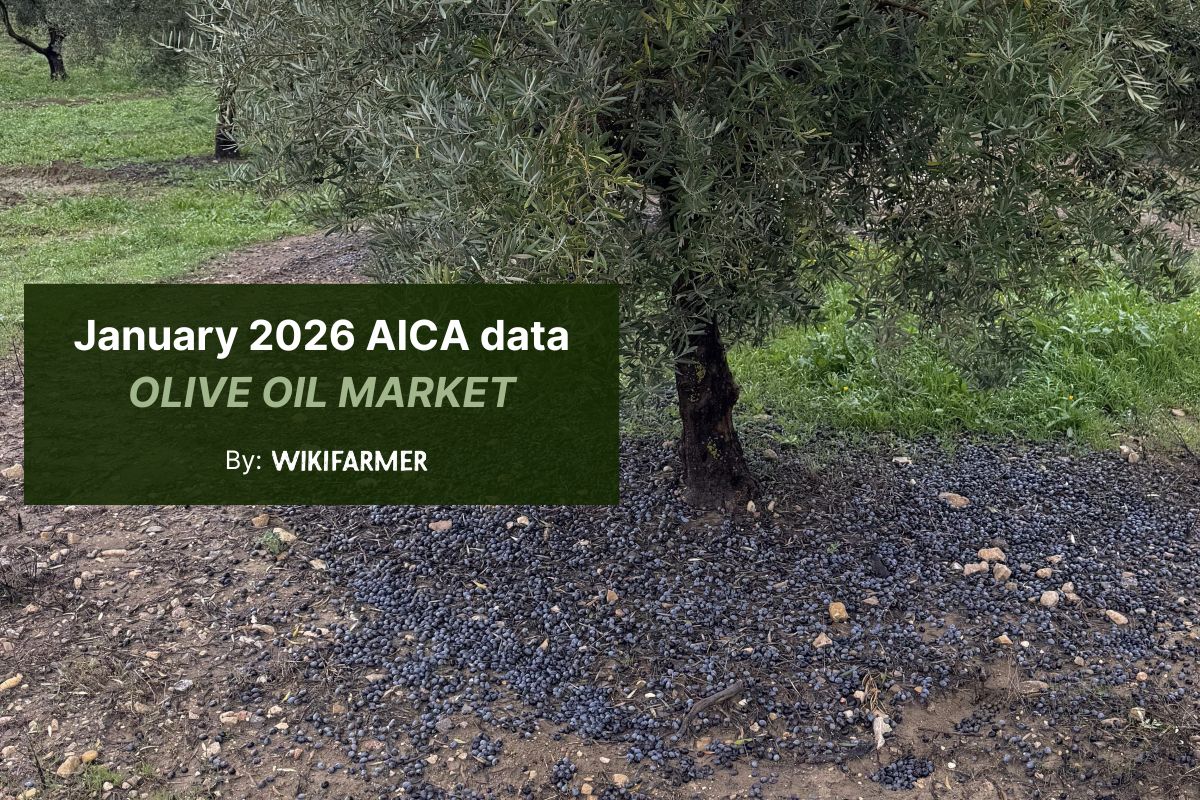
The latest data from the Agencia de información y control alimentarios highlights a critical moment for the Spanish olive oil market. Harvest has slowed dramatically due to heavy rainfall and strong winds, raising concerns about insufficient supply, little high-quality oil, and rising prices.
This report provides a clear snapshot of what the latest data reveals about the current market, helping producers, bottlers, and traders understand supply trends, production changes, and stock movements.
Stay up to date with our Weekly Olive Oil Digest
Olive oil stocks in January
In January, total olive oil stocks reached 943,688 tonnes, up 223,210 tonnes from December. Breaking it down:
- Producers: 726,966 tonnes (+173,052)
- Bottlers: 209,231 tonnes (+46,896)
- Olive-Growing Foundation: 7,492 tonnes (+3,262)
.jpg)
With production severely delayed, current stock levels may not be sufficient to meet demand throughout the year, raising concerns about tight supply and potential price pressure.
Production trends
- January production: 321,040 tonnes
- Cumulative production: 1,044,116 tonnes
January production was 55.6% lower than in December, at 723,076 tonnes, due to heavy rainfall and strong winds that limited harvesting days.
The 2025–2026 season was initially forecast at 1.4–1.44 million tonnes, but current figures suggest the target will not be met. With December and January—the key harvest months—largely lost, only February and March remain, which are usually low-yielding.
As a result, the harvest is significantly delayed, with the bulk of production already behind schedule, and it is unlikely that total production will even exceed 1.2 million tonnes.
Outputs and market flow
Total outputs in January were 97,130 tonnes, while producer outputs were 144,727 tonnes. The difference reflects the portion of production retained for storage or bottling rather than immediate sale.
The combination of delayed production and a limited remaining harvest raises concerns that stocks may not be sufficient to meet demand, particularly as consumption remains high.
 (6).jpg)
Market outlook
- Tight supply: The shortage of freshly harvested oil may put pressure on stock levels.
- Delayed production: The two most important harvest months are now over, and the tail-end months are expected to contribute only modest volumes.
- Price risk: Limited supply and high consumption needs could push prices sharply higher. Traders and bottlers may face inventory challenges and higher costs in the coming months.
- Quality concerns: Fallen olives lead to less high-quality olive oil and more low-quality oil.
Market participants should closely monitor February and March production, but expectations are cautious. The market is bracing for a season of tight supply, rising prices, and increased competition for quality olive oil.
Source olive oil with confidence on Wikifarmer's Marketplace:
Looking for gold standard EVOO?
Disclaimer: The information provided on this website, including market prices, insights, and projections, is for general informational purposes only. While we strive to ensure accuracy and timeliness, we make no guarantees regarding the completeness, reliability, or suitability of the information presented. Users are solely responsible for independently verifying the data and assessing its relevance to their specific circumstances before making any decisions. Wikifarmer and its operators shall not be held liable for any losses, damages, or consequences arising from the use of the information provided herein.