Food recalls in Europe: Week 10, 2026
Your weekly food recall & compliance tracker
The EU's Rapid Alert System for Food and Feed (RASFF) recorded 98 notifications during last week (2–8 March 2026). The total is in line with recent weeks, but we can observe several new incidents.
Salmonella accounted for 17 notifications, more than any other single hazard, with 13 in poultry meat alone. Six of those were Salmonella Infantis, a serovar flagged by EFSA for resistance to multiple antibiotics, including ciprofloxacin and nalidixic acid. These alerts came from four different countries: Poland, Romania, Ukraine, and Slovakia. The same resistant serovar, from four countries, in one week. That points to a supply chain corridor, not bad luck.
On the produce side, Turkey recorded 5 ochratoxin A alerts for dried figs: five separate lots, same product, same origin, same mycotoxin, in seven days. Egypt's 5 alerts were all pesticide-related, but each involved a different banned substance: dimethoate, chlorate, oxamyl, chlorpyrifos, and chlorfenapyr. And avocados from Latin America triggered 3 alerts across Peru and Mexico for three different contaminants (chlorpyrifos, cadmium, and lead).
Highlights at a glance
- 98 total RASFF notifications: 89 food, 5 food contact materials, 4 feed
- Fruits and vegetables led all categories with 26 alerts (26.5% of total), followed by poultry meat at 14 (14.3%)
- Salmonella was the week's dominant hazard with 17 alerts — 13 in poultry, 3 in feed, 1 in meat
- Pesticide residues appeared in 22 hazard mentions across fruits, vegetables, tea, and olive oil
- Germany led all origin countries with 11 alerts, followed by Poland (10), Turkey (9), the Netherlands (6), and China (6)
- EU member states originated 43 notifications (44%), matching recent weeks where domestic production generates nearly as many alerts as third-country imports
- 14 alerts involved unauthorised substances, spanning 8 different banned chemicals across food and feed categories
Top product categories affected by food recalls
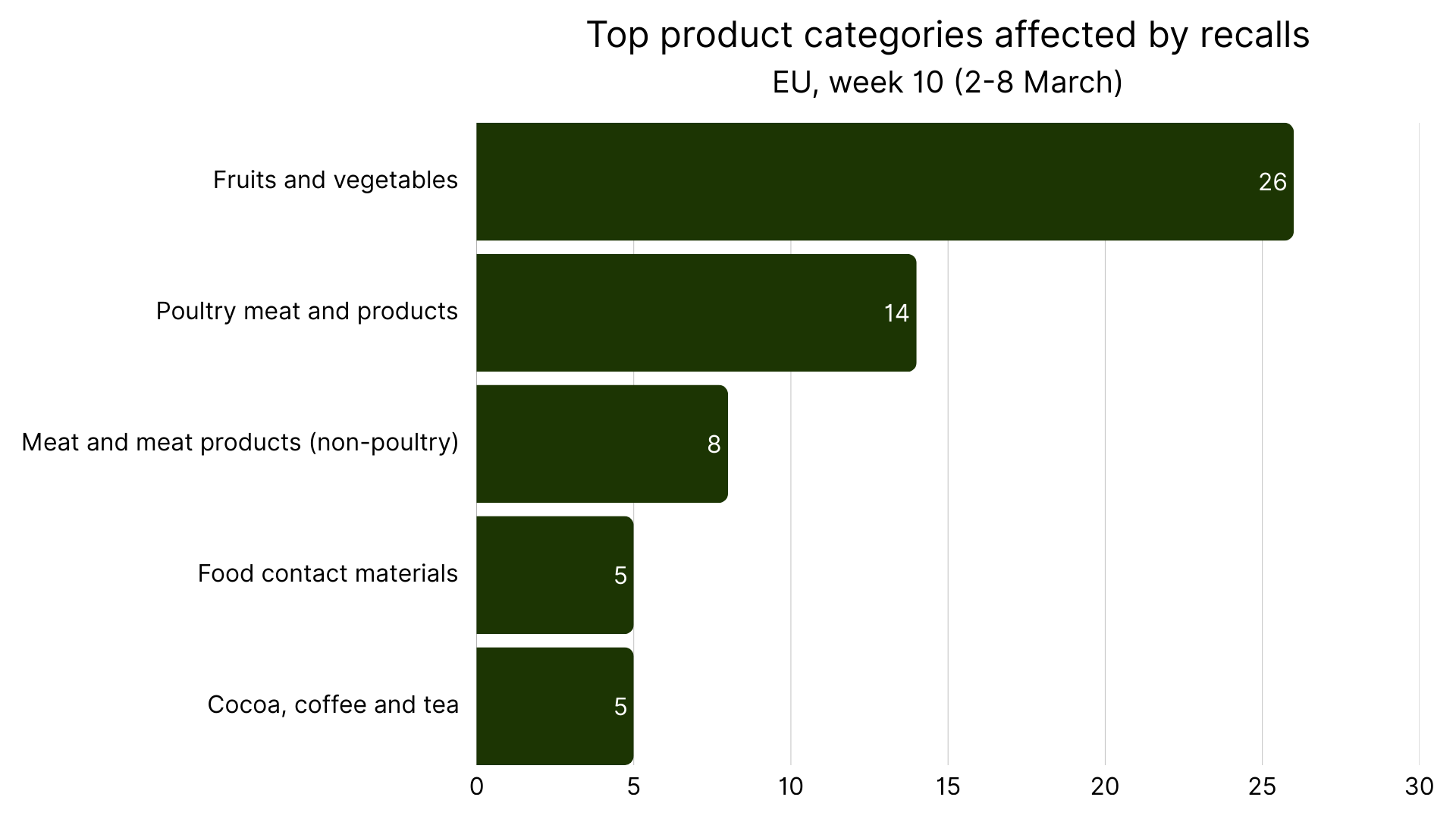
Graph 1: Top 5 Product Categories with the Most RASFF Alerts (Week 10, 2026)
Fruits and vegetables held the top spot, consistent with February's monthly data where the category accounted for 27.5% of all notifications. Within last week's 26 produce alerts, pesticide residues were the dominant hazard type (18 mentions), followed by mycotoxins (5) and heavy metals (3). Turkey generated 8 of the 26 produce alerts, nearly one in three, split between dried figs with ochratoxin A and fresh products with pesticide residues.
Poultry meat's 14 alerts represent the highest weekly poultry count relative to total volume in recent memory. Nearly every poultry notification (13 of 14) involved Salmonella, and the recalls are concentrated in Poland (6), Romania (3), Ukraine (2), Slovakia (1), and Germany (2, though one involved raw material sourced from Poland). The single non-Salmonella poultry alert was a plastic foreign body in Swedish chicken burgers.
The products ranged from chilled chicken breast fillets (Ukraine, Slovakia) to marinated chicken mid-wing sections (Poland) and frozen boneless chicken (Ukraine, where 4 out of 5 sampled units tested positive).
Non-poultry meat recorded 8 alerts, with E. coli STEC as the primary concern. Uruguay alone accounted for 3 beef alerts, all for shigatoxin-producing E. coli, while Germany added 3 further meat alerts, including STEC in bovine meat and two cases of sensory spoilage in beef products.
Fresh produce focus
Turkish dried figs: 5 ochratoxin A alerts in 7 days
Five alerts in one week during March suggests the problem has not eased with the turn of the calendar. The figs triggering these alerts were likely dried and packed during the 2025 harvest season (August–October) and are now moving through European distribution chains. Ochratoxin A is produced by Aspergillus and Penicillium fungi during drying and storage when moisture control fails, and it does not break down during subsequent handling.
For buyers holding Turkish dried fig inventory or planning spring procurement, last week's alerts reinforce that lot-by-lot ochratoxin A testing remains essential. Certificates of analysis from origin are not sufficient on their own, and independent verification at the point of entry or at warehouse receipt is the current industry minimum for this specific origin-product combination.
Egypt: five alerts, five different banned chemicals
Egypt generated 5 notifications last week, every one involving pesticide residues, and 4 of the 5 involved substances that are banned or unauthorised for use in the EU. What makes last week's Egyptian profile different from the pattern we tracked in February (where chlorpyrifos dominated) is the diversity of chemicals detected:
- Oranges: dimethoate (an organophosphate under increasing EU restriction)
- Frozen broccoli: chlorate (unauthorised substance)
- Frozen strawberries: oxamyl (a carbamate insecticide, unauthorised in the EU)
- Oranges: chlorpyrifos (banned in the EU since 2020 under Regulation (EU) 2020/18)
- Chili peppers: chlorfenapyr (unauthorised in the EU)
Five products, five different active substances, four of them banned. This indicates that multiple pesticide classes remain in active use in Egyptian agriculture despite their EU-prohibited status.
Avocados: three countries, three contaminants
Avocados appeared in 3 separate alerts, with hazards spanning chemical and heavy metal contamination:
- Avocado from Peru: chlorpyrifos (unauthorised pesticide)
- Avocado from Peru: cadmium (heavy metal)
- Fresh avocado from Mexico: lead (heavy metal)
Complete fresh produce recall list
Fruits and vegetables (26 alerts)
- Kale (Belgium): foreign body (plastic/rubber > 7 mm)
- Amaranthus (Togo): acetamiprid
- Drinking coconuts (Germany): mold contamination
- Bananas (Ecuador): chlorpyrifos (unauthorised)
- Oranges (Egypt): dimethoate
- Avocado (Peru): chlorpyrifos (unauthorised)
- Avocado (Peru): cadmium
- Fresh avocado (Mexico): lead
- Mixed pickles (Turkey): undeclared sulphur dioxide
- Pomegranate (Turkey): imazalil, prochloraz
- Dried figs (Turkey): ochratoxin A [5 separate alerts]
- Fresh peppers (Turkey): tebufenpyrad
- Drumsticks (India): tebuconazole
- Frozen broccoli (Egypt): chlorate (unauthorised)
- Capsicum spp. (Tanzania): carbendazim (unauthorised), chlorfenapyr, lambda-cyhalothrin
- Frozen strawberries (Egypt): oxamyl (unauthorised)
- Bottle gourd (India): acephate (unauthorised)
- Beans (Peru): cadmium
- Oranges (Egypt): chlorpyrifos (unauthorised)
- Yard long beans (Sri Lanka): metalaxyl
- Chili peppers (Egypt): chlorfenapyr (unauthorised)
- Canned vegetables (Madagascar): foreign object
Herbs and spices (4 alerts)
- Dried whole bay leaves (Poland): foreign body (insect)
- Juniper (North Macedonia): sulphur dioxide (too high)
- Curcuma longa extract (India): novel food (unauthorised)
- Cinnamon sticks (China): foreign body (insect excrement, webs, egg)
Nuts, nut products and seeds (4 alerts)
- Pistachio kernels (USA via Germany): aflatoxin B1
- Hazelnuts (Azerbaijan): aflatoxin B1
- Peanuts (Argentina): aflatoxin B1
- Pistachio kernels (Iran via Turkey): aflatoxin B1, total aflatoxins
Cocoa, coffee and tea (5 alerts)
- Tea (China): dinotefuran (unauthorised)
- Black tea (India): tolfenpyrad
- Green tea powder (Japan via Poland): incomplete import procedures
- Chocolate (Sweden): plastic pieces
- Tea (China): folpet (phthalimide)
Top food hazards for Europe this week
Last week's hazard distribution reversed the pattern seen in February, where pesticide residues led with 40.7% of all hazard mentions. This time, pathogenic micro-organisms took the top position at 27 mentions (driven almost entirely by Salmonella), while pesticide residues dropped to second with 22. Mycotoxins placed third at 12, inflated by the Turkish fig cluster. Biological and chemical hazards are running neck-and-neck in early March, which means sourcing teams need both testing tracks active simultaneously.
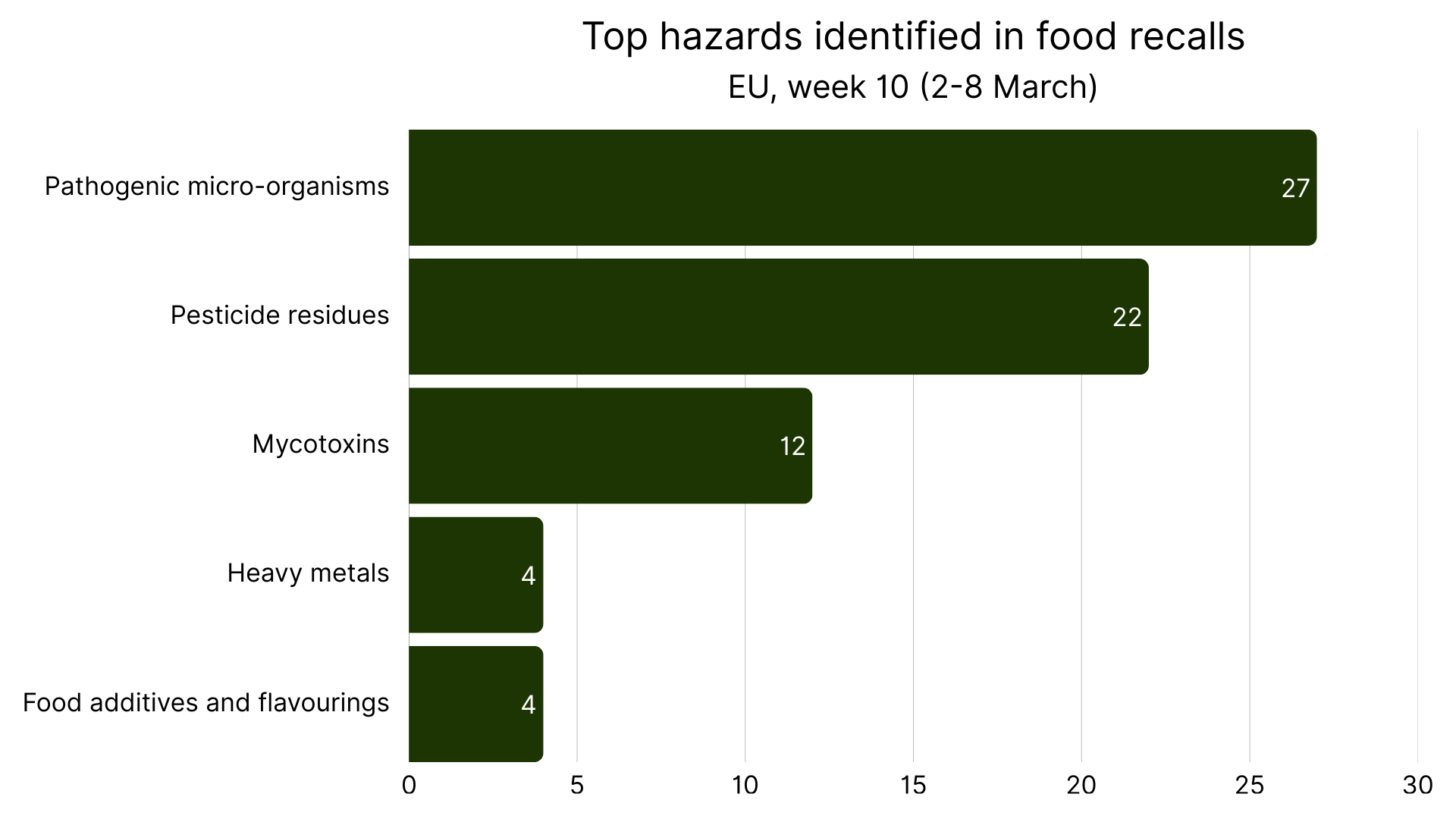
Graph 2: Top 5 food hazards in Europe, Week 10, 2026
Key observations regarding the origin of recalled products
The top three origin countries last week were all European: Germany (11), Poland (10), and Turkey (9).
Germany's appearance at the top is the least concerning of the three. Eleven alerts spread across dairy, meat, poultry, produce, feed, and food contact materials, with no two sharing a hazard type. This is what routine enforcement looks like when inspectors are active across multiple product categories at once.
Egypt's shows a multi-chemical banned substance profile that changes the testing calculus. The five different substances detected last week (dimethoate, chlorate, oxamyl, chlorpyrifos, and chlorfenapyr) span organophosphates, inorganic substances, carbamates, and pyrroles. A broad-spectrum multi-residue analysis (covering 400+ substances) is the only panel wide enough to catch this range.
EU member states collectively originated 44% of last week's 98 notifications. Ten different EU countries appeared as origin countries. That ratio has held between 37% and 46% in every reporting period since we began tracking in mid-2025, and it consistently challenges the assumption that food safety risk is primarily an import problem.

Graph 3: Top origin countries, Week 10, 2026
Outlook
Behind each notification or recall sits a much larger system of farms, processors, traders, and regulators trying to keep an increasingly global food chain safe. Most of the time, the food safety systems work effectively in the background. But when clusters appear across several countries or hazards, they expose the pressure points where control measures begin to fail. Tracking these patterns week by week offers something more valuable than a list of recalls. It offers early signals about where the next food safety challenge may emerge.