
We know the bad news. We hear it constantly. Droughts are getting longer, entire harvests vanishing in weeks across southern Europe, East Africa, and the American Midwest. A third of the world's topsoil is already degraded, and we keep losing more every season. Pesticide residues show up in places nobody expected. Another UN report lands, another set of numbers that make you want to look away. And behind all of it, the quiet, grinding reality that millions of farmers wake up to every morning: the weather is less predictable than it used to be, the costs are higher, and the margins are thinner.
That is all true. None of it should be brushed aside.
But here is the thing, and it is something we almost never talk about. While all of that has been happening, people have been working. Hard. Scientists in Hyderabad spent years editing rice genes so that salt-poisoned fields could once again grow food. Women in rural India learned to fly drones so their neighbours could spray less poison on their crops. Danish dairy farmers started feeding their cows a supplement that cuts methane by a third. In Mexico, monarch butterflies came back in numbers nobody dared predict five years ago.
Good things are happening in agriculture. Real, measurable, meaningful things. They just don't make the front page.
So let's take a moment to focus on what is going right. Not to pretend the problems have gone away, but because the people doing this work deserve to be seen and because knowing what is possible matters just as much as knowing what is broken.
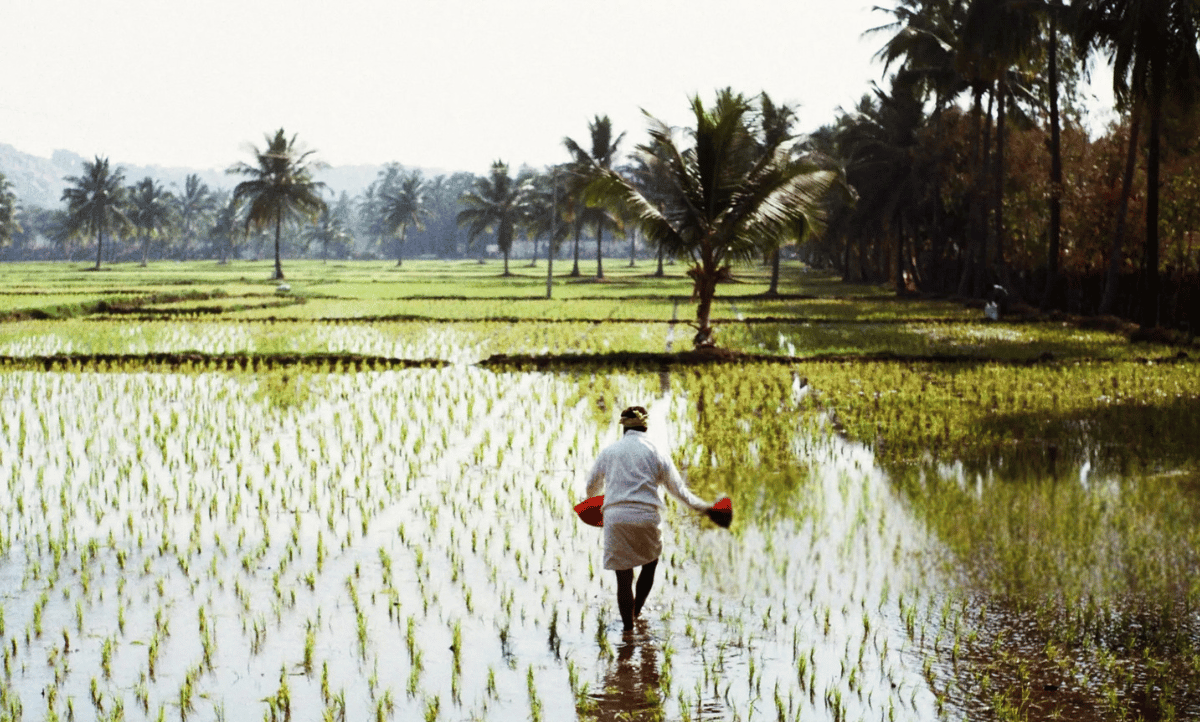
India developed salt-tolerant, high-yield rice and gave it to farmers for free
In May 2025, India released two rice varieties developed using CRISPR gene editing and made them available to farmers as public goods, openly accessible through the national research system. That is a first in global agriculture.
The first variety, DRR Dhan 100, was bred at the Indian Institute of Rice Research in Hyderabad. In field trials, it delivered a 19% yield increase over its parent line, matured 20 days earlier, and emitted roughly 20% fewer greenhouse gases because of its shorter growing cycle. The second, Pusa DST Rice 1, was developed at the Indian Agricultural Research Institute in New Delhi and specifically targets salt-affected soils, a growing problem in coastal and irrigated farming regions worldwide. On saline fields where conventional varieties struggle, it achieved yield gains between 9.7% and 30.4%.
Rice feeds more than half the world's population, yet the crop is under enormous pressure from climate change: rising temperatures, shifting monsoons, saltwater intrusion along coastlines. Traditional breeding has produced excellent varieties over the decades, but the process is slow. CRISPR allows researchers to make precise, targeted edits to a plant's own DNA, achieving in a few years what conventional breeding might take a decade or more. And because India released these as publicly funded varieties, smallholder farmers across the country can access the seed without paying premium licensing fees. It is a model that other rice-producing nations are now watching closely.
Gene editing is also making waves in Europe. The EU reached a provisional agreement in December 2025 on new rules for plants developed using techniques such as CRISPR. The proposed framework would exempt plants with 20 or fewer genetic modifications from the current GMO regulatory process, potentially speeding up farmers' access to drought-tolerant, disease-resistant, and climate-adapted crops in Europe. A final parliamentary vote was expected in early 2026.
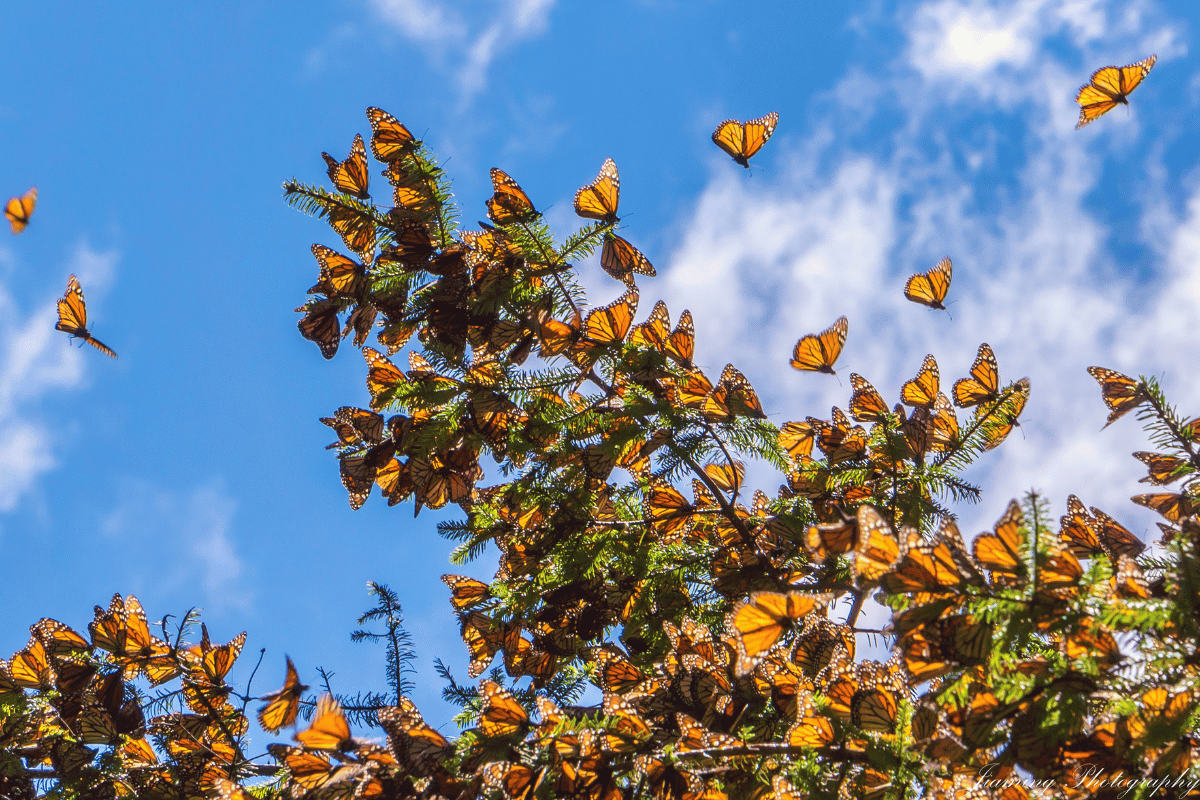
Monarch butterflies nearly doubled their numbers, and lawmakers noticed
For anyone who has watched the slow decline of pollinators over the past two decades, the winter of 2025 brought something worth celebrating. The eastern monarch butterfly population nearly doubled compared to the previous year, occupying 4.42 acres (1.79 hectares) of overwintering forest in central Mexico versus 2.22 acres (0.9 hectares) the year before. At the same time, forest degradation within the monarch reserve fell by 10%, suggesting that habitat protection efforts are gaining real traction.
Monarchs are not the only good news in the pollinator world. Across the United States, more than 30 states introduced a combined 200 pollinator protection bills in 2025, and 12 states passed them into law. California's ban on neonicotinoid pesticides, a class of insecticides closely linked to bee decline, took effect on 1 January 2025, pulling roughly 150 products off shelves.
This matters for farming in the most direct way possible. Pollination by insects underpins an estimated $235–577 billion worth of global food production each year. Crops from almonds and apples to blueberries and broccoli depend on it. When pollinator populations recover, farm productivity follows. The legislative momentum suggests the connection between healthy insect populations and healthy food systems is finally landing with policymakers as an economic priority, not just an environmental one.
Drones are saving small farmers millions of litres of water and thousands of tonnes of chemicals
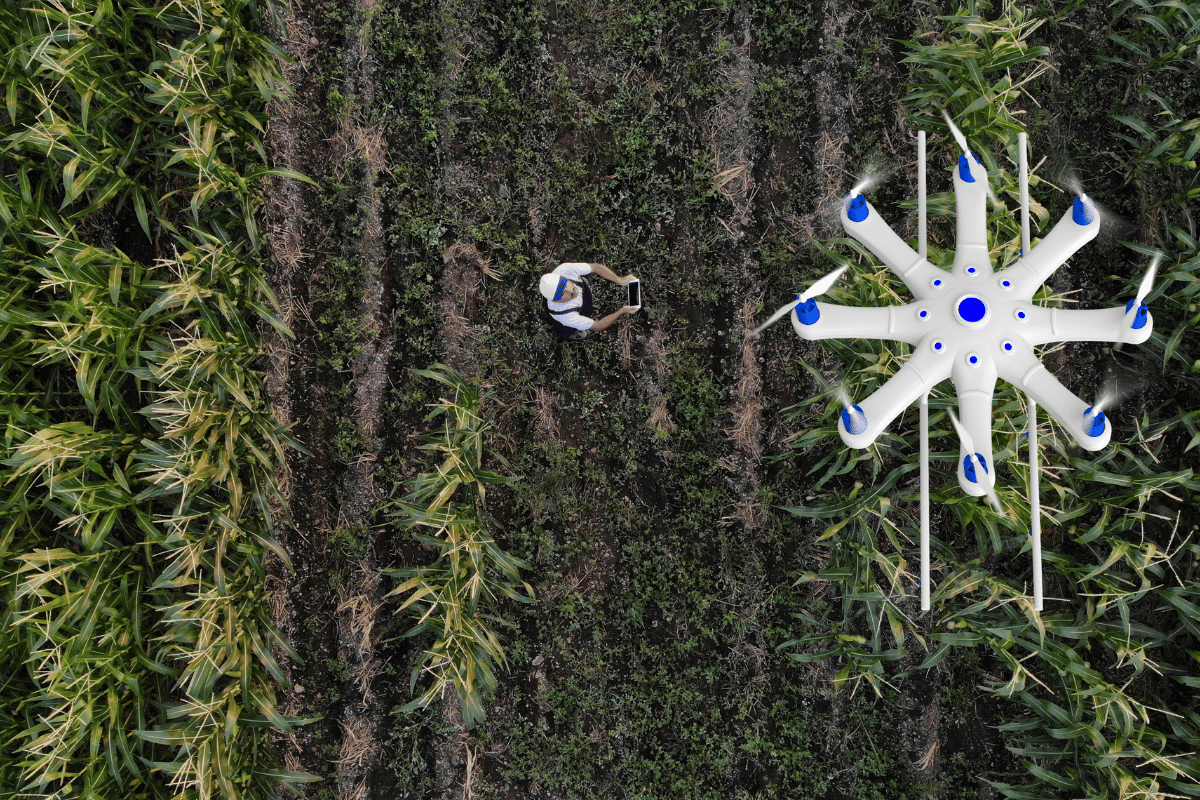
Agricultural drones are no longer a novelty reserved for large-scale Western farms. As of 2025, over 400,000 DJI Agriculture drones are operating worldwide, a 90% increase from 2020, and the impact is measurable. Collectively, these machines have helped reduce chemical inputs by 47,000 metric tonnes and cut greenhouse gas emissions by an estimated 25.7 million metric tonnes. The global agricultural drone market, valued at $5.86 billion in 2025, is projected to reach $23.8 billion by 2032.
At the CES 2025 technology show, John Deere unveiled second-generation autonomy kits, including fully self-driving tractors and orchard machines equipped with LiDAR sensors and 16-camera arrays running on NVIDIA processors. The company designed these as retrofit kits for equipment from 2022 onward, lowering the barrier to entry for farmers who cannot afford a brand-new fleet.
Some of the best adoption stories are coming from India. Garuda Aerospace has built a 35,000-square-foot drone manufacturing facility and, through the government's "Drone Didi" programme, trained 15,000 rural women as certified drone pilots. Niqo Robotics has deployed AI-powered spot-spraying across more than 90,000 acres (36,400 hectares), achieving 60% reductions in chemical use for the 1,800 farmers on its platform. AI-driven irrigation systems are delivering water savings of 30–50% with yield improvements of 20–30% in trials across multiple countries. In Italy, the SMARTER platform cut water use in kiwifruit orchards by 40%, paying for itself within two years.
The US just put $700 million behind soil health, and Europe wrote its first-ever soil law
Regenerative agriculture has spent years as a promising idea looking for serious institutional backing. In December 2025, that changed. The USDA launched its Regenerative Pilot Programme with $700 million in funding, split between $400 million through EQIP and $300 million through CSP. The programme includes mandatory soil testing for participating farms and a 15-member advisory council to guide its rollout.
It was not an isolated move. The Rainforest Alliance published a new Regenerative Standard in September 2025, with 119 requirements and pilot programmes with coffee farmers in Costa Rica and across 3,000 hectares (7,400 acres) in Brazil. Mad Capital closed its second investment fund at $78.4 million, seven times the size of its debut, deploying $25 million to 17 farmers managing a combined 126,260 acres (51,100 hectares), with a goal of reaching 5 million acres by 2032. ADM, one of the world's largest agricultural commodity companies, expanded its regenerative programmes to 28,000 farmers across more than 5 million acres globally.
Europe took a parallel step. The EU Soil Monitoring Directive (EU 2025/2360) entered into force on 16 December 2025, the first EU law specifically dedicated to soil health. It requires member states to establish monitoring networks tracking erosion, compaction, organic carbon, biodiversity, contamination (including PFAS), and soil sealing, with a target of healthy soils by 2050. The directive responds to sobering numbers: an estimated 60–70% of EU soils are currently degraded, at an annual cost of around €50 billion.
The first feed additive that cuts cow methane just got approved, and Denmark made it mandatory
Livestock farming produces about 14.5% of global greenhouse gas emissions, and cattle are the main source of agricultural methane. For years, researchers have been seeking practical ways to reduce the methane produced by cows during digestion. In May 2024, the US Food and Drug Administration approved Bovaer (3-NOP) as the first methane-reducing feed additive for dairy cattle.
In dairy herds, Bovaer reduces methane output by around 30%. In beef cattle, the reduction is closer to 45%. Per animal, that translates to roughly 1.2 tonnes of CO₂ equivalent saved each year. The additive is now approved in over 70 countries and is being used with more than 500,000 cows across 25 nations.
Denmark went further than anyone else. On 1 January 2025, the country made methane-reducing feed mandatory for conventional dairy operations with 50 or more cows. By October, 75% of Danish dairy farmers were already using it. Meanwhile, the Bezos Earth Fund and the Global Methane Hub committed $27.4 million in April 2025 to fund research into low-methane cattle and sheep breeding, screening more than 100,000 animals to identify genetics that naturally produce less methane.
The bigger picture
No single development on this list solves the enormous challenges facing global food systems. Climate change is accelerating. Farmland is shrinking. The world needs to feed two billion more people by mid-century. These are real problems that deserve serious attention.
But so do the facts on the other side of the ledger. CRISPR rice is reaching farmers who need it most — without a licensing fee attached. Pollinator populations are responding where protections are put in place. Feed additives are cutting livestock methane in real herds, not just in lab trials. Drones and AI are helping smallholders stretch every drop of water further. And governments are backing soil restoration with real money for the first time.
Progress in agriculture is rarely dramatic. It happens field by field, season by season, often out of sight. But when you step back and look at what 2025 delivered, the picture is clearer than most people realise: the seeds of a better food system are already in the ground.
References
- Indian Council of Agricultural Research. (2025). Union Agriculture Minister announces two genome-edited rice varieties developed in India. ICAR, 4 May 2025.Union Agriculture Minister Shri Shivraj Singh Chouhan Announces Two Genome Edited Rice Varieties — ICAR
- Council of the European Union. (2025). New genomic techniques: Council and Parliament strike deal. Press release, 4 December 2025.New Genomic Techniques Council and Parliament Strike Deal to Boost the Competitiveness — Council of the EU
- World Wildlife Fund. (2025). Monarch butterfly survey report 2024–2025. WWF, March 2025.Monarch Butterfly Survey Report 2024 2025
- US Food and Drug Administration. (2024). FDA completes review of Bovaer, first methane-reducing feed ingredient for lactating dairy cattle. Elanco / FDA, 28 May 2024.FDA Approves Methane Dairy Cow Supplement Elanco Bovaer
- DJI Agriculture. (2025). Agricultural drone industry insight report 2024/2025. Presented at Agrishow 2025, São Paulo, 30 April 2025.Dji Agricultures Annual Report Reveals Drone Powered Farming Revolution at Brazils Agrishow 2025
- USDA. (2025). USDA launches new Regenerative Pilot Program to lower farmer production costs. USDA Press Release, 10 December 2025.USDA Launches New Regenerative Pilot Program Lower Farmer Production Costs and Advance Maha Agenda — USDA
- European Parliament and Council. (2025). Directive (EU) 2025/2360 on soil monitoring and resilience. Official Journal of the European Union, 26 November 2025.Directive (EU) 2025/2360 — EUR-Lex