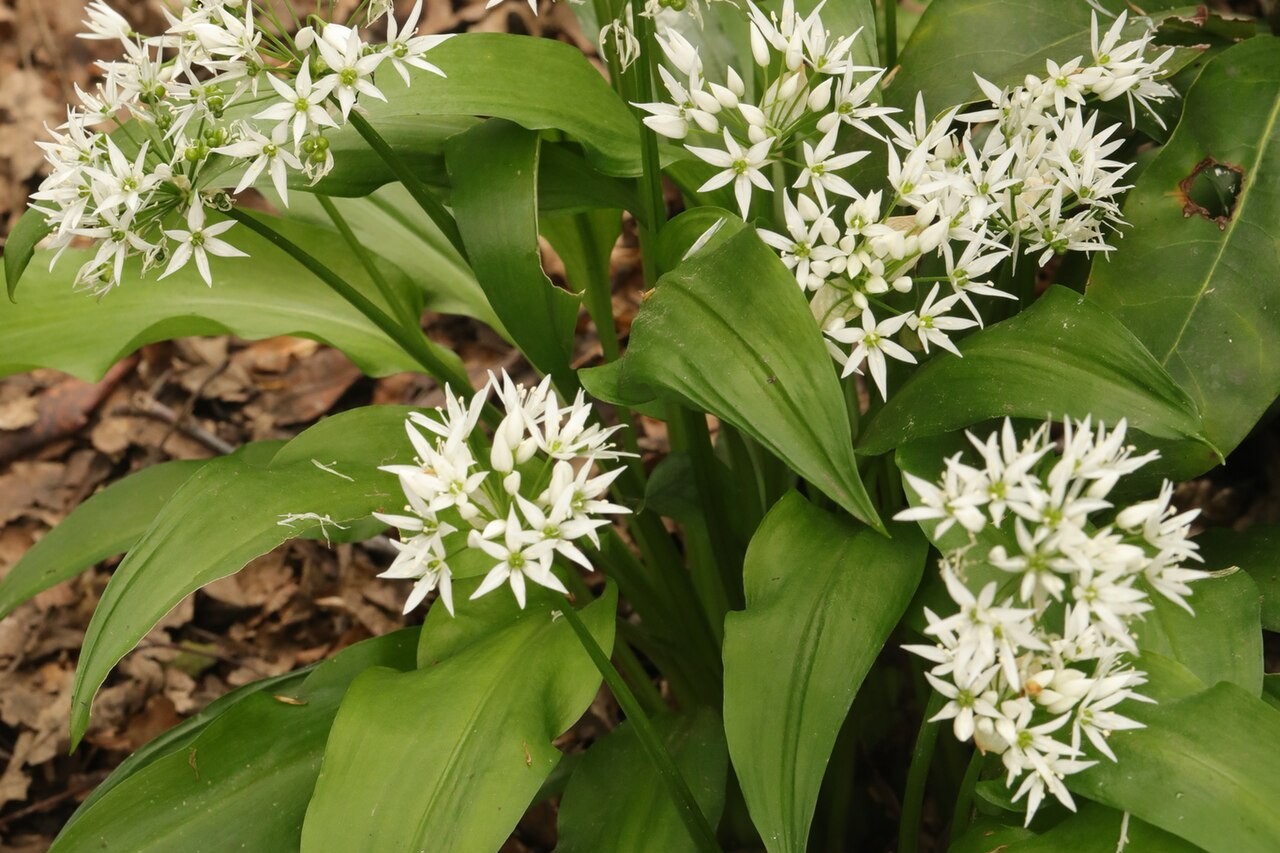
Wild garlic (Allium ursinum), also known as ramsons or bear's garlic, is a perennial bulbous plant of damp, shady deciduous woodland. It usually has two broad, lance-shaped, glossy leaves, each on its own stalk, which smell strongly of garlic when rubbed, and white star-shaped flowers in rounded clusters from April to early June. The leaves are picked in spring, before flowering. Wild garlic is often confused with poisonous lily of the valley and the highly poisonous autumn crocus, and according to the German Federal Institute for Risk Assessment (BfR), such mix-ups cause poisonings every season, some of them fatal. This guide covers how to identify it safely, how to tell it from its lookalikes, when and how to harvest it, and how to grow it in the garden and in pots.
Which plant is wild garlic
Allium ursinum belongs to the family Amaryllidaceae, like common garlic, onion and chives. It grows in damp, shady, nutrient-rich deciduous woodland, mainly with beech and oak, and in riverside woods, where it often forms extensive carpets. It occurs across most of Europe, and Greece lies close to the southern edge of its range, in cool and shady sites. It needs coolness and shade, because strong sun scorches its leaves.
Many other wild Allium species grow in Greece and elsewhere, and the name "wild garlic" is sometimes used for them as well. This article is about Allium ursinum, which stands out from most of its relatives for its broad leaves. Common garlic and its varieties are a different species, Allium sativum.
How to identify it
- Leaves: usually two, broad, elliptic to lance-shaped, glossy, with a pointed tip. Each leaf has its own distinct stalk, and the veins run parallel along the leaf
- Smell: when a leaf is rubbed or broken, it gives off a strong garlic smell
- Flowers: white, star-shaped, in rounded clusters at the top of a leafless stem, from April to early June
- Bulb: narrow, elongated and white
- Height: 15 to 40 cm when fully grown
- Appearance: leaves emerge in February and March, and the plant usually forms large, dense colonies
In summer, after flowering and seed ripening, the foliage dies back and the bulb goes dormant until the following spring.
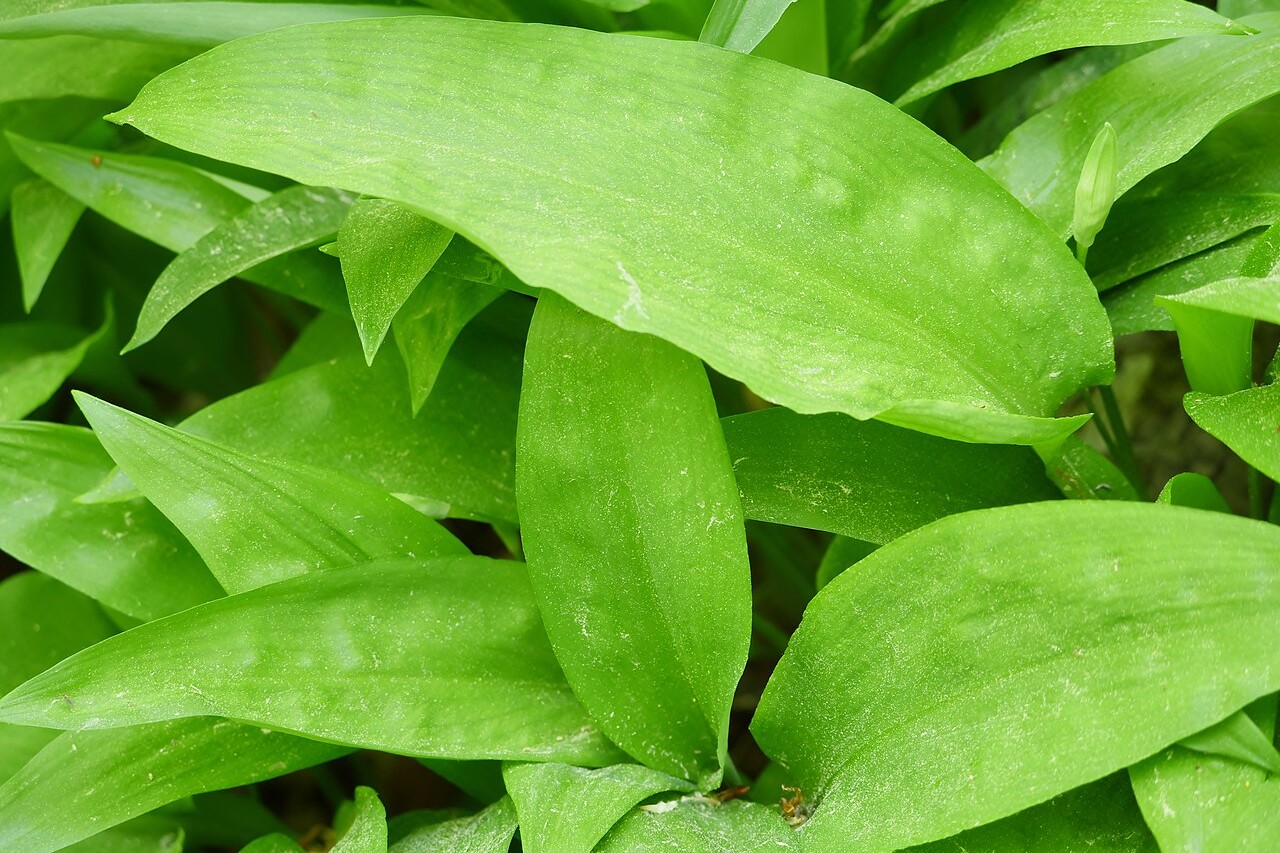
Wild garlic leaves are broad, glossy and pointed, each on its own stalk, and smell strongly of garlic when rubbed.
The poisonous plants that look like it
| Plant | How it differs from wild garlic | Risk |
|---|---|---|
| Autumn crocus (Colchicum autumnale) | Stiffer, stalkless leaves with a rounded tip that seem to grow straight from the ground. Round, dark bulb. Purple flowers in autumn only. No garlic smell | Highly poisonous in all parts. Can cause fatal poisoning |
| Lily of the valley (Convallaria majalis) | Usually two or three leaves wrapped at the base in a shared sheath, with a pseudo-stem green above and reddish below. Grows in drier spots and slightly later. No garlic smell | Contains cardiac glycosides. Nausea, vomiting, diarrhoea, palpitations, rarely arrhythmia |
| Lords-and-ladies (Arum maculatum) | Net-like leaf veining, instead of the parallel veins of wild garlic. No garlic smell | Highly poisonous in all parts |
Autumn crocus is the most dangerous, because its leaves appear in spring, in the same woods and at the same time as wild garlic, while its very different flowers appear only in autumn. In spring, then, neither plant is in flower, and the distinction has to be made from the leaves alone. According to the Austrian Agency for Health and Food Safety (AGES), colchicine, the toxin in autumn crocus, only takes effect after a few hours. The first symptoms are nausea and vomiting, followed by diarrhoea. The toxin destroys intestinal, blood and bone marrow cells, and the poisoning can lead to death after about two days. Eating three or four leaves can be enough to kill. In France, poison centres recorded 28 cases of autumn crocus mistaken for wild garlic between 2020 and 2022, all between March and May. Half involved leaves made into pesto.
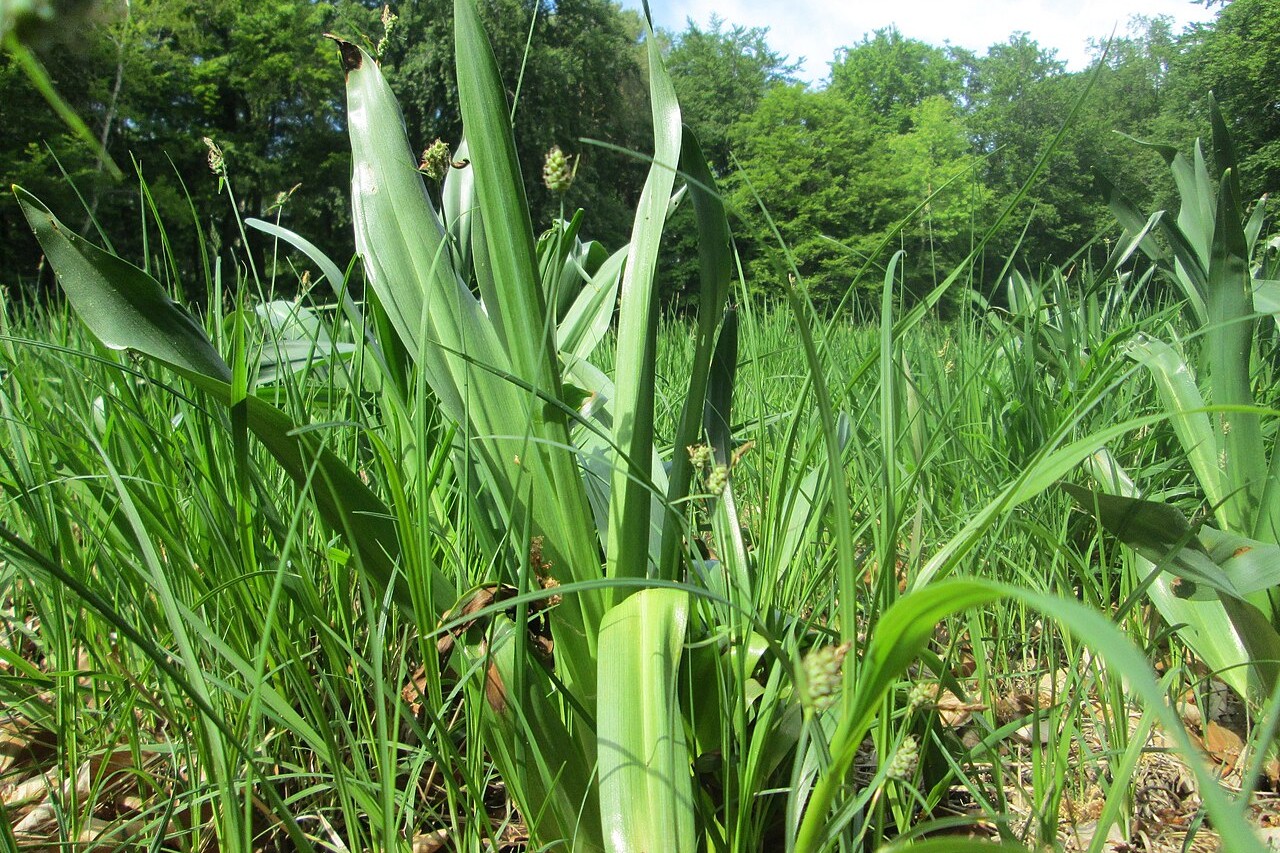
Autumn crocus leaves in May. They are stiff and stalkless, grow straight from the ground and have no garlic smell.
The smell test and its limits
Smell is the best-known test. Rub a piece of leaf between your fingers, and if it does not give off the characteristic garlic smell, leave the plant where it is and wash your hands at once. The BfR warns, however, that the test is not without risk, because the smell from a previous leaf lingers on the fingers and can give a false positive. Smell alone is therefore not enough, and foragers need to know all of the plant's features well. European food safety authorities recommend:
- Picking leaf by leaf, not in bunches, which can mix edible and poisonous leaves
- Checking the smell of every leaf separately
- Not eating anything if in doubt, not even a taste
- Stopping immediately if the taste is bitter or unpleasant
- Buying from trusted shops or growing it in the garden, for anyone who is not completely sure
If symptoms appear after eating a plant thought to be wild garlic, seek medical help immediately through a poison control centre or emergency services, which is 112 across the European Union.
When and how to harvest
Leaves emerge in February and March and are picked until the first flowers appear, so the main season runs from March to May, depending on altitude. Take only a few leaves from each plant and leave the bulb in the ground, so the colony comes back the following year. As well as the leaves, the flower buds are edible.
Growing wild garlic in the garden
Growing it in the garden is the safest way to have wild garlic, because it removes the risk of confusion. According to the RHS, the plant is easy to grow in fertile, well-drained soil and is generally pest-free.
- Position: shade or partial shade, ideally under deciduous trees. In hot, sunny climates with dry summers, shade is essential
- Soil: rich in organic matter, moist but well-drained, with acid, neutral or alkaline pH. Adding compost mimics its natural woodland soil
- Planting bulbs: from September to December, 10 to 15 cm apart. A colony takes 2 to 3 years to establish
- Sowing: seeds need a cold period, about 60 days according to seed suppliers, to germinate, and plants take 2 to 5 years to mature
- Watering: keep the soil steadily moist in spring, when the plant is growing. In summer, once the foliage dies back, the plant is dormant
The RHS warns that wild garlic spreads rapidly through seeds and bulbils, so it is best planted away from the vegetable garden, in a shady corner where it can spread freely.
Growing wild garlic in pots
Wild garlic also grows in pots, provided they are at least 15 to 25 cm deep and about 30 cm across, with good drainage. Place the pot on a shady balcony facing north or east, and do not let the compost dry out in spring.
Uses in the kitchen
The tender leaves and buds are eaten raw in salads or cooked in pesto, soups, omelettes and risotto, and their flavour recalls garlic but is milder and fresher. In cooking they are best added at the end, to keep their aroma. To preserve them, the leaves are chopped and frozen.
Like common garlic, wild garlic contains sulphur compounds. In the EU, health claims for botanical ingredients are on hold, so no health claim for wild garlic is authorised. For what applies to common garlic, see garlic nutrition facts.
Frequently asked questions
What is wild garlic
It is Allium ursinum, a perennial bulbous plant of damp, shady deciduous woodland, related to common garlic. It has broad leaves that smell of garlic and white star-shaped flowers in spring.
How do you identify wild garlic
By its two broad, glossy leaves on their own stalks with parallel veins, the strong garlic smell when rubbed, and the white star-shaped flowers in rounded clusters. Smell alone is not enough, because it lingers on the fingers from earlier leaves.
What can wild garlic be confused with
Mainly autumn crocus, which is highly poisonous and can cause fatal poisoning, lily of the valley and lords-and-ladies. None of them smells of garlic, and if in doubt the plant should not be eaten.
When is wild garlic in season
Leaves are picked from when they emerge in February and March until the first flowers, so mainly from March to May. Take a few leaves from each plant and leave the bulb in the ground.
Can wild garlic be grown in the garden
Yes, and it is the safest way to have it. It needs shade or partial shade and rich, moist soil, and bulbs are planted from September to December. It spreads quickly, so it is planted away from the vegetable garden.
Does wild garlic grow in Greece
Yes. Greece lies close to the southern edge of the range of Allium ursinum, which grows in cool, damp, shady deciduous woodland. The name "wild garlic" is sometimes also used locally for other wild Allium species.
Important notes
Identifying wild plants for eating requires experience and certainty. If in doubt, do not eat the plant, and if symptoms appear after eating it, seek medical help immediately.
References
- German Federal Institute for Risk Assessment (BfR), Wild garlic, beware of mix-ups.
- German Federal Institute for Risk Assessment (BfR), Odour test with pitfalls, what to look out for when collecting wild garlic.
- ANSES, Confusion between autumn crocus and wild garlic can lead to fatal poisoning.
- AGES, Wild garlic.
- Helsenorge, How to avoid mistaking lily of the valley for wild garlic.
- Royal Horticultural Society, Allium ursinum.
- Flora of Greece, An annotated checklist.