


The need: meeting consumer demand for health-promoting foods
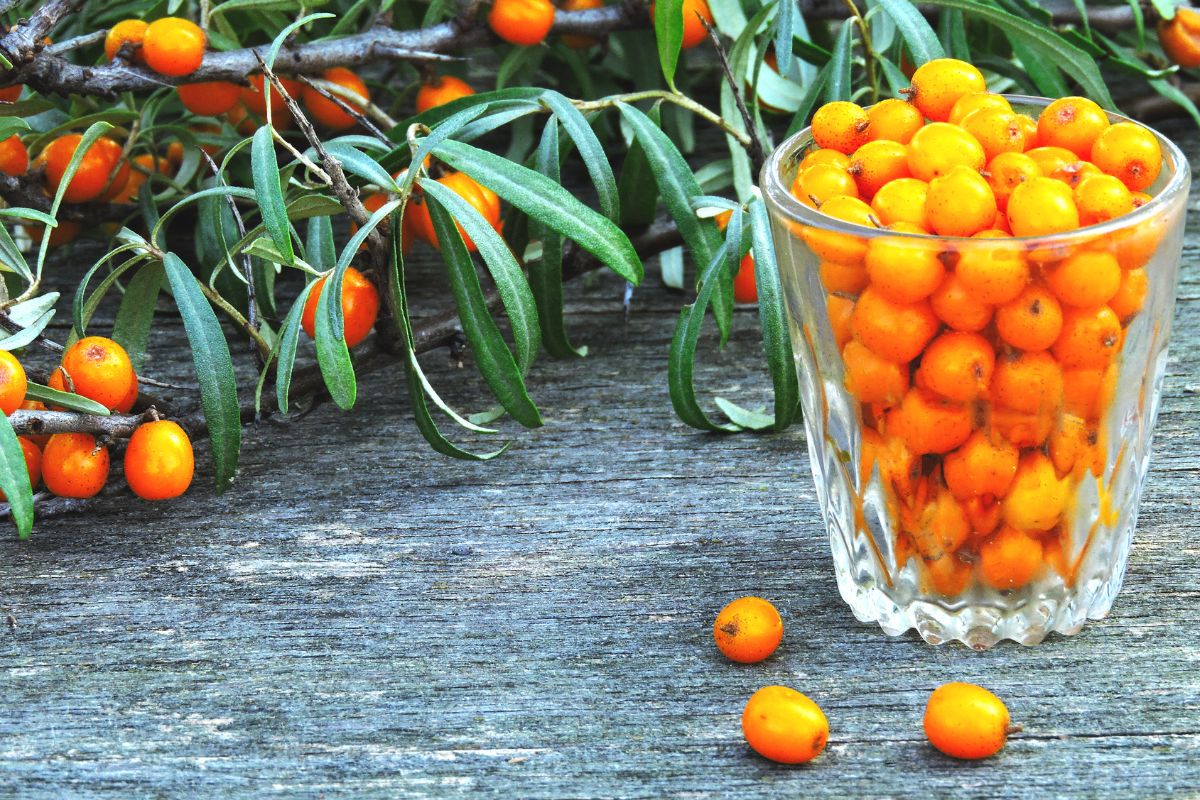
In today’s fast-changing world, consumers are increasingly seeking foods that not only nourish but also offer health benefits. The search for so-called superfoods has intensified, driven by evidence that certain natural compounds can help prevent disease and promote well-being. Among these, sea buckthorn (Hippophaë rhamnoides L.) has emerged as a particularly promising candidate.
Sea buckthorn is packed with up to 200 bioactive compounds, including phenolics, flavonoids, pigments, phytosterols, and fatty acids. Research suggests that these phytochemicals have antioxidant, anti-proliferative, antiviral, and anti-inflammatory properties—making sea buckthorn an excellent candidate for developing functional foods with measurable health benefits.
The opportunity: transforming a nutrient-dense plant into functional foods
Despite its impressive nutritional profile, sea buckthorn remains underutilized in mainstream food production. This gap presents a unique opportunity: to apply advanced science and technology to create products that harness sea buckthorn’s potential, improve health outcomes, and align with modern dietary trends.
The solution: the RIA4FOOD project’s scientific approach
The RIA4FOOD project takes on this challenge by developing novel functional foods based on sea buckthorn. Running from November 2023 to 2027, the project applies cutting-edge methods—such as metabolomics, proteomics, and epiproteomics—to understand the plant’s effects on nutrition and health. It also employs advanced dehydration techniques to create osmotic sea buckthorn products: nutritious, shelf-stable snacks designed for today’s consumers.
By combining organic cultivation, precision agriculture, bioactive compound extraction, and health evaluation, RIA4FOOD aims to deliver products with scientifically validated benefits. A key innovation is the development of algorithms that define optimal levels of bioactive compounds for targeted health outcomes.
How the RIA4FOOD Project Works
The project is organized into seven work packages (WPs), each led by a specialized partner:
- WP1 (University of Patras) focuses on organic cultivation of three sea buckthorn varieties using precision agriculture, alongside optimizing extraction protocols and analyzing metabolic profiles with NMR spectroscopy.
- WP2 (Cyprus Institute of Neurology and Genetics) investigates the anti-cancer, anti-inflammatory, and gut microbiota effects of sea buckthorn fractions using advanced cell models and molecular techniques like mass spectrometry.
- WP3 (Alexander Fleming Biomedical Sciences Research Center) explores the role of sea buckthorn bioactives in human health, assessing dietary intake, bioavailability, and correlations between plant compounds and health outcomes through bioinformatics.
- WP4 (University of Agricultural Sciences and Veterinary Medicine of Cluj-Napoca) translates findings into functional food products designed for safety, efficacy, and consumer acceptance.
- WP5 (FoodScale Hub) assesses the environmental and economic sustainability of the entire production chain, using Life Cycle Assessment to identify and address hotspots.
- WP6 (INSPIRE SCIENCE) leads the dissemination and communication strategy, ensuring that results reach scientific, industry, and public audiences through publications, events, and social media.
- WP7 (REZOS Brands) ensures overall project coordination, covering quality assurance, risk management, intellectual property, and compliance with ethical standards.
Why This Matters
The RIA4FOOD project is more than an academic exercise—it is a coordinated effort to raise the bar for nutrition and health. By unlocking the potential of sea buckthorn, the project offers a concrete response to consumer demand for health-promoting foods. Its innovations could help shape future food products that are not only tasty and convenient but also scientifically proven to improve well-being.
Partners and Funding
RIA4FOOD brings together a consortium of nine partners across five European countries (Italy, Romania, Greece, Cyprus, Serbia), including:
- Universities: University of Patras, University of Agricultural Sciences and Veterinary Medicine of Cluj-Napoca, Università del Piemonte Orientale
- Research centers: Cyprus Institute of Neurology and Genetics, Alexander Fleming Biomedical Sciences Research Center
- SMEs: REZOS Brands, Inspire Science, FoodScale Hub, NovaMechanics
The project is funded under the Marie Skłodowska-Curie Actions (MSCA) Staff Exchanges program of Horizon Europe.
Acknowledgment information:
This project was funded by the European Union. However, the views and opinions expressed are those of the author(s) only and do not necessarily reflect those of the European Union or the European Research Executive Agency (REA). Neither the European Union nor the granting authority can be held responsible for them. Grant agreement No 101131479 (RIA4FOOD).
References
- Wang, Z. et al. Phytochemistry, health benefits, and food applications of sea buckthorn. Front. Nutr. 2022, 9, 1036295.
- Chen, Y. et al. Bioactive Compounds in Sea Buckthorn and their Efficacy in Preventing and Treating Metabolic Syndrome. Foods 2023, 12.
- Wang, K. et al. Bioactive compounds, health benefits and functional food products of sea buckthorn. Crit. Rev. Food Sci. Nutr. 2022, 62, 6761–6782.