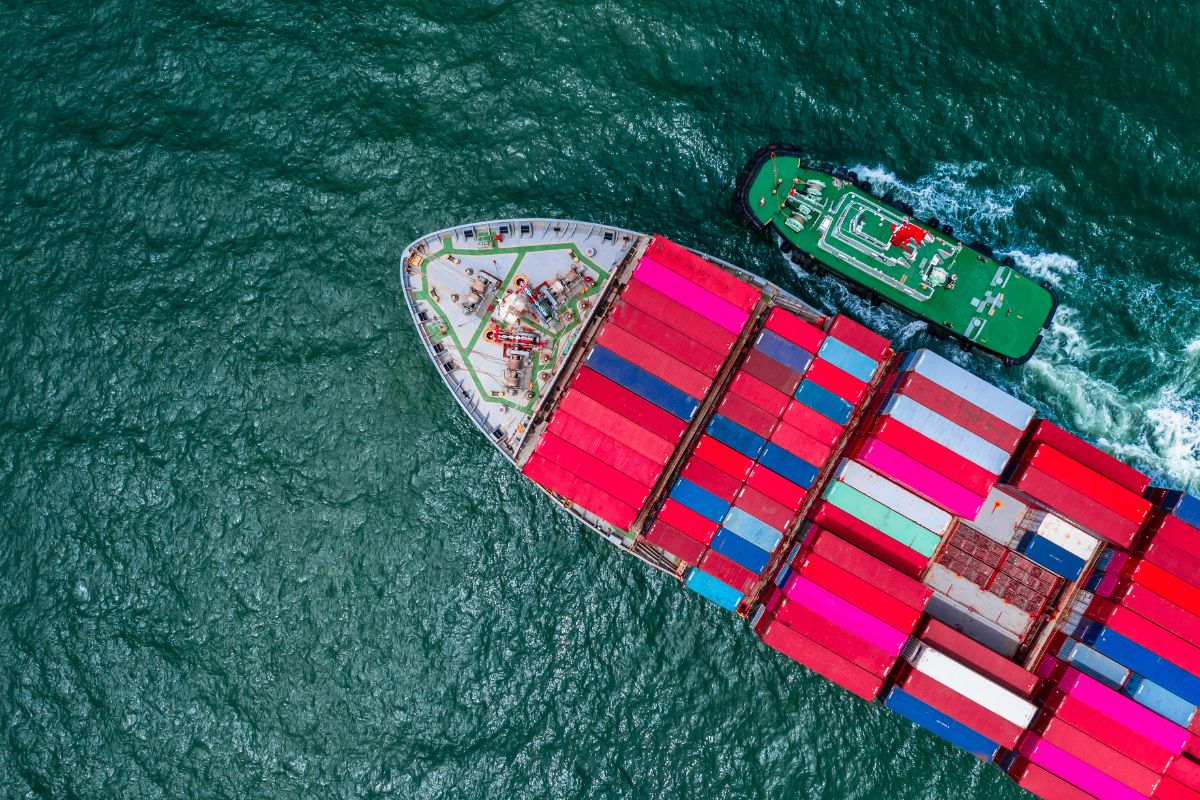
Every agrifood transaction that takes place is actually a complex chain of documentation, logistics, coordination, compliance checks, and stakeholder management that must come together to ensure products arrive where they need to be, on time and as agreed. And to accomplish this, a network of logistics providers, customs authorities, inspection bodies, and financial institutions must be aligned to keep goods moving.

Konstantinos Skoufalos, Operations Specialist at Wikifarmer, works at the centre of all that. He helps turn commercial agreements into successful transactions while navigating the countless variables that can disrupt them along the way.
“I'm responsible for making sure that once a deal is agreed upon, everything that needs to happen actually happens on time, correctly, and with as little friction as possible for both sides,” says Skoufalos.
His job definitely keeps him on his toes: “Day to day, no two days are identical, which is honestly part of what I enjoy. I might be coordinating documentation with a supplier in the morning, following up on the status of a shipment with a freight partner midday, and supporting a buyer with questions about their order in the afternoon. It requires a lot of context-switching and the ability to hold many moving parts in your head at once.”
What it takes to make a transaction happen
An international agrifood transaction, that is, moving a food product across borders and having it arrive on time and in good condition, involves a surprising number of parties: the buyer, the supplier, freight forwarders, inspection bodies, customs authorities, banks if there's a letter of credit involved, and sometimes regulatory bodies on both ends.
Skoufalos communicates with all of the above while keeping in mind their preferred communication methods, strict timelines, and any other requirements.
“What it really takes is clarity and consistency. Everyone involved needs to know exactly what is expected of them and by when. The moment something is left ambiguous, a specification not confirmed in writing, a deadline that's loosely agreed on, that's where problems emerge later,” says Skoufalos.
International agrifood trade also requires navigating different business cultures, legal frameworks, and commercial expectations. Each country, and even each region, has its own customs and business practices. It is very important to follow a country’s standards.
“Part of my job is bridging those gaps, making sure both sides of a transaction are working from the same understanding, even when they come from very different contexts,” says Skoufalos.
Using data insights to work smarter
Data is increasingly changing how agrifood businesses make decisions and manage risk.
“Data insights enable us not just to react to problems but to anticipate them. When you've worked with data, you start looking for patterns. Why do certain types of shipments get delayed? Where does communication tend to break down? That mindset has been genuinely useful here,” explains Skoufalos.
By analyzing data, companies can identify recurring inefficiencies linked to specific suppliers, products, or trade routes and address problems at their source.
Market intelligence and demand signals allow companies to make more informed purchasing and pricing decisions. It’s not just a guessing game.
“The biggest missed opportunity I see is that many companies collect data but don't actually use it. They have shipment records, communication histories, quality reports, but it all sits in inboxes or spreadsheets and never gets synthesized into insight. The companies that will have a real edge are those that treat their operational data as a strategic asset and build processes around learning from it continuously,” explains Skoufalos.
Common issues and how to avoid them
Even when everything is done properly, surprises do happen, explains Skoufalos, no matter how hard you try to make everything go perfectly. His job includes solving problems as they arise.
“You must have patience and proactivity. Things will go wrong. The question is whether you've anticipated them and have a plan in place, or whether you're scrambling when they happen,” says Skoufalos.
Documentation, he says, is usually the most common source of delays. International agrifood trade requires extensive paperwork, including phytosanitary certificates, certificates of origin, quality inspection reports, and customs declarations. If any required documents are missing or have errors, the shipment can be stopped at the border.
“The mistake I see most often is treating documentation as an afterthought rather than something to start preparing from day one,” says Skoufalos.
Many buyers enter deals without fully understanding lead times and don't allot enough buffer time before they actually need the products. Many suppliers overpromise on volume, quality, or delivery timelines despite uncertainty around conditions.
Constant communication throughout the order lifecycle is a must. When this is missing, problems often arise.
“After the deal is agreed, communication often drops off, and that's a risk. Both parties tend to go quiet and assume everything is moving smoothly until something comes to light. Regular check-ins at key milestones are simple but effective,” advises Skoufalos.
Sometimes, assumptions are the agrifood trade’s worst enemy. People assume things without even realizing they’re doing it.
“Buyers assume the product will match a previous shipment. Suppliers assume the buyer understands local constraints such as seasonal variability or export quotas. Both assume the other party has more flexibility than they actually do,” explains Skoufalos.
There must always be clear written specifications agreed upon before production or dispatch to avoid discrepancies further down the road.
“The overarching lesson is that most problems in operations are actually communication problems in disguise,” states Skoufalos.
What the future of agrifood businesses holds
When asked about the future of this sector, Skoufalos said that continued digitalization is a given across the entire supply chain.
“Right now, a lot of the friction in international agrifood trade comes from the fact that different parties use different systems, different document formats and different ways of communicating. Platforms that can bring more of that into a unified digital environment will reduce errors and speed up transactions significantly,” said Skoufalos.
Another big trend is traceability, as buyers increasingly wany to know exactly what a product is made of, where it comes from, and how it was produced.
“Operations teams will need to build traceability into their processes from the start, not as a box-ticking exercise but as a genuine part of how transactions are managed.”
As the industry evolves to become more digital, data/driven, and transparent, Skoufalos's job evolves alongside it: “It's becoming less about manually chasing updates and more about overseeing systems, interpreting data, and managing exceptions. That's a more strategic position, and I think it reflects how the industry is maturing overall.”
But the objective hasn’t changed: ensuring products move reliably from those who produce them to those who need them. For Skoufalos, the future of agrifood operations is about doing this but more efficiently, transparently, and resiliently for everyone involved.