Syria's 2025 wheat and barley harvests came in 60% below average, the worst result the country has seen in nearly four decades. The figure appears in the latest FAO and WFP Global Report on Food Crises, and it changes the eastern Mediterranean grain math in ways the market is still working through. A 60% drop in both crops is a structural exit, not a yield wobble. For buyers, traders, and millers, the practical question is who fills the gap and at what cost.
A 60% drop traced to the worst drought in nearly four decades
Syria's wheat production in a normal pre-2011 year cleared roughly 4.1 million tonnes. The 2025 crop is estimated at around 0.9 to 1.2 million tonnes by the FAO, well below domestic consumption of close to 4 million tonnes, creating a deficit of about 2.73 million tonnes. Barley collapsed alongside it, which compounds the feed and livestock story. The cause is the dry season of late 2024 through spring 2025, with Q1 2025 rainfall recorded at 94.9 mm, the lowest since 1997 and well below the long-term average of 165.4 mm. Syria sits at the sharpest end of a wider pattern that also caught Lebanon and parts of Iraq, but the Syrian harvest is the headline single drop. The wider 2025 picture is detailed in the WikiFarmer analysis of the global cereal market under pressure from weather and trade turbulence.
For context on yields, a typical Syrian rainfed wheat crop yields between 1.0 and 1.5 tonnes per hectare in the northern dryland belt, while irrigated land yields 2 to 3 times that. The 2025 figures suggest national average yields fell to roughly 0.4 to 0.6 tonnes per hectare on the rainfed area, the kind of number you see in a regional famine year rather than a difficult season.
How drought translated into the harvest figure
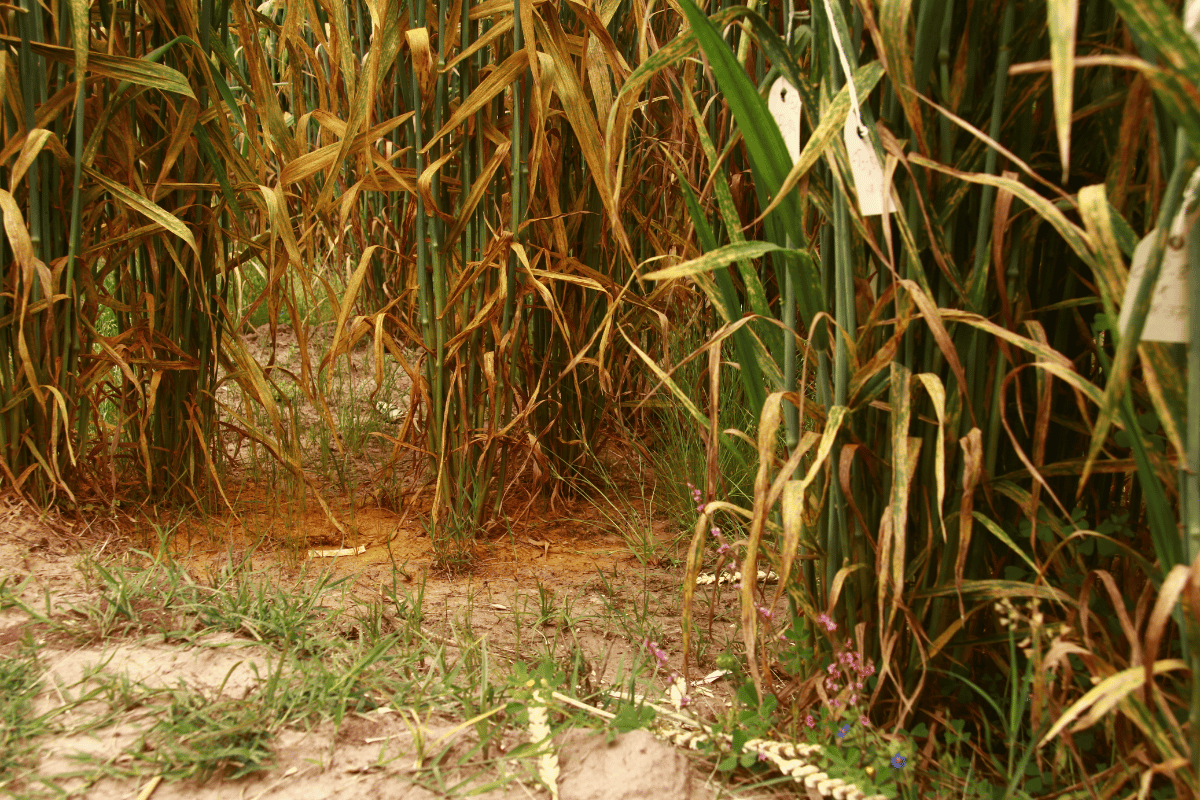
Most Syrian wheat is grown in rainfed areas across the northern belt, from Aleppo and Idlib east to Hasakah and Raqqa. When autumn and winter rains underperform, there is no functioning irrigation system left to compensate. Years of conflict have degraded the canals and pumping networks that once buffered against dry years, and FAO field reports indicate that more than 95% of rainfed crops were not harvested in 2025, with irrigated yields down 30 to 70% across governorates.
Farmers entered the 2024 to 2025 season already short on fertilizer and seed, with prices high enough that many smallholders planted below normal rates. When the rains failed, even the reduced plantings lost most of their potential. The mechanics behind events like this sit in the wider analysis of the primary reasons that hampered global wheat production and supply, and the operational picture of wheat irrigation requirements explains why a rainfed system with degraded irrigation backup has no shock absorber when rainfall collapses.
Lebanon and Yemen sit in the same weather pattern
Syria is the headline, but the surrounding regional picture matters as much. Lebanon's cereal production halved in 2025 under the same dry conditions, with the 2024 to 2025 winter ranking among the driest in 75 years. Yemen's harvests came in roughly 10% below average, hit by rainfall deficits compounded by flooding in some regions. All three countries are now meaningfully more import-dependent than they were 18 months ago. Lebanon, already a large net importer, sees its dependency ratio climb sharply. Syria's 2025 wheat deficit of 2.5 to 2.73 million tonnes will require a similar volume from international markets, depending on consumption assumptions and stock drawdowns.
The Mediterranean supply gap that opens next
When a regional producer of this scale steps out, the demand has to land somewhere. Black Sea origins, primarily Russian and Ukrainian wheat, are the most likely first call, followed by EU origins and selected North African flows. The result is a tighter call on Black Sea and EU supply through 2026. Winter cereal planting in Europe is more important in this environment, and winter cereal management for the 2025/2026 season is now central to eastern Mediterranean food security. Risk premiums on Syrian, Lebanese and Yemeni grain contracts should widen. For traders, the live question is which alternative origins can deliver consistent volume into the region at competitive landed costs.
Romanian, Bulgarian and French wheat are the closest substitutes for Syrian and Lebanese milling demand on quality grounds. Kazakh wheat moves through Black Sea ports and offers competitive landed prices for parts of the region. North African flows from Egypt are limited by Egypt's own import dependency, but Morocco and Algeria sit on different supply routes and can ease pressure on specific corridors. None of these origins fully replaces Syria as a regional producer. Together, they can cover the deficit if logistics hold.
Why this is a structural shift rather than a one-off
The Levant has seen drought before. What makes this episode different is the combination of three factors stacking at the same time. The irrigation infrastructure that historically buffered dry years has been degraded by conflict and underinvestment. Fertilizer access remains constrained and expensive across the region. And more than 1.14 million internally displaced Syrians had returned to areas of origin by May 2025, with that figure rising further through the year, adding pressure on a production system that is still rebuilding. A larger rural population producing the same crop on a depleted resource base means the next year with average rainfall will not yield an average harvest. That is the adjustment buyers need to build into 2026 planning. The wider EU procurement context is the analysis of Europe's food security position under trade tensions, which explains why diversification has moved from a policy preference to a procurement priority.
What buyers and traders should watch in 2026
Three things carry most of the signal over the next two seasons. Syrian winter cereal planting for the 2025 to 2026 cycle will be constrained by adverse weather and input shortages. Lebanon's recovery, which depends almost entirely on rainfall and on how quickly milling and import infrastructure adapts. And the eastern Mediterranean rainfall outlook through spring 2026, which determines whether the 60% harvest drop becomes a one-year shock or a two-year supply gap. The regional rainfall pattern matters more than Syria's 2026 production target. That pattern decides whether the math behind the 60% figure resets or holds.
References
- FAO, WFP and GNAFC. (2026). 2026 Global Report on Food Crises – Joint analysis for better decisions. Rome, FAO and WFP.
- FAO. (2026). Crop Prospects and Food Situation – Triannual Global Report, No. 1, March 2026. Rome.
- FAO. (2025). Crop Prospects and Food Situation – Triannual Global Report, No. 3, November 2025. Rome.