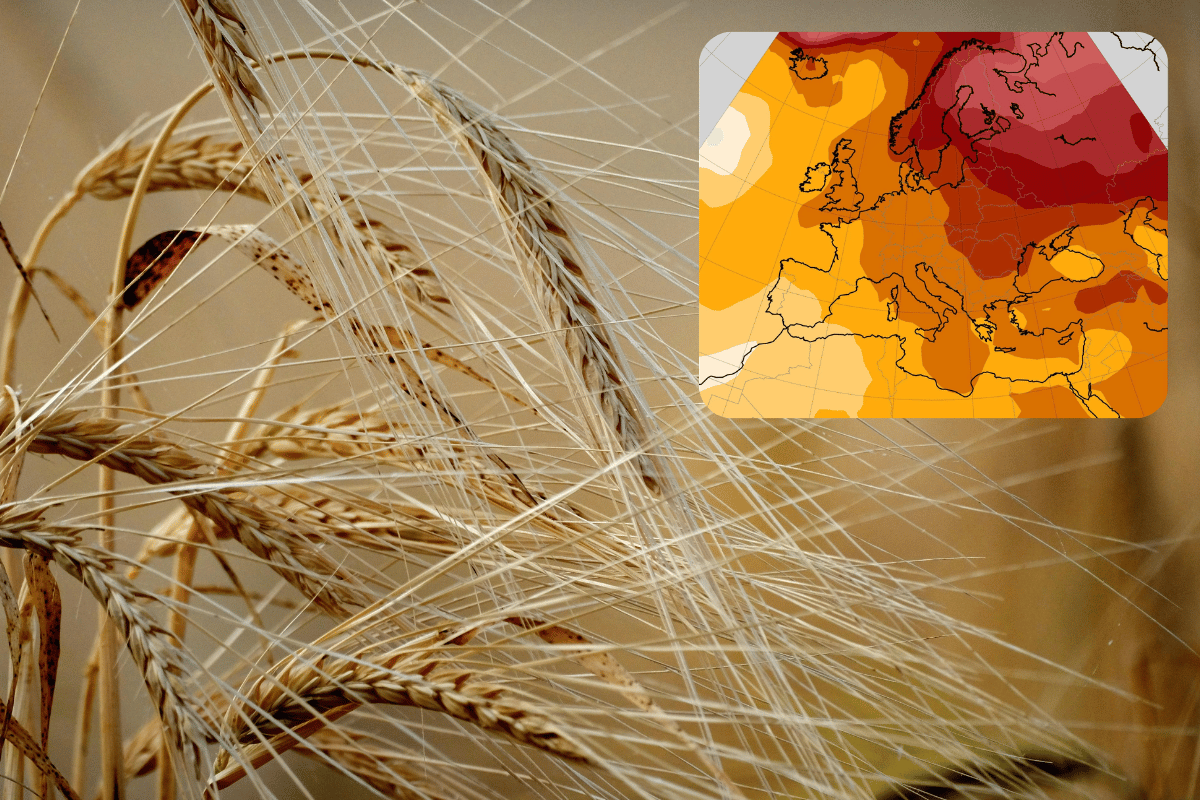
Scroll through this page for an overview of the state of the climate for Europe this month, as well as seasonal outlooks for December 2025 – February 2026. Want to find out more? Explore the in-depth seasonal climate outlook for September Seasonal Climate Outlook for Europe, September 2025 — Climate Strategies (PDF).
State of the Climate – August 2025 Observations
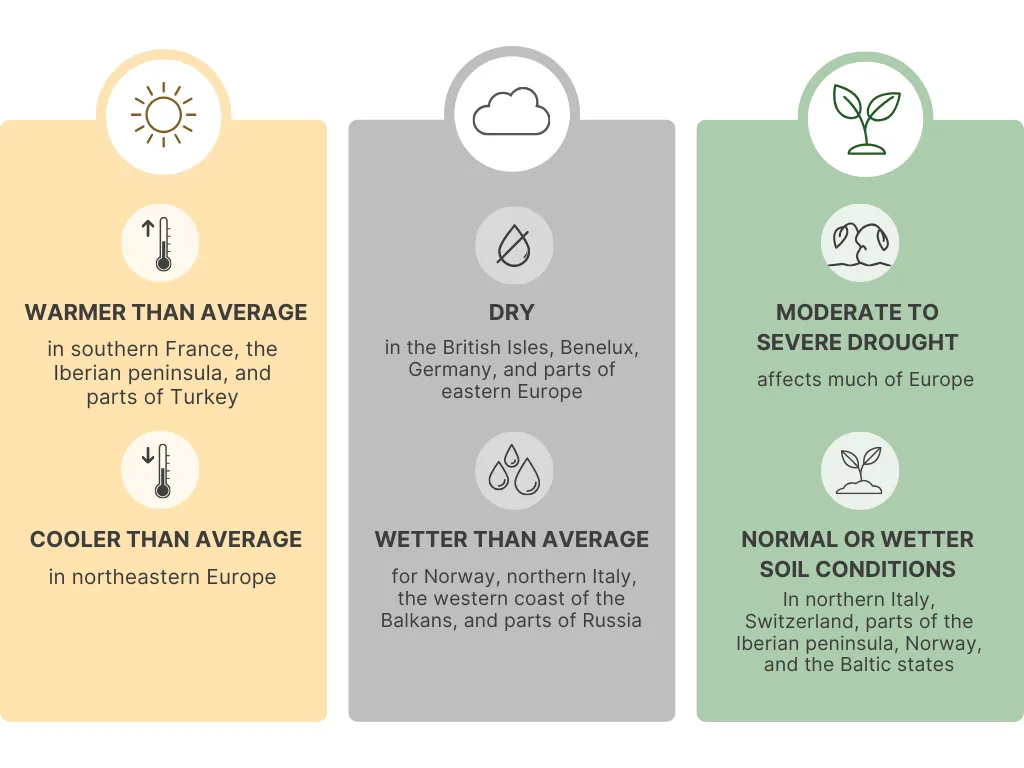
Europe experienced a warmer-than-average August, at 0.30°C above the 1991-2020 mean. Monthly-mean temperatures were significantly above normal in southern France, the Iberian peninsula, and parts of Turkey, while they were below normal in northeastern Europe (Fig. 1).
In terms of precipitation, August was dry for the British Isles, Benelux, Germany, and parts of eastern Europe, while it was wetter than average for Norway, northern Italy, the western coast of the Balkans, and parts of Russia.
A state of moderate to severe drought affects much of Europe based on the September 1st soil moisture conditions. Northern Italy, Switzerland, parts of the Iberian peninsula, Norway, and the Baltic states are, in contrast, in normal or wetter than average conditions. Compared to last month, there is no substantial change in the drought conditions in Europe.
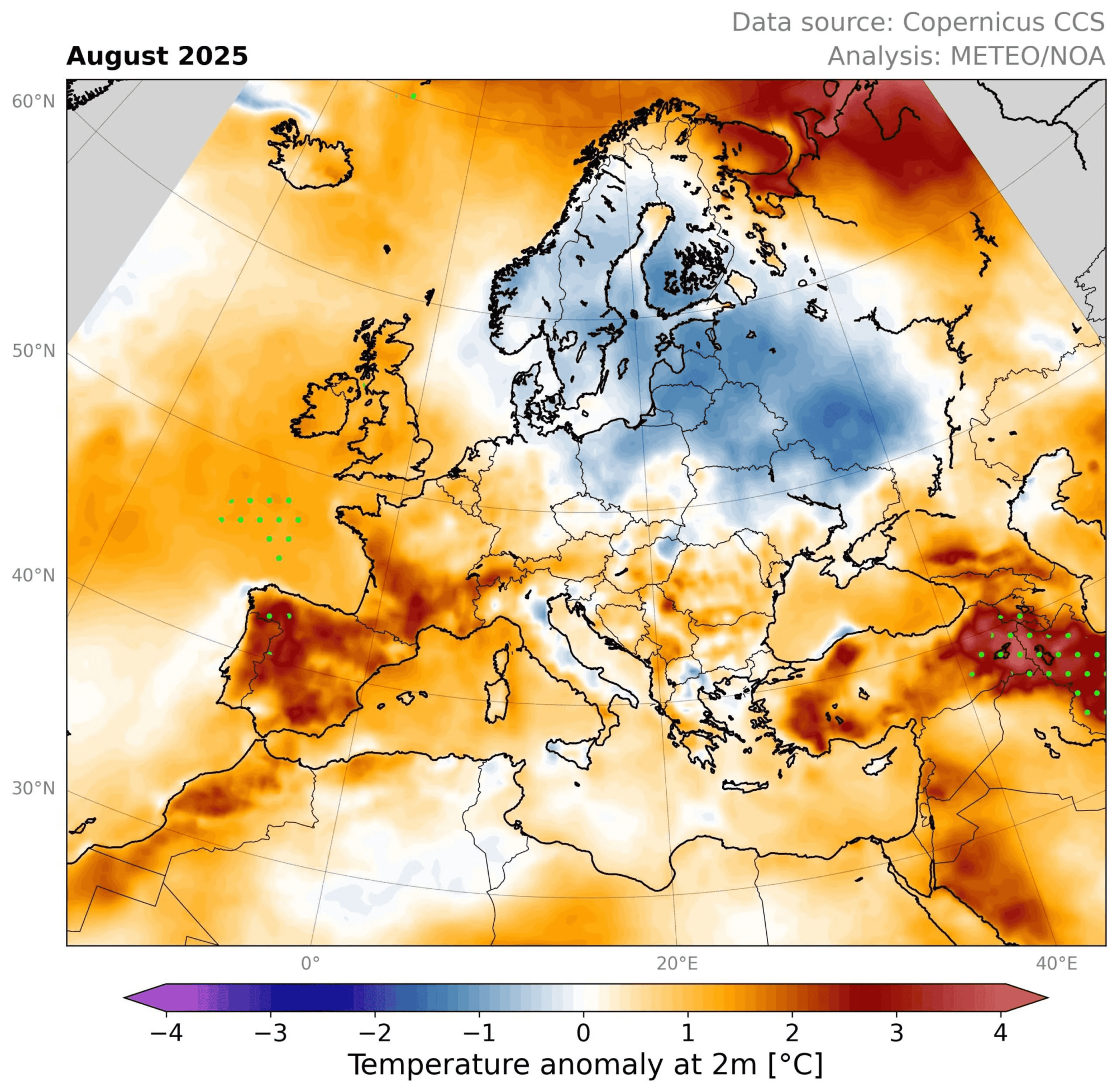
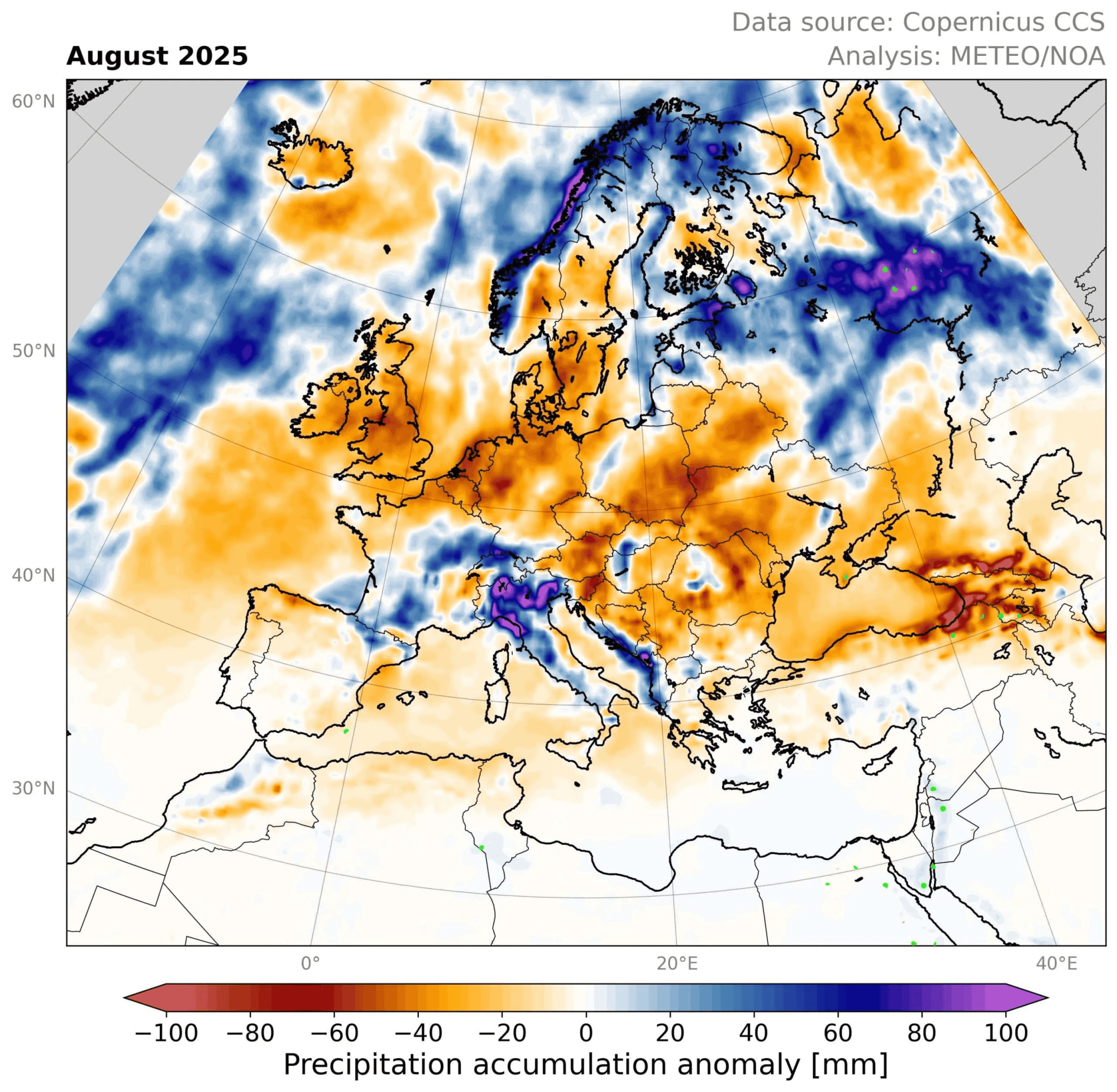
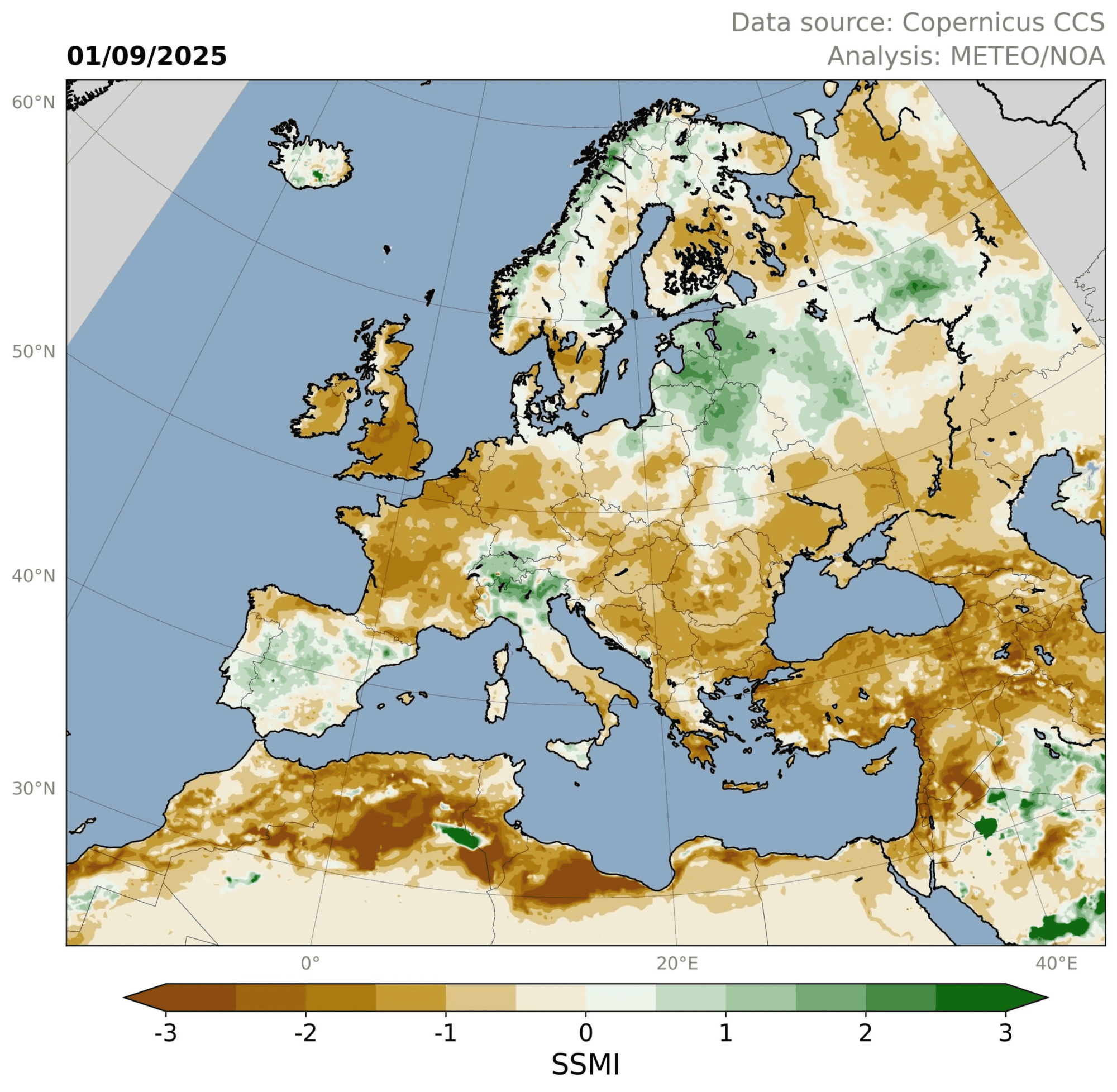
Figure 1. Agrometeorological overview of August 2025 in Europe. Anomalies in temperature at 2m (top) and precipitation accumulation (middle) based on ERA5. Green dots indicate the areas where the observed anomalies were record-high (positive or negative) for July in the period from 1960 to today. (bottom) Standardised anomaly in soil moisture in the 28-100cm layer below the surface based on ERA5-Land. Values below -1, -1.5, -2, and -2.5 indicate “moderately dry”, “significantly dry”, “severely dry”, and “extremely dry” conditions, respectively. Values above +1, +1.5, +2, and +2.5 indicate “moderately wet”, “significantly wet”, “severely wet”, and “extremely wet” conditions. Values between -1 and +1 reflect near-normal conditions. The climatological baseline for the computation of anomalies is the 1991-2020 period.
Seasonal Outlook – Forecasts for December 2025 – February 2026
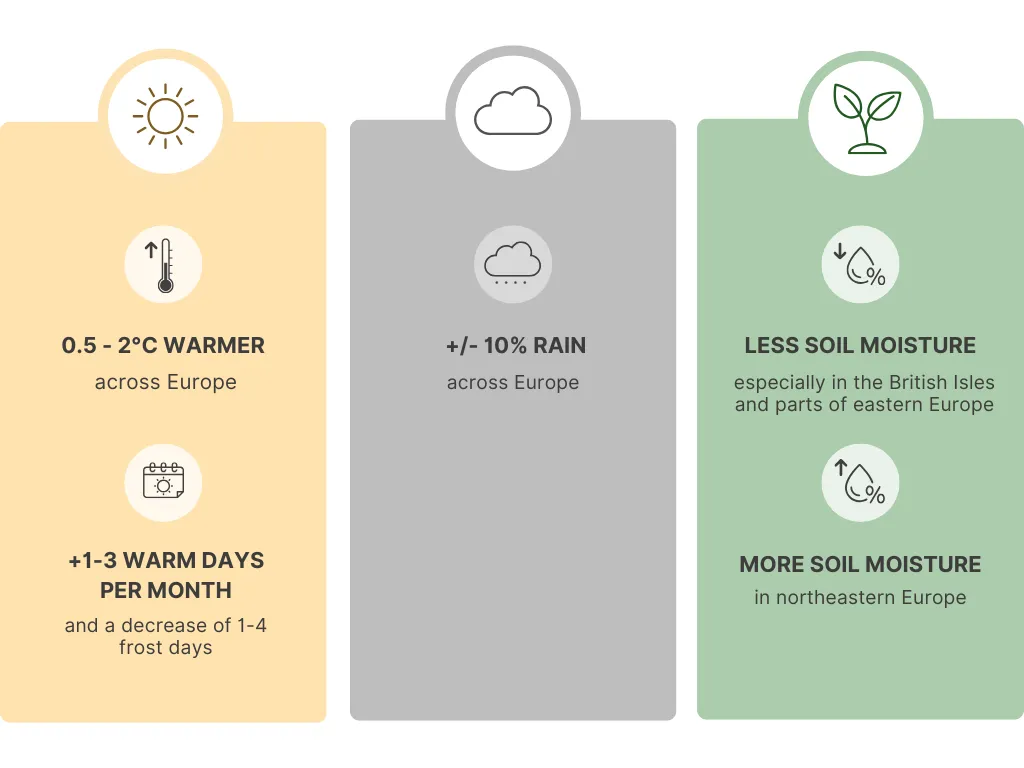
The key points of the seasonal forecasts issued in early September 2025 for the upcoming winter in Europe are summarized below:
- Europe is projected to be warmer than average, with the anomalies increasing gradually from 0.5°C in southwestern Europe to 2°C in northeastern Europe (Fig. 2).
- While the day-to-day weather evolution of the coming months cannot be foreseen, an increase of 1-3 Warm Days and a decrease of 1-4 Frost Days per month are expected throughout Europe.
- In terms of the total precipitation, the mean of all examined scenarios results in a mixed signal for Europe of -10% to +10% anomalies. This is an expected result, as winter weather systems in Europe are highly unpredictable even at shorter timescales (Fig. 2).
- Given the state of the climate and the aforementioned forecasts, negative soil moisture anomalies are projected to persist in the British Isles and parts of eastern Europe, while a further increase in soil moisture is expected for northeastern Europe.
Considering the complexity of the Earth system, seasonal forecasts are characterized by large uncertainty. Daily and local weather conditions may differ significantly from the monthly average conditions in a broader region.

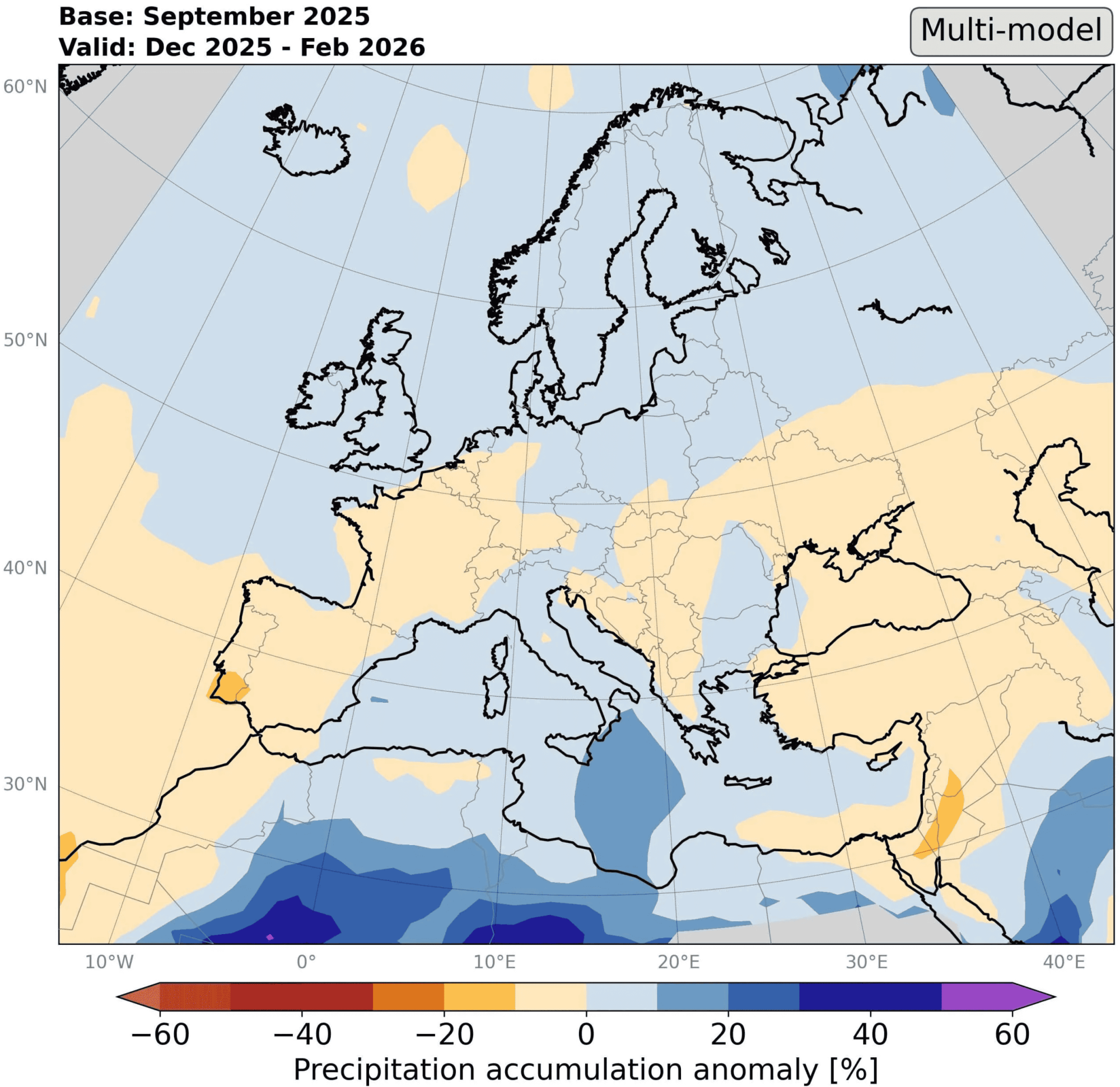
Figure 2. Multi-model mean 2m-temperature (top) and precipitation (bottom) anomaly for the upcoming winter in Europe, based on the seasonal forecasts issued in September 2025.
Agricultural impact assessment: Winter climate outlook 2025-2026
Europe faces a warmer-than-normal winter season with temperatures projected to be 0.5-2°C above average, creating significant implications for agricultural operations across the continent. The upcoming winter period (December 2025 - February 2026) presents unique challenges that will require strategic adaptation from farmers, particularly as current drought conditions persist in many regions while temperature patterns shift dramatically from traditional seasonal norms.
Regional climate patterns and agricultural implications
Northeastern Europe emerges as the region facing the most pronounced temperature increases, with projections showing warming up to 2°C above normal. This substantial temperature anomaly will fundamentally alter traditional winter crop management practices, particularly affecting vernalization requirements for winter cereals. Farmers in these regions should prepare for significantly reduced chilling hours, which may compromise winter wheat and barley development cycles.
Southwestern Europe will experience more moderate warming of approximately 0.5°C above average, yet this region continues to grapple with persistent drought conditions from previous months. The combination of elevated temperatures and ongoing soil moisture deficits creates a compound stress environment that will challenge both winter crop establishment and dormant perennial crop health.
The British Isles and parts of eastern Europe face particularly concerning conditions, as negative soil moisture anomalies are projected to persist throughout winter. This extended drought period, combined with warmer temperatures, will accelerate soil moisture depletion and potentially compromise spring crop planting preparations.
Critical impacts on winter agricultural operations
Winter crop vernalization faces unprecedented disruption with the forecasted decrease of 1-4 frost days per month across Europe. Traditional winter wheat and barley varieties requiring specific chilling periods may experience incomplete vernalization, leading to delayed or irregular flowering patterns in spring. Farmers should consider selecting varieties with reduced vernalization requirements or adjusting planting strategies to optimize available chill accumulation.
Soil management becomes increasingly critical as warmer winter temperatures accelerate soil biological activity while moisture deficits persist. The increase of 1-3 warm days per month will enhance soil microbial activity, potentially depleting soil organic matter reserves faster than normal winter conditions. This accelerated decomposition may initially provide increased nutrient availability but could compromise long-term soil health.
Pest and disease pressure will likely intensify due to extended favorable conditions for pathogen development and insect survival. Warmer winter temperatures traditionally reduce natural pest mortality, allowing higher populations to survive until spring. Farmers must prepare enhanced integrated pest management strategies and consider adjusting prophylactic treatment schedules.
Water resource and irrigation planning
Current moderate to severe drought conditions affecting much of Europe will persist through winter in many regions, creating unprecedented water management challenges. The projected mixed precipitation signals ranging from -10% to +10% anomalies indicate high uncertainty in winter moisture availability, requiring farmers to develop flexible water management strategies.
Northeastern Europe presents a contrasting scenario, with expected further increases in soil moisture. Farmers in these regions should prepare for potential waterlogging issues and adjust drainage systems accordingly. The combination of increased precipitation and reduced frost penetration may create challenging field conditions for spring operations.
Strategic management recommendations
Variety selection becomes paramount for winter crop success. Consider cold-tolerant varieties with flexible vernalization requirements, particularly in northeastern regions experiencing the greatest temperature anomalies. Evaluate varieties with enhanced drought tolerance for regions where soil moisture deficits will persist.
Planting timing adjustments should account for altered temperature patterns. Earlier winter plantings may face prolonged warm periods that disrupt natural dormancy cycles, while later plantings may not accumulate sufficient chill hours. Based on projected temperature patterns, develop region-specific planting windows.
Soil conservation practices require intensification throughout the winter months. Implement cover cropping strategies to protect soil structure during periods of reduced frost penetration. Maintain residue cover to preserve soil moisture in drought-affected regions and prevent erosion during potential thaw-freeze cycles.
Irrigation infrastructure should be evaluated and upgraded where possible. Regions experiencing persistent drought may require expanded irrigation capacity, while areas expecting increased moisture should ensure adequate drainage systems.
Livestock and forage considerations
Extended growing seasons in moisture-adequate regions may benefit forage quality, but drought-stressed areas will continue to experience reduced productivity. To compensate for regional shortfalls, plan supplemental feeding strategies and consider alternative forage sources.
Grazing management requires adjustment for extended growing seasons. Warmer winter temperatures may allow continued grazing in some regions, potentially reducing feed costs, but careful pasture management is required to prevent overuse during traditionally dormant periods.
Preparation for spring operations
The highly unpredictable nature of winter weather systems necessitates flexible planning approaches. Farmers should develop contingency plans addressing both excessive moisture and continued drought scenarios. Equipment maintenance schedules may require adjustment to accommodate potentially extended field work windows.
Monitor soil temperature patterns closely, as reduced frost penetration may affect spring field workability timelines. Traditional spring operation schedules may require significant revision based on actual winter conditions and their impact on soil structure and moisture content.
The upcoming winter represents a departure from traditional European climate patterns, demanding adaptive management approaches that balance immediate operational needs with long-term agricultural sustainability. Success will depend on flexible planning, appropriate variety selection, and proactive resource management strategies tailored to regional climate projections.