The evolving concept of beef efficiency
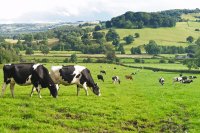
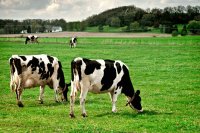
Beef production holds a unique and often debated role in worldwide food systems. On one side, beef cattle transform fibrous, inedible plant material into high-quality protein that plays a significant role in human nutrition, especially in areas where crop production is restricted. Conversely, beef is frequently criticised for its higher greenhouse gas emissions, intensive land use, and resource requirements compared to other livestock systems. This conflict between beef as a fundamental element of rural economies and nutrition, and beef as a contributor to environmental challenges, has become more pronounced in recent years due to the pressures of climate change, discussions on sustainability, and increasing consumer awareness.
The concept of efficiency is central to this debate. Historically, efficiency in beef production has been evaluated using economic and biological criteria, such as feed required for specific weight gain, time to reach slaughter weight, and the proportion of live weight converted into marketable carcass. Although these measures are foundational, they do not fully address the complexity of contemporary beef systems. A more comprehensive framework is necessary, one that incorporates biological performance, environmental impact, animal health, welfare, and system-level resilience.
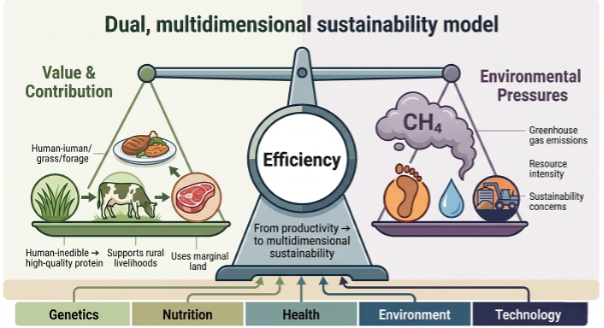
Figure 1. The beef efficiency paradox: cattle systems simultaneously deliver nutritional and socio-economic value while facing increasing environmental scrutiny. Efficiency emerges as the central concept linking these competing dimensions, evolving from a narrow focus on productivity to a multidimensional framework integrating sustainability, animal health, and system resilience.
Redefining efficiency extends beyond theoretical considerations and holds significant practical implications for veterinarians aiming to prevent disease, animal nutritionists balancing productivity with sustainability, farm managers maintaining profitability in volatile markets, and agritech developers creating advanced precision livestock tools. This article examines both traditional and emerging definitions of efficiency in beef production, tracing the shift from narrow feed-to-gain ratios to multidimensional frameworks that incorporate genetics, nutrition, environmental sustainability, and digital innovation.
Traditional measures of efficiency
Historically, beef production has utilised fairly straightforward parameters to quantify efficiency. The primary examples include feed conversion ratio (FCR), average daily gain (ADG), and carcass yield. Feed conversion ratio is the ratio of the quantity of feed necessary to generate one kilogram of live weight gain. This metric has served as the basis for the economic aspect of beef production for many years. Cattle with a lower FCR value can prove highly economical, as they need less input to reach the desired growth levels. Genetic improvement, dietary changes, and efficient management practices have led to consistent improvements in FCR across most beef production operations over the years (Archer et al., 1999).
Carcass performance and quality have brought another dimension into the concept of efficiency. Carcass performance and tenderness determine the profit margin, considering that beef cattle are sold based on their carcass performance rather than live weight. The markets favour those who produce high carcass performance and grades because efficiency should be considered in terms of outputs against inputs.
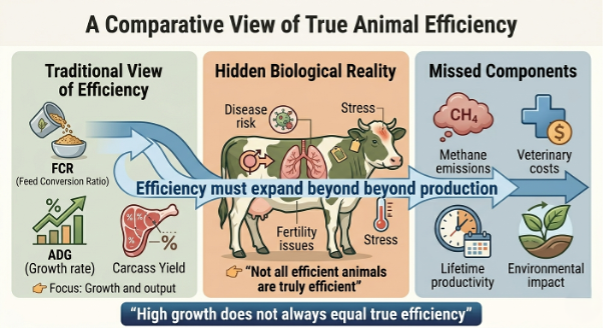
Figure 2. Limitations of traditional efficiency metrics in beef production. While feed conversion ratio, average daily gain, and carcass yield focus on productivity, they fail to capture critical dimensions such as animal health, reproductive performance, environmental impact, and lifetime productivity.
Despite the usefulness of these metrics, there are major drawbacks. They tend to focus solely on production and growth, while overlooking other equally important aspects, including reproduction, resistance to disease, environmental impact, and overall lifetime performance. For example, a highly efficient animal in terms of FCR may turn out to be inefficient because it could be susceptible to respiratory disease and reproduction problems, leading to high treatment costs and decreased herd life. A highly efficient feedlot in terms of average daily gain may also have high levels of methane emissions.
Beyond productivity
Sustainability in beef production has compelled a shift in perspectives concerning cattle husbandry efficiency. Besides kilograms of gain for kilograms of feed, other aspects have come to be included within the concept of efficiency, among them environmental, biological, and societal considerations.
In light of the current climate crisis, environment-based efficiency is one of the most pressing issues. Methane emissions produced by enteric fermentation in ruminants constitute an important greenhouse gas contributor from agricultural production. Thus, methane efficiency evaluates emissions intensity (methane or carbon dioxide equivalence per kilogram of beef). Animals capable of generating a certain weight gain with minimal methane emissions can be regarded as more efficient. Interventions such as supplementation with 3-nitrooxypropanol (3-NOP) or seaweed have shown a decrease in methane emissions while maintaining the same level of productivity (Roque et al., 2021).
3-NOP, marketed as Bovaer, has now received regulatory approval in over 65 countries, including the US, EU, Australia, Brazil, Canada, and the UK. A 2025 meta-analysis confirmed average methane reductions of 22% in beef cattle and 39% in dairy cattle, with reductions up to 82% observed in feedlot cattle on grain-based diets. Denmark has become the first country to mandate methane-reducing feed additives for all dairy farms with over 50 cows, with full cost reimbursement beginning in 2026.
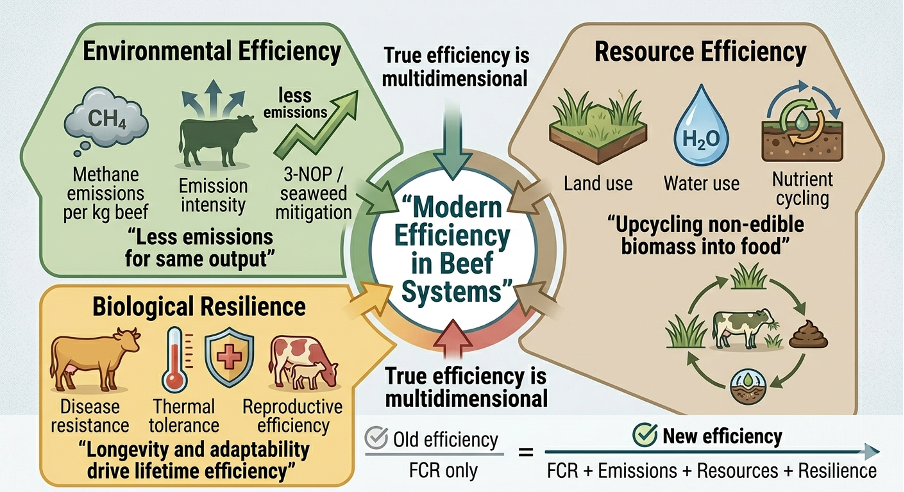
Figure 3. Expansion of efficiency in beef production from a feed-based metric to a multidimensional framework incorporating environmental impact, resource use efficiency, and animal resilience. Modern efficiency integrates methane emissions, circular resource use, and adaptive biological traits.
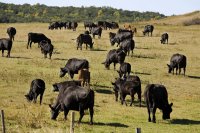
Resource use efficiency goes beyond feeds. Land, water use, and nutrient cycles are necessary components in measuring the overall efficiency of beef production. Grazing cattle on marginal lands, incapable of cultivating crops, convert non-edible biomass into a high-protein product that monogastrics could not manage to do. If efficiency is calculated not only in terms of feed but also with reference to the conversion of non-edible protein sources into human-edible food, the importance of cattle becomes obvious (Mottet et al., 2017). This expanded perspective views cattle as an integral component of circular food systems rather than competitors to humans in grain consumption.
Resilience is another area in which efficiency becomes increasingly critical. Disease tolerance, thermal resistance, and reproductive performance affect cattle's lifetime efficiency. Cattle capable of surviving under difficult conditions and thriving in them increase their efficiency since veterinary assistance is minimised. Efficiency needs to include health performance and adaptive traits (Roche et al., 2018).
The genetic frontier
Genetics and genomics are two of the key tools in shaping efficiency. As compared to older methods which concentrated mainly on growth rate and carcass characteristics, new breeding approaches now consider residual feed intake (RFI), fertility, disease resistance, and methane emissions. RFI is perhaps one of the most efficient tools because it measures the difference in feed intake by the animal as compared to the amount of feed it was expected to eat according to its growth rate and maintenance level. Low RFI implies that the animal consumes less feed as compared to other animals at the same level of performance, and thus it exhibits biological efficiency (Berry & Crowley, 2013).
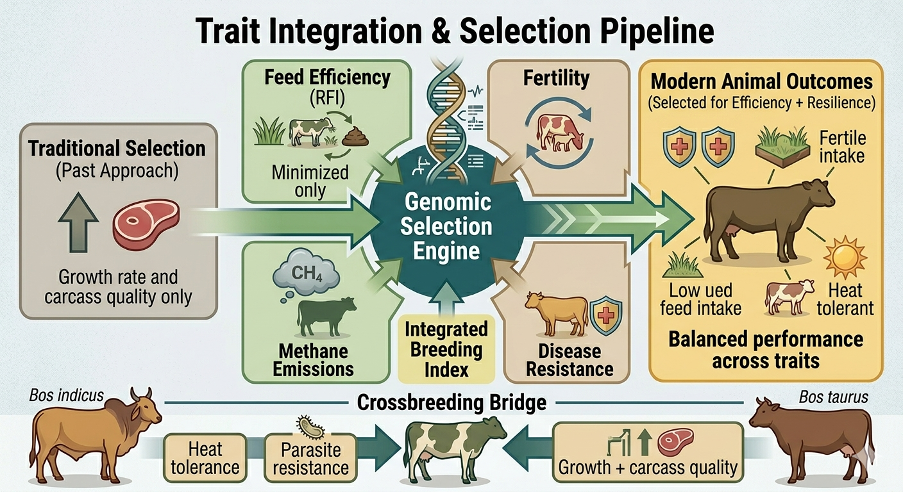
Figure 4. Genetic and genomic approaches to improving efficiency in beef cattle. Modern selection integrates multiple traits, including residual feed intake, fertility, disease resistance, and methane emissions, into genomic selection indices. Crossbreeding strategies further enhance efficiency by combining complementary traits from Bos indicus and Bos taurus breeds, resulting in animals with improved productivity and resilience.
Through genomic selection, it has been easier to predict the lifetime performance of animals before breeding. With the use of high-throughput genotyping, it is possible to combine information from different traits, including feed efficiency, fertility, and disease resistance, to give a multidimensional trait for selection. Many national breeding programmes are already adopting such efficiency indices (Berry & Crowley, 2013).
Crossbreeding can also contribute to efficiency, especially in specific environments. When breeding animals in tropical and sub-tropical areas, Bos indicus breeds are efficient due to their heat tolerance and parasite resistance (Johnston et al., 2013). They can be crossed with Bos taurus breeds known for good growth rates and carcass quality, producing animals that balance productivity and resilience.
Nutrition as a driver of efficiency
Nutrition plays a key role in efficiency on both biological and environmental levels. Precision feeding is among the most promising approaches, providing nutrients required by individual animals or herds with minimal waste. Thanks to automation technologies, near-infrared spectroscopy, and ration-balancing software, it has become easier to formulate diets with minimal nutrient loss and maximum growth. Precision feeding minimises protein and energy overfeeding and thus decreases the excretion of nitrogen and methane.
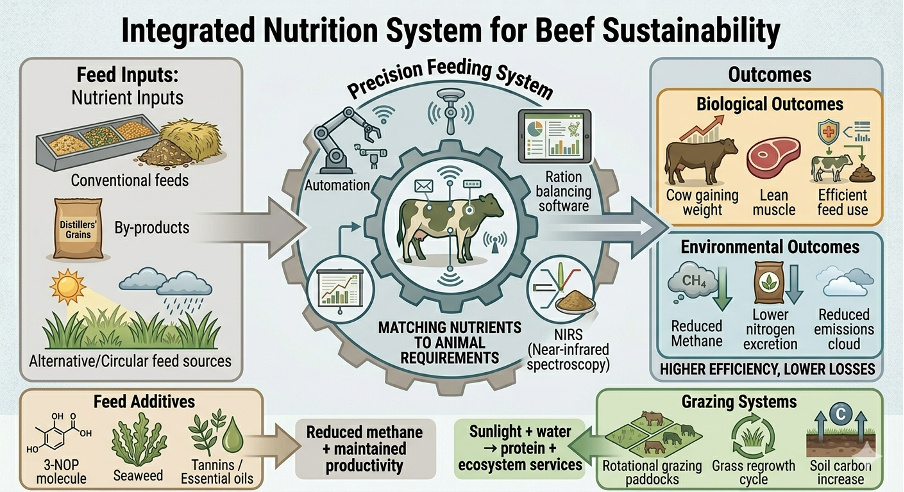
Figure 5. Precision nutrition as a driver of efficiency in beef production. By aligning nutrient supply with animal requirements, precision feeding systems reduce nutrient losses and environmental emissions while maintaining productivity. Feed additives and grazing management further enhance efficiency by improving nutrient utilization, reducing methane emissions, and supporting ecosystem services.
Feed additives can improve nutrition efficiency. Methane production can be minimized using compounds such as 3-NOP, tannins, or essential oils. The use of rumen-protected amino acids and choline increases nutrient uptake. Seaweed (Asparagopsis taxiformis) is a particularly promising option. Researchers have demonstrated that methane can be decreased by over 80% through seaweed supplementation without any effect on animal productivity (Roque et al., 2021), while also improving feed conversion efficiency by as much as 14% in beef cattle. Byproducts from agriculture, such as distillers' grains or food industry leftovers, can also be added to cattle diets to increase efficiency.
Pastures provide an additional opportunity. Grazing management techniques like rotational and adaptive multi-paddock grazing result in more efficient forage intake and increase soil carbon content. If a pasture-based beef system is managed well, it becomes possible to achieve very high resource-use efficiency with the transformation of sunlight and rainwater into protein production and ecosystem services (Teague et al., 2013).
Technology and digital innovation
There are numerous technological tools designed for precision livestock farming that allow for monitoring and managing efficiency effectively. Wearable technology, such as rumination collars and accelerometers, measures animal behaviours, activity, and health status. Automated weighing equipment and milk meters (in cow-calf systems) gather data about animal performance to detect possible inefficiency at an early stage. Computer vision technologies have made tremendous progress in beef cattle operations. Data about body weight, body condition scores, and lameness can be gathered from cameras without any physical handling of cattle. Drones contribute to assessing forage availability, grazing behaviour, and accessibility to water sources.
What makes all of these innovations effective is their integration. Using artificial intelligence and algorithms allows one to combine various aspects related to genetics, nutrition, environment, and health. These technologies help detect not just inefficient animals but also the factors contributing to the situation. An AI system can determine, for instance, that the reason for lower weight gain is not low feed intake but subclinical disease.
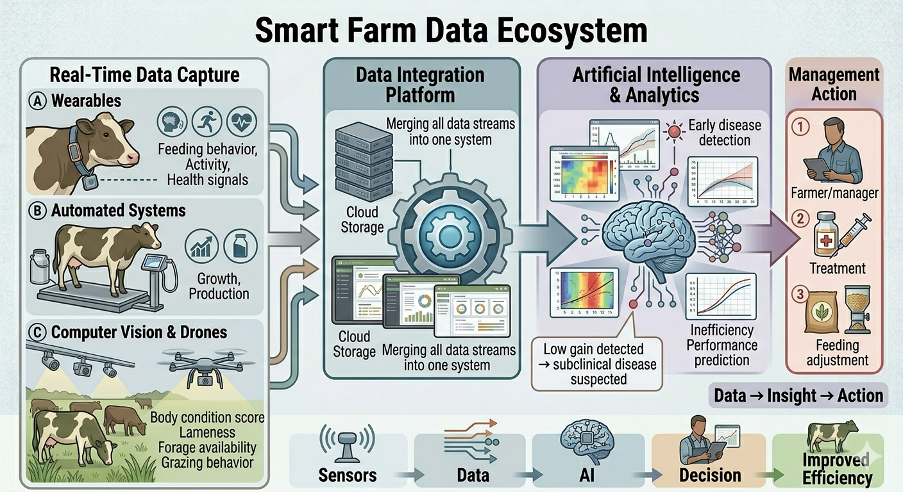
Figure 6. Integration of precision livestock farming technologies for efficiency monitoring in beef systems. Wearable sensors, automated weighing systems, computer vision, and drones generate continuous data streams that are integrated through digital platforms. Artificial intelligence and predictive algorithms transform these data into actionable insights, enabling early detection of inefficiencies and targeted management interventions.
System-level perspectives
The efficiency of beef production cannot be measured solely based on the performance of the animal itself. It must also incorporate the interaction of cattle, feed sources, environment, and markets. Beef cattle have an unmatched ability to graze marginal lands that cannot grow crops, thereby providing an additional protein source without compromising staple grain production. The ability of cattle to up-cycle marginal lands and convert low-quality biomass into valuable proteins is one of the important factors in measuring efficiency (Wilkinson, 2011).
Integrating beef production into agricultural systems can lead to further efficiencies. Grazing cover crops, recycling manure to fertilise fields, and integrating cattle rotations with crop residue create more complete nutrient cycles and improve both efficiency and circularity. In this manner, beef production can deliver more value than what is captured by individual animal performance metrics alone.
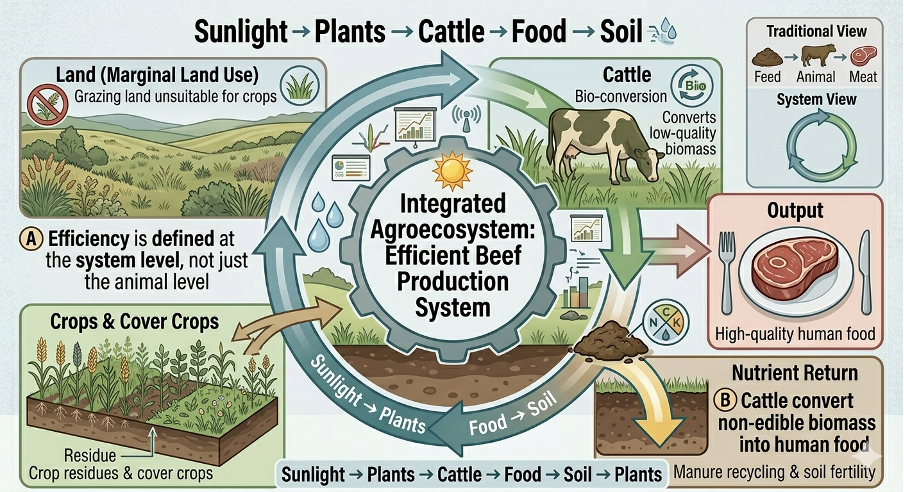
Figure 7. Beef production within circular agricultural systems. Cattle convert low-value biomass from marginal lands into high-quality protein while contributing to nutrient cycling through manure and integration with crop systems. This systems-level perspective highlights the role of beef in enhancing overall agricultural efficiency beyond individual animal performance.
Practical pathways for stakeholders
Farm managers will need to take into account the broader definition of efficiency when making decisions regarding productivity while maintaining resilience and sustainability. They must focus on more than genetics alone, providing optimal housing conditions, grazing environments, and overall health management.
Veterinarians will need to shift their focus from treating diseases to preventing them. An efficient herd is a healthy one, with low occurrences of disease outbreaks, low antibiotic consumption, and lifetime productivity optimisation.
Nutritionists will need to develop diets that maximise both animal performance and environmental benefits. This means exploring methane inhibitors, protein balance that reduces nitrogen loss, and innovative feed materials in line with circular economy principles.
Agritech companies need to ensure their technologies apply to all types of producers, not just large-scale operations.
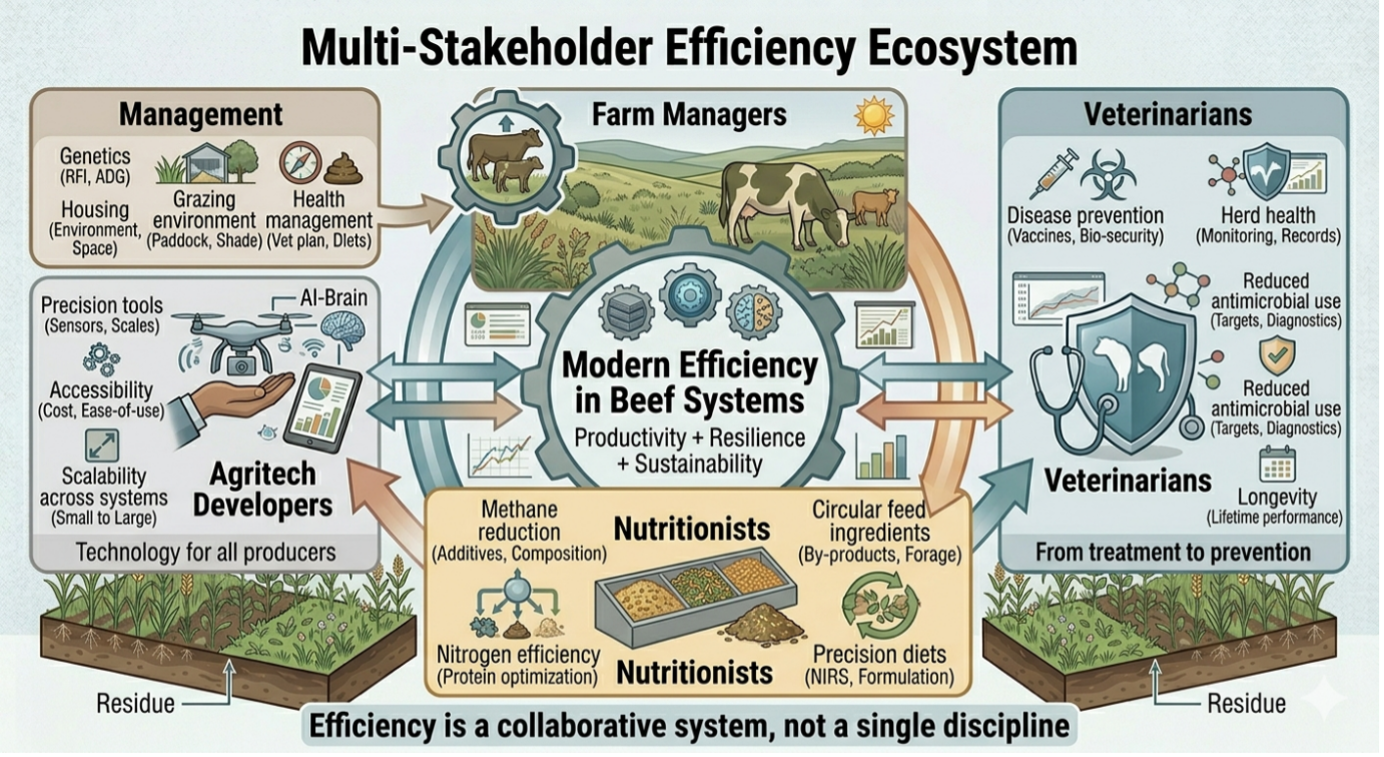
Figure 8. Stakeholder integration in modern beef production systems. Farm managers, veterinarians, nutritionists, and agritech developers each contribute to a broader definition of efficiency that balances productivity, resilience, and sustainability. Effective efficiency requires coordinated action across genetics, health management, nutrition, and technology.
Future outlook and research directions
Any future progress in efficiency cannot focus merely on improving feed conversion or carcass yield ratios. Revising efficiency to reflect resilience and methane measurement needs advances in social indicators. Developing cost-effective technologies to quantify methane emissions at the farm level is crucial since existing techniques remain expensive and unaffordable for most producers. At the same time, breeding schemes need to emphasise heat tolerance, fertility during stressful conditions, and disease resistance traits. This ensures that animals can sustain productivity in changing environments.
It would also be worthwhile to incorporate consumer and societal aspects into efficiency. Not all attributes in efficiency frameworks should favour producers. Efficiency should consider animal welfare, trustworthiness of the meat producer, and the role of beef farming in supporting rural livelihoods. Extending efficiency definitions to incorporate social dimensions would make beef production more responsive to shifting societal priorities.
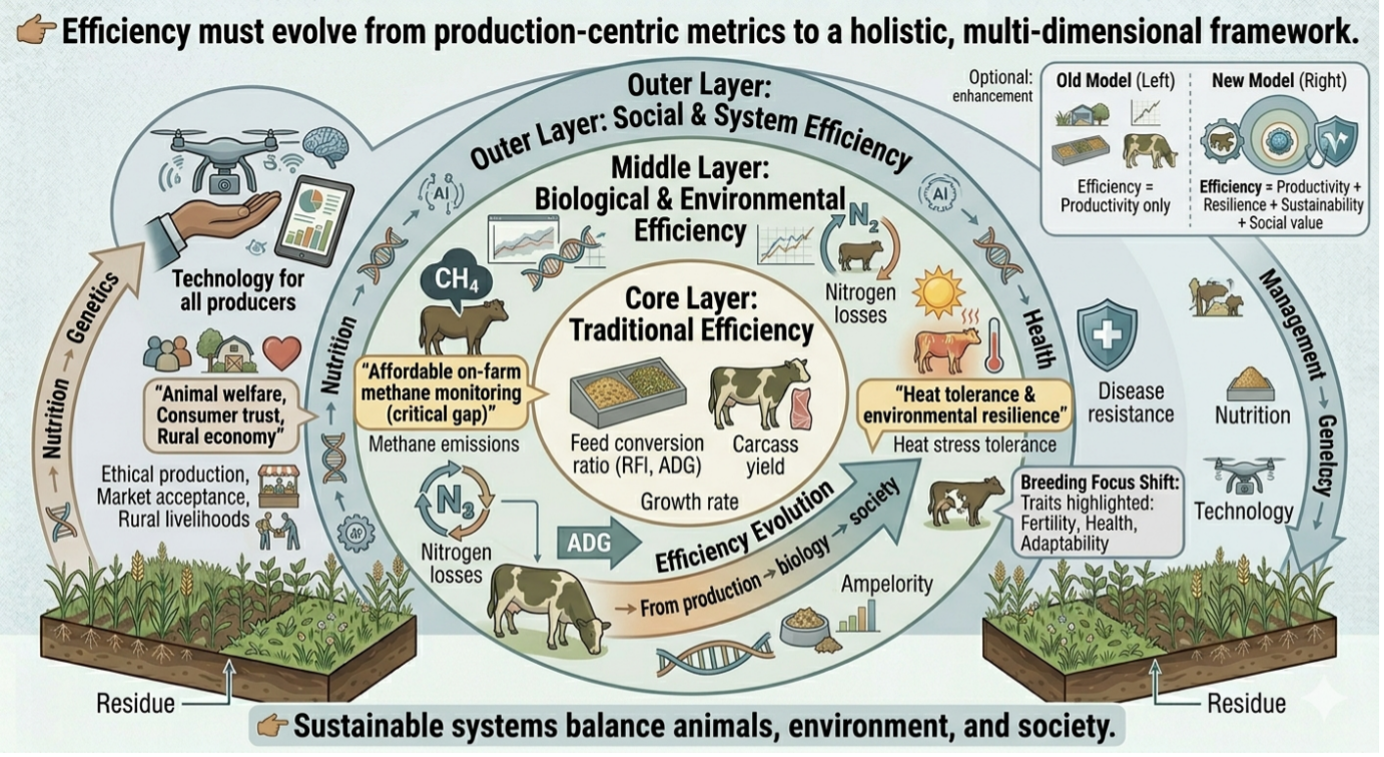
Figure 9. Evolution of efficiency in beef production systems. Traditional efficiency metrics focused on productivity alone are expanded to include biological resilience, environmental sustainability, and social dimensions such as animal welfare, consumer trust, and rural livelihoods. This multi-layered framework reflects the need for more holistic and future-oriented efficiency definitions.
Conclusion
Efficiency in beef production has evolved. While parameters like feed conversion ratio and carcass yield continue to be important, they do not encompass all characteristics required in producing sustainable beef. Efficiency must now reflect the environmental footprint, resource utilisation, animal health, resilience, and integration within circular food systems. Through genetic improvement, nutrition, and precision agriculture, beef production can realise efficiency improvements that extend beyond productivity alone. From a veterinary, nutritional, farm management, and agritech perspective, there is a clear opportunity to enhance biological performance through revised efficiency concepts. The future challenge in beef production is no longer about whether the sector is inefficient. Rather, it lies in refining what efficiency means as societal demands per kilogram produced continue to grow.
References
- World Resources Institute. (2025). Cutting cattle methane through feed additives: Lessons from early adoption and the road ahead.
- The Bullvine. (2025). Stop chasing feed fixes: Why genetic methane solutions deliver 30% greater ROI than additives.
- Archer, J. A., Reverter, A., Herd, R. M., Johnston, D. J., & Arthur, P. (2002). Genetic variation in feed intake and efficiency of mature beef cows. In Proceedings of the 7th WCGALP (Vol. 31, pp. 221–224). Montpellier, France.
- Berry, D. P., & Crowley, J. J. (2013). Cell biology symposium: Genetics of feed efficiency in dairy and beef cattle. Journal of Animal Science, 91(4), 1594–1613.
- Johnston, D. J., et al. (2013). Genetics of early and lifetime annual reproductive performance in cows of two tropical beef genotypes. Animal Production Science, 54(1), 1–15.
- Mottet, A., et al. (2017). Livestock: On our plates or eating at our table? Global Food Security, 14, 1–8.
- Roche, J. R., et al. (2018). Assessing and managing body condition score for sustainable dairy cow production. Journal of Dairy Science, 101(6), 5644–5663.
- Roque, B. M., et al. (2021). Red seaweed (Asparagopsis taxiformis) supplementation reduces enteric methane by over 80% in beef steers. PLOS One, 16(3), e0247820.
- Teague, W. R., et al. (2013). Grazing management impacts on vegetation, soil biota and soil properties in tall grass prairie. Agriculture, Ecosystems & Environment, 193, 62–69.
- Tedeschi, L. O., & Boin, C. (2025). Principles of precision feed evaluation and diet formulation for ruminants. Animal Nutrition, 236.
- Wilkinson, J. M. (2011). Re-defining efficiency of feed use by livestock. Animal, 5(7), 1014–1022.