As society demands food systems that are both extremely productive and environmentally sustainable, the dairy business faces unprecedented challenges. Also, the concept of "efficiency" in the dairy sector has historically focused on increasing milk yield per unit of feed. For many years, the quantity of milk produced, or kilograms of feed consumed by the animal, has been the only way to measure the efficiency of dairy cows. Even though the feed conversion ratio (FCR) is still a crucial metric, new scientific discoveries have led to a more comprehensive and nuanced definition.
However, an integrative, science-based viewpoint is quickly replacing this conventional understanding; This new perspective integrates animal, genetics, and welfare, reproductive outcomes, microbial ecology, methane mitigation, economic sustainability, and even environmental design into the framework of dairy cow efficiency (Richardson et al., 2024). The definition of "efficient" in a dairy system has also changed due to advancements in animal care, digital monitoring, nutritional research, and genomics. This article explores the development of dairy cow efficiency, from its historical roots to the state-of-the-art studies and inventions shaping the sector's future. This piece further
explores how state-of-the-art research is changing the perception of what it means for a dairy cow to be "efficient," and identifies the complex parameters behind this change.

Figure 1. From Output to Outcome, The New Face of Dairy Efficiency: Dairy efficiency is no longer just about yield; rather, it’s about genetics, welfare, environment, economics, and the cow’s lifelong performance.
The traditional paradigm: Milk output and feed conversion
Traditionally, output metrics, the amount of milk produced per cow and the ratio of milk production to feed intake (i.e., feed conversion efficiency), have been exclusively used to quantify dairy cows' efficiency (Cole et al., 2021). Decisions were made based solely on productivity in this traditional approach, which treated the cow as a "biological machine" that turns grain into milk (Culbertson et al., 2025). This simple strategy looked rational in a time when the main goal of genetics and management in dairy production was to maximise yield while lowering feed cost.
However, over time, serious concerns were observed in this conventional paradigm. Although this strategy worked well in the early stages of agricultural industrialisation, it ignored other important factors, including sustainability, environmental impact, animal health, nutritional absorption, and metabolic balance. Additionally, only focusing on productivity leads to unintended consequences, such as a decrease in cows' longevity, a rise in metabolic and reproductive diseases, and neglect of welfare and adaptive features (Richardson et al., 2024; Bengtsson et al., 2022).
Furthermore, the notion that higher productivity is necessarily more sustainable was challenged by the fact that high-yield cows pose greater environmental costs per animal (Krauß et al., 2015). Accordingly, the high-yielding cows may still be metabolically inefficient or environmentally harmful (Kebreab et al., 2025). Last but not least, as consumer and regulatory priorities change, producing the most milk is not necessarily the best approach to achieve both sustainability and profitability (Moraes et al., 2017).
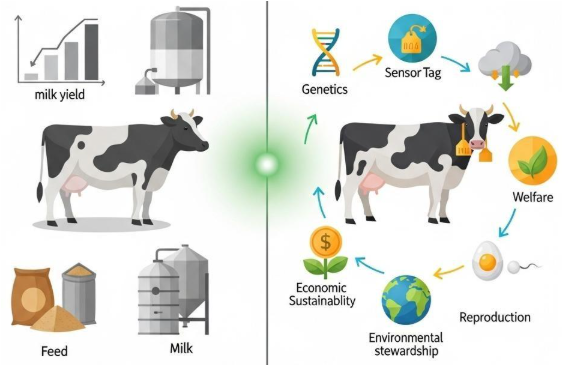
Figure 2: Why More Milk Isn’t Always Better: Traditional vs modern concept of dairy efficiency.
Toward a multifactorial definition of efficiency
As a result of growing knowledge regarding those concerns, scholars and industry leaders have promoted a multifaceted approach to efficiency. Modern efficiency integrates animal health, reproduction, welfare, productivity, feed and nutrient use, environmental effects, and economic results rather than focusing on only one aspect of dairy systems (Monllor et al., 2020; Vullo et al., 2021). Nowadays, a cow or system is considered efficient if it generates large yields while using resources optimally, maintaining good animal health, causing little harm to the environment, and being profitable. This change is a result of both scientific discoveries and the understanding that dairy systems need to be robust and accountable contributors to global food security.
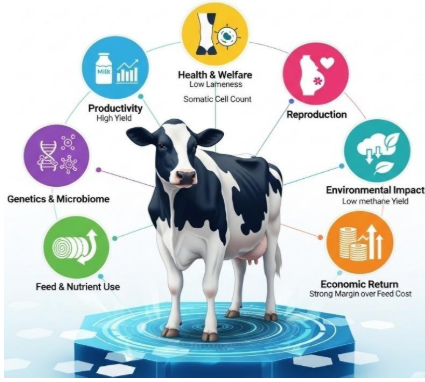
Figure 3: The Modern Dairy Cow, A Multifactorial Model of Efficiency: True efficiency isn’t about producing more milk at any cost, it’s about doing it better, with healthier cows, fewer inputs, lower emissions, and stronger long-term profitability
In addition to milk production, the redefined concept of efficiency in dairy cows has been extended to include a broader variety of performance measures that show a cow's ability to use resources, maintain her health, and contribute to environmental sustainability. Important elements contributing to this more expansive definition are as follows:
Advances in cow genetics: Beyond yield
The development of animal genetics and genomics has resulted in one of the biggest shifts in dairy efficiency. In addition to high yield, modern genetic selection methods now aim at characteristics including feed efficiency, fertility, disease resistance, and general robustness. For instance, residual feed intake (RFI) calculates a cow's feed requirements after her maintenance and milk production needs. Cows with lower RFI can produce the same amount of milk using less feed, which lowers expenses and the impact on the environment (Richardson). As a result, genetic advancements in feed efficiency, health, and adaptability have been significantly accelerated.
Instead of waiting for years of performance data, now breeders can predict an animal's genetic value for complex traits early in life (Moraes et al., 2017). Breeding for longevity and disease resistance at the same time guarantees both longer lifespans and lower culling rates (Zhang et al., 2021). Moreover, breeders can, however, now identify and select for complex traits such as resilience, feed efficiency, and methane emissions using modern genomic methods (Martins et al., 2025). Due to these advancements, future dairy herds, in addition to being more productive, will be more efficient in terms of energy use, health management, and environmental impact.
The rumen microbiome and biological efficiency
The rumen of a cow is a fermentation chamber and home to an extremely diverse ecosystem of bacteria, fungi, protozoa, and viruses. According to recent studies, a dairy cow's efficiency is influenced by both the cow itself and the vast community of microbes that live in the rumen. Otherwise, indigestible plant fibres are transformed into readily available energy and nutrients by the rumen microbiome, and differences in the composition of the microbiome can result in significant variations in methane production and feed efficiency (Monteiro et al., 2024).
According to cutting-edge research using artificial intelligence and sophisticated DNA sequencing (Monteiro et al., 2024), certain microbial communities have been linked to reduced greenhouse gas emissions and increased feed conversion rates. This research opens new opportunities for increasing biological efficiency, not only through breeding, but also through management strategies to optimise or select for advantageous rumen microbial profiles.
Although microbial roles have been thoroughly explored, the rumen virome is another unexpectedly significant contributor to feed efficiency (Liu et al., 2025). Researchers found more than 6,900 distinct viral operational taxonomic units (vOTUs); several of these had auxiliary metabolic genes (AMGs) that affect fermentation pathways. Viral populations actively alter microbial communities through processes such as lysis and metabolic gene exchange. According to Liu et al. (2025), these results reframe the rumen as a virus-influenced dynamic ecosystem. The impact of these viruses on efficiency is demonstrated by two main pathways:
- Lytic Viral Action: Certain viruses specifically target and eliminate beneficial microbes (e.g., Ruminococcaceae) that are necessary for the breakdown of fibre and the production of volatile fatty acids.
- AMG-Driven Enhancement: Genes like GT2 are carried by other viruses and improve the metabolic processes of microbial hosts such as Lachnospiraceae.
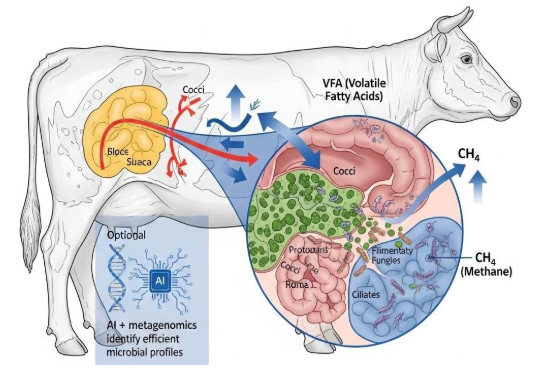
Figure 4: The Hidden Engine, How Microbes Drive Dairy Efficiency: Biological efficiency is more than skin deep. The rumen microbiome plays a key role in converting feed into energy and influencing emissions. Cutting-edge DNA and AI tools are helping farmers and scientists uncover the microbial profiles of high-efficiency cows.
Precision nutrition and nutrigenomics
Precision and customised formulations are currently at the forefront of advancements in dairy cow nutrition. Precision feeding is formulating meals that are tailored to an individual cow's unique genetic potential, physiological state, and production goals. This method reduces waste and nutrient excretion while increasing productivity (Bionaz et al., 2014). For example, the transition period right after calving is a particularly crucial time. Making the right feed choices at this time will help promote quick recovery, avoid expensive metabolic problems, and maintain high milk supply throughout lactation (Bionaz et al., 2014).
Nutrigenomics, the study of how feed ingredients affect gene expression, has emerged as a crucial tool. A novel approach to increasing the resilience and productivity of cows is adjusting nutrition to alter the activity of genes involved in immunity, metabolism, and production (Bionaz et al., 2014). Technological advancements such as slow-release urea and rumen- protected amino acids help to further optimise the nutrient supply, lower feed costs, and lessen the impact on the environment (Grossi et al., 2021).
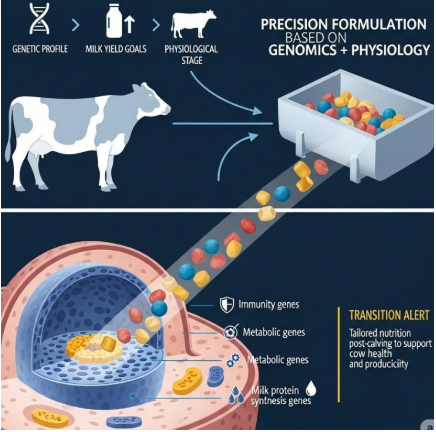
Figure 5: Feeding the Genome, Precision Nutrition in Action: Precision nutrition aligns diet with genetic and physiological profiles, while nutrigenomics reveals how nutrients influence gene expression, unlocking a new frontier of resilience, productivity, and sustainability in dairy herds.
Health, welfare, and reproductive success
Efficient dairy production depends on optimal health and well-being. Subclinical conditions (e.g., mastitis and lameness) often go undiagnosed, but they can significantly lower milk production, impair reproductive function, and decrease productive lifespans (Winder et al., 2019; Booth et al., 2004). Mastitis raises somatic cell count, which lowers milk supply and market value while increasing treatment cost and culling. Lameness reduces feed intake and oestrous signs, which reduces productivity. These disease incidences and related economic losses have decreased as a result of technological advancements in automated health monitoring, better housing conditions, and evidence-based treatment regimens (Winder et al., 2019).
Another essential element of efficiency is fertility and reproductive efficiency. Synchronised breeding programs backed by genetics and health monitoring benefit productive cows by improving conception rates, fewer open days, and longer lifespans (Cardoso et al., 2021). Efficient reproduction ensures that a larger proportion of the herd is actively providing milk, further improving resource use and financial results.
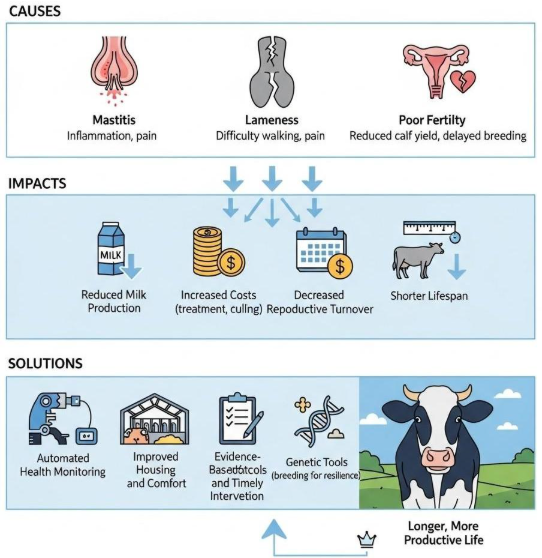
Figure 6: Invisible Losses, Visible Gains: Health, Welfare & Reproduction in Efficient Dairies.” Invisible health issues like subclinical mastitis and lameness silently reduce efficiency. Technology, better housing, and precision breeding improve welfare and boost reproductive and economic outcomes.
Environmental efficiency: Lowering the dairy footprint
One of the main concerns within ruminant agriculture is methane emissions. Although methane production has traditionally been seen as an environmental issue, it also results in an energetic loss for the cow; up to 12% of dietary energy may be lost as methane. Environmental effects and efficiency are closely related in today's dairy industry. Optimising resource utilisation and reducing greenhouse gas emissions and nutrient waste have become crucial as public and regulatory scrutiny has intensified (Krauß et al., 2022). In addition to saving money, feed and nutrient efficiency directly reduces methane emissions per kilogram of milk produced. Effective dairy systems today depend on precision feeding, better manure management, and farm nutrient recycling (Grossi et al., 2021). According to research, farmers can maintain or boost yields while lowering the environmental impact per unit of milk by concentrating on feed conversion efficiency (Richardson et al., 2024).
It has been demonstrated that alterations in feed composition, for example, increasing dietary starch levels, increase milk yield while decreasing methane yield per unit of milk (Culbertson et al., 2025). In addition, according to a thorough meta-regression of 21 research studies, supplementing with 3-nitrooxypropanol (3-NOP) can lower methane emissions while increasing feed efficiency (Martins et al., 2025). California's methane reduction program, a practical initiative by which feed additives, infrastructure modifications, and policy can dramatically lower methane emissions from the dairy industry (Kebreab et al., 2025).
The physical surroundings of the cow, especially the infrastructure for feeding, are a commonly overlooked component of the efficiency equation. In order to decrease microbial contamination and enhance cow comfort, a study looked at the effects of feed tables covered with polymers (Galo et al., 2003). The relationship between behaviour, stress, and production efficiency is further evidenced by advancements in behavioural monitoring, which has been made possible by AI and precise sensors (Zong et al., 2025).
Digital transformation and smart dairy management
Dairy management has been transformed by digital technologies and data analytics, which have made possible the previously unimaginable levels of precision in dairy systems. Real-time data
on cow movement, rumination, feed intake, milk production, and health parameters are continuously available through sensor-based systems and computer vision (Vullo et al., 2021). Those data platforms provide actionable insights for genetic selection, disease detection, heat abatement, and feeding by integrating the data across herds. Real-time data is driving efficiency towards high standards. The way farms track and enhance cow performance is being revolutionised by technologies such as automated milking systems, behaviour recognition systems, and Internet of Things (IoT) platforms (Zong et al., 2025; Shamsuddoha & Nasir, 2025).
These tools provide a data-driven redefinition of efficiency that is based on individual cows' performance under various conditions rather than averages. Moreover, the automated milking and feeding systems maximise efficiency while promoting the comfort and welfare of the animals through individual care and nutrition adjustments. Additionally, digitisation of the dairy system supports increased transparency, traceability, and consumer trust, all of which are becoming more and more crucial in international marketplaces (Vullo et al., 2021).

Figure 7: The Smart Dairy, Data-Driven and Cow-Centred: From wearable sensors to cloud platforms, smart dairy systems turn real-time data into actionable decisions, supporting efficiency, animal welfare, and transparency in the global marketplace.
Integrating metrics: Building a comprehensive efficiency index
The efficiency of a cow, herd, or farm is measured by its capacity to produce high-quality milk with the least amount of resource input, healthy animals, a little environmental impact, and significant financial returns. In light of the fact that efficiency is multifaceted, modern science is moving towards comprehensive indices. These frameworks include economics, longevity, disease incidence, productivity, feed and nutrient usage, reproductive success, and environmental impact (Monllor et al., 2020; Cardoso et al., 2021). In progressive dairy regions, these holistic indices are being developed and put into use to direct stakeholder communication, improvement plans, and benchmarking.
Table: A new efficiency framework should include these indices to reflect the multifactorial nature of modern dairy systems.
|
Metric |
Traditional Definition |
Redefined Scope |
|
Milk Yield |
Litres/cow/day |
ECM per kg DMI, adjusted for fat/protein content |
|
Feed Efficiency |
Milk per kg of feed |
Incorporates RFI, methane emissions, microbial health |
|
Environmental Efficiency |
Not measured |
Methane/L of milk, water use, carbon footprint |
|
Behavioral Efficiency |
Rarely tracked |
Feeding time, lying time, stress behaviour |
|
Infrastructure |
Fixed variable |
Evaluated for microbial load, impact on intake |
Future Perspectives: Efficiency Through Adaptation and Resilience
Efficiency goals will continue to be shaped by cultural shifts, market instability, and climate change. Future efficient dairy cows and systems must be resilient to the changing environment and sustain productivity under heat stress, disease pressure, and fluctuating feed availability (Bengtsson et al., 2022). Functional qualities, including heat tolerance, immunocompetence, and adaptability, must become more and more important in breeding and management strategies. According to Richardson et al. (2024), these priorities complement continuous initiatives to match dairy efficiency with more general societal values, such as environmental responsibility and animal welfare.
Conclusion
The dairy industry plays a crucial role in ensuring a sustainable food future by adopting this multidimensional strategy and utilising state-of-the-art science and technology. Dairy cow efficiency has developed into a comprehensive, thoroughly scientific paradigm. Genetics, nutrition, health, reproductive control, digitisation, and environmental sustainability are now all intertwined. In addition to increasing output and profitability, this comprehensive approach addresses the need for ecological and moral stewardship in the food production process. Redefining efficiency in dairy cows also involves moving away from linear, output-focused paradigms and towards systems-based thinking. Efficiency involves more than just increasing milk production; it also involves utilising fewer resources, sustainably producing milk, and preserving the health and welfare of cows. It incorporates:
- Biological efficiency based on virome and microbiome (Liu et al., 2025).
- Environmental responsibility through mitigation of methane (Martins et al., 2025; Culbertson et al., 2025; Kebreab et al., 2025).
- Facilities that facilitate stress-free hygienic feeding (Galo et al., 2003)
- Genomic selection to produce animals with robust metabolic efficiency and high resilience.
- Individualised management using precision technologies (Zong et al., 2025; Shamsuddoha & Nasir, 2025).
This multifaceted model of efficiency offers a strong, scalable framework for sustainable growth of dairy science into this new era.