Cows speak, are you listening?
In an era where dairy operations are increasingly becoming more complex. Among the technological innovations helping farmers to improve dairy production efficiency, the cow, the main machinery of the farm, is still the best indicator of productivity. The health, comfort, and productivity of cows are all communicated through their posture, behavior, and appearance, which are visible from a distance. This is a useful concept backed by science; behavioral signs are one of the most reliable early indicators of animal disease or distress (Chapinal et al. 2011). The best approach lies in learning to observe these signals and act to address specific behavioral needs.
From looking to seeing: Developing observational intelligence
Scientific articles also support the significance of animal behavior observation. For example, DeVries et al. (2009) showed that Changes in feeding behaviour were observed before the disease event, while a study by Chapinal & (2011) illustrated that gait and activity changes can indicate lameness before the appearance of clinical signs. Therefore, farmers must switch from just looking passively at the animal to actively seeing the animal. This approach is further based on three fundamental questions: What do you see? Why did this happen? What does it mean? This structured observation method allows us to detect the early signs of health and welfare issues. Moreover, the observation approach should be focused and open-minded. The Focused observation style targets known areas of risk, such as lameness or heat stress, and open-mindedness in observation aids in overcoming "farm blindness," a propensity to ignore chronic issues due to them being seen every day.
Behavior as a diagnostic tool
The behaviour of cows is never random, it is typically governed by one of the three drivers: biological requirements (e.g. hunger or rest), a response towards environmental stimuli (e.g. fear or noise) or a physiological condition (pain or hormonal changes). For instance, if a cow is not lying down and frequently spends more time standing, it could potentially be due to hard bedding/ground or inflamed joints. For example, Cook and Norrland (2009) emphasized that major factors impacting cow comfort and claw health could be housing conditions (e.g., stall design and flooring).
Grant (2007) has shown that cows that were offered the optimal lying surface exhibited longer lying behaviour (increased lying time) and higher milk yield. Similarly, a cow not eating well may be suffering from social stress due to herd hierarchy or an overcrowded feed bunker. If some heifers stand at the bunker instead of eating, it could be due to an issue with the social dynamics in the group or the ration formulation.

Cow signals: Unlocking the hidden language of dairy cattle for health and productivity
A Structured approach: From herd to individual
Observation is most effective when proceeding from general to specific. It is best, to begin with the overall herd: for example, is there uniformity in body condition, health, and overall herd behavior? Do most cows lie in cubicles or just randomly stand around? A healthy herd usually presents a set of synchronized behaviors (e.g., ruminating while lying down) that further indicate physical comfort and social stability in the herd.
The next focus should be specific subsets/groups in the herd, including heifers, fresh cows, and those with higher productivity. These groups are also important because they usually respond first to nutritional or environmental challenges; therefore, they are commonly called "risk groups". Lastly, the individual cows should be observed for abnormal gait, dirty hocks, and a poor rumen fill. Each additional level of observation adds value towards a higher level of understanding of herd health, welfare, and productivity status (LeBlanc et al.2006).
The importance of risk groups and indicator animals
Not all cows take stress equally, and not every animal responds the same to stressors. Certain cohorts (e.g., fresh calvers, high producers, and first-lactation heifers) are more sensitive and easily influenced by an imbalance in management or environment. Therefore, these cows serve as "indicator cows," warning through early signs about a large systemic problem before it appears in the whole herd.
Consider this preventive approach similar to what you would see in preventive veterinary medicine, which targets a risk-based approach. LeBlanc et al. (2006) stated that high-risk groups are the best reproductive and metabolic indicators to direct herd-level interventions. Farmers can prevent the spread of trouble by regularly watching the most vulnerable cows from day one.
Young stock and transition cows: The future of the herd
It is also important to monitor calves, heifers, and dry cows. These are usually overlooked groups, but they define the longevity and productivity of a herd for the future. Calves should be observed for dehydration, illness, and social stress signs. To get into the milking herd, heifers need adequate space, quality forage, and peaceful handling. The transition period in dairy cows is particularly important. Assessment of body condition, feed intake, and signs of calving readiness, such as ligament relaxation and vulva swelling, decreases the incidence of retained placenta, metritis, and milk fever. Soberon et al. (2012) published that animals receiving adequate nutrition during the pre-weaning period produce more milk during their first lactation, thus enhancing the importance of early investment.
Housing: Designed for the cow, not the farmer
Cow comfort is profoundly affected by the housing design, which in turn has large effects on the health and productivity of the animal and is reflected through cow signals. It is very important to evaluate if the cubicles are long enough for lunging forward, as more room leads to less aggression and proper socializing behavior. The lying surface should be flat and clean enough for the individual cows. Floor problems are demonstrated by bruised hocks and dirty udder, which indicate that the cubicle space provided is low and the cow's environment is not meeting her needs.
The shed should be flat and clean with adequate lighting (200 lux+) to help natural circadian rhythms. Poor stall comfort was associated with subsequent lameness and reduced lying time in a study by Cook and Nordlund (2009). In herds with more dominant animals, there are greater risks of fear and frustration, which result in decreased feed intake and higher incidence rates of injured cows. By addressing these cues, farmers could be able to implement cost-efficient changes that should have measurable welfare benefits.
Health assessment through visual signals
There are large practical implications for observing animal health status and spotting problems using visual assessments. Lameness, for example, can be detected with locomotion scoring. Sprecher et al. (1997) introduced the first effective locomotion scoring system, which long remained in use for early lameness detection. Mildly lame cows treated timely/early prevent progressive deterioration and culling risk and increase animal productivity (Green et al., 2002). Another visually observed signal is an arched back in the cow while walking or standing; this indicates the animal is experiencing pain. Other visual signals are rumen fill, which indicates recent feed intake, and body condition score (BCS), which represents the long-term energy reserve. Moreover, the dung quality is also an indicator; watery manure may point to too many fermentable carbohydrates or the presence of disease, and very hard feces indicate a possible lack of fiber in the diet.
By regularly observing and recording these signs systematically, farmers can create a dynamic real-time health profile of their herd. This data fuels targeted preventative measures and minimizes reliance on emergency medications, which is consistent with best practices for herd health management.
Feeding behavior: A window into nutrition and welfare
Nutrition, social harmony, and the design of the infrastructure can all be reflected in feeding behavior. Cows are naturally grazers and often eat small meals throughout the day. Farmers
need to track feeding behavior to pay attention to how animals eat and if they can reach and eat from the feed alley. Can they all eat at one time? Are the leftover feeds sorted or refused? Krause and Oetzel (2006) found a link between unpredictable feeding routines and feed sorting to subacute ruminal acidosis. Moreover, dung and rumen fill scores provide insights into diet effectiveness and determine if the feed is getting to the right cows at the right time.
Observation should also include monitoring drinking water intake. Cows need 3–5 liters/kg of milk produced, and inadequate access can lead to a drop in performance. Clean, accessible water is as critical as good feed and yet is the one least focused on.

Feeding Behaviour: Insights into Cow Nutrition and Welfare
Milking behavior and health clues
Milking time always allows for a closer look at the individual cow and a chance to get most of the information needed. Robotic milking brings a whole new set of challenges and opportunities. Consistent VFF (voluntary visit frequency) in robotic milking systems is linked to cow comfort and health (Jacobs and Siegford, 2012). It is suggested to track how cows go into and come out of the milking parlor, how they react to cluster attachment, and if they show teat discomfort or mastitis marks on the udder. Cows that are reluctant to enter the parlor may associate it with pain and stress, while patchy udder fullness could mean issues related to udder health or the milking system. Cows that stop coming to the parlor are the ones suffering from lameness, illness, or social issues.
Cow signals in grazing systems: Reading the signs beyond the barn
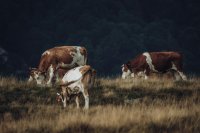
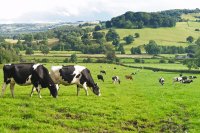
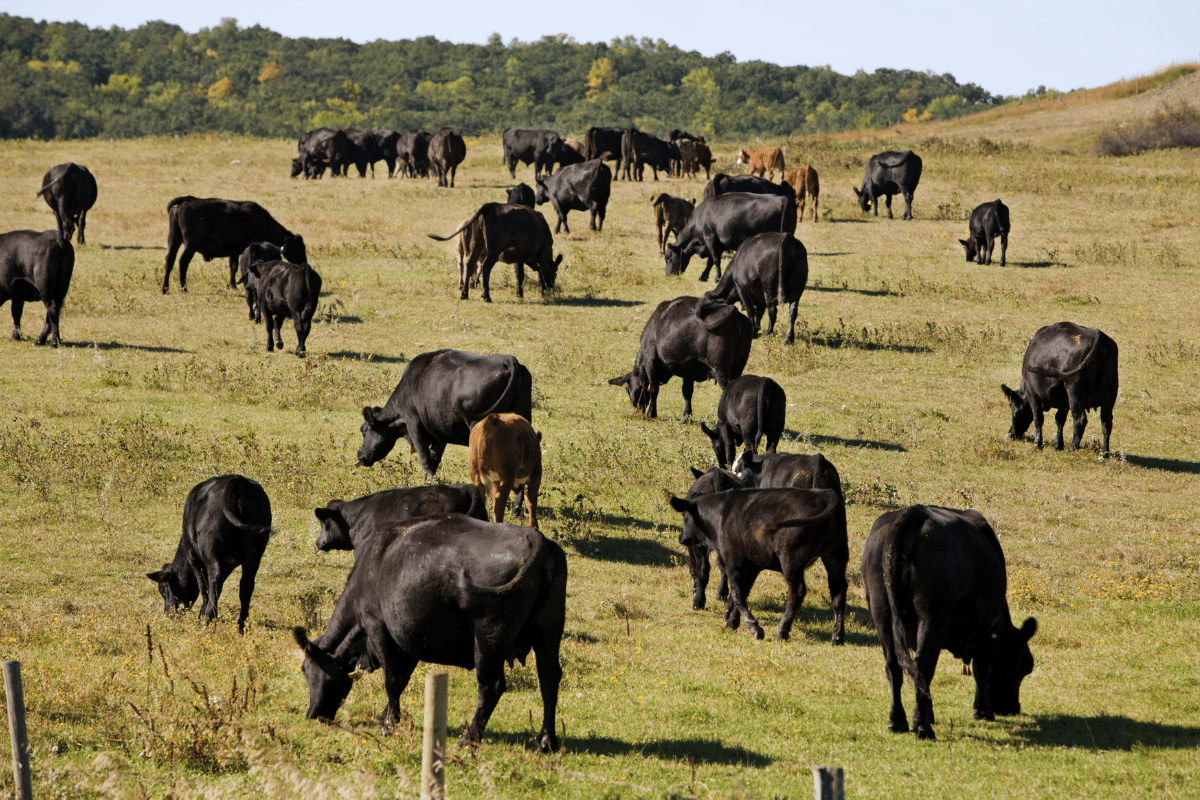
Cow Signals, although discussed more in the context of housed dairy systems, are equally vital in grazing-based operations. Essentially, cows on pasture might not receive the same close-up attention as housed cows, making observational insights even more critical. In the pasture system, cows still communicate their well-being through behavioral time budgets, typical postures, and activity patterns. Tracking grazing cows usually involves monitoring time spent eating versus lying or idling, their freedom of
movement across paddocks, and selective grazing (Gregorini et al., 2015). Irregular manure patches indicate poor pasture quality or uneven utilization, while extreme vocalization or fence-line pacing may indicate hunger, discomfort, or social tension in the herd (Kaur et al., 2019). Visual indicators, including skin condition, rumen fullness, and body posture, can reflect the sufficiency of pasture nutrition, water availability, and shelterbelt (Schütz et al., 2010). Incorporating cow signals into grazing systems improves welfare monitoring, helps optimal pasture utilization, and affirms that animals' nutritional and behavioral needs are addressed.

Decoding Cow Signals for Smart Dairy Management
Conclusion: Observation as a daily discipline
Farming starts with seeing, thinking, and leading. Cows cannot stop speaking; they give feedback on their comfort, health, nutrition, and management by expressing subtle behaviors and cues. From locomotion scores to feeding behaviour, visual signs are powerful tools in the hands of farmers. So, the question is: Are farmers paying attention? The systematic, goal-oriented observation method puts farmers in the driver's seat for better herd health and welfare outcomes with improved productivity. This approach is also validated by science.
References
- Chapinal, N., de Passillé, A. M., Rushen, J., & Wagner, S. (2011). Automated methods for detecting lameness and measuring analgesia in dairy cattle. Journal of Dairy Science, 94(3), 1410–1416.
- Cook, N. B., & Nordlund, K. V. (2009). The influence of the environment on dairy cow behavior, claw health, and herd lameness dynamics. The Veterinary Journal, 179(3), 360–369.
- DeVries, T. J., von Keyserlingk, M. A. G., & Weary, D. M. (2009). Short communication: Effect of feeding space on the inter-cow distance, aggression, and feeding behavior of lactating dairy cows. Journal of Dairy Science, 92(7), 3111–3115.
- Grant, R. J. (2007). Taking advantage of natural behavior improves dairy cow performance.
- Western Dairy Management Conference, 13, 225–237.
- Green, L. E., Hedges, V. J., Schukken, Y. H., Blowey, R. W., & Packington, A. J. (2002). The impact of clinical lameness on the milk yield of dairy cows. Journal of Dairy Science, 85(9), 2250–2256.
- Jacobs, J. A., & Siegford, J. M. (2012). Invited review: The impact of automatic milking systems on dairy cow management, behavior, health, and welfare. Journal of Dairy Science, 95(5), 2227–2247.
- Krause, K. M., & Oetzel, G. R. (2006). Understanding and preventing subacute ruminal acidosis in dairy herds: A review. Animal Feed Science and Technology, 126(3–4), 215–236.
- LeBlanc, S. J., Lissemore, K. D., Kelton, D. F., Duffield, T. F., & Leslie, K. E. (2006). Major advances in disease prevention in dairy cattle. Journal of Dairy Science, 89(4), 1267–1279.
- Soberon, F., Raffrenato, E., Everett, R. W., & Van Amburgh, M. E. (2012). Preweaning milk replacer intake and effects on long-term productivity of dairy calves. Journal of Dairy Science, 95(2), 783–793.
- Sprecher, D. J., Hostetler, D. E., & Kaneene, J. B. (1997). A lameness scoring system that uses posture and gait to predict dairy cattle reproductive performance. Theriogenology, 47(6), 1179– 1187.
- Kaur, M., Tucker, C. B., Weary, D. M., & von Keyserlingk, M. A. G. (2019). Effect of feed restriction on the behavior and feed intake of pasture-fed dairy cows. Journal of Dairy Science, 102(10), 9071–9081.
- Schütz, K. E., Cox, N. R., & Tucker, C. B. (2010). A field study of the behavioral and physiological effects of varying amounts of shade for lactating cows at pasture. Journal of Dairy Science, 93(1), 125–133.