Introduction: Why dairy cow happiness matters
Happiness” in dairy cows is generally means to imply a state of physical comfort, positive emotional experiences, and behavioural freedom. The Five Domains Model, an extension of the Five Freedoms model, constitutes a comprehensive approach to assessing welfare; it takes into account the criteria, including nutrition, environment, health, behaviour and mental state. Cows that experience low stress and are allowed to perform natural activities such as lying, ruminating, grooming, and social interaction are considered to be in a good welfare condition.
When we refer to "happy cows," we are talking about animals that are healthy, comfortable, free of negative stress, and able to engage in natural behaviours, including lying down, eating, walking, or grooming themselves. Cows in this state have more readily available nutrients to generate more milk, stay healthier, and live longer. The slogan "happy cows perform better" is based on scientific literature and evidence of the relationship between animal behaviour, welfare science, and production physiology. Animal welfare and efficiency are no longer mutually exclusive terms in livestock production systems, specifically in dairy farming. Environmental animal nutrition, ethology, and health management
advances underscore the critical link between cow well-being and farm profitability. Take cow happiness as a key tool for your business; Just like you'd maintain your other tools such as milking machines or tractors, your cows need regular checks, clean stalls, fresh feed, and time to rest. A calm, comfortable cow is a more productive one.
Numerous studies have shown a clear connection between dairy cow productivity and welfare. For example, cows who are more comfortable have better reproductive outcomes, produce more milk, and have fewer health problems. Complex connections between immunological response, metabolic efficiency, and stress physiology mediate this association. A series of detrimental physiological reactions can be set off by stress and poor health. Elevated cortisol levels from prolonged stress weaken the immune system, resulting in impaired reproductive hormones and decreased feed efficiency. Conversely, cows in an enriched environment with sufficient comfort and social structures demonstrate better lactation performance and less stress signs (von Keyserlingk et al., 2012). Welfare and productivity interaction is shown in Figure 1.
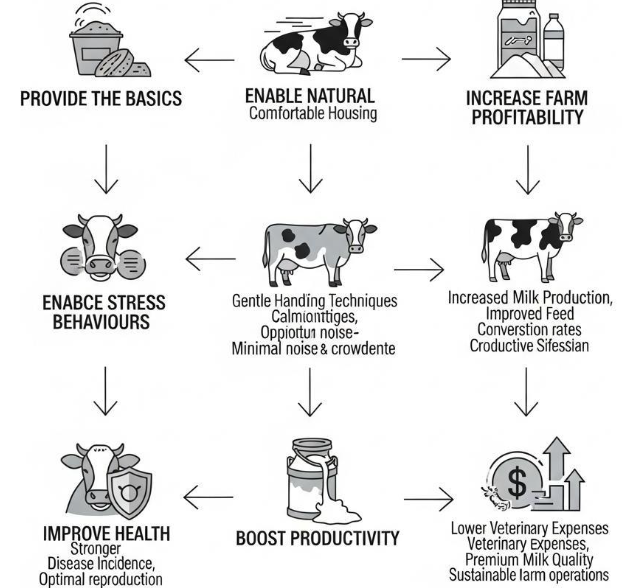
Figure 1. Simple step-by-step flow showing how daily welfare actions directly lead to better returns, making it practical for farmers to remember, Happy cows perform better, and so does your farm.
Using information from recent scientific research, this article explores behavioural, physiological, and production-level indicators to examine the positive effects of better welfare on dairy cattle performance.
Lying behaviour and milk yield: comfort equals production
One of the most-studied behavioural indicators of dairy cow welfare is lying time. According to Jensen et al. (2005), cows prefer to lie down for 12 to 14 hours every day. Restrictions on lying time brought on by crowding or inadequate bedding can result in reduced milk production. According to a study by Grant (2007), cows that were not given enough time to lie down (less than 10 hours per day) produced 2 to 3 kg less milk daily than cows that were given the recommended amount of rest.
This is partially due to the fact that lying down encourages rumination and increases blood flow to the mammary glands. Longer periods of laying are facilitated by better ventilation, bedding, and stall design, all of which increase milk production. Cows produce less milk if they are made to stand for extended periods of time due to unclean, crowded, or poorly built stalls.
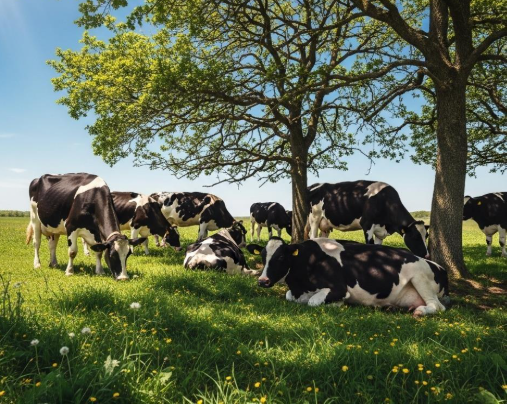
Figure 2. Cows resting under tree shade during a sunny day.
On-farm applications
- Lying is encouraged with deep bedding, such as sand or soft matting.
- Avoid keeping more cows than stalls.
- To avoid accidents and slips, keep stalls dry and alleyways clean.
Social hierarchies and housing: Reduce stress to improve yields
Performance can be significantly impacted by social stress. Being social animals, cows create hierarchies within their groups. Increased aggression, competition at the feed bunk, and decreased feed intake might result from disruptions in these hierarchies, which are caused by frequent regrouping or overcrowding. Harmonious relationships and
better resource access are fostered by stable groupings with minimum mixing. According to Bach et al. (2008), cows housed in regular groups outperformed those regularly moved between pens in terms of milk production and experienced fewer instances of mastitis and lameness. Therefore, minimizing regrouping and providing each cow enough room are crucial practices. Cows are social, they establish a hierarchy, and they get stressed when overcrowded or frequently mixed with new cows. Pushing, fighting, and reduced feed intake may result from this.
On-farm applications
- Steer clear of frequent regrouping: If at all feasible, keep cows with their herd mates.
- Give each cow ample room to feed; ideally, one headlock or 60 cm.
- Keep an eye out for bullying: Recognize and, if necessary, separate hostile cows.
Nutrition, Comfort, and Gut Health
The relationship between gut microbiology and welfare is becoming more widely recognized. Stress reduces digestion efficiency and modifies the rumen microbiome. Heat stress, for instance, might hinder nutrient absorption, alter fermentation processes, and decrease dry matter intake. A stable rumen environment is maintained with the aid of comfortable environment and balanced rations. Cows which are regularly given access to clean water, fresh feed, and shade have less stress and have better digestion. Consequently, this improves milk's essential components for dairy profitability, such as protein and butterfat (Collier et al., 2008). The stress sensitivity of cows is high. It has an impact on their feed digestion. Stress can cause reduced milk fat, stomach issues, and even disease. A calm cow uses her feed more efficiently, eats more frequently, and chews her cud properly.
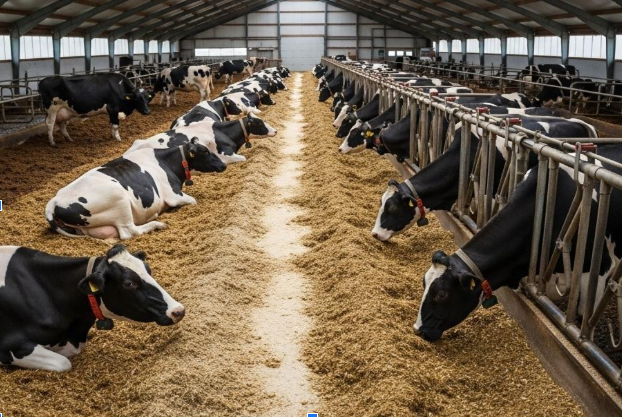
Figure 3. Cows under shade eating TMR
Application at the farm level:
- Keep the feeding time consistent/same for every day.
- Cows dislike empty bunks, so don't let feed run out.
- A cow can use up to 150L of water each day, so keep it clean and accessible at all times.
- In hot temperatures, provide fans, shade, or sprinklers to lessen heat stress
Reproductive efficiency and welfare: Stress-free cows breed better
Welfare conditions have a significant impact on reproductive performance. Oestrous expression and conception rates are adversely affected by heat stress, lameness, and low body condition scores. Happy cows have better pregnancy rates and stronger oestrous behaviours when they are not experiencing pain, heat discomfort, or social stress. According to Lucy's (2001) research, cows raised in high-welfare situations have shorter postpartum anoestrus periods and greater ovarian function. Increased reproductive success is a result of better nutrition, less stress, and timely veterinary care. Cows who are stressed or uncomfortable don't get pregnant as easily and exhibit less indicators of heat. Low body conditions, heat stress, and lameness all lower the conception rates.
On-farm applications
- To avoid lameness, regularly trim hooves and use footbaths.
- Pay particular attention to heat signs, such as mounting, tail lifting, and vocalizing.
- For improved timing, keep record of breeding dates, heats, and calvings.
Health Indicators and Economic Returns
The foundation of animal welfare is health, and there is clear evidence linking it to financial gains. In addition to lowering milk yield, mastitis, lameness, and metabolic disorders also bring treatment expenses, culling, and reductions in milk quality bonuses. Clinical disease incidence is lower on high-welfare farms that regularly manage cow comfort, cleanliness, and early disease identification. One study, for example, found that providing deep sand bedding dramatically decreased mastitis and lameness rates, increasing net returns per cow per year. Vaccination, hoof clipping, and regular health monitoring are examples of preventative health management that serve two purposes: safeguard animal welfare and improve farm sustainability. Poorly cared cows are more susceptible to metabolic problems, lameness, and mastitis. The expense of treating sick cows includes lost milk, medication, and veterinary bills. Some might even need to be culled early, which is worse.
On-farm applications
- Milk hygiene: Mastitis is less common when hands, equipment, and teats are clean.
- Foot health: Every week, look for cows which are limping and take quick actions.
- Proper bedding management: Udder infections are decreased by dry, clean bedding.
- Teach employees to recognize the early symptoms of illness, such as swollen joints, quiet behaviour, and off-feed.
Precision livestock farming: Smart tech for happier cows
Welfare monitoring is being revolutionized by precision livestock farming (PLF) technologies, such as thermal imaging, automated laying time trackers, rumination collars, and behaviour recognition algorithms. Farmers can identify abnormalities early and take time action before performance drops; thanks to these devices, which offer real-time data on individual animals. In a similar way, oestrus behaviour, lameness development, and eating patterns, all of which are closely related to welfare and productivity, can be tracked by real- time activity monitors. In addition to tracking movement, eating patterns, and lying time, devices including leg sensors and cow collars can also identify heat and lameness before they become visible.
On-farm applications
- If you have the money, use rumination collars or pedometers.
- Track cow behaviour manually using spreadsheets or mobile apps.
- To keep an eye on behaviour, place cameras in strategic locations, such as calving or ill cow quarters.
Consumer demand and ethical value: Welfare as a market advantage
Animal welfare is central to the growing consumer demand for responsibly produced food. Farms with Certified Humane, Animal Welfare Approved, and RSPCA Assured schemes that satisfy welfare standards charge higher prices for their goods. This trend reflects the increasing awareness that animal care is not only a moral obligation but also a differentiator in the marketplace. Farms can increase their brand value and gain access to niche markets by implementing improved welfare practices.
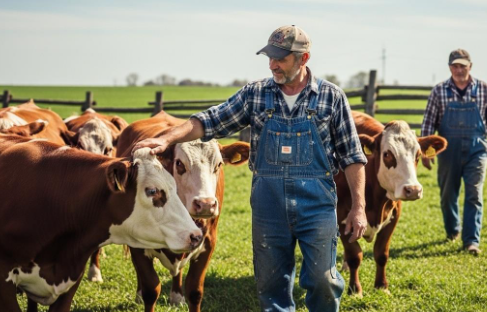
Cows enjoy interacting with people, grooming, exploring, and lying down in soft places. They cannot behave naturally if they are kept in small, dark barns or made to stand on concrete all day, which has an impact on their health and milk production.
On-farm applications
- Provide scratching posts or brushes.
- Provide them access to see daylight through open sides or skylights.
- When feasible, provide them access to the outdoors or pasture time.
Environmental Sustainability and Welfare Synergies
Improving animal welfare can benefit the environment as well. According to Capper et al. (2009), longer-lived, healthier, and more productive cows result in lower greenhouse gas emissions per unit of milk produced. The environmental impact of dairy operations can be decreased by better fertility, decreased disease incidence, and efficient feed conversion. Therefore, including welfare measures into sustainable intensification plans helps farmers and animals alike while simultaneously supporting global climate goals.
Precision livestock farming: Technology that cares for your cows
Precision Livestock Farming (PLF) monitors the health, behaviour, and productivity of cows around-the-clock using smart tools such as automated milk sensors, rumination monitors, pedometers, and cow collars. Often before you can see it with your own eyes, these devices can alert you when a cow is in heat, when she is not eating well, or when she may be lame or ill. This means better breeding outcomes, faster treatment, and fewer losses due to disease or missing heats.
By providing technologies that allow for real-time individual animal monitoring, PLF is revolutionizing the way farmers care for their cows. By identifying early indicators of disease, stress, or reproductive events like heat, this technology can enhance productivity and well-
being. For instance, rumination sensors and activity monitors can detect decreased movement or feeding, which are generally the initial indications of mastitis, metritis, or lameness, days before clinical symptoms are visible enabling earlier intervention. According to studies, automated heat detection with leg sensors or activity collars can shorten calving intervals and greatly improve insemination success. Similarly, smart milking systems that track temperature, conductivity, and milk flow assist farmers in identifying mastitis early, lowering the need for antibiotics and improving milk quality. Crucially, these technologies boost labour efficiency, reduce workload, and increase data-driven farm management in addition to improving cow comfort and longevity. Farmers are making investments in their long-term sustainability and financial success by utilizing PLF solutions to keep cows happier, healthier, and more comfortable.
Farm-level application
You don't have to install everything at once, even if you manage a small to medium-sized farm. Start with the most profitable tools, such as activity trackers, heat detecting collars, or milk yield notifications from your parlour software. Some farmers use thermal cameras to check for mastitis or apps that track behaviour. The objective is straightforward: identify issues early and maintain cow satisfaction and productivity without adding to the workload.
Challenges and limitations
Even with these benefits, there are also certain challenges. It is necessary to make upfront investments in monitoring systems, staff training, and infrastructure in order to increase welfare. Without assistance from incentives or extension initiatives, small-scale farmers could find it difficult to cover these expenses. Furthermore, not all welfare metrics are readily quantifiable. For example, it is challenging to measure emotional states objectively. To close this gap, initiatives like Qualitative Behavioural Assessment (QBA) present encouraging strategies (Wemelsfelder et al., 2000).
Conclusion
The advantages of animal welfare are multidimensional and include increased milk production, successful reproduction, and improved health and longevity. Integrating welfare into the foundation of management methods is not only humane, but also financially rational as dairy farming changes to satisfy the expectations of ethical consumers and climate-smart production systems. Ultimately, cows that are allowed to lie comfortably, eat freely, socialize peacefully, and live free from disease and discomfort repay their caregivers with higher productivity, lower treatment costs, and better product quality.
In every sense, investing on cow happiness is a wise strategy toward a sustainable and successful future. It's not just a saying, it's a verified fact that happy cows produce better. Calm, healthy, and well-cared- cows produce more milk, remain fertile, stay healthy, and live longer. You can make cows happy without having a big farm or being an expert in technology. Being observant, consistent, and open to making adjustments in response to the cows' behaviour, production, and overall health are what really count.
Table 1. A Short Checklist for Keeping Cows Content on Your Farm
|
Area |
Key Tips |
|
Comfort |
Dry, clean bedding, enough lying space, well-ventilated barn |
|
Health |
Prompt treatment, hoof care, good hygiene, and staff training |
|
Feeding |
Timely feeding, no empty bunks, plenty of clean water |
|
Behaviour |
Avoid overcrowding, allow grooming, and social grouping |
|
Reproduction |
Detect heat, avoid stress, keep good breeding records |
|
Monitoring |
Use tools or simple observations to track cow behavior |
References
- Bach, A., Valls, N., Solans, A., & Torrent, T. (2008). Associations between nondietary factors and dairy herd performance. Journal of dairy science, 91(8), 3259-3267.
- Boissy, A., Manteuffel, G., Jensen, M. B., Moe, R. O., Spruijt, B., Keeling, L. J., ... & Aubert,
- A. (2007). Assessment of positive emotions in animals to improve their welfare. Physiology & Behavior, 92(3), 375-397.
- Capper, J. L., Cady, R. A., & Bauman, D. E. (2009). The environmental impact of dairy production: 1944 compared with 2007. Journal of Animal Science, 87(6), 2160–2167.
- Collier, R. J., Dahl, G. E., & VanBaale, M. J. (2008). Major advances associated with environmental effects on dairy cattle. Journal of Dairy Science, 89(4), 1244–1253.
- Cook, N. B., & Nordlund, K. V. (2009). The influence of the environment on dairy cow behavior, claw health and herd lameness dynamics. Veterinary Journal, 179(3), 360-369.
- Cook, N. B., Nordlund, K. V., & Oetzel, G. R. (2004). Environmental influences on claw horn lesions associated with laminitis and subacute ruminal acidosis. Veterinary Journal, 167(2), 201-209.
- Dobson, H., Walker, S. L., Morris, M. J., Routly, J. E., & Smith, R. F. (2001). Why is it getting more difficult to successfully artificially inseminate dairy cows? Animal Reproduction Science, 66(3-4), 347-355.
- Gibbons, J. M., Lawrence, A. B., Haskell, M. J. (2010). Consistency of aggressive feeding behavior in dairy cows. Applied Animal Behaviour Science, 127(1-2), 20-25.
- Grant, R. J. (2007). Taking advantage of natural behavior improves dairy cow performance. Western Dairy Management Conference, Reno, Nevada.
- Harper, G. C., & Makatouni, A. (2002). Consumer perception of organic food production and farm animal welfare. British Food Journal, 104(3/4/5), 287–299.
- Jensen, M. B., Pedersen, L. J., & Munksgaard, L. (2005). The effect of reward duration on demand functions for rest in dairy heifers and lying requirements as measured by demand functions. Applied Animal Behaviour Science, 90(3–4), 207–217.
- Lucy, M. C. (2001). Reproductive loss in high-producing dairy cattle: where will it end? Journal of Dairy Science, 84(6), 1277–1293.
- Mellor, D. J., & Beausoleil, N. J. (2015). Extending the ‘Five Domains’ model for animal welfare assessment to incorporate positive welfare states. Animal Welfare, 24(3), 241-253.
- Moberg, G. P. (2000). Biological response to stress: implications for animal welfare. In G. P. Moberg & J. A. Mench (Eds.), The Biology of Animal Stress (pp. 1-21). CABI Publishing.
- Schaefer, A. L., Cook, N. J., Tessaro, S. V., Deregt, D., Desroches, G., Dubeski, P. L., ... & Tong, A. K. (2012). Early detection and prediction of infection using infrared thermography. Canadian Journal of Animal Science, 87(3), 263-270.
- von Keyserlingk, M. A. G., Barrientos, A., Ito, K., Galo, E., & Weary, D. M. (2012). Benchmarking lying time and lameness prevalence in freestall herds. Journal of Dairy Science, 92(9), 3457–3463.
- West, J. W. (2003). Effects of heat-stress on production in dairy cattle. Journal of Dairy Science, 86(6), 2131–2144.
- Wemelsfelder, F., Hunter, E. A., Mendl, M. T., & Lawrence, A. B. (2000). The spontaneous qualitative assessment of behavioural expressions in pigs: first explorations of a novel methodology for integrative animal welfare measurement. Applied Animal Behaviour Science, 67(3), 193–215.
- Zebeli, Q., & Metzler-Zebeli, B. U. (2012). Interplay between rumen digestive disorders and diet-induced inflammation in dairy cattle. Research in Veterinary Science, 93(3), 1099-1108.
- Rutten, C.J., Velthuis, A.G., Steeneveld, W., & Hogeveen, H. (2013). Invited review: Sensors to support health management on dairy farms. Journal of Dairy Science, 96(4), 1928–1952.
- Kramer, E, Cavero, D, Stamer, E and Krieter, J 2009. Mastitis and lameness detection in dairy cows by application of fuzzy logic. Livestock Science 125, 92–96.
- Roelofs, J.B., van Eerdenburg, F.J.C.M., Soede, N.M., & Kemp, B. (2006). Various behavioral signs of estrus and their relationship with time of ovulation in dairy cattle. Theriogenology, 65(4), 819–831.
- Kamphuis, C., Mollenhorst, H., Heesterbeek, J. A. P., & Hogeveen, H. (2010). Detection of clinical mastitis with sensor data from automatic milking systems is improved by using decision-tree induction. Journal of Dairy Science, 93(8), 3616-3627.
- Wathes, D.C., Kristensen, A.R., Aerts, J.M., & Berckmans, D. (2008). Is precision livestock farming an engineer’s daydream or nightmare, an animal’s friend or foe, and a farmer’s panacea or pitfall? Computers and Electronics in Agriculture, 64(1), 2–10.